
Translated material
The seventh season of “Game of Thrones” ended with record ratings. But was the series remained true to himself, books and fans?
And again spoilers!
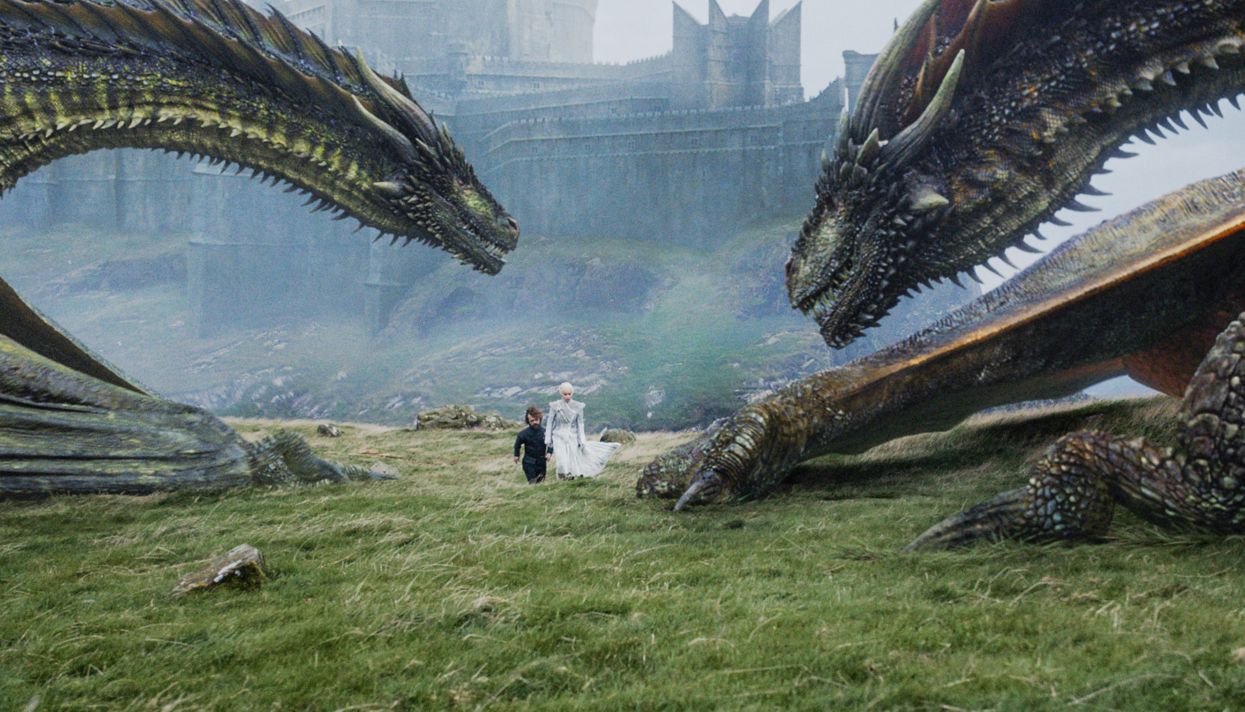
HBO completed the show of the seventh season of "Game of Thrones." The last episode, which lasted almost 80 minutes, watched a record number of spectators in America - 12.1 million people. Together with laudatory reviews throughout the season, claims sounded to the scriptwriters - the main thing is that the “Game of Thrones” is increasingly similar to the Hollywood blockbuster. At the request of Medusa, the film critic Yegor Moskvitin tells at what point the series turned out to be after the seventh season. Caution: There are spoilers in the text!
The season ended. None of the main characters died. But it has become more difficult to understand who is the main one and who is secondary. Thanks to John R. R. Tolkien in the middle of the 20th century, the publishers believed that fantasy could be released not only in soft binding and cheap paper-as it was, for example, with the American magazine Weird Tales, published since 1923 and released the first novels about Konan-Warwar-but that this is serious literature, complicated, complicated, voluminous, which creates volumetric, which creates a voluminous one, which creates a voluminous one, which creates Entire worlds from scratch. It was Tolkien that was able to break his huge novel into three and publish them all. Since then, the release of trilogies has become a rule of good tone - and this happened long before the dominance of the franchises was established in the cinema.
George Martin was not limited to trilogy - and was able to build not only an epic, but also a polyphonic narrative where dozens of archive, hundreds of simply important and thousands of accused heroes coexist. And all of them are equal in front of the author, jokingly calling himself a "ruthless god." Therefore, the heroes who were considered the main ones, in Martin, die in the first third of the story. And the survivors travel from the mud to the riches and back so often that the reader has no idea which of them is the future king or queen of the seven kingdoms, and who is the promised prince.
Therefore, after the seventh season, it is difficult to say a big loss - Lord Petir Bailish nicknamed the Mizanets. He was in the series from the first season and stood behind the scenes of all the most important events - the deaths of the two deserts of the king (John Arren and Nor Stark), the beginning of the war of Lannisters and Starkov, the captivity of Sansa Stark and the liberation of Winterfell. After the death of Joffrey and Ramsi, it was he who became the villain number one. But no one ever believed in his chances of taking the iron throne - so the death of the little finger does not seem the victim that we used to expect from every season. The main conclusion from the Game of Thrones in 2017: the series made the audience so bloodthirsty that they can no longer satisfy their appetite. For two years in a row, we have been pampering with hippi, but after five years of getting used to pain, they cause only suspicion and irritation.
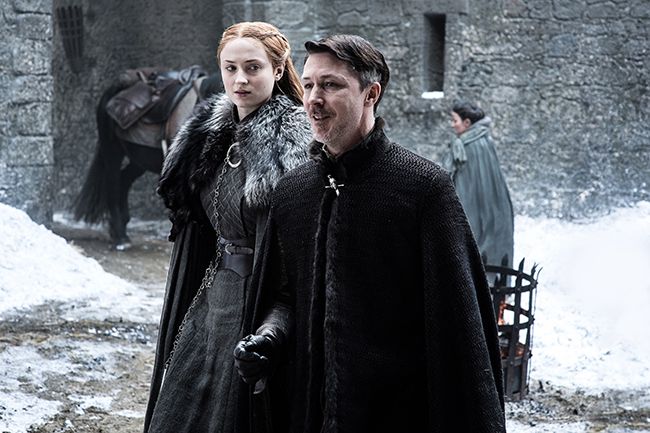
The sixth season was scolded for Hollywood stamps: the heroes regularly escaped at the last moment; The series began to play along with those characters who seemed the main ones, but at the same time remained ruthless to everyone else; And bloody realism - a corporate for the "Game of Thrones" - became less and less.
The seventh season repeats all the same techniques (whether to consider them erroneous is a question for each viewer). Fans are already joking that instead of the principle of Deus Ex Machina, the series Dragon Ex Machina is acting in the series - a wonderful salvation in it always comes at the last moment on the whole creature. There is a lot of blood in the season, but not shed a rain drop - and the audience has not reacted to any other viewers for a long time. After six seasons of painful separation, the audience offer a season of happy reunification: Tyrion again with Jaime; Arya, Sansa and Bran rule Winterfell; Even John forgave Theon. The most popular fan theories come true like a click: John and Daenerys together; The real name of John is Targaryen; The king of the night now has his own dragon; Arya killed the little finger, and Cersei is preparing to strike everyone in the back.
And this flirting with the viewer cannot be nothing more than preparation for the most cruel and disappointing denouement as much as possible. George Martin said that the name of the cycle “The Song of Ice and Fire” is a reference to Robert Frost’s poem “Fire and Ice”. It refers to the foreboding of the end of the world. The Apocalypse is predetermined, but the lyrical hero of the poem doubts that it will destroy the world - ice or flame. In the “Game of Thrones” this question can be reformed as follows: what is more destructive - the anger of the king of the night or the good intentions of the main characters? Whatever the answer, the world is clearly non -appropriate.
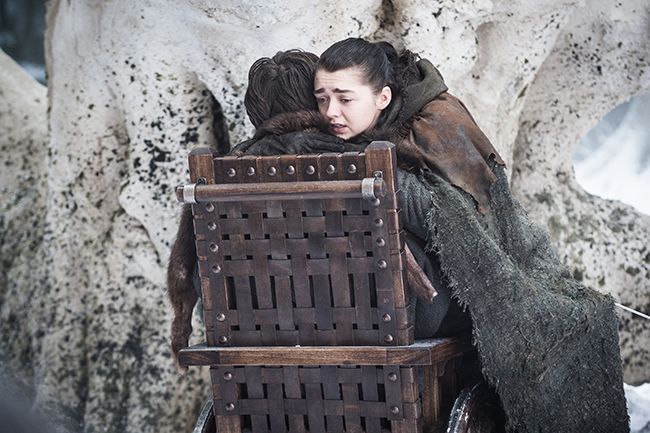
The feeling of the upcoming disaster is intensified by the strange ring composition of the seventh season: he always tries to remind us of the events that happened to the heroes before. Arya Stark returned to Winterfell in the same way as in the first season she returned after an unexpected journey through the dungeon to the royal harbor: two guards did not recognize her at the gate. Sir Sandor Cligan, nicknamed, the dog was again in the house where he was sheltered a couple of years ago, but now the owners are dead-and because of him. Arya fled from the stronghold of Walder Frey along the same route as after a red wedding. But then she met Freyev thugs on the halt, and now - ordinary boys recruited to the army of lannisters. The ring composition is a harbinger of the fact that the development of action (and characters) is approaching its logical conclusion. During the winter break, the viewer felt something like this before the final “to stay alive”-a grandiose story behind, and the memories of how it all began, they only hurt before separation.
George Martin complains in an interview that the “Games of Thrones” showranners were so ahead of him that he was behind the series - and not only stopped writing scripts for him, but did not even see the last season (but the writer still gives advice to the authors of the show). In fact, there is nothing to worry about the master: he began as a television center, so that his books already laid a serial installation - constant switching between the heroes, disproportionate temporary segments in different chapters that confuse geographical span. The Hollywood conventions of the last two seasons forced the most devoted fans to think that Martin completely lost control of the series. After the final, it seems that he nevertheless imperceptibly returns him to himself and prepares us for a new red wedding.
Egor Moskvitin