
Translated material
Oreshkin: the ruble will be stable in the coming months
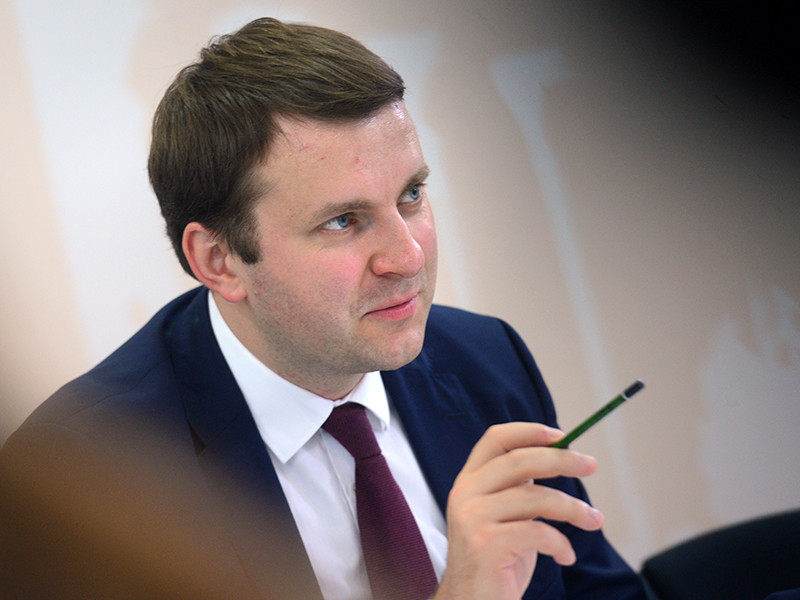
The head of the Ministry of Economic Development of the Russian Federation Maxim Oreshkin considers the current ruble exchange rate justified and expects to preserve it at the current values in the coming months, Interfax reports. “The factors that influenced the ruble in the first half of the year are no longer of such importance, and we expect that the ruble will be quite stable and will remain near the current values that we consider reasonable ... We expect a stable ruble in the coming months,” he told reporters after a meeting with representatives of the French business during a working trip to Paris.
Since April, the ruble has been weakened by 9%that "a really great change, and which is fully consistent with what we expected by this time," the minister believes.
“The only mistake we made in April - we did not expect such a significant strengthening of the euro in relation to the dollar. This led to the fact that the ruble turned out to be stronger than the expectations for the dollar, but weaker to the euro,” Oreshkin added. According to him, the influence of the current account in the second half of the year will virtually be felt.
“The current account worsened, as we expected. We even saw a shortage of some months this year, but now it will stabilize and remain in a positive plane during the fall and in the fourth quarter,” the head of the Ministry of Economic Development explained.
“We do not see any significant shocks on the part of the current account that will affect the ruble exchange rate. We expect the course to be stable in the coming months,” Oreshkin added.
The Ministry of Economics, according to him, expects that Russian GDP growth in August will accelerate and exceed 2%, in addition, according to the results of the year, the growth in the indicator will also exceed the previously previously predicted 2%.
The minister also noted that Western sanctions against Russia have made it possible to mobilize the Russian economy to a certain extent, but in the future these restrictions will prevent all parties from developing constructive relations.
"Any sanctions restrictions are what, of course, harms all partners and prevents the development of those types of activities that could develop together between Russian and European partners," he told reporters.
As the minister admitted, "indeed, at the moment when the sanctions were introduced, they influenced the payment balance and the dynamics of the Russian economy." “In many ways, they also became a motivating factor for Russian companies, for the Russian population, for the Russian government to act more actively in the development of their own economy. And from this point of view there is a certain positive effect,” the head of the Ministry of Economic Development said.