
Translated material
The overthrow of the idols
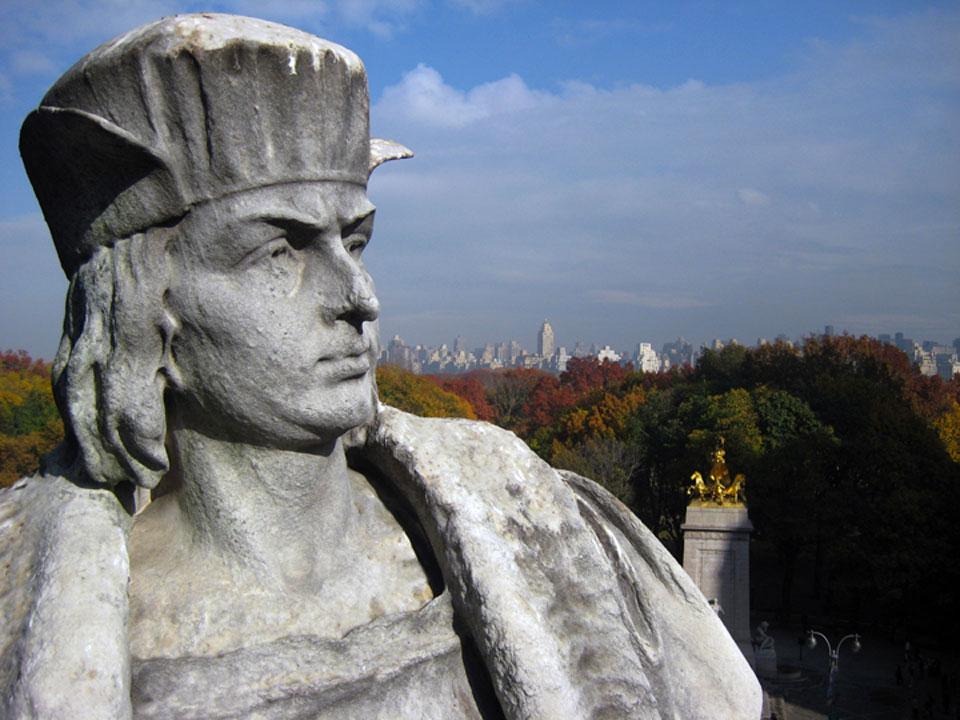
The epidemic of the struggle with the "wrong" monuments reached Australia. On the night of Friday to Saturday in Sydney, unknown people damaged the monument to James Cook. On his pedestal, they wrote with a spray: "Change the date" and "Genocide is not a reason for pride." By the date, this refers to the year of opening Australia on the pedestal by expedition of Cook - 1770.
Statues of James Cook, Lachlan Macquarie, and Queen Victoria Has Been Vandalated in Hyde Park/Macquarie Street Area. @7newssydney pic.twitter.com/g25TB0TX0Q
- Jason Morrison (@jasonMorrisonau) August 25, 2017
The popular TV presenter Stan Grant, whose ancestors were natives for the demolition of the monument, believes that this inscription is a lie in relation to the indigenous Australians who reached the continent tens of thousands of years before Europeans.
Is Cook guilty in the genocide of the natives? Dubious statement. He punished them for theft and used weapons for self -defense, but did not exterminate them. Here is a record in his diary - it belongs to the much more warlike New Zealand Maori:
I am convinced - humane people, without experiencing everything that fell to our share, will condemn me for shooting, and I myself understand that the reason that prompted us to seize the boat against the will of its owners does not justify me. If I knew that the natives would resist, I would not come close to Canoe, but since they behaved contrary to our assumptions, it was impossible to wait calmly while one of my people folded their heads.
Australia Prime Minister Malcolm Turnbull sharply condemned the vandals. In his comments on Facebook, he compared the demolition requirements of the monument with Stalinist cleaning:
This is what Stalin did. When his henchmen fell out of favor, he not only executed them, but also removed from official photographs - they ceased to exist not only in this world, but also in memory and in history.
And in the USA, a monument to Columbus-a gift of New York from the Italian community of the city, was under the threat of demolition. Natives of the islands of the Caribbean basin have long called Columbus their enslave. New York mayor Bill de Blazio, half Italian, despite the calls of these "victims" of the sailor, each year took part in the parade on the occasion of Columbus Day, although he called him "at least a complex figure." The following year, the mayor’s elections will be held in New York, the campaign has already begun, and the fate of the monument has already become one of the topics of the election discussion. Meanwhile, the de Blazio rating begins to fall . In these circumstances, the mayor may allow demolition. So far, he established a commission, which for three months should “objectively” deal with each monument in the city.
NYC MAYOR de Blassio Considers Removing Columbus Statue Amid Protesh https://t.co/spvlmajmlp pic.twitter.com/scynrol0pq
- Democracy Now! (@Democracynow) August 29, 2017
The argument that if we approach historical figures with modern measurement, not a single monument can resist, is broken against a blank wall. Recently, the famous chef and restaurateur Tom Kolichchio decided to change the sign of his New York institution Fowler & Wells. The institution is located in the building, which in the 19th century occupied the company of the same name. Its owners, the brothers Orson Square and Lorenzo Niles Fowler and their companion Samuel Wells were enthusiasts of Frenolonia - the doctrine of the connection of the brain activity with the convex of the skull. Subsequently, the failure of this theory was proved, but in those days it was dominant in psychiatry.
Kolichchio knew very well about the hobby of Fowler and Wells: Frenological terminology and paraphernalia was used in the names of the dishes and design of the restaurant. But in 2012, the film “Dzhango Liberated” was released in the rental of Quentino Tarantino, whose hero Kalvin Candinology uses phrenology to prove the inferiority of the black race.
Dr. Schulz: Who is your friend?
Kalvin Candy: This is Ben. The old black man who lived here terribly long, well, just damn long. He served my dad and dad of my dad, until they died. And then Ben began to serve me. When you are the son of the owner of a huge plantation in Mississippi, you will grow among the breaches of black faces. I spent my whole life here in Candland, among black faces. I saw them day after day. And all the time he asked himself: why don't they kill us? Here, on the veranda, 50 years in a row, three times a week, old Ben Bril my father with a dangerous razor. If I were an old Ben, I would cut my father’s throat to the hell, I would not need 50 years for this. But he did not do it. Why? Understanding the difference between the two types gives science phrenology. On the skull of the African, here, the area of subordination is greater than on the skull of any person or a humanoid being in the world. If you inspect this part of the skull, you will find three distinct recesses: here, here and here. If I had a skull of Isaac Newton or Galileo in my hands, these three recesses would be located in the area associated with creativity. But this is the skull of old Ben, not a burdened genius. These three recesses are in the area associated with humility.
The performer of this role, Leonardo DiCaprio told in his interview that he persuaded the director to insert this scene into the picture. Frenology was really used to justify slavery, but opponents of slavery used it to prove the opposite .
If we are talking about culinary renaming, we can recall how, in 2003, the chairman of the Lower Chamber Committee on Administrative Issues of the Congressman Bob her, outraged by France's refusal to enter the anti-Irac coalition, ordered the Capitol to rename the "French potatoes" into "potatoes of freedom", and "French Toasts " - in" Toasts of freedom ". (In fact, Free potato chopped by striped in Belgium and in France is called Belgian - French was called by Thomas Jefferson, who was the US Ambassador to Paris and was the first to serve it in the White House in 1802.) When the congress left it in 2006, the former names returned to the menu without too much noise.
Under the Soviet regime, the French roll was renamed the city, and the Olivier salad into the metropolitan salad. Only the Napoleon cake survived. But the cutlets in Kiev was not lucky : in the dining room of the Russian Foreign Ministry, they are now called “Crimean” cutlets.
In the Russian Foreign Ministry%27s Canteen What Is Really a Chicken IS Called Chicken Crimea. pic.twitter.com/juwr7166br
- IVAN NECHEPURENKO (@inechepurenko) February 15, 2017
Dmitry Medvedev, Chairman of the Government of the Russian Federation, does not lag behind the trends: in November last year, he suggested renaming the Americao coffee in Rusiano coffee, after which the application for registration of the corresponding trademark was received to Rospatent.
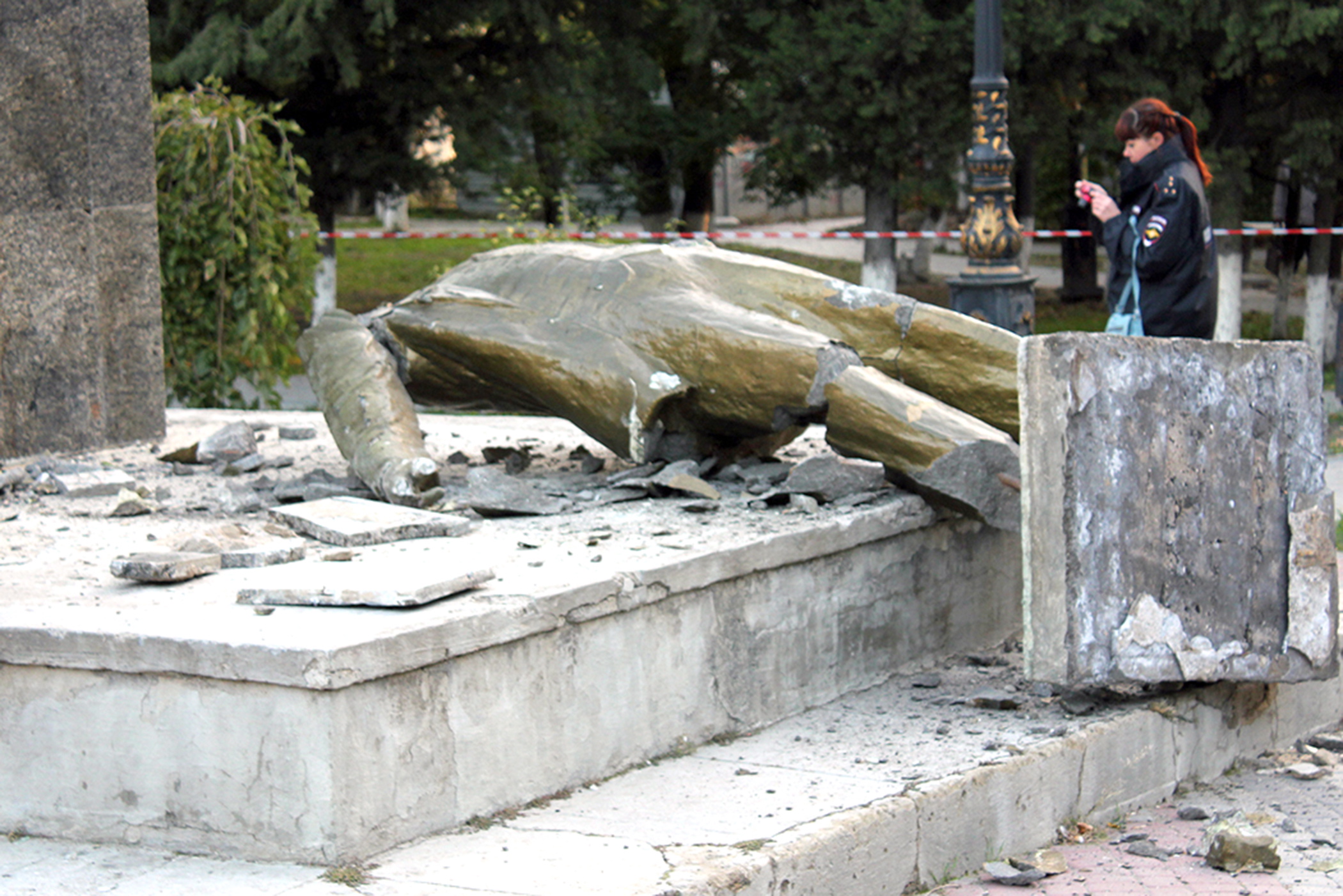
And in Ukraine, where there were no more monuments to Lenin , a monument to Peter I in Poltava was doused with paint .
At such a pace, Caesar’s salad can also reach the renaming of the Caesar salad - after all, Julius Caesar was also a slave owner and a colonialist, although he has not the slightest relationship with the salad!
The business has not yet reached the toponyms. But the US geographical map is replete with "monarchical" names. Charlotsville is named after the wife of George III Charlotte Mecklenburg-Strelitskaya, Virginia in which he is located, in honor of the queen-girl Elizabeth, both Carolins-in honor of Charles I, Georgia-in honor of Georg II, Louisiana-Louisia XIV ... However, the particularly vigilant lawmakers of Rodi-Alenda For more than a year, attempts have been making to rename the staff whose full name is usually translated into Russian as "The state of Rhizhnod and Providence Plantation." Member of the state of legislature African American Joseph Almeide, who made the corresponding amendment, the word "plantation" recalls slavery.
In fact, it should be translated as "corpusions". Thus, these lands were called the founder of Rhizen Island, Priest Roger Williams, expelled from Massachusetts for the preaching of freedom of conscience. He never had slaves, the Indians gave him the land. In 1774, Rhizen Island became the first North American colony to ban the slavery. The state has no reason to be ashamed of such a story. Nevertheless, in 2010, a referentd reflection was carried out in Rhizda-Island. The voters answered "no" to the proposal of legislators.
There was a case in the history of the United States when the king’s statue was demolished. This happened on July 6, 1776, when the Declaration of Independence was read out to residents of New York. At the same night, 40 soldiers and sailors led by the artillery of Captain Oliver Brown went to Nizhny Manhattan, where in the Bowling-Grin park (there is now a fountain and an attacking bull) there was a horse statue of George III on the marble pedestal. The statue, cast from lead and generously gilded, arrived from London six years earlier and was opened with large pomp.
The sailors climbed onto the statue and tied the king with ropes, but the soldiers were in a hurry that the ropes broke off. The statue was poured on the second attempt. His Majesty crashed into pieces.
Lead went to the musket bullets. Documents indicate that 42,088 bullets turned out from the statue. The rebellious colonists wore the king’s head around the city at the peaks, but then the loyalists sent her to England. In America, only the tail of the horse remained from the statue, now exhibited at the Museum of the New York Historical Society, and several more debris stored in this and other museums.
The Pulling Down of the Statue of King George III, New York, 1776. By Ortel. pic.twitter.com/mhfgnztu4l
- Historyland. (@Landofhistory) August 22, 2017
There are many drawings and at least one picturesque canvas captured by this event, but not one of them is true. Georg is everywhere depicted in the crown and costume of the XVIII century. Reliable images of the monument were not preserved, but from his descriptions it is known that the king was dressed in the Roman toga and had a laurel crown on his head. Using these descriptions, the sculptor Michael Ferrari-Fontan reconstructed the statue, which now stands in the Philadelphia Museum of the American Revolution.
Thinking of dumping the statue, Captain Brown acted exclusively on his own initiative. General Washington, having learned about the destruction of the statue, strictly condemned Brown's actions as outrageous arbitrariness. In addition to the fact that a valuable work of art was destroyed, such actions, the general believed, should be undertaken only by decision of the proper authorities. Subsequently, Brown has repeatedly said that he considers the destruction of the statue the most shameful act in his life.