
Translated material
Assessment for the school

How to measure school? Not a specific student, but the whole school, especially if it consists not entirely of the winners of the All -Russian Olympiads, but from different children brought up in families in different social and economic status.
There is no single measurement for the school. World practice is diverse: the American media - Ny Times , La Times , Washington Post - evaluate schools and school districts for expenses for the student. The Australian newspaper Sun Herald - according to the number of graduates mentioned in the collections “Who is in Australia”, and the BetTereducation.com.au website is the number of cavaliers of the Australian Order. But most ratings are still based on academic results. In the largest rating of schools and colleges Niche.com in the USA, performance is 50% of the final score. In the academic version - the rating of Bettereducation.com.au - more than 10 parameters: the results of several exams, permitted universities, comparison of exams with the average result of the state, etc.
The educational result is closely related to the influence of the environment, therefore an important component of ratings is socio-economic. The Ny Times newspaper in 2016 made a rating of school districts taking into account their economy and came to the conclusion that children in areas with a wealthy population overtake their peers in poor areas for four classes. Australian agency Acara ( www.acara.edu.au ), specializing in measurements in the field of education, has developed a rating of “socio-economic advantage”-the level of development of the territory affecting the result of education. It applies as an amendment to academic results for the “honest comparison” of schools so that the poor do not compete with the rich.
In Russia, data on the academic performance of schoolchildren are massively and centrally collected since 2001, when the implementation of the exam began with the pilot regions. However, there are very few ratings of schools. MCNMO makes the ratings “500 best schools in Russia” and “200 best rural schools in Russia”, based on data on students of “best universities in Russia” and data on the winners of the Olympiads. The schools of the Moscow Department are made by the Moscow Education Department, and the Ministry of Education of Tatarstan - the rating of municipalities in the quality of education. Separate independent projects, such as russianschools.ru , collect data on the exam in different regions and make schools on the average USE score.
Such projects have become possible because the results of the exam for schools (average points in all subjects) were published in several regions of Russia until 2015. In 2016, Rosobrnadzor categorically opposed the publication of such data throughout Russia and in individual regions, and especially against the development of ratings based on data from the exam. The position was motivated by a number of arguments: from the uncertainty of the school contribution to the result of the exam to conflicts of school directors with local authorities, requiring them to increase the results by any means. The main argument is that in Russian education you need to fight for equally good education in all schools, and not cultivate the struggle of parents for getting into the "best" educational institutions. Since 2016, even average points in subjects by regions have not been published - so that they do not compete with each other.
Against this prohibition, Rosobrnadzor developed a unified system for assessing the quality of education (ESOOO), which includes the results of the exams - the GIA, the exam and testing - VPR, Nico. But this system is not public - its aggregate data is available only to officials who use them to “improve the quality of education”. Without telling parents what quality is today.
There are no practices of rating of schools taking into account their financial condition yet. Despite this, state and municipal schools since 2012 are mandatory to publish financial statements. In general, Russian parents have not yet appeared - not the “best school of Russia”, but the most ordinary. Parents still evaluate the school only on the basis of opinions of relatives and acquaintances. And they really need this assessment, this is the ground under the feet, even if the choice of school is small or completely absent. They also need data about the school in order to conduct an informed dialogue with the school, including about financing issues. Parents should know that there are criteria by which the school can be reasonably compared with the neighboring ones, and may ask why, with an equal budget in one school, rusty swings in the yard, and in the other a new sports ground.

The practice of the region
We began the practice of evaluating the activities of schools in the Samara region in 2015 in the magazine “Del” - we compared the average score of the USE of city schools in Samara (the region published this data) with their extra -budgetary income. It is formed from income from paid services, from renting premises, voluntary donations, grants. Data on this is available on the website of state and municipal institutions Bus.gov.ru.
True, you need to know what to look. The site interface is not easy to arrange, the data behind an inconspicuous button are grouped by types of accounting forms, the names of which will not say anything to the ordinary parent. There are about ten forms, inside each of them there can be several more pages with data. The most information was collected on the “Results of the Institution” tab - the income of the school, including extrabudgetary ones, expenses for articles, the number of employees, the average salary. The number of schoolchildren is presented here in a special form: by the number of consumers of services. These groups can intersect - the same student receives the School Transportation service, and the “Additional Education” service, and “Implementation of general educational programs of primary school”, therefore, the final number of students must be calculated by non -overeating groups. All forms can be unloaded from the site in the “Open Data” section on the link http://bus.gov.ru/pub/old-open-data .
When comparing the exam of schools with their extra -budget income, it quickly became clear that in the best schools in Samara (among them there are participants of the “500 best schools in Russia”), there is always extra -budgetary income, and in many cases it is quite high - up to 70 thousand rubles. per year, per student, which is more budget financing (the average salary in the region in 2015-2016 was 25 thousand rubles). This is not counting the funds of voluntary donations in such schools, the reports of which are difficult to, but you can find - parents pay 15-30 thousand rubles in them. per year. The smaller the average USE score is at school, the less likely you can find a high extra -budget income in it, and in schools with low points it is stably close to zero.
This study aroused great interest among parents, and we expanded it to the scale of the entire Samara region, where about 700 schools with 180 branches work, including about 30 non -state. The site zeus.volgamonitor.com posts a pilot version of the school directory, which contains data on the average USE score in 2014 and 2015, financing data (budgetary and extra -budgetary income in general and in the calculation for one student), school funds and the average salary and share of the payment fund in the income in the income (shows how much money the school remains on development), as well as the opinions of parents about schools following a survey conducted by the Ministry of Education of the Samara Region.
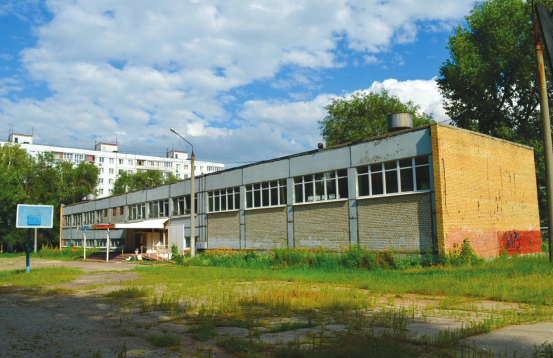
School in Samara, a typical secondary outskirts with a poor budget - 432 students, 59 employees, 42 thousand per student per year
Data on the finances of private schools are taken from the register of the NPO of the Ministry of Justice of the Russian Federation and from the reporting databases of commercial organizations. It is important to take into account private schools, because they are equal players in the educational market, and one of the most honest and understandable, and in general they are not much different from the state ones - they have both the exam and budget financing.
In each direction - performance, opinions, finances - to schools are assigned a rating. In terms of academic performance, each school was first assigned the rating from C to A+ for each subject, then the average rating was calculated. In mathematics and physics, group A+ - 70 and above the USE points, in other subjects - 80 and higher. The leading physical schools of Samara and Togliatti stably show the average USE score in physics 65-68, in specialized mathematics 68-75 with the number of 50-100 people in the issue.
The collected data give not only the instrument of the approximate assessment of the school for parents, but also the rich soil for analyzing the state of education in the region. It can be seen that per capita normative financing really works like per capita only in a large school, where teachers account for 10-15 and more students. In a small school, everything is wrong. There you can not reduce the staff and make it proportional to the number of students, as in a large school, so that there are fewer expenses, and more income. In the Samara region, out of 700 schools, less than 10 people work in only one. Only in 14 schools - less than 20 people. At school No. 116 of Samara, 44 employees work, they account for 650 students. At the school of the village of Alekseevsky, Krasnoarmeysky district, there are also 44 employees, only they account for 108 students-a little more than two for each, and not 15, as in school No. 116. Teachers earn more of their rural colleagues in the 116th school-28 thousand rubles. Against 18 thousand, but the load is incomparable. In dozens of rural schools per employee accounts for one, two, three students. In a sense, this is per capita financing-only in the calculation of the soul of a teacher, not a student. As a result, financing of rural schools is on average twice as high as urban-80-90 thousand rubles. per year for a student instead of 40-50 thousand. Many of them are now in excellent condition (and many, although not all, show good educational results)-unlike small city schools on the outskirts, in which the average salary is 10-15 thousand rubles, and the income for the student is 30-40 thousand rubles. per year. From the reporting of schools, it generally turns out that the statements of representatives of the authorities about the average salary of regional teachers of 26 thousand rubles. Only partially correspond to reality - less than a quarter of schools can boast of such a result.
Another example: in some prestigious city schools in Samara, parents monthly “add” to budget financing modest, it would seem, money-1.5-2.5 thousand rubles. (not counting one -time “voluntary” contributions upon admission) that schools use for supplement to teachers, purchase equipment, and repair. These little money actually consist of about 80% of the budget financing of the school, respectively, almost double its income. If it is with such money that the school finally begins to live satisfying, then maybe these are concrete goals to increase school financing?
Our rating of schools is not yet integral - there is too little data. It is also not easy to make it federal - schools in Russia are in such different conditions that it is often a shame to compare them. At one end of the scale is the Moscow Electronic School, on the other-Yakut boarding schools with toilets on the street. Nevertheless, the great interest of readers and users in such measurements and ratings shows how important this topic is for parents. Rosobrnadzor is unlikely to allow the regions to centrally publish the data of the exam and the OGE in the near future, but a significant part of the data on academic performance can be collected from the reports on the self -examination of schools that they are obliged to publish according to Federal Law No. 273, and published on their sites. You can add dozens of different parameters to these numbers, which today's data collection and processing technologies can be measured easily - from accuracy to universities according to social networks to the emotional background in school publics. Such an assessment will allow society to see problems, and when the quality of education in all schools in Russia will be increased to the equally good level, to make sure that they are really resolved.
Julia Torgasheva