
Translated material
Landscape during the battle
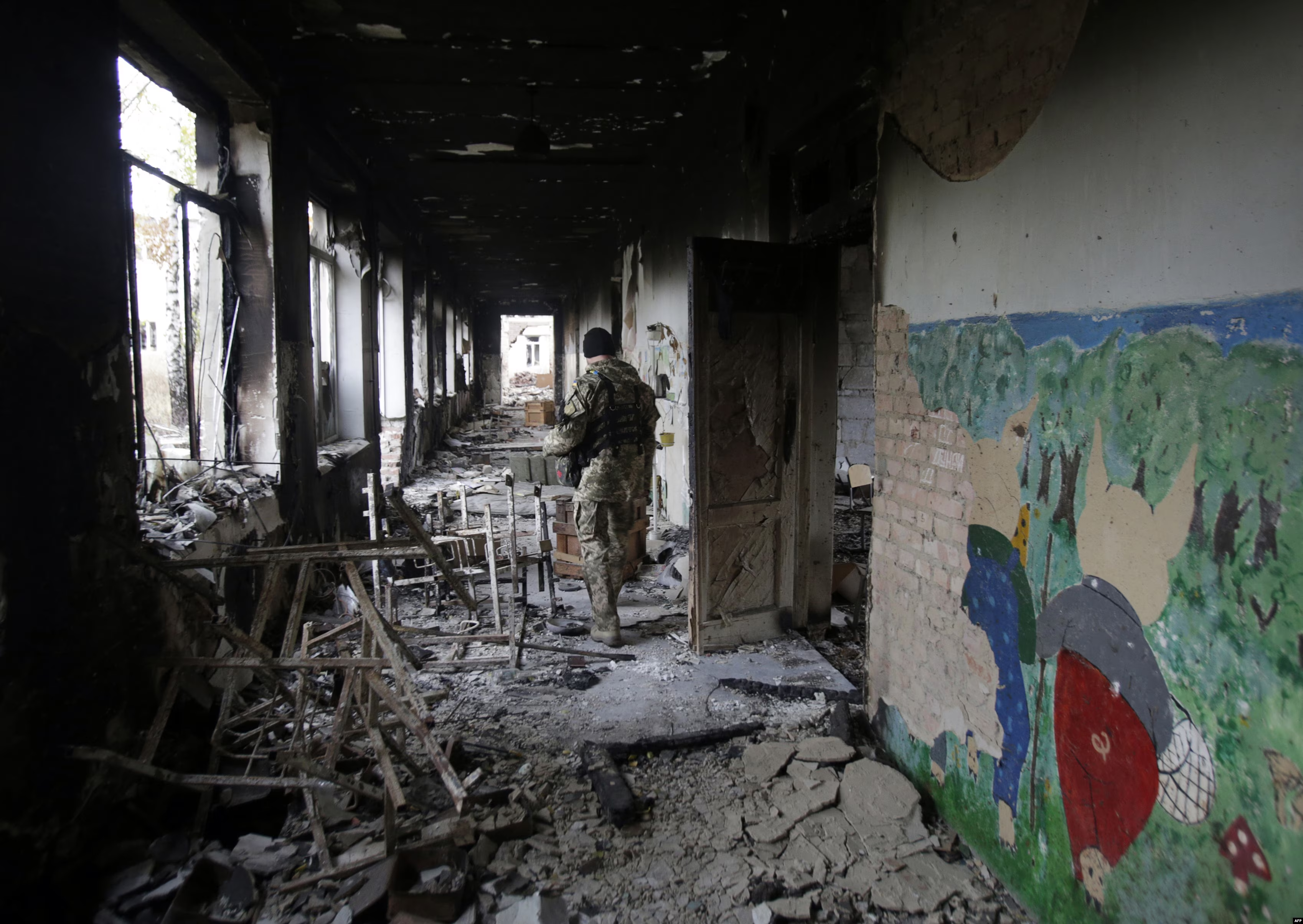
In Chernivtsi (publishing project of the poetic festival, Meridian Czernowitz) was released by Sergey Zhadan’s novel “Interonat”.
“The station is painted yellow, but in the rain the paint has become dark, heavy. State flags from the columns were prudently removed: they understand that the army leaves the city, it is better not to annoy those who follow here. Near the columns of garbage baskets, overwhelmed with bright grabs and plastic. On top, on empty bottles from under the cola, several bloodied bandages hung. Blood is also bright. Nobody has been thrown out of the baskets for a long time. Even the pigeons around them are not pushing. ”
Igor Pomerantsev : Poems, essays, blogs were written about the war in the east of Ukraine, but these are all dynamic genres. There are films that are one way or another related to the war. But the Ukrainian reader was waiting for the novel about the war. And you wrote it. This genre is taken out to you, is it? How meaningful, rational is the choice of the genre?
Sergey Zhadan : This is a rational decision, this decision is not spontaneous. I made this decision back in 2014 in the summer, I remember all this very well. I had an interlocutor, the addressee with whom we corresponded, his name is Igor, he is a writer, he lives near Lugansk, in the occupied territories, just the hell began there. He found my address, began to write letters to me. That is, he described that he sees around, and he saw a war around. That is, it was a diary from the very heart of the war, but the diary of a civilian person. That is, by and large, a person without any pronounced political position. Naturally, he did not support the separatists, but did not understand the Ukrainian side. Igor tried to write about this to everyone. At some point, I realized that I was reading the novel, it is terribly important and terribly relevant. At some point I asked him if he was not against if I use his experience for my novel. He said that he did not mind, and I started working. I came up with the first option back in 2014, tried to write, I didn’t like it all, I realized that I still don’t feel something, I misunderstood something. Therefore, all this was postponed until 2016, last year I began to write and finished this text on the last day of winter, that is, in fact, a year of active scripture, it took all. And Igor, by the way, we correspond with him further, I sent him this text, he liked something, didn’t like something, he felt something, something was not. He writes further, I even helped him make a couple of publications.
- The human you are talking about, by the name of Igor, is he a co -author or character?
“It’s not even a character, he should have been a character in the first version, there I wrote about him, about his experience, about the experience of a person who lives an active phase of war, and then I realized that I would like to say a little more. Roman, returning to your question, how much it is all pragmatic, the novel is a complete story, it is not just some kind of emotion or some kind of reflection, it is a story where there is a cause, there is a consequence, there is an attempt to explain the mechanics of action of the hero. It is clear that if you write a novel, then you take the whole story. I did not have enough of his story for the novel, so I pushed away from him, and as a result I turned out to be a completely different hero.
- The writer writing a novel must choose a position, I do not mean the ideological or political position, I mean the position of the narrator, his optics. Was it a problem for you?
-Yes, sure. For me, this is the most important thing in the novel: how the writer’s optics are tuned in, how close to events is, how much he is suspended, how much he is overwhelmed. Hence the degree of the story and the temperament of the story. Yes, to build optics - it was the most difficult, probably that is why I was so delayed with the start of writing. In 2014, I would not write, of course, such a text. I now understand that three years ago everything was perceived much more acute. Still, this distance in two years makes itself feel.
- What kind of optics did you choose, who are you, who is the narrator?
- I'm the operator, that movie camera that shows events, the movie camera has no emotions, it fixes. The task of the operator is as detailed as possible as possible to convey what is happening.
“The wounded is a very teenager, probably there are no twenty. A naked skull, on the chin of a scratch from the razor: it seems that he shaved in the dark. A sharp nose, dark eyes that he closes his eyes in pain. Under the sweater of the vest. Heavy army belt, camouflage pants, berets. And the wound under the throat. When it sucks, blood flows down the vest. Therefore, he holds his breath, as he dives under water. "
- You often visit the ATO zone, in other words, in the zone of hostilities, near the front line. How did this experience affect your novel?
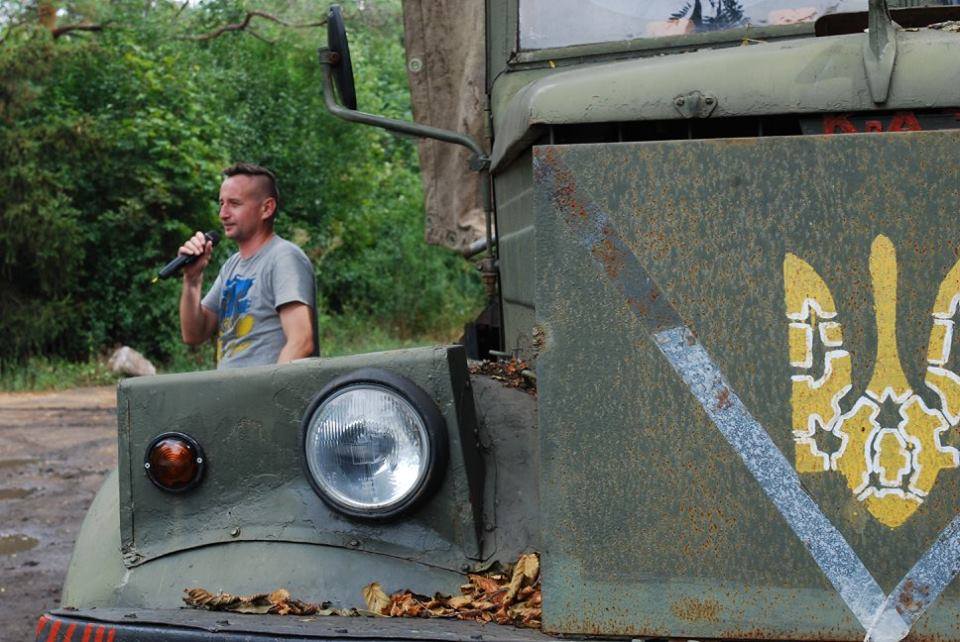
- Of course, he affected. Starting from some situations, scenes from real life and ending with some kind of general atmosphere that I wanted to convey. I don’t know how much this succeeded, but some things are taken from real life, I tried to install them on the text.
- Maybe you will give at least one example?
“For example, there is an episode there when the characters move along the street and the“ hail ”begins to shoot above them, that is, it does not fly in their direction, but flies out of them. This is what we encountered on one of the trips, suddenly rockets began to burst over us. On the one hand, this is somewhat unexpected, on the other hand, you understand that the worst can begin a few minutes later, when it starts to fly back. You understand that you unconsciously become a target, you suddenly begin to behave completely differently, because it is clear that you need to do something.
“Thousands of writers wrote about the war, including novels.” Is there any Ukrainian tradition of a military novel, perhaps not even about the Second World War, but about the First World War? Did you write with an eye on this tradition or is it more interesting for you to compare and compare your text with the best Western novels about the war?
“Featurely, you always keep in your memory what you read.” In the Ukrainian literature of the 20-30s, it seems to me that a very interesting layer is just dedicated to the war. That is, this is not even the first world-it is rather the civil war of the 1918-20s. The same Mykola Khviveeva, other writers of his generation, there are really very important, very deep things. Khvillevoy, starting with his early prose, is very fresh and very interesting. That is, how can one talk about military texts "interesting"? This is deep, it is original. For me, this is part of my reader experience, because I grew up in this literature.
“You wrote a novel, of course, in the Ukrainian language, meanwhile, in this war, soldiers participate on the side of Ukraine, who speak Russian among themselves, and sometimes with the enemy. How did you solve this language problem?
“I did such a thing, I do not know how convincing it is how acceptable it will be for some readers.” My characters in reality mainly speak Russian, although not always. Again, the war changed the situation somewhat, because there were characters who speak Ukrainian, or who switch to Ukrainian, or who switch to Russian from Ukrainian. Ukrainian is now there, too, in this war, it is also present. But my characters say more in Russian, I understand it. Again, this is such an eternal problem of Ukrainian prose, how to convey it all. I made in this novel very simply: I constantly emphasize what language the characters speak in. In the original novel, this is all transmitted in Ukrainian, but there are constantly such remarks: in this case they speak Russian, here on Surzhik, here they speak Russian with a Moscow accent, here they speak Russian, but it is clear that they are local, through the Ukrainian word. That is, this translite comes out. It is clear that the same thing will be when translation into German, into French or into English, that is, the reader will read in his own language, but will understand that in reality the heroes speak different languages. There is still such a moment, for which it is all to me and where is it all, my main character, he is not a military man, he is civilian, he has a very unusual profession - he is a teacher of the Ukrainian language. That is, he lives in the Donbass town, he is local, he was born and raised there, graduated from the pedagogical, and he teaches such an object - the Ukrainian language. That is, for him, Ukrainian is not a stranger, but on the other hand, he still speaks in Russian, and speaks Ukrainian with students. Almost his linguistic breakdown is imposed on the torn ideological, political and generally existential. Because his house is on the front line, he leaves his house in the morning, on the one hand he has a Ukrainian army, on the other hand, separatists, on the one hand he has a Ukrainian language, on the other hand, he is trying to find himself between all this. He does not have a clear position.
—The writers have their own periodic table, like the one that in schools in Russia is called the Mendeleev table. What other novel or book do you see yours next to? Maybe this is Erich Maria Remark or the English writer Robert Graves, or poets of the First World War and World War II?
—No, not remark and not Hemingway. This is not front -line, not trench prose. It still seems to me that if you yourself have not fought, then you need to write on behalf of the people who are fighting, you need to be very careful. Because there is a very great temptation to say things that you yourself do not feel, did not feel. That's why I have civil characters. And what can this be compared with? I have not come up with now yet. I will think, probably, by the time the book is released, I will already be ready for some template answers.
“I think critics will find templates very quickly.”
–Awn, yes. Because in fact, it is clear that Homer wrote about the war at one time, and we only write variations.
“The book is a publishing project of the poetic festival“ Meridian Czernowitz ”. Why did the book come out in Chernivtsi?
“Because I am comfortable to publish in Chernivtsi, that is, this is a technical question rather than ideological.” Although ideological, too, because friends are always nice to publish. I think there is no strategies here, everything is just situationally here, the book is published where it is nice and convenient to be published to the author.
“Snow snow on the roof, clumsy trees in the distance, the sky was shaking from above. Pasha glances up and down and suddenly notices them-hundreds of warm birds, compressed like fists, hundreds of bird beaks, aimed at him from above, hundreds of eyes, round, frozen with constant fear. Pigeons are clinging to each other, sit tightly above the columns, under the station canopy, squeeze each other as if they are cold, even though they are not cold, they are scared: they are afraid of noise behind the plant, they are afraid of the silence of the adjacent streets, they are afraid of mercury heavenly shirts, and they are afraid that there are nobody around. ”
Excerpts from the novel were translated into Russian Elena Marinicheva
Further in the program:
"Our contemporaries."
They say residents of the village of Ozhmovo, Kirov region.
"Radioantology of modern Russian poetry."
Evgeny Rhine verses:
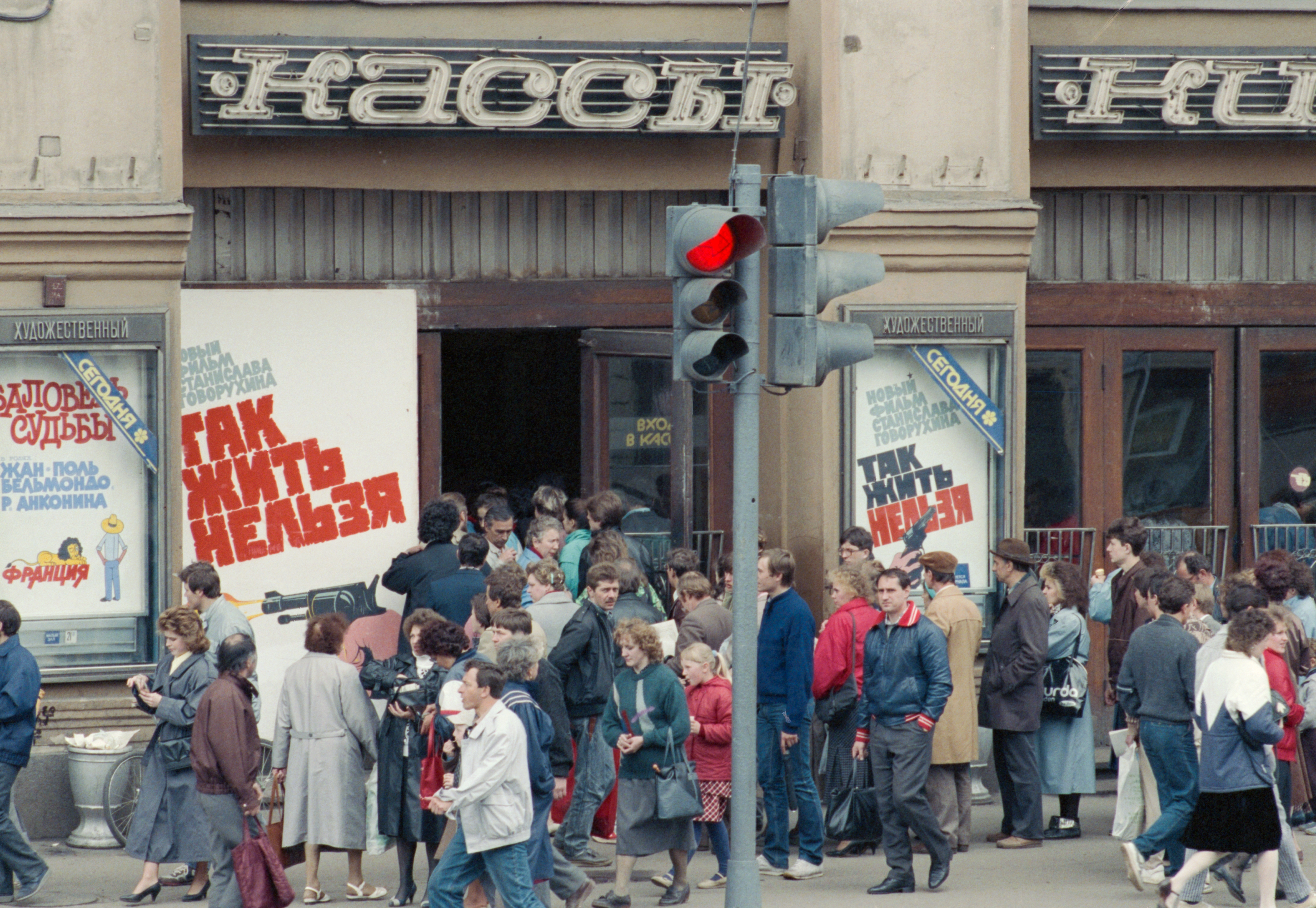
The last time
How life is blocked, I understand,
when it was already going down to the valley,
And, as if during the repair of the capital,
Suddenly plywood shutters fell,
And the initial plan opened,
By which they built an apartment.
And everything became so obvious ...
Jewish boy, an excellent student said,
gathered
And the cavalier of a silver medal,
capable, clever, favorite of the dean,
already opening the puff of careers,
already drank a muddy port
Khrushchev thaw,
Light writer
and nervous young poems,
where jazz blood vests flushed
on the Leningrad dead water
where western narrow stickers
They were seized to the Shevot Soviet,
but not at all with poems, but stitches
Harsh loose prose life was fastened.
Such a boy pulled out once
from the wheel of a cloudy fortune
Special lot. This lot was
Infronted on the Leningrad Board form:
"Red cavalry St. ...", and then only the numbers.
He found the door, and everything changed.
. . . . . . . . . . . . . . . . . . . . . . . . . . . . . . . . .
How scary to approach the Russian muse
tall, in -wrapped after three
heart attacks, the one that dictated and "God",
And the "Prophet", "Nedonoska", "Trilist in the Park."
She mutters under her breath
the most important poems,
She reaches out to you
a wilted but feminine hand.
And it’s hard to stole and omnipotally.
She offers you a chair and a cup
Brick, unpretentious tea.
Here is a sugar tower, poor Rafida,
So sweeten the first poison
And take a sip - now already
She will never regret you.
"My favorite records" with the altist Tatyana Solomadina (Kharkov ) .