
Translated material
FSB without fools
How Lubyanka intervened in the case of the director Serebrennikov and who inspired counterintelligence
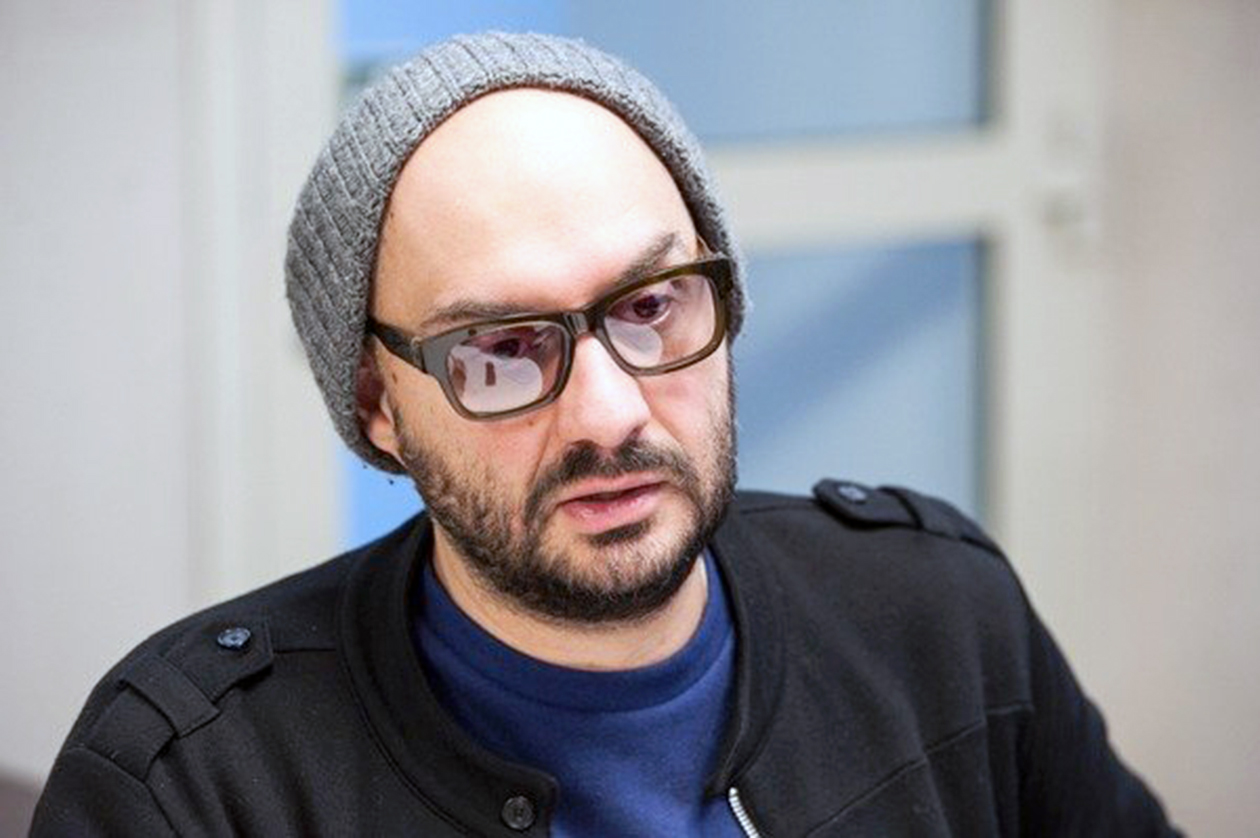
Photo: vladtime.ru
In Lubyanka, they again became interested in the masters of culture-the August news about the participation of the 2nd Service of the FSB in the Gogol Center was perceived as a sensation. In fact, Kirill Serebrennikov, the defenders of the constitutional system took up many months ago, and this was not an accident. In the process, the interests of several departments came together against the disgraced director: the FSB established itself as the main special service to investigate resonant cases, regardless of the composition of the crime, Alexander Bastrykin again enlisted the support of the Lubyanka, and the conservative church circles demonstrated their growing influence, political and power.
Answer to the president
Vladimir Putin twice publicly criticized law enforcement agencies in connection with the case of Kirill Serebrennikov. In late May, shortly after the searches in the Gogol Center, the president, answering the question of actor Evgeny Mironov, called the organizers or participants of this action “fools” , and in mid-June noticed “that there is no need to come to the theater, in accounting with power support; It’s just ridiculous. ” Surveys close to the government, after that, said that the country's leadership decided to abandon the criminal prosecution of Serebrennikov .
By the way, in November 2011, it was Putin, at that time the prime minister, signed a government decree on the creation of the Serebrennikov project “Platform”, which suggested “Implementation of a complex of shares at the junction of four directions of modern art-theater, music, dance and visual art (media art), as well as the formation of a permanent platform for the work of young creative figures, educational projects in the field of contemporary art .”
Employees of the Investigative Committee (IC of the Russian Federation) spent three months to dissuade Putin and prove their case, two interlocutors of NT, familiar with the course of the case. By July, materials on the Seventh Studio were taken from the Moscow department of the department and transferred to the Main Directorate for the investigation of especially important cases of the UK, and the investigation was entrusted to the deputy chairman of the committee Igor Krasnov, who was known for revealing the case of the combat organization of Russian nationalists (Born) and found the killers of Boris Nemtsov.
Vladimir Putin twice publicly criticized law enforcement agencies in connection with the case of Kirill Serebrennikov
After Putin criticized law enforcement agencies, all his forces were abandoned to search for evidence of the director’s guilt, the interlocutors of NT say. According to one of them, all witnesses at interrogations were found out mainly what role Serebrennikov could play in the alleged crime. The result was one of the key evidence in the case - the testimony of the chief accountant of the Seventh Studio Nina Maslyaeva, which states that the studio was created for the “realization of criminal intent” and cashing out funds. Allegedly, for this, the accountant was invited to work by the director of the studio Yuri Itin. As a result, Maslyaeva said that she participated in cashing about 100 million rubles. That is - almost half of all the receipts of the Serebrennikov team from the state. The materials of the Ministry of Finance stated that the Seventh Studio received 210 million rubles from the budget - 70 million rubles each from 2012 to 2014.
Close to the intelligentsia
This service is "closer to the topic of the intelligentsia." In such a peculiar way, the former FSB press secretary Alexander Mikhailov explained the message that the Serebrennikov case was engaged in the Service for the Protection of the Constitutional system and the fight against FSB terrorism. The general knows what he is talking about: this service acquired his name back in perestroika, in 1990 - the Office for the Protection of the Constitutional Original or simply “Z”. But in history, ideological counterintelligence entered as the fifth department of the KGB of the USSR .
The service is divided into two units: one fights with the Islamists and, for example, participates in the investigation of the case of the explosion in the metro station of St. Petersburg; The second - looks after informal movements, including nationalists and anti -fascists. In addition, service operatives work as seconded employees in the Ministry of Culture.
In fact, this service was at the source of the Serebrennikov case. Contrary to the statements of the media that she was connected to the case only at the end of August, back in May FSB operatives conducted searches at the Gogol Center and the director at home. It was the employees from Lubyanka who delivered him from St. Petersburg to Moscow.
According to the interlocutor NT, close to the investigation group, law enforcement agencies thoroughly prepared for searches and subsequent courts, during which at the end of May, the restriction measures were chosen: in the hands of the operatives, by that time, all the necessary documentation was already. The interlocutor believes that the FSB required at least a few months of work for this. When exactly the preparation began, the source found it difficult to say.
This case could not do without the FSB: any investigation is the result of the joint work of operatives who are engaged in surveillance, listening, etc., and investigators. The Ministry of Internal Affairs and the FSB can engage in operational support by law, but in this case, it was Lubyanka who has shown the initiative, who has been striving to participate in all high -profile affairs for the past few years.
Not only Putin, but also his former colleagues in the KGB-FSB considered his spiritual pastor of Father Tikhon.
Spiritual shepherd FSB
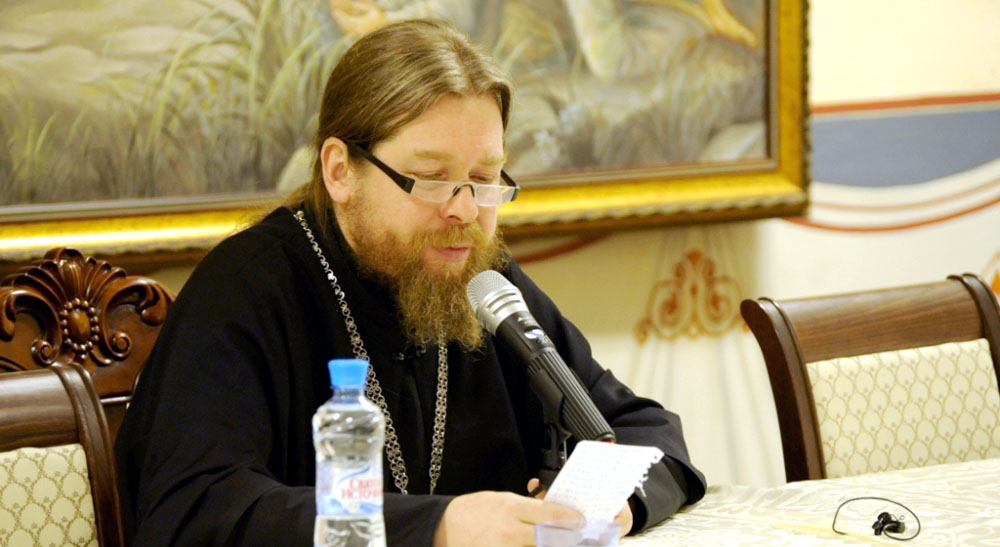
Archimandrite, rector of the Sretensky Monastery Tikhon (Shevkunov), whom The Financial Times, called “Putin’s confessor” , could be affected by the active participation of specialists from the Lubyanka in the Lubyanka. His role in the persecution of the director is indicated by the interlocutors close to the FSB and the familiar of the most disgraced director.
Not only Putin, but also his former KGB-FSB colleagues, consider his spiritual pastor of Father Tikhon. According to the interlocutor NT from the FSB, the leaders of the special services who consult with the archimandrite go to the monastery, located near Lubyanskaya Square. Tikhon himself, in a conversation with FT, admitted that back in the late 1990s, Putin came to his monastery, who at that time was the director of the special services: they discussed both spiritual and economic issues.
Archimandrite did not hide that he was dissatisfied with Serebrennikov, that he was extremely upset by the director’s position. Two years ago, the FSB shepherd said: “They directly demand from us and not to stick out their nose because of their church fences. “It is necessary once and for all to these obscurantists to explain that they do not climb into foreign territories,” says director Cyril Serebrennikov. How are they going to explain this to us? Maybe this: “We must now give the most decisive and merciless battle to the Black -Helpen clergy and suppress his resistance with such cruelty that they do not forget this for several decades” (V.I. Lenin. A letter in the Politburo of March 19, 1922). I don’t want to focus, but it looks like sadness. ”
The interlocutor from the FSB notes that the director’s discontent was preserved, and the film “Student”, dedicated to religious fanaticism, was one of the main stimuli for Tikhon and his like -minded people.
Archimandrite Tikhon (Shevkunov). Photo: hram-troichi.prihod.ru
Bastrykin rehabilitation
Deputy Bastrykin, General Krasnov, says the interlocutor of RBC in the Investigative Committee, is able to interact well with representatives of counterintelligence. The establishment of relations with Lubyanka, according to two NT sources close to the leadership of the FSB, became the key to the fact that Alexander Bastrykin retained the chair of the chairman of the RF IC of the RF SK. In the fall of 2016, RBC sources predicted that by the end of the year he would leave this position, including because of the criminal case that was instituted against high-ranking employees of the UK, the head of the Office of Interdepartmental Interaction and Own Safety, Mikhail Maksimenko (considered by Bastrykin’s right hand), his deputy Alexander Lamonov and the deputy head of the Main Investigation Department in Moscow Denis Nikandrov. They were suspected of cooperation with people of criminal authority Zakharia Kalashov, nicknamed Shakro young.
In the case of generals of the Investigative Committee of the Russian Federation, the FSB was engaged in everything - both the investigation and operational support. By the time, when they took up the encirclement of Bastrykin in Lubyanka, the FSB already seized the initiative from the Investigative Committee in the investigation of the most resonant matters. For the FSB, participation in high -profile processes (including the criminal prosecution of Serebrennikov) is a question of reputation. Last summer, significant personnel changes occurred in Lubyanka: the economic security service (SEB), one of the key divisions of the FSB, was headed by General Sergei Korolev, who had previously led the Office of his own security. The permutations took place due to the fact that several service officers were involved in the case of smuggling in the north-west direction. In one of these cases, an influential businessman Dmitry Mikhalchenko is held.
Bastrykin’s resignation did not take place largely due to the fact that he agreed with the new, key role of Lubyanka in the most high -profile criminal processes and was able to find a common language with the FSB
As a result, the FSB cleared its own ranks and only strengthened its positions, say two NT interlocutors close to the leadership of the special services. And they would not like to lose these positions on Lubyanka. “A couple of years ago, the FSB sought to create the impression that special services employees are literally everywhere and can do anything,” says the lawyer who represented the interests of the accused in the criminal case conducted by the FSB.
Bastrykin’s resignation did not take place largely due to the fact that he agreed with the new, key role of Lubyanka in the most high -profile criminal processes, was able to find a common language with the FSB and establish cooperation, one of the sources of NT notes. As a result, two departments brought to court criminal cases against ex-governor of the Kirov region Nikita Belykh and former Minister of Economic Development Alexei Ulyukaev, together investigated the terrorist attack in St. Petersburg, and also reported on the arrests of several high-ranking investigators, including the head of the department of the RF IC for the Kemerovo region.
Thus, the matter of the principle for both law enforcement agencies was asserted to assert himself in the process of a disloyal director, the interlocutor, close to the FSB, notes. To leave Serebrennikov at large (regardless of who asked for him) meant to stay in fools - neither Bastrykin’s subordinates nor Bortnikov’s colonels were in such a status.
See also: "Nikita Petrov:" All means of moral terror were used "