
Translated material
Butterfly for which there was no toad
What does the Nationalization of the Bank “Opening” mean, why it was not a bank, what is this story similar to Kit Finance and who eventually ended up in a bite
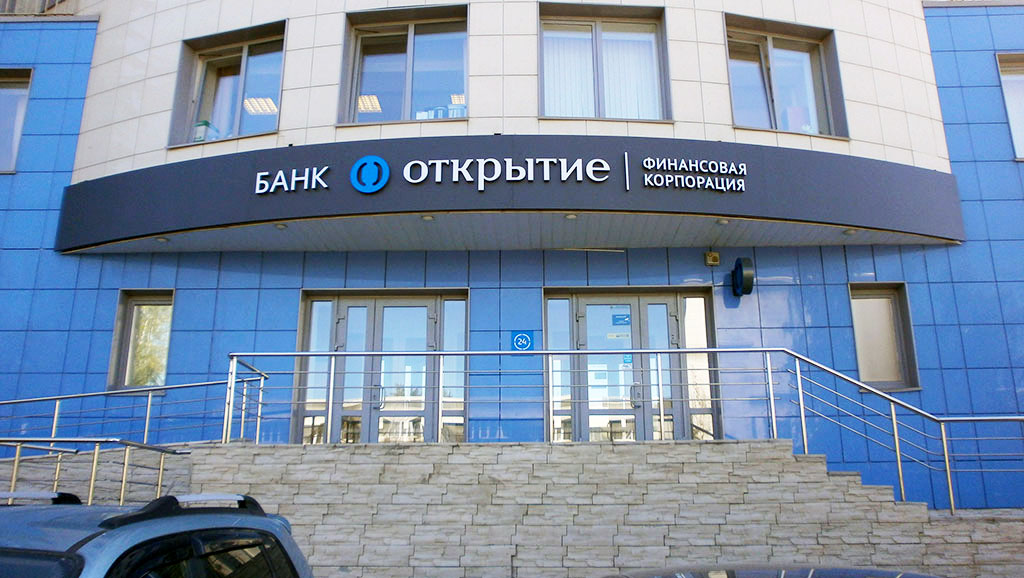
Photo: en.wikimediaorg.org
Good news for the Opening investors - they are now customers of the bank that will not burst before the current management of the Central Bank is replaced. The bad news for everyone else - by nationalizing the “discovery”, the head of the Central Bank Elvira Nabiullina admitted: to stop the state -owning of the financial system in Russia is not in her power.
How it was
On August 29, after the next many hours of meeting at the Bank of Russia and countless telephone calls throughout Moscow and the surroundings (from California to Spain), the non -governmental financial group “Otkritie” ceased to be private not only on the merits, but also formally. A temporary administration, the Central Bank, which has already announced the softening of supervisory requirements for the bank, will be introduced into its head bank “Financial Corporation Opening, will become its chief shareholder through LLC“ UK FKBS ”, and 25% of its capital will remain behind private owners.
Contrary to the tradition, the Central Bank’s message on August 29 about what is happening was not called the traditional official heading “On the appointment of a temporary administration ...”, but optimistic “On measures to increase the financial stability of PJSC“ FC Opening ”Bank. The Central Bank repeatedly and persistently emphasized that with all the financial companies of the group, from Rosgosstrakh to Rocketbank, nothing will happen at all and they work exactly as usual and will work for sure - citizens, do not pay attention, repair work is ongoing. Later, the first deputy chairman of the Central Bank Dmitry Tulin began commenting on what is happening, who, in general, did not hide that the “discovery” is not that a happy find for a banking regulator, but definitely a problem, but the problem solved. At the same time, the Otkritie Director Director Alexander Dmitriev said: the group’s shareholders themselves turned to the Central Bank with their problems, the dialogue was successful, and the fact that the bank, which is not closing and going to develop further, will now belong to the state in the person of the Central Bank - well, everything happens.
In the end, citizens, what are you worried about? After all, the bank, owned by the Central Bank, is already more stable than the bank, the Central Bank not belonging!
Of course, the mention of LLC “UK FKBS” is slightly spoiled a little. The full name of this management company, owned by the Central Bank and completely deciphering as the “Consolidation of the Consolidation of the Banking Sector”, actually sounds quite menacingly. The team of the banking sector through the recall of licenses for unreliable banks has been engaged in the Elvira Nabiullina team for five years. However, “consolidation” has always been meant another process. Large stable banks under the supervision of the Central Bank absorb smaller and unstable ones, sometimes the sanitation mechanisms of the Central Bank, sometimes the insurance system of the DIA, but all this need only one. Namely, so that the Bank of Russia does not act as a lender of the last instance. We have already forgotten that in the modern banking system with a partial reservation of the Central Bank is needed for this: if any bank is faced with a quick outflow of depositors, then the regulator helps him to survive the “raid” with its obligations, in our case, by rubles.
In essence, the Central Bank in the case of the “opening” for the first time in recent years is forced to play this role, and it is inconvenient for him to do this publicly. So, the size of the last prosecutor's loan, which is represented by the “discovery” of the Central Bank, is not disclosed. It, apparently, amounts to hundreds of billions of rubles-the total outflow of explorers and legal entities from the “discovery” for July-August 2017 exceeded 0.5 trillion rubles, despite the fact that the bank’s assets were about 2 trillion rubles, and how much it would be in a week-God the news. But if the concept has changed, and “consolidation” is now meant “nationalization under the wing of the Central Bank”, then perhaps it is time to declare mourning for a private Russian banking?
If the “discovery” was a bank in the Russian understanding of this phenomenon, then we would have done so. But the “discovery”, in our understanding, is anything, but not a bank. Most of all, the term "project" is suitable for the group. And this project is now either destroyed, or moved into a new quality, about which its creators did not think.
“Discovery” is anything, but not a bank. Most of all, the term "project" is suitable for the group. And this project is now either destroyed or moved into a new quality
Happy story of one “discovery”
It makes sense to tell the history of “discovery” in two ways, both of which are essentially true. The first story is about how the financier and banker Vadim Belyaev, who in the 1990s engaged in investment in telecom assets, decided to enter the financial market in 2001 and create an integrated structure providing all types of financial services. Thus appeared the “VEO-opening”: the VEO deciphens as a “free economic society” (under the wing of the VEO Belyaev began a business with the company “VEO-Invest”). The “discovery” was a group of physicists and programmers who earned a brokerage, whose smart business was bought by the “VEO-Invest” for $ 1 million. For a long time Belyaev and his team did the same thing that was written in all management manuals: they mastered niches, developed areas of work, searched for clientele, consulted investment transactions. So far, finally, a banking license was not acquired in 2006 on occasion-she was the Moscow “Shield Bank”, the name (remember your English) laughed a lot in the market.
However, Belyaev, a person who is fond of cinema and generally beautiful stories, was able to convince his partners that his story would be beautiful. And she was essentially beautiful. The basic principles of the work of the “discovery” directly contradicted everything that was the unwritten rules of Russian banking. The “discovery” was initially a structure in which there is no controlling shareholder and even a shareholder who owns a block of shares. Belyaev, repeatedly called by the shareholders for the leadership of the “discovery” and regularly handed over the brothers to the board of employment, owns 17.9%in the group that control shareholder. The list of other, smaller shareholders, as of 2017, will decorate any meeting: this is the head of LUKOIL VAGIT Alekperov and his longtime partner Leonid Fedun, businessman Alexander Mamut, co -building of the engineering group Ist Alexander Nesis, financier Ruben Aganbeyan, former chief PRAR Aleksandei Karakhan, VTB Bank VTBB Bank And many more, who own the small stakes of “discoveries”.
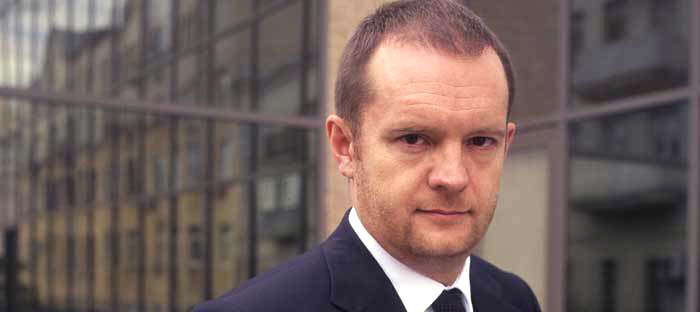
Vadim Belyaev. Photo: OpenHolding.ru
“Opening” often used a classic scheme for sharing shares in the absorption of business for its growth - this is how part of the shareholders appeared in it. However, since 2008, the group bought mostly slightly problematic, but quite stable banks. In 2010, it was the Petrovsky and Sverdlovsk Gubernsky bank, in 2011-the Nomos-Bank group, in 2013-Petro-Kommerz, in 2016 the absorption of Rosgosstrakh began. In 2012-2016, the group also absorbed non -state pension funds. It was not a classic organic growth of business, but it was a very rapid growth of the future federal financial supermarket. At a certain moment, the electronic Rocketbank for individuals and the Bank "Point" for small entrepreneurs were added to it. The absence of a single owner and the multidisciplity of the business allowed the “discovery” to declare that he prefers to work with new medium and small companies, and not with the state “cereal”, puts on the middle class, and not on the elite, credits the purchase of Bentley, but “Fords” and prefers to help children-autists, and not the Orthodox cadet corps.
In general, this project was brilliant in the eyes of an enlightened clientele. This was done by all stellar entrepreneurs. So scripts for Hollywood blockbusters are written and these blockbusters are sold.
But, of course, not only like that.
It was not a classic organic growth of business, but it was a very rapid growth of the future financial supermarket of a federal scale
Another story of the same “discoveries”
In general, strictly speaking, from the above from any classic banker from any international financial center 40 years ago, hair would stand on end. However, from the end of the 20th century, you will not surprise anyone. Back in 1987, money loved silence, solid interiors and quiet conversations behind closed doors. But after 1991, both in the USA and the UK, and in general in the world, we could more and more often observe a strange story. About half of the signs in a large financial center designated the presence in it of the old, with centuries-old history, financial and banking structures. Of course, they changed the logos to innovative ones, hired the best advertising agencies and arranged cool parties. But - closed. The second part of the signs was brighter, and they were always new. The new bank of this type has always been bright and aggressive. His logo was not only innovative, but also dynamic, advertising could draw (under the supervision of an ultramoded PR Bottout) poor children from Thailand or pink dolphins from Mekong, and the parties of such a bank were always very closed, but actually open to all those who wanted to get there.
After some, for a long time, the logos on the signs of the second -type bank changed to new, already hyperinnovative. No, nothing bad happened to the old bank: he happily poured at the peak of his aggressive strategy into a very large financial group of the first type. Everyone was satisfied. The shareholders of the Bolshoi Motylka received their hundreds of millions of dollars for 5–7 years in a multi -billion dollar transaction with the repayment of multi -billion dollar debts, the management of the “old toad” - the termination of the grumbling of its shareholders complaining that the centenary bank, they say, lose their positions in front of young and greyhounds. And everyone went about their business to new successes.
It is not known whether the shareholders of the “discovery” in their heads kept just such a picture, but outside the “discovery” looks like a Russian implementation of this particular scenario. Usually, all this is accompanied by a light mess in a continuously reorganizing business that are inconceivable for classical banking with quick quarries within the financial structure, an enthusiastic attitude of most of the unpretentious clientele and deaf hatred of a smaller, sophisticated part. Finally, the Big Moth script always assumes that the giant created at all pairs assumes greater risks than the old conservative bank can afford. The movement forward will write off everything, now it is important to win the stage: in an interview with recent years, Vadim Belyaev repeatedly and persistently repeated the word “jerk”, and it was symptomatic - “for a break” is not done a bank, but an escape.
Such attempts have already been made in Russia, mostly unsuccessful ones-“Kit Finance”, “Moibank” looked very similar to, and with the proclamation of the Central Bank “Banking System clearance”, such attempts were generally doomed to popularity: organic growth was not successful, so we will try to play the imperial march of mergers and acquisitions. What to do? We do not undertake to say that the “discovery” was created, like many businesses, for sale - but the fact that all this was more early than late should have ended is obvious.
Yes, there was always a chance that at a certain moment the number will develop into quality - and the largest co -owners of the “Big Motyl” will become values that have their own political ties and power, which will give them time to correct the flaws of fast construction and create from the details of a very large air balloon balloon. But no - we get money.
“Kit Finance” and “Moibank” looked very like, and with the proclamation of the Central Bank “Cleaning of the Banking System”, such attempts were generally doomed to popularity: organic growth was not successful, so we will try to play the imperial march of mergers and acquisitions
Why did not work
The versions that it was not the consortium of shareholders, led by Vadim Belyaev, can be put forward, but they all do not explain what is happening completely.
The simplest and most understandable version is Bank Run , a “banking raid”, from which not a single bank is safe in the current world with partial banking reservation. If the bank’s clientele decides to withdraw at least a quarter of deposits in the bank for some reason, this is almost always the problem of unsolvable. However, in the case of “raid” there is always a fair question - what happened before: chicken or egg? If a large client with money leaves you-this is because he suspected something was amiss, or because he saw that before that the bank left another same large client? But there are no small ones and there is no conversation: they always run to where everyone runs, and this is always reasonable behavior - they must save their money, not strangers.
However, for some reason, the most probable explanation for what is happening was not called. The “discovery” with all his image of the “democratic” bank with liberal values had its own history of relations with very large clients. In Russia, where the process of nationalization of the loan through state banks has been going on for many years, there were very few non -state money, and there was not enough one “LUKOIL” for “opening”, especially since VAGIT Alekperov and Leonid Fedun were completely not inclined to go crazy, putting too much growth in the “discovery”. So, in December 2014, the Assets of the Otkritie bank increased from 1.5 trillion rubles. Up to 2.7 trillion rubles: on the market, everyone was sure that this is a consequence of an not too advertised operation to provide the state through the Central Bank of the support of Rosneft, which just placed the multi -million -dollar ruble loan. Relations with Rosneft-we can assume that it lasted another year or two, until the fall of 2016, when Rosneft needed money at least for the purchase of Bashneft, in which much-from the resistance of the government to the Minister of Economy Alexei Ulyukaev-clearly went wrong.
Another, obviously emergency story, the acquisition of Rosgosstrakh, which has not yet been completely completed, has not been overlined on what is happening. The main problem of Rosgosstrakh and other insurance companies is that the CTP market has been formally unprofitable for two years due to a sharply increased number of cases of insurance compensation lost to insurers in the courts. The insurers themselves talk about these matters through their teeth and reluctantly - for their reasons, a certain “group of insurance fraudsters in the south of Russia” systematically corrupt courts that make obviously unlawful decisions: insurance mythology attributes to them the enrichment of OSAGO in 2015-2016 at least 150 billion rubles. If so, then the “roof” of the “scammers from the south” should, based on the scale of what is happening, be located on some extremely high floors of the FSB buildings, the Ministry of Internal Affairs or, judging by the profile, the judicial system. Moreover, it is unlikely in the south, rather - in Moscow.
So, Rosgosstrakh due to OSAGO in 2016 received a loss of more than 40 billion rubles.
Finally, the “discovery” was to ensure that the “discovery” was supposed to ensure what they call “pension reform” in Russia, more precisely, by freezing of pension savings in non -state pension funds (NPFs) since 2014. In the perimeter of the “discovery” there are two such funds-“Lukoil-Garant” and the NPF of the electric power industry, the first is the contribution of the Petro-Kommerz group, the second is apparently the heritage of those times when the “discovery” still made complex and opaque transactions with the now deceased RAO “UES of Russia” (which is why Belyaeva is often considered by an Anatoly Chubais-however, whose man is not for a person not Belyaev is considered, who is quite obvious primarily by a person of himself). The constant renewal of the moratorium on the transfer of 6% of the wage fund does not interfere with the NPF. But if the NPF money is used to solve current problems of other parts of the financial supermarket - the absence of their influx is very significant, this sharply reduces the resources for “jerks”.
When all this is Rosneft, Rosgosstrakh, NPFs, the southern bandits and the northern generals - coincides in a particular configuration, it becomes clear that the Central Bank should go to negotiations with the poster of “Tooobigtofall” (“too big bank to let it crash”).
In December 2014, the Assets of the Otkritie Bank grew with 1.5 trillion rubles. Up to 2.7 trillion rubles: on the market, everyone was sure that this is a consequence of an not too advertised operation to provide the state through the Central Bank of Rosneft's Central Bank
Battles of correspondence
From a purely technical point of view, the nationalization of the “discovery” has become one of the options for the development of events since April 2017. It was then that the Russian credit rating agency Akra, assessing the prospects of “discovery” after the acquisition of Rosgosstrakh, reduced the group ratings to a level at which state structures formally cannot keep deposits in such a banking organization. You can engage in any kind of speculation on these topics (for example, the head of ARKRA Ekaterina Trofimova previously worked in Gazprombank, which theoretically could be interested in reducing the activity of the “opening” in the market), but for the business the Acre itself, the accepted rating action itself was long -term very important and significant. Akra, created as part of the “import substitution” of Western rating agencies, is not able to behave anyway “flexibly” in assessments of the quality of the borrower: the “opening” bonds of almost $ 2 billion are applied on the market, and problems with these papers would become a problem not only of their holders, but also by Acre. Trofimova’s agency would simply stop believing.
Everything that happened after that is essentially the best possible options. Belyaev and partners, making sure that in the conditions of successful resistance of the Russian economy to sanctions, counter -sanctions, “legal sector”* and other intrigues of NATO, it is impossible to find a reliable financial partner, they came to the Central Bank and handed over cards to the table. To collapse the “discovery”, at that time, the fifth largest (now eighth) financial group of Russia is clearly dangerous, if not a jurisdiction. Banks do not exist in the airless space, and the fact that the “discovery” supported the level of equity by agreement with other large private banks (“Moscow Credit”, banks of the Bin group, “Promsvyazbank”) mutual purchases of bonds - not a crime, but the natural property of the Russian market: it is a non -hub, this possibility is legal, and the Central Bank is not persecuted. The fall in the “discovery” could well cause a systemic crisis - and the fact that the Central Bank agreed to replace the missing strategic investor of the “discovery” for free.
But what will now be done with this, the Central Bank will do is strongly unknown: it is unlikely that Elvira Nabiullina likes everything that happens.
To collapse the “discovery”, at that time, the fifth largest (now eighth) financial group of Russia is clearly dangerous, if not a jurisdiction
Long road to Karakas
The decision on the nationalization of the “discovery” is wider than the purchase of the Central Bank 75% of capital in a particular bank. For the first time, the Bank of Russia is owned by a large and wide -profile financial holding, which, in fact, must be managed on an ongoing basis. Sberbank, the control package of which belongs to the Central Bank, is still enough autonomous - with all its incredible sizes, the group is a separate value, which is quite able to be operationally independent of the main shareholder. “Opening” is a fundamentally different matter: the subordinates of Elvira Nabiullina will have to not only sanitize the group in rather convenient circumstances (Belyaev’s consortium will not get anything if he prevents the Central Bank’s actions or try to take out what it belongs to it for at least six months, but also decide what, in fact, do it later.
What is happening is very symbolic. For all the effectiveness of the work of the Elvira Nabiullina team, the only system problem of the Bank of Russia policy is still that its successful activity in financial stabilization and liquidation of banks, the creation of which was a long theft of depositors, laundering money and other joys of life, did not interfere, and rather even contributed to the state of banking of a bank loan. The share of private capital in the banking market of the Russian Federation did not fall too much, but the share of large state banks in lending has been growing in recent years: the nationalization of the economy through the nationalization of the loan has become a reality.
However, it would be naive to assume that this is only Elvira Nabiullina. And the fullness. Is this a problem? In the Russian state, many will say that this is the only possible way and this is also a bright path. Just completely different. There are socialist economies in the world? So what, what were they once market? Everything changes.
And Russia's path to Venezuela of the 2017 model has become one more step shorter.
* "Right Sector" - an organization banned in Russia as extremist.