
Translated material
Who and why created the main St. Petersburg site about Citywalls architecture
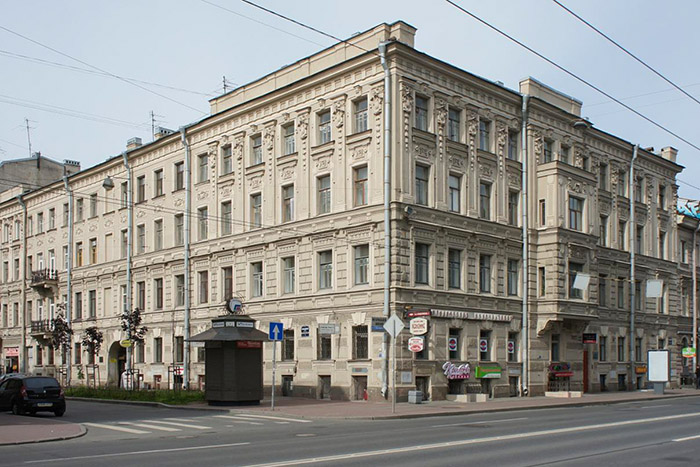
The site about the architecture of St. Petersburg Citywalls, in the filling of which historians and ordinary citizens participate, has been working for more than ten years. Every month, about 100 thousand people read it, and when at the end of July the site became unavailable for several days, Petersburgers panicked.
Who and why created a site about city houses and streets, from where the editors take information, how it is checked and why they work at night - in the material "Paper" .
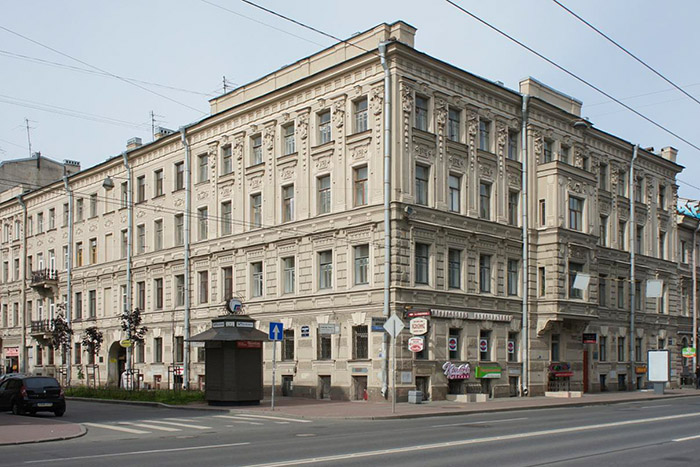
Why did two programmers create a site about Petersburg architecture
Marina Mikhailova - one of the creators of the site Citywalls - lived all her life in St. Petersburg. In the late 70s, she graduated from the Mathematical and Mechanical Department of the University of Leningrad, worked as a programmer, and in the early 2000s she professionally took up photography.
In parallel, Marina began to be interested in the architecture of the city: she photographed at home, studied their story. Seriously carried away by this topic, Marina, together with the former programmist colleague Oleg Kuznetsov, the second creator of Citywalls, decided to open a site where you could find information about every St. Petersburg house.
“The idea was global,” says Marina. - We wanted not only to cover the history of construction, but also to tell who lived in this house, what was happening there and what is happening now. At the same time, the task was to group information on a certain principle, to tie everything to the addresses so that it is convenient to find.
The site Marina and Oleg made it completely themselves. Oleg took up the development, Marina created a design and began to fill Citywalls with information. “We made the site in my free time from the main work, I was engaged in it at night,” recalls Mikhailova. In February 2007, Citywalls launched.
What do the site editors do and where they get information from
Citywalls is filled with administrators, site editors, as well as registered users. There are more than 10 thousand such people. Each of them can open topics on the site forum, participate in discussions.
Those who are actively involved in the life of the site receive expanded rights: they can create publications themselves, edit them. There are about 30 such people. Most from St. Petersburg, but some live in other countries. All of them met thanks to Citywalls, but the administrators do not know many.
According to Marina, readers daily send them many photographs and stories, but all publications are preoccupied. This is mainly done by Marina herself and the lead editor of the site Natalya Kidoni.
“There are such houses that no one knows about at all, and only tenants can say: it was built in such a year such an architect,” says Marina. - We put nothing without verification. We use archival sources, address books, guidebooks. If the information cannot be verified, then we give it with reference to the residents.
Citywalls has no work schedules. “It all depends on employment,” says Marina. “When a wave of enthusiasm surfaces, I can wake up at five in the morning and sit until three in the morning.” All editors are engaged in the site in their free time and do not receive any rewards for this. The site has an advertisement of Yandex.Direct, but this, according to Marina, brings little money. Mikhailova emphasizes that the site is non -profit.
Over 10 years of work, almost 26 thousand publications and hundreds of thousands of photographs were gained on the site. There you can find information about 2300 streets listed in alphabetical order. The site has a search by architects, styles and historical periods.
More than 100 thousand people come to the page per month. In 2012, Citywalls awarded the Antsiferovsky Prize diploma-rewards in the field of local history-in the nomination "For the best Internet resource on the history of St. Petersburg."
“We wanted to attract as many people as possible that could tell something,” says Marina. - People who used to live in the house remember what apartments were there and what was happening there. We walk a lot around the city, take pictures. Locals, especially the elderly, are interested in: what are you going, what are you doing here. Upon learning that we are engaged in the site, they begin to tell.
Why the site did not work for more than a week and what are the administrators' plans
At the end of July 2017, users noticed that Citywalls was not available. Many were worried that the site, in which many local historians and historians participated, stopped working. It turned out to be problematic to get in touch with Citywalls administrators.
According to Marina Mikhailova, the site had problems with the server, and since the administrator was outside of St. Petersburg, it was not possible to fix it.
“There was a failure on the site, something had to be done manually,” says Marina. - And our admin by car drove to Sakhalin, and on the way back in the Khabarovsk area he had broken a car and a laptop. Therefore, I had to wait until he returned to Petersburg.
A week later, Citywalls restored the work. According to Marina, for so long the site was not available for the first time.
“I like that people know about our website and that it helps a lot,” says Marina. - A lot of letters come with thanks. People write: how great, we looked at our yard, as if in childhood we visited. Discussions are underway about the houses in the comments, some questions are finally clarified.
Marina says that Citywalls plans to develop an online magazine with verses and stories about St. Petersburg. In addition, the site has not covered areas - mainly new buildings.
“At first we wrote just about what is interesting to us,” says Marina. - Then they attached Pavlovsk, Pushkin, Peterhof, then massive housing began, but few people like to write about new buildings. Slowly we try to make up for this.