
Translated material
White Suprematism
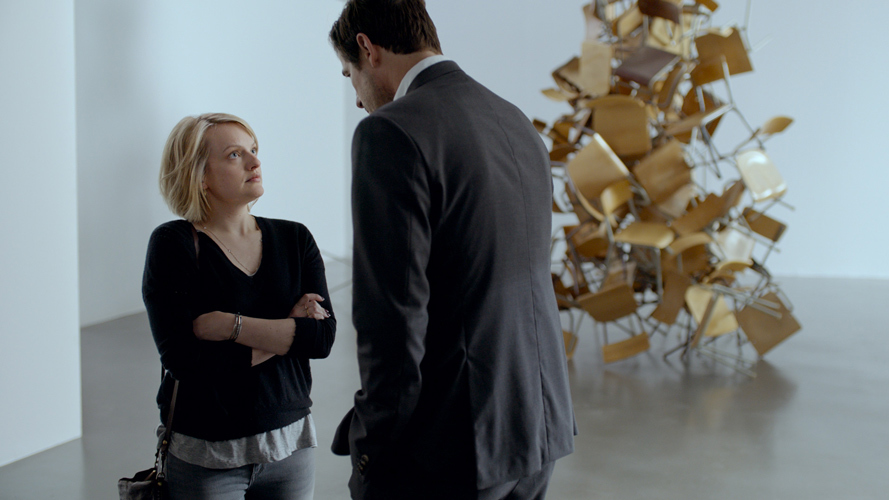
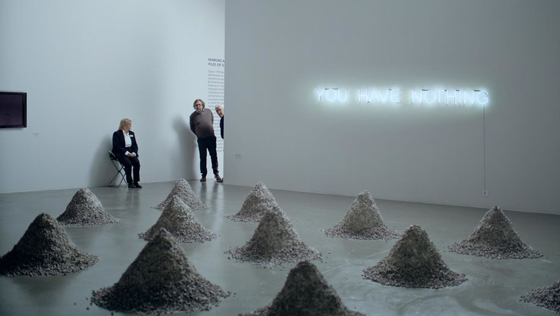
Christian, a toned Danish in a scarf and aesthetic glasses, works as the director of the new Museum of Contemporary Art in Stockholm. In the exposition there are piles of concrete, a staggering pyramid of chairs, a little party art and, most importantly, fresh installation “square”: a square meter outlined by neon, a zone of comfort, indifference and mutual assistance (as they quickly show in the very first frames, the rest of Stockholm reigns icy atomization: crowds of fenced in the stockholm. Gadgets of citizens are indifferent to any requests for help). Actually, Ruben Estlund’s film is dedicated to a detailed chronicle of several days before the opening of the “square”, during which Christian saves a girl on the street (but loses his mobile phone: the entire incident turns out to be a performance of pickpockets), negotiates with comic advertisers, gives an equally comic interview of the American art-journalist-and then ends up with her in the same bed (the evening ends with the struggle for used A condom), organizes a scandalous performance of a Russian artist before the Board of Trustees and returns a cell phone, scattering leaflets with threats to all apartments of a dangerous high -rise building, where, according to geolocation, its iPhone lies.
 © Plattform Produktion
However, these days, in fact, do not bring anything good to the hero: the sensational advertising campaign of the “square” on the Internet ends with a scandal, and the operation to return the phone - by the fact that Christiana begins to pursue a brisk black -haired boy. His parents seriously took the accusations printed in the leaflet and now they do not let him in for a walk; The child needs satispulation, everyone can offend the refugee.
 © Plattform Produktion
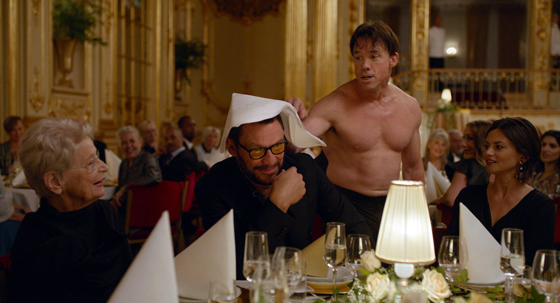
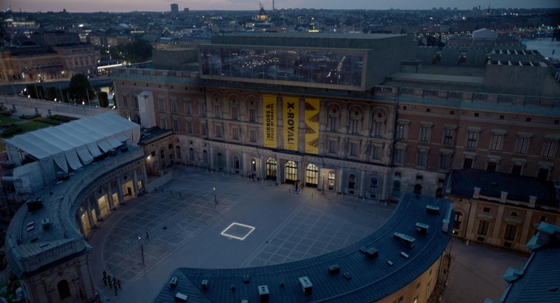
The witty and ruthless, the “square” in detail answers the very question that the children meeting them are addressed today by the visitors of the Moscow Muar (the Tino Segal project in the “Ruin” outbuilding), what is progress? Probably, it was the spatiness of the answer that brought Estlund Cannes with gold, for five years now as a nobel in cinematography turned into a sort of nobel. However, the medium here could be any-the journalistic virtues of the “square” are much superior to its imagery (the central metaphor of the film-Christian, lying on a heap of suddenly overgrown garbage from an inverted garbage-seems to be some kind of poorly digested quote from everywhere). Deprived of Estlund Sassens, which is common for films, exhausting the feelings of awkwardness and shame for characters, pumped up with a delicate work with a duration, the “square” turns out to be a dashing feuilleton, a fictionalist satire (including itself). The film form here strives for transparency, functional invisibility, as if with its emphasized realism, Estlund riot against the conceptual obscenity of the Council, which becomes in the film metonymy of post -industrial democracy. The Museum of the Ex-Royal, in which the main character works, is not by chance in the building of the former royal palace-in the “democratized” country, the place is not the demos and not its representatives, but as far from the people, the gang of “experts” in the bird (Estlund shows the empty halls of the anti-people's museum, whose rare visitors shy away from quiet horror Installations a la Anish Kapur or Ai Weiwei).
 © Plattform Produktion
At the same time, the assumption of the abolition of the monarchy in Sweden is perhaps the only hyperbole in the “square”. Each of the comic details, each of the homeric heroes of the film-Pat and Patashon from an advertising agency, their progressive boss, coming to meetings with a baby, art critics, living with enthusiastic drawing of Bonobo (also, in fact, a contemporary artist), Russian corporateist Oleg, obviously decommissioned from Kulik, an art lover with the Syndrome of Tutret, Aggressive journalists professing a resentment cult - all, in fact, are extremely realistic. In the end, even the most idiotic and vulgar art object, the same square that becomes the central point of narrative whirlpool is a very real art project of Estlund itself. The comicism of each of the scenes-scenes of the film arises as the effect of the overall synchronization of the world, in which the speed of cultural transformations is significantly ahead of the flexibility of the human psyche. The main theme of cinema Estlund has always been the psychology of a person in a group. Here, the concept of the group expanded to the scale of society and even more culture: the heroes of the “square”, individualists-single people, still live under the constant gaze of an imaginary other, public opinion, total political correctness. It is completely impossible here a good deed as a spontaneous, sincere gesture - every time Christian tries to be good, he is waiting for either embarrassment or trouble. The salvation of a stranger on the street turns into pocket stealing, buying food with a beggar - a clash with other people's whims (a gypsy requires only Chiabatta with chicken, and certainly without a bow), and a final attempt to apologize to an angry boy from a municipal high -rise building - inevitable frustration: the family has moved, and now Christian will have to live forever with feelings with feelings. guilt. The only time to the hero becomes good is the moment of reconciliation with the imperfection of his own emotions when he actually admits a seduced (or seducing him?) Journalist that objectifies her. However, it is no coincidence that this outrageous recognition occurs in the hall of the museum, in the autonomous territory of art, almost independent of culture.