
Translated material
Korean peninsula. What's happening?
The situation on the Korean peninsula as the DPRK moves in achieving goals in its nuclear program, it becomes more and more tense, the media write. In connection with what is happening, the United States has already proposed a draft resolution on additional sanctions against the DPRK for consideration by the UN Security Council.
Russia will study this document and make a decision - so the assistant to the President of the Russian Federation Yuri Ushakov answered the question of whether Moscow will question the effectiveness of sanctions against the DPRK to use the veto's right when voting on the project. “We will have to work on the draft resolution, and we'll see there,” TASS reports Ushakov’s information agency.
Andrei Lankov agreed to talk with Polit.ru on the situation on the Korean Peninsula, Koreudeda, publicist, candidate of historical sciences. In his opinion, we are now observing the usual workflow for Korea, which looks unusual only due to the fact that the style of reaction to the current US president differs from the style of its predecessors.
“The fact that Trump gave a fundamental consent to billion supply of Seoul weapons, in general, there is nothing new. South Korea is one of the largest buyers of American weapons, and no special permits for the supply of weapons are required - this is not Taiwan, where any supply causes a diplomatic scandal with China. America was selling weapons of South Korea in very large quantities.
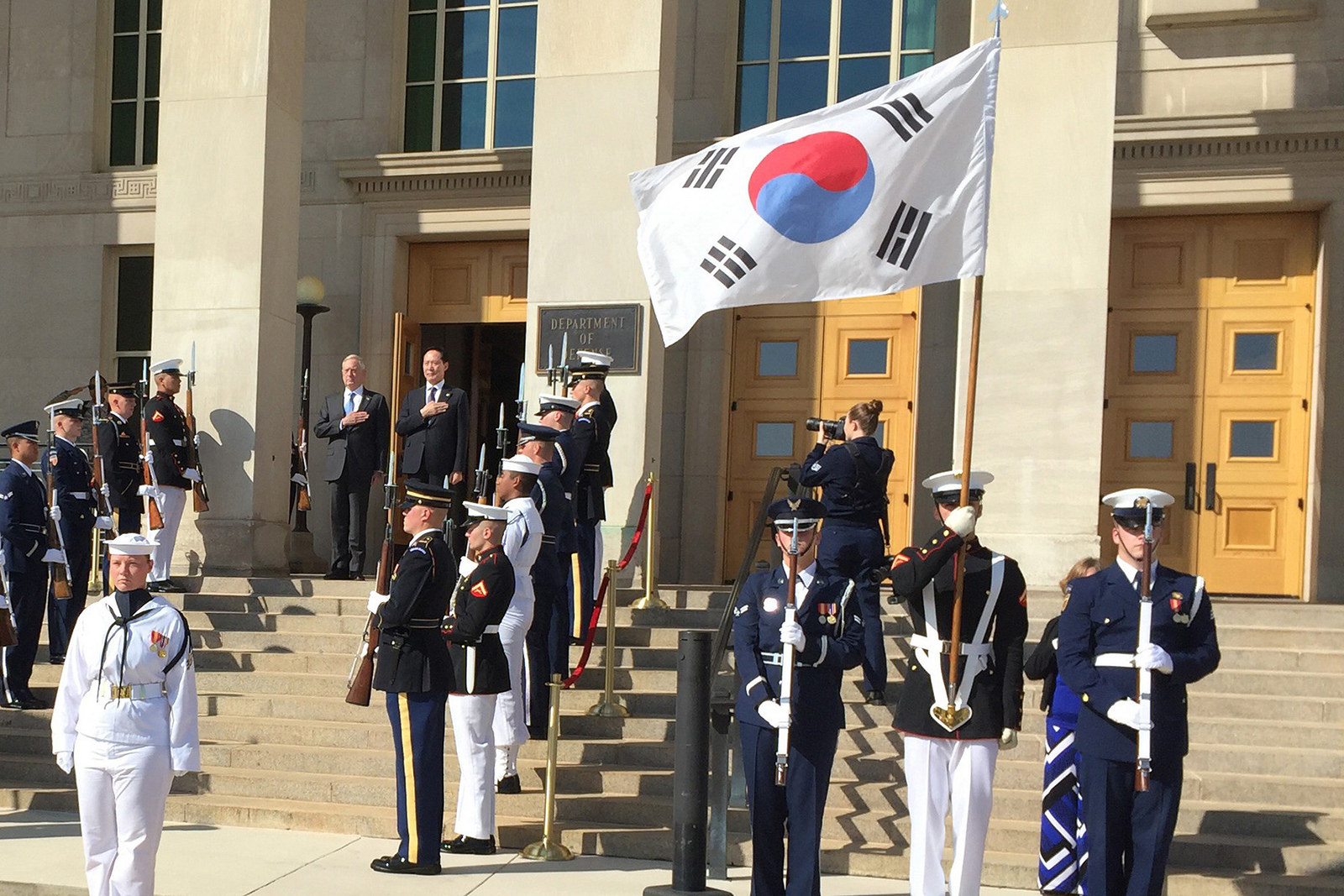 Meeting Ministers of Defense of the United States and South Korea in Washington August 30, 2017 Dod Photo by Jim Garamone
However, there are, indeed, serious news regarding the military balance on the Korean peninsula and around it - we are talking about revising the missile weapons agreement. The fact is that at one time, in the seventies, the Americans imposed a serious restriction on the right to develop their own missile weapons. Under this agreement, South Korea does not have the right to develop missiles with a range of more than 800 kilometers and with the weight of the combat part of more than 500 kilograms. This restriction, apparently, will be removed.
Returning to the main question: “What is happening?”, I can say only one thing: nothing special happens, to be honest. What is happening now is a regular work process that is common for Korea, which certain colors are given, except, unusual behavior of the American president. Usually conversations in the style of "Right now I will tear everyone to pieces, keep me seven!" - This is the North Korean "chip". And now we are faced with a situation where threats (and threats are mostly empty, not intended for execution, but, by and large), not only the North Korean, but also the American side erupts.
If we talk about some basic canvas of events, it is connected with the fact that Kim Jong-un from the moment he came to power in December 2011, he revised his father's nuclear policy. The deceased Kim Jong Il set himself limited tasks. He wanted to create a nuclear weapon, a certain number of nuclear charges and to limit himself, in general, a rather modest nuclear arsenal. Work on the supply of nuclear charges with whom Chen Ira was conducted, but it was carried out quite sluggish.
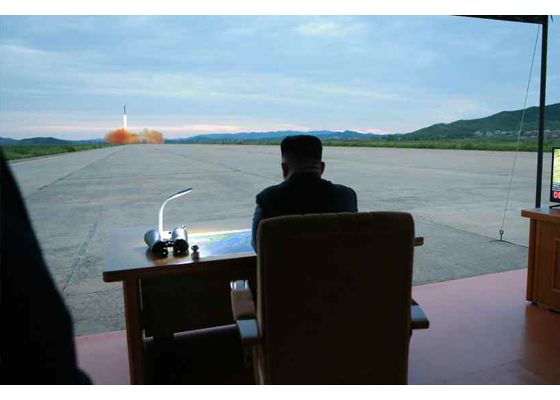 Kim Jong -un watches the launch of the Rodong Sinmun ballistic missile
Then, there was partly not enough money for serious work on intercontinental missiles, but the main thing, of course, was that then the North Korean government did not pay much attention to the development of delivery funds. That is, the position of Kim Jong Ira was that to ensure the safety of North Korea, it is quite enough that the DPRK has a certain number of nuclear charges and this circumstance is very well known to all those who potentially want to attack North Korea. Such a minimalist approach.
Kim Jong -un decided to move away from this approach. This is probably due to a noticeable improvement in the economic situation in the country that has been happening in recent years; But it is also possible that this largely reflects his personal addictions.
The policy of Kim Jong-un is that the DPRK should develop “nuclear deterrence forces” that could deliver a nuclear-nuclear blow to the United States. Moreover, we are talking about the continental territory of the United States. That is, not Alaska and not guam, but the continental territory-that is, New York, Washington, Chicago.
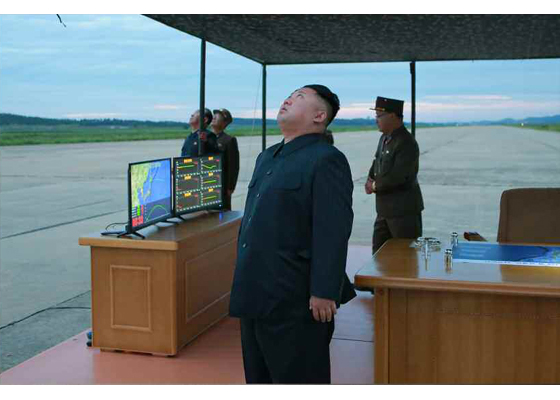 Kim Jong -un watches the flight of the Rodong Sinmun ballistic missile
To this end, Kim Jong-un forced work on intercontinental ballistic missiles-work that generally went sluggishly in the DPRK since the beginning of the 1990s-and at the same time began to make much greater efforts to develop nuclear weapons.
His efforts in this direction were crowned with success, and successful quite impressive: although most experts expected that in the foreseeable future North Korea would create a nuclear weapon suitable for installing on intercontinental ballistic missiles and these missiles themselves, almost no one suggested that this problem would be solved in such a short time. Only two or three years ago, the majority believed that the task of creating an intercontinental missile and a charge to it would be able to solve only by 2025. Now the North Korean missilers and nuclear people have reached the level that, as expected by the majority, they should have reached ten years later.
In the past two months, North Korea spent at least two successful, that is, the launch of a large -range missiles. Perhaps there were even three launches - there are some disagreements about the third. In any case, at least twice the launches of intercontinental ballistic missiles suitable for striking through the United States were absolutely regular. In the reach of these missiles there are cities such as Chicago and New York. Washington-somewhere on the verge of their probable range: maybe they get it, or maybe not.
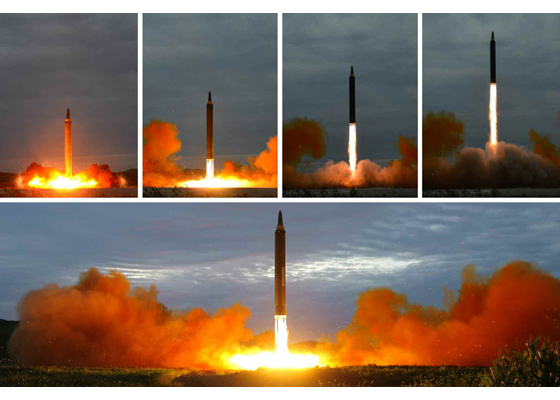 The launch of a strategic ballistic missile in North Korea. August 2017 Rodong Sinmun
At the same time, the North Koreans tested a new very powerful nuclear charge, which in its power is at least four to five, and possibly ten times higher than they experienced earlier. They stated that this charge is a thermonuclear, and even placed a photo of Kim Jong -un on the first page of Nodon Sinmun, examining this charge, allegedly suitable for installing a rocket in the warhead.
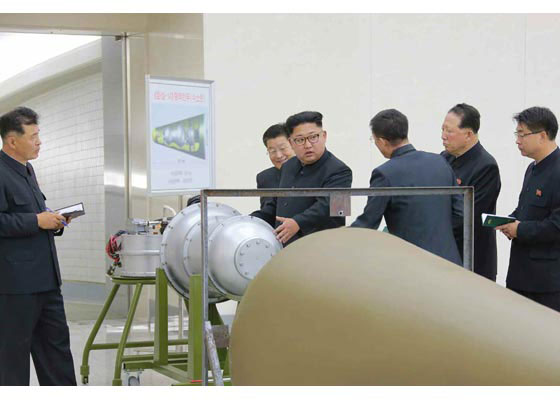 Kim Jong -un examines a new nuclear charge. Rodong Sinmun
As far as it is, and how true it is, it is impossible to say, but there is a high probability that the explosion was really thermonuclear. For North Korea, this is important, since the main problem of their missiles is a very low accuracy. They ate they will install large power charges on missiles, this will largely solve the problem caused by low accuracy. When you strike hundreds of kilotons with a charge, then, in general, it is not so important how accurately you hit the target.
All this happened in Trump's presidency. The North Koreans have long stated that this is all - that is, the creation of a nuclear and especially thermonuclear charge for missiles and the development of the missiles themselves - and there is their main goal. This was stated quite openly, and work on this program went as openly as openly at all, work on the military program of this importance could be carried out. Nevertheless, in early January, Trump, then just elected by the president, in one of his tweets stated that, they say, "the North Koreans assure that they would soon launch a rocket that could strike in the United States, but this will not happen." But here it happened.
North Korea turns into a third country of the world after China and Russia, capable of delivering a nuclear blow to the United States. It is clear that this circumstance in America does not cause any enthusiasm, especially if you take into account that the North Koreans have a reputation for “frostbitten” and unpredictable. This reputation is greatly exaggerated, but not quite unfounded. Therefore, the question arises, what to do next.
There are three options that, however, are either unreal or ineffective. The first option is to try to agree with the North Koreans, give them a lot of money and try to achieve their consent to hand over a nuclear program for money. This is unrealistic, and not least because the North Koreans saw perfectly well what happened to the only person in history who went to such a deal. This person was called, as you guess, Muammar Gaddafi. True, he passed the not ready nuclear weapon, but a rather problematic nuclear program in the early stages. But, nevertheless, his sad fate served as a lesson for Pyongyang.
Therefore, the North Koreans have a clear position: they will not talk about anything until they develop and put intercontinental ballistic missiles on combat duty that can strike at the United States. When they do this, they may talk - but not about nuclear disarmament, which is unacceptable for North Korea, but about control over weapons. For example, they can discuss the cessation of further work on nuclear weapons in exchange for some serious economic and political concessions by the United States. In the meantime - no negotiations!
The second version of further actions is sanctions. Everyone is not worn with sanctions least because in conditions when nothing can really be done, sanctions are still useful from an internal political point of view. In other words, although they do not bring any real effect, they can be “sold”, present to their own voter as a manifestation of a tough position. Any congressman, any senator who votes for sanctions, can then, meeting with his voters, say that, they say, we do not allow, we do not tolerate, look what the harsh we are! The senator can at the same time understand perfectly that sanctions do not give anything, but, nevertheless, they will still be held.
Sanctions do not work for two reasons. The first reason is the position of China, which now controls somewhere about 80-90 percent of the North Korean foreign trade. China is not happy with the North Korean nuclear program, does not support it. However, strict sanctions are not acceptable for China. The fact is that such sanctions can provoke a serious economic, and then a political crisis. Simply put, first - hunger, and then the fall of the regime in North Korea.
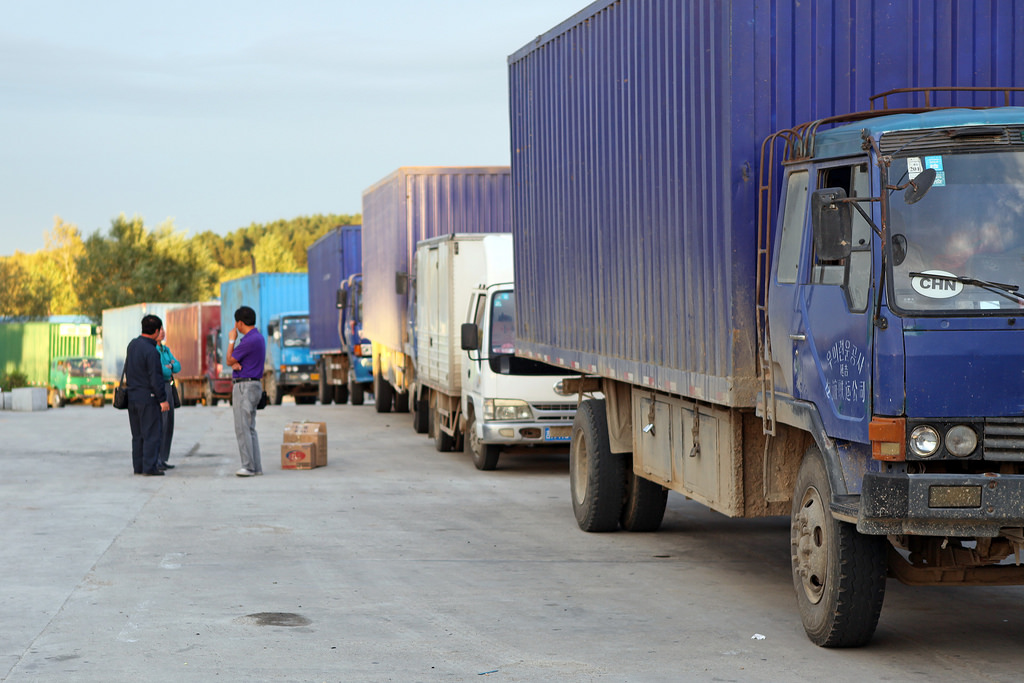 Chinese trucks on the border with North Korea. 2011 Roman Harak
Such a turn of events for China is more dangerous than all the nuclear adventures of the current North Korean leadership. China is easier to deal with nuclear North Korea than with North Korea, which fell into a state, say, similar to the current state of Syria or Libya. And this is a completely reasonable and correct approach-so, in general, any responsible government would have led itself, and in any case should not be attributed to some ideological “bends” of China.
This is the first reason why sanctions do not work. The second reason is also quite understandable: if China will support the sanction for some unknown reason, then the North Korean leadership, even faced with hunger and riots, remembering the fate of Gaddafi, Saddam and many more, will not take nuclear weapons. If necessary, it will sacrifice part of the population of his own country, explaining its sad fate by the fact that these are the heroes who fell in the invisible war in the fight against the external enemy (it sounds good, the explanation is good, is it not true?) It will sacrifice part of the population, if necessary, but retains nuclear weapons - because it will not be able to preserve the North Korean state, separate from the South South of South Korea, nor Him, leadership, his own regime. And for them, this, of course, as for any ruling elite, preserving the regime and the preservation of the state is one and the same.
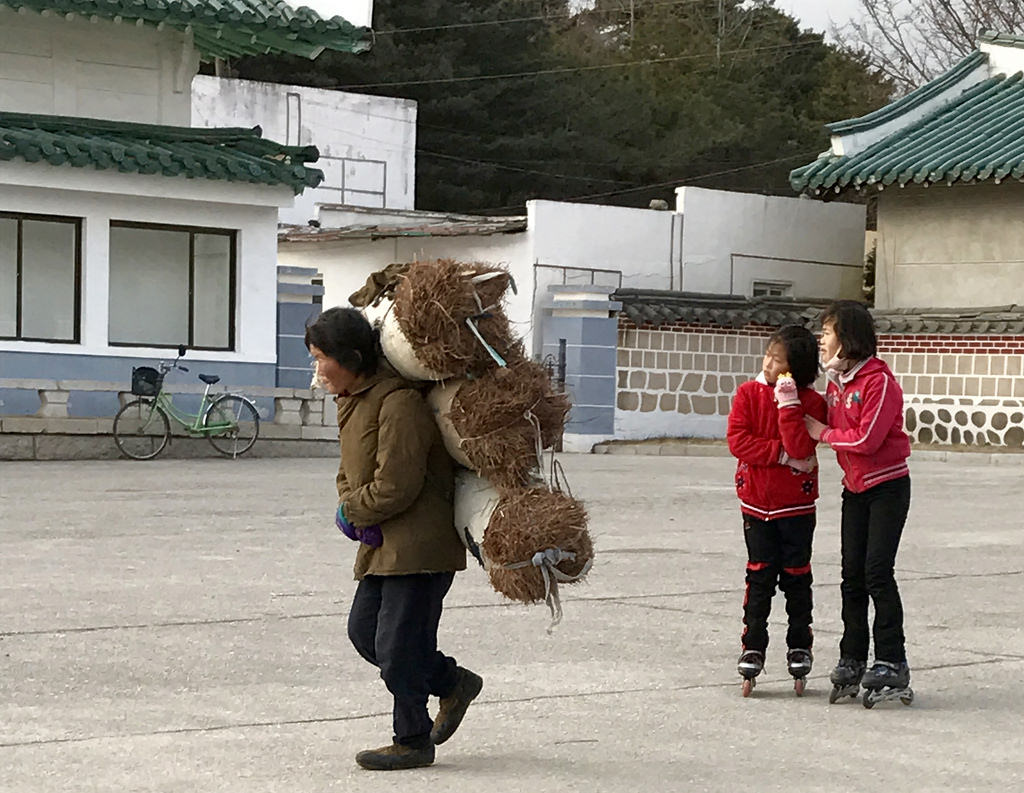 Pyongyang, 2017 Jennybento
The last possible option is armed actions. Armed actions also do not work here - simply due to the fact that the entire population of Seoul and its districts (about 25 million people, half of the population of South Korea) is in the reach of the North Korean artillery. The beginning of the war will lead to a massive artillery strike on Seoul, and even if I do not use the means of mass defeat, the number of victims will be calculated by tens and hundreds of thousands.
In addition, most likely, in the event of an attack on North Korea, to one degree or another, she will provide support from China - simply out of a desire to teach America and show her that such actions in the neighborhood of China are unacceptable. The result will be the war of the Vietnamese type. Not a light, cheerful expedition to the Middle East, where a pair of squadron goes, a certain number of missiles, a little special forces are launched, and then tells about their exploits, and a serious war in the long -forgotten style of the war in Vietnam is a war that the Americans have not waged for a very long time, naturally, do not want to wage and do the right thing.
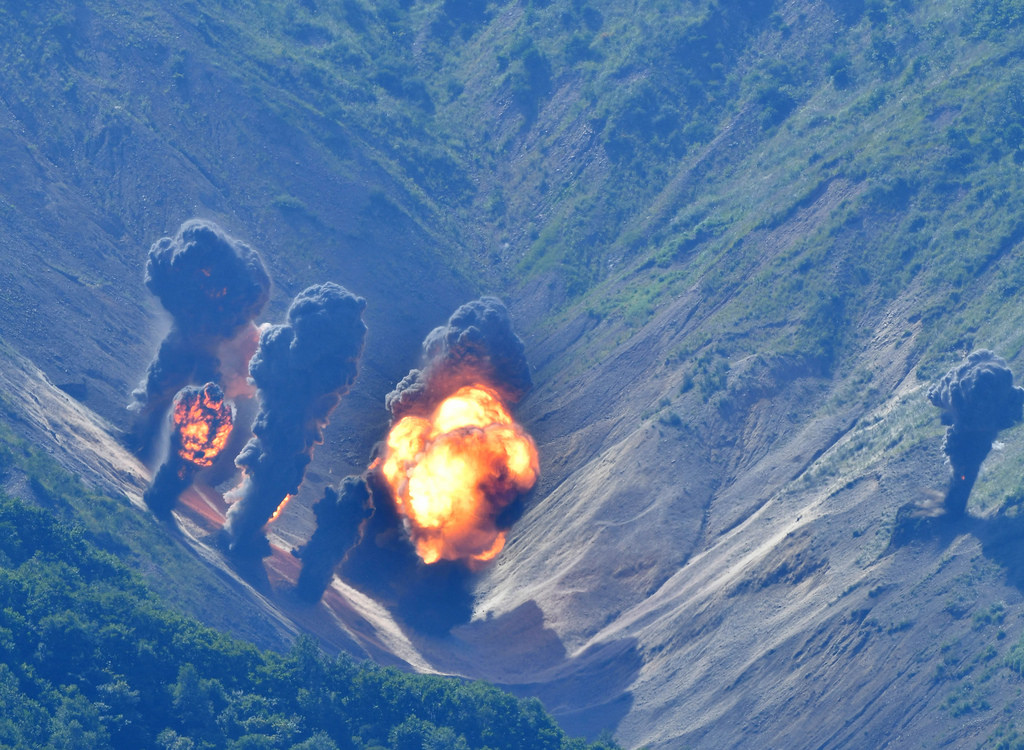 Military exercises in South Korea, August 2017 Photo by Republic of Korea Air Force
Awareness of this fact did not immediately come to Trump: he did not understand this for the first couple of months of his reign, but somewhere by April he was explained it. Faced with this situation, the American leadership in general and President Donald Trump are personally trying now, most likely, just bluff. They make the maximum number of warlike body movements, their rhetoricism and behavior, surprisingly reminiscent of the traditional line of the North Korean leadership, hoping, apparently that threats themselves are frightened by either the North Koreans or the China, and the Chinese, they say, frightened, will go to the introduction of really strict sanctions against Northern Korea.
Of course, most likely, “take it for fright,” as they say in certain circles, neither China nor North Korea will be able to, but President Trump honestly tries to do this. As I understand it, his experience on television and Realter affects here. Well, here, in fact, everything that happens there, ”explained Andrei Lankov.