
Translated material
Sorting out our dates
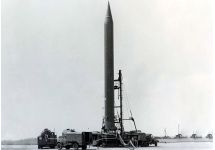
The Ministry of Defense, in connection with the 55th anniversary of the delivery of the first Soviet ballistic missiles to Cuba, declassified data on losses during the acute phase of the Caribbean crisis and in the next period. This is stated in the message of the Department of Information of the Military Department.
"The exact number of losses of Soviet military personnel was not officially published during the operation. According to the Ministry of Defense, from August 1, 1962 to August 16, 1964, 64 Soviet citizens were killed in Cuba," the message said.
The idea of conducting the secret operation "Anadyr" for the placement of Soviet missiles with nuclear warheads belonged to the Soviet leader Nikita Khrushchev. "The operation carried out in June - October 1962 became a response to the placement of American missiles in Turkey and Italy, as well as the threats of the American military invasion of Cuba. Expansion of the Soviet military presence in a cube located 200 km from the United States, caused the Caribbean crisis - a sharp exacerbation of the Soviet -American military -political relations of the" Cold War ", which delivered the world to the world The facet of a nuclear clash between the two superpower, ”the Ministry of Defense says.
On July 10, 1962, an advanced reconnaissance group went to Cuba under the guise of agricultural specialists. It was headed by the commander of the troops of the North Caucasian Military District, Army General Issa Pliev.
On September 9, 1962, the first Soviet ballistic missiles were delivered to Cuba. Later, nuclear ammunitions were delivered to them. Two types of medium-range ballistic missiles-R-12 with a radius of action of more than 2 thousand km and R-14 with a range of more than 4 thousand km were sent to Cuba. They were equipped with 1 megaton with nuclear warheads with a capacity of 1 megaton. In total, it was planned to place 40 missiles, 24 P-12 and 16 P-14.
The number of groups of Soviet troops in Cuba reached 50 thousand people. Four motorized rifle regiments, two tank battalions, 40 MiG-21, 28 IL-28 bombers, S-75 anti-aircraft missiles, and two winged missiles, and artillery were delivered to the island.
On October 14, 1962, the U-2 American reconnaissance aircraft photographed the starting positions of Soviet ballistic missiles. The materials provided by the American and British agent, Colonel GRU Oleg Penkovsky, helped to identify them. He was arrested on October 22, on the announcement of the American sea blockade of Cuba.
The Caribbean crisis was regulated by the gentleman's agreement of Khrushchev and US President John Kennedy. The USSR evacuated missiles, nuclear warheads and other offensive weapons from Cuba and pledged not to place them there. The United States lifted the blockade of Cuba, but received the right to control the export of missiles, inspecting the Soviet vessels at sea, which was extremely humiliating for Moscow. The Americans also promised not to take military intervention against the Castro regime.
A few months later, the United States deduced the Jupiter missiles from Turkey, the placement of which in 1961 prompted Khrushchev to decide on the Cuban adventure. By 1963, these missiles were already outdated, and Kennedy did not consider their conclusion as a concession to the Soviet Union.
According to the results of the operation "Anadyr" 1001 soldier "for the exemplary implementation of a special task of the government" was awarded orders and medals, including 18 people - the Order of Lenin, 38 - the Order of the Red Banner, 591 - the Order of the Red Star.