
Translated material
Bankrupt rate
How Rosneft tries to save the ruling Venezuela regime from financial collapse
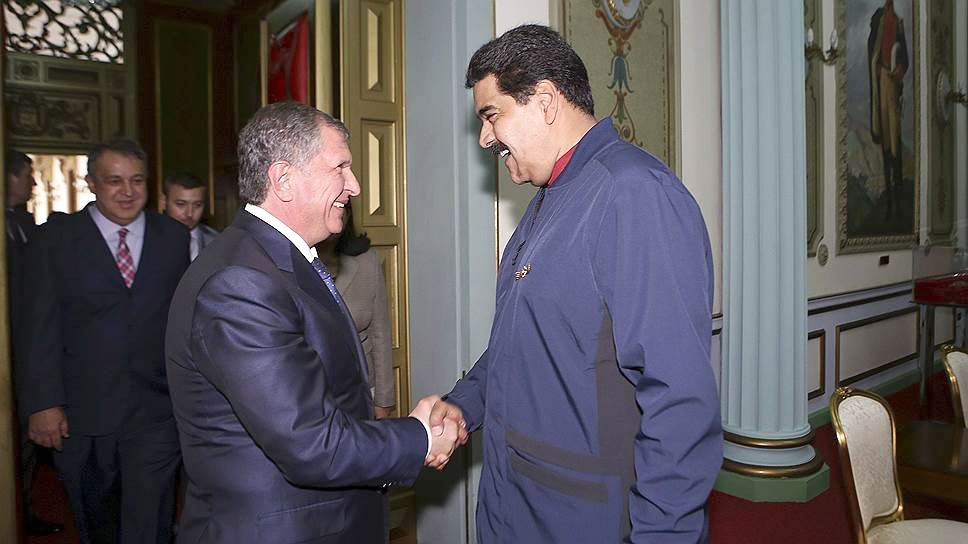
Venezuela President Nicholas Maduro and the head of Rosneft Igor Sechin. Photo: vladtime.ru
The economic sanctions imposed by the US Government at the end of August 2017 on Venezuela put the Maduro government in a difficult situation. Venezuela is now deprived of the possibility of trading in America securities of the state oil company Petroleos de Venezuela (PDVSA), whose export revenues make up 96% of all foreign exchange earnings. Thus, PDVSA itself can no longer trade in its duty. Meanwhile, very soon, in October-November, PDVSA should pay $ 3.5 billion on its external debt, while Venezuela's currency reserves are only $ 10.8 billion, most of which are stored in gold ingots. To avoid default, Venezuela addresses with his outstretched hand to his two main sponsors - China and Russia.
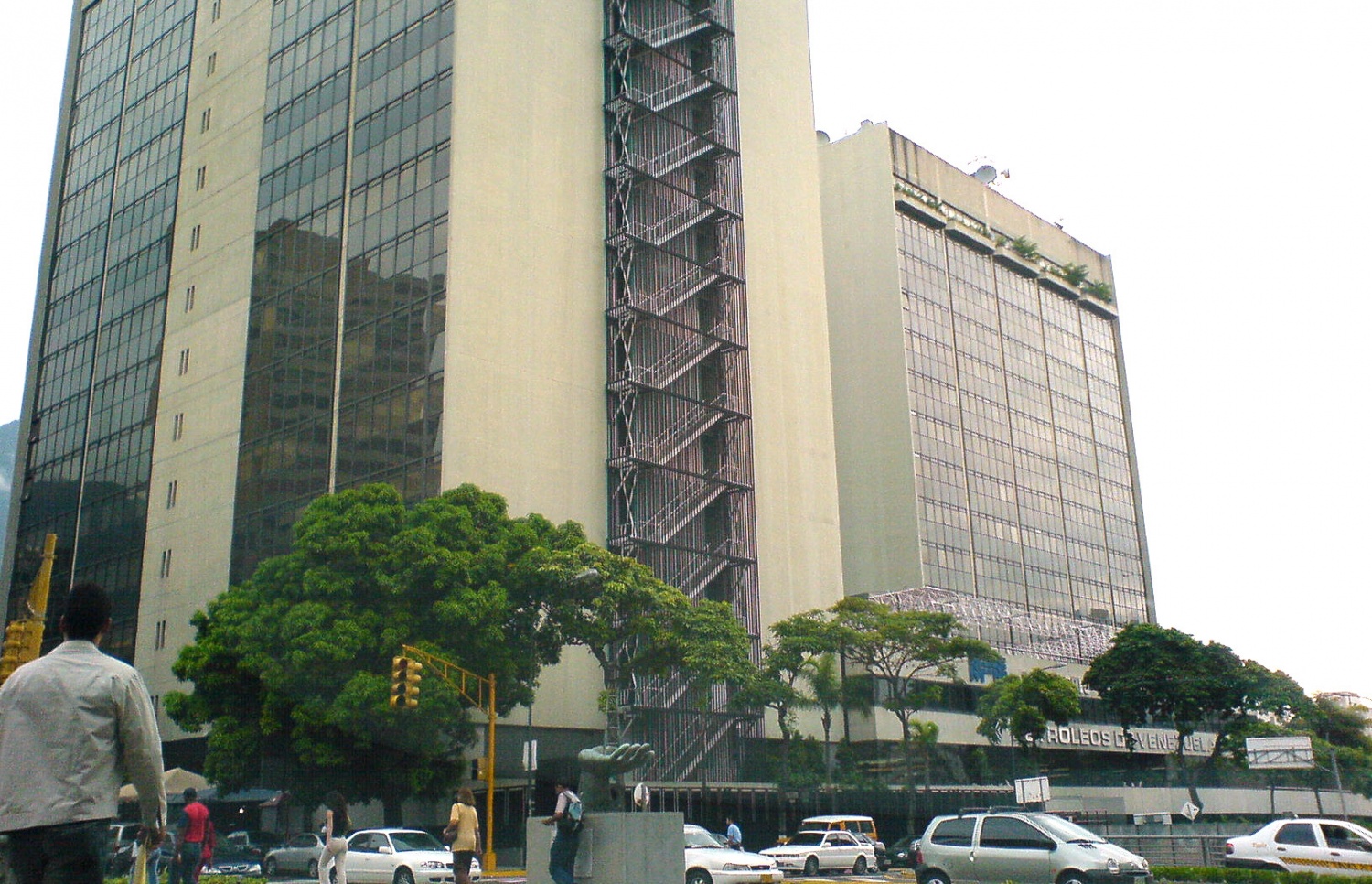
Photo: Flickr.com
"We cannot be expelled from Venezuela"
In Beijing, from the first days of September, there is a Venezuelan delegation that is trying to convince the Chinese authorities to throw them a rescue circle. However, as the American newspaper El Nuevo Held writes, "the chances that China will respond to the Maduro government prayer."
Another reaction of the Russian company Rosneft - it has already provided Venezuela with a loan of $ 6 billion, of which PDVSA, the Rosneft partner company, received $ 1.5 billion. But whether the saving straw will help from Igor Ivanovich Sechin to pay off the debts in which PDVSA is drowning is a big question.
The level of oil production in Venezuela is rapidly falling: now the country produces 1.9 million barrels per day, despite the fact that at the end of 2015, production was 2.5 million, and before the arrival of Hugo Chalosa in 1999, the PDVSA does not have currency liquidity, the chances of obtaining loans in the West have zero, the infrastructure is emitting, experienced personnel run abroad. According to Fitch rating agency, the capacity of the company's default is very high. Independent Venezuelan experts believe that this will happen in the first half of next year.
But the signals about the possible collapse of the Venezuelan oil industry "Rosneft" do not scare. “We will continue to work in Venezuela and intend to increase cooperation in the field of the fuel and energy complex,” said Igor Sechin, the head of the company. “As I repeated repeatedly, we will never leave there, and no one can drive us out of there.”
However, in case of Venezuelan default, Rosneft was nevertheless safe. She received three large oil fields in Sulia, and most importantly, she acquired 49.9% of the shares of the American “daughter” PDVSA, Citgo, whose headquarters is in Houston (Texas).
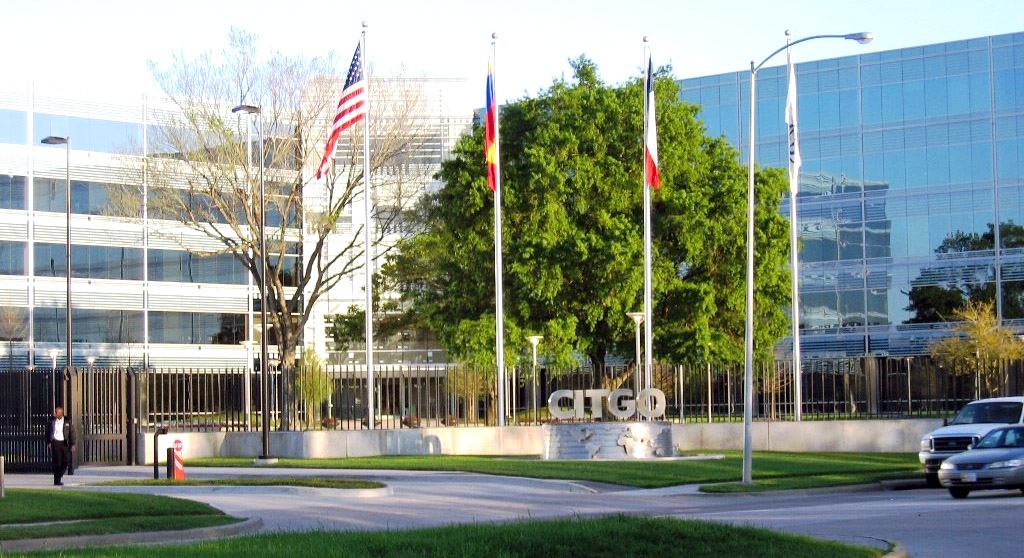
Citgo headquarters in Houston. Photo: keyword-sugggetstions.com
Citgo is the main diamond in the oil crown of Venezuela. She has three large oil refineries in the United States (in Texas, Louisiana and near Chicago), which process up to 750 thousand barrels of crude oil per day. She owns 48 terminals in 20 states of the country and thousands of gas stations from California to Man. It was around this company in America that the cheese was flared up.
In case of Venezuelan default, Rosneft was still safe. She received three large oil fields in Sulia and most importantly-she acquired 49.9% of the shares of the American “daughter” PDVSA, Citgo, whose headquarters is in Houston (Texas)
The tidbit of it
The first reports that Rosneft wants to take it close to the control package of Citgo stakes to the control in the spring of this year and immediately caused the concern of American lawmakers. A number of prominent senators, both Democrats and Republicans - Ben Cardin, Marco Rubio, Tim Kane, Bob Menendes, John McCain - prepared a bill that would be the response of Washington to suppress democracy in Venezuela ( from M. NT No. 14 of April 14, 2017 ). Part of the bill concerns Citgo directly: the senators demanded that President Trump not allow the company to transfer the company to Rosneft. In their opinion, the possession of such a large package of shares will allow Russia to negatively affect the US oil market and at the same time overcome the economic sanctions imposed on it in 2014 after the capture of Crimea and the invasion of the Donbass.
A letter with this requirement was sent from the Capitol Hill to the Minister of Finance of the United States Stevensom Mnuchin. He did not answer him on time, but the senators continued the struggle, and now, according to the informed The Wall Street Journal, she was successful. The Donald Trump administration, according to the newspaper, firmly intends to block the Russian-Venesuel transaction that would give Rosneft control over important assets in the field of oil refining in America.
The Donald Trump administration, according to The Wall Street Journal, firmly intends to block the Russian-Venesuel transaction that would give Rosneft control over important assets in the field of oil refining in America
The White House came to a simple conclusion: the PDVSA default is inevitable, therefore, the company will become a mild prey of Russians - the level of threat from the acquisition of Rosneft Citgo in the eyes of the American administration increased sharply. According to WSJ, Rosneft’s transmission of refineries, oil terminals and gas stations will be stopped by the Foreign Investment Committee (CFIUS), which has the right to block any operation that threatens the US national security.
The largest American oil companies also joined the struggle for refineries and oil terminals. One of them, Conocophilips, filed a lawsuit against Rosneft in January of this year. At one time, the property of ConoCo was expropriate for Hugo Chavez, while the company did not receive any compensation. Now she claims to be three CITGO refinery to compensate for damage.
"Bonds on hunger"
Having introduced economic sanctions against Venezuela on August 25, the Trump administration forbade American financial institutions to conclude transactions on PDVSA Bonds and actually called on investors to leave Venezuela. But - a significant detail - it is only about newly released securities. Whereas the old ones remained out of the ban. And they still remain a super-leafy piece for American investors. “It is very difficult to leave Venezuela,” Bloomberg states not without irony. And he explains: despite the inexorably approaching default, Maduro offers foreign investors not seen in the world the interest on (old) bonds that grow in price as on yeast. So, PDVSA papers in the last week of August were given profitability at 1.7%. “The government of Nicholas Maduro deprives the population of medicines and food to avoid default for its external obligations, as a result of which one of the Harvard professors called these papers“ hunger bonds ”,” writes Bloomberg.
Despite the inexorably approaching default, Maduro offers foreign investors not visible interest in the world on PDVSA bonds, which grow in price as on yeast
In May 2017, part of the PDVSA bonds bought up Goldman Sachs and Nomura banks - the transaction caused the anger of the Venezuelan opposition. According to the speaker, the National Assembly (parliament) Hulio Borhees, Venezuela, who received $ 850 million from this transaction, over $ 300 million spent not on the purchase of food for starving citizens and not on medicines, but on the acquisition of Russian weapons. That is, the Venezuelan authorities are trying to suppress the anti -government demonstrations that have been continuing in the country since April.
Read also: “I. Sechin. "Sausage". Play in one act (for now) "