
Translated material
North Korean hackers were suspected of theft of bitcoins for Kim Jong -un
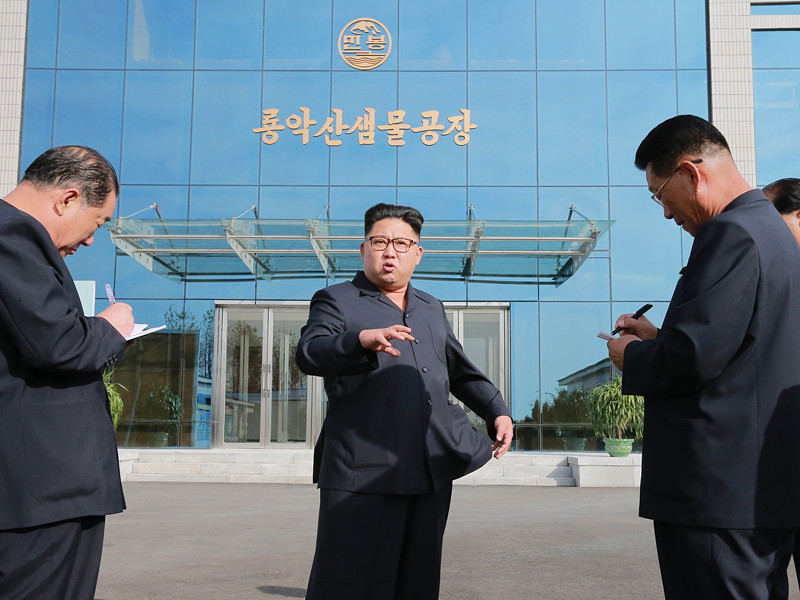
North Korean hackers attack the South Korean exchanges of cryptocurrencies, stealing bitcoins and other cryptocurrencies, which are believed to help the Kim Jong -un regime to survive the UN sanctions, Bloomberg reports with reference to the study of the American company Fireye Inc..
Cryptocurrencies are interested in the North Korean dictator because they are not adjusted, which makes them a convenient tool for laundering money and a way to get cash. "Cryptocurrency is perfect for evasion of sanctions, despite the volatility of value, since payments are not processed through the central body," explains Sky News .
North Korean hackers hacking the English -language news site about bitcoins, which helped to determine visitors. Attacks were carried out using phishing letters infected with Peachpit virus. According to Fireye, there was a group of hackers TEMP.HERMIT, which is known for the attack on Samsung in 2015 and, possibly, on the Sony studio.
Fireye confirmed at least three DPRK attacks on South Korean exchanges in 2017, including the Yapizon Seoul Exchange in May, with which 3.8 thousand bitcoins were stolen. Fireye, however, did not clearly confirm the participation of North Korean hackers in this attack, but it was indicated that the strengthening of economic sanctions against the DPRK was accompanied by an increase in the number of phishing letters sent to South Korean cryptocurrency exchanges.
In early July, it was reported that the largest in South Korea and the fourth in the world, the BitHumb Bitcoin Exchange was subjected to a hacker attack, as a result of which cybercriminals stole several million dollars from customers accounts.
Attackers gained access to the accounts of 31 thousand BIMB users, including personal data, phone numbers and email addresses. According to one of the victims, bitcoins instantly disappeared from his account worth about nine thousand dollars. According to BITHUMB representatives, hackers hacked the accounts of 3% of the exchange customers. They received access to them by hacking the computer of one of the BIMB employees, and some data were stolen using one -time passwords that users receive during transactions.
Skynews reports about the hacker group controlled from North Korea, which the researchers called Lazarus Group and which from 2015 to 2016 held a series of complex attacks to Swift and stole millions of dollars.
Cybersecurity researchers connected Lazarus Group with the DPRK, but it is still unknown whether it is controlled by the government or elite Pyongyang, who is trying to replenish its cash reserves with its help.
The Government of North Korea has long been suspected of illegal economic activity. The secret state North Korean agency, known as “Room 39” (or “Bureau 39”), receives income from the Black Market from at least the 1970s. Revenues can reach 1 billion dollars a year, including from falsification of currency, drug trafficking and gold smuggling.
The author of the Fireye study Luke Maknamara states the growing interest of North Korea in cryptocurrencies, despite the fact that the cost of bitcoins increased by 400% since January 2017 - in early August, Bitcoin overcame the $ 3,000 and grew to $ 3400.
"It is not surprising that cryptocurrencies as a new class of assets become the object of interest of a regime acting in many respects as a criminal organization," says Maknamara. The cost of all the world’s circulations in late August has increased to a record $ 160 billion due to an increase in bitcoin and ether.
"Mining", that is, "prey", in the Bitcoin system is not controlled by any financial institution. The cost of bitcoins in relation to other currencies is determined by the free market, like world reserve currencies or precious metals.
To ensure the functioning and protection of the system, cryptographic methods are used, but all information about transactions is not encrypted and available in open form. An important property of the system is complete decentralization, that is, its work is not supported and is not regulated by state or banking supervisory authorities.