
Translated material
In the chains of Biennale
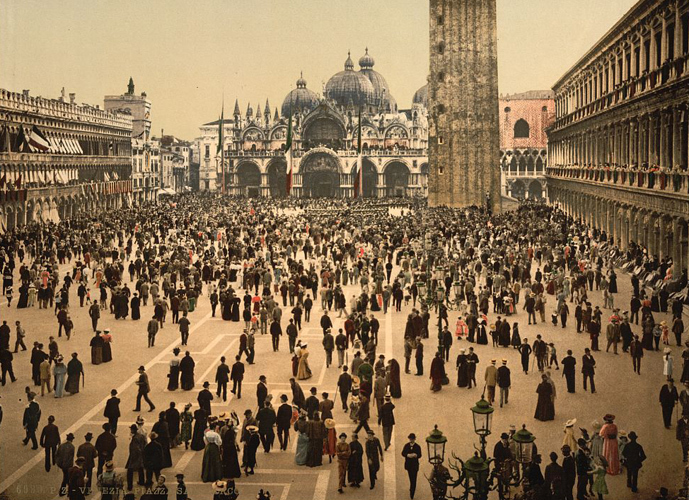
Venice in the book of Gleb Smirnov, the main Russian Mistagog Light, imports not only resources, but also the forms of existence itself. Venice was never established in wars and folk assemblies, but successfully carried out military and peaceful activities. The Venetian Panagirists, to whom the author of the book nourishes no less weakness than to the enlightened praise of Venice of our days, praised the peaceful spirit of the city - but this peaceful spirit was created by a borrowing of even the main life forms. The Venetians learned everything from scratch - to rule the seas, to perform justice and create their own forms of hostel; Smirnov notes how invisible Venetian literature is precisely because all the forces went to the justification of institutions and the creation of unsurpassed grace on scratch. They say that philosophy is invisible in Spain, because the Flmenko dance surpassed the sophistication and necessity of a quick response any philosophical system; Then literature is invisible in Venice, because it was brought by whole libraries and founded by whole printing houses, like the inimitable book production of Alda Manius, who created the Pokes for reading on the road. The universality of Venice is not to subjugate large spaces, but to read something in these spaces in transport. The quality of the infrastructure was more important than its solemn demonstration; Therefore, a small piece of land in the sea could take patriarchs, cardinals, leaders, whole exchanges and banks-as if suddenly modern Wall Street and the Tokyo Exchange, grabbing several universities, faiths and high-tech centers, moved to an unknown island. Even Singapore can not be compared with Venice: Singapore attracts business strategists, and Venice - brilliant tactics.
Gleb Smirnov-Greek, as we recall, according to the publications of the 90s, the Tanor of the Venetian libraries and the commander of Russian culture in the world of the deepest aristocracy, has repeatedly declared himself as a professor of arthodoxy-a religion of free art. This religion has its martyrs - poor and misunderstood artists, their worships - Biennale, their temples are galleries that immediately resemble the monastery galleries in the very meaning of the word; Finally, their attentive clergy, keeping the accounting of both sins and truth of art and the property of art, which is never subject to secularization. Artodox always shows why this property is sacred; And the book “Metaphysics of Venice” can be completely considered as an inventory of the Venetian cultural sacristy.
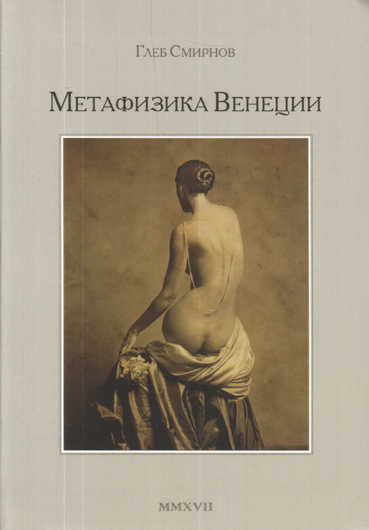 © OGA, 2017
The genre of the book is sometimes called “conversations” - one of the sections is named “evening conversations with algae” as a joke: pathetic words like “philosopher” or “writer” will carry the author, therefore a conversation with the ubiquitous and at the same time imperceptible with Wencan brilliance witnesses is the main way to penetrate that it is behind the brilliant glory of Venice and the myth of Venice in a broad sense. The myth of Venice is the myth of the adventure city, but Smirnov sees labor and constancy in Venice: the theater that never closes its scenes, the theater that accepts everyone, but forcing us to play by its own laws, this theater will not allow any arbitrariness, fake or emotional game, how many fake tourists with false decorations and false souvenirs through it are neither passed. Fake, however, nature is a cough at a concert, let's say; Already this teaches not to be annoyed by disciplined tourists.
The first hero of Gleb Smirnov’s book is death, “A nobleman in black”. Death for the author is not an excess and not a fatal finale in the drama that was raised by every person, but the continuation of loneliness, noble attention and noble posture. Like the melancholy of the past, the researcher of the Venetian Marine House sees not apotheosis of meaninglessness in death, but an apotheosis of attention: nature who protects himself from oversaturation with himself knows death - and a person who understands the unwrittenness of many of his life ways, widespread the meaning of the most worthy ways: the heroic immortality that gives the most attentive to the trepidation of life and the trepidation of the canvas souls.
The Venetian artists themselves for the author are visionaries, prophets that can feel the beating of life among the mass of depicted people and objects. The prophets of other lands expose what they saw; Venice's prophets bless what turned out to be worthy of inner feeling. “Consolation in Venice” - so Smirnov calls the special charm of a city captivating those who do not build large plans for life, who can be upset, offended - and not in order to then go to another emotional state, but so that the soul played not quite that you intended to play yourself. The episode behind the episode, the page of the page of modern Venice recreates spontaneous games, involuntary walks, involuntary outpourings of feelings and a free conscious acceptance that there will be no big strategies.
The view in the book is always described not just as interested, but as languid, surprised, exhausted - after all, this look does a huge job on the outskirts of Venice, getting acquainted with reproductions and cherishing the images of Venice from mass culture on the flour. Whereas Venice, only it arrives at it, literally feeds vision, it does not promise comfort, but promises to get rid of the main illusion - that Venice supposedly fell out of history, turning into a tourist attraction. Smirnov-Greek, our glorious Glebus, says that even the most supreme tourist will still notice how the city deceives Tourist counterparts and lasts its history as a timely presence in the world. Venice has long ceased to be the center of political decisions, but it is always timely as part of Europe - without Venice it is impossible to imagine the synchronization of traffic flows in Europe at the junction of land and sea, rivers and bays, air routes and foot paths. It is inconceivable without it to imagine the being of art, which ceases to be sighing curious, but becomes words for adherents of progress - always when looking at the Venetian architecture and art can be called “innovation” without even knowing the history of art: here it will not be in technology, but in the ability to quickly adapt the radical gestures to modernity. The quadriga of Lisippus was a way of swiftness in its place, and on the pediment of St. Mark, she became a gadget, as it were, soaring the channels soaring over the network of the domes of the cathedral.
But the general history of mankind for Gleb Smirnov holds on gadgets intuitively deep art: thanks to them, a political story is possible as the story of people who do not allow themselves to deceive and therefore cope with external and internal tyranny. Venice was a special empire, sometimes terrible, but it taught people not to deceive themselves: neither promises of quick income, nor promises of glory, which everyone allegedly recognized without exception. Smirnov and in other books developed this topic indigenous for his work: how the necessary devices create new imperial styles. He had an option of a gloomy empire - in the sketch of the book “Metropolitan”, where the Moscow metro is represented as a catacomb faith into Soviet communism and the whole technique is turned into an endless and hopeless symbolization in this culture: wagons as pilgrimage trips, escalators like the extinguishing of the deities, deities like workers underground nods at everything, and nods with respect.
In the book “Metaphysics of Venice” there is a different image of a great style - Elysius, the dream of poets and artists. Elysius, unlike the metro or even the street, is a place of respectfulness: if on the street you can teach hats to each other, then only in Elsia you can teach aristocratically quoting each other, pay tribute to trepidated reverence, and not just mean knowledge, and see the stories of love for the seemingly insolvent actions of the loving. “A treatise on eternal love”, included in the book, like a treatise on Elsia, explains in a slightly narrow manner that love is immature, but respect for the beauty of love is always a mature feeling. Without this last feeling, civilization will die.
Turning the pages of the book, we find ourselves between eternal love and eternal eli: between the education of aristocratic feelings and observation of all nature as a triumph of aristocratism. The modesty of sunset, the greatness of the oak, sacrificing itself to the Venetian piles, some distraction of the sea is no less noble things for the author than the situation of palaces. Smirnov, with the attention of the naturalist, explores the patina and other natural-cultural nobility, and this intense study is the only full-fledged stress in several relaxed conversations. The catalog of eras can be read out of curiosity, but traces of eras require seriousness. The eras are left by melancholy, but they will never stop being witty on each page. This is the therapeutic wit - in care for the word and reader, and not the surgical wit of satire or corridor wit of jokes familiar to us. We have already left the doctor’s ward and we can only bow to the lightning -bearing verbal no longer operation, but simple therapy.
Gleb Smirnov. Venice's metaphysics. - M.: OGI, 2017. 368 p.