
Translated material
How Russia saves Marshal Kim
With the help of fake companies, Moscow supplying oil, ore and even luxury items bypassing international sanctions.
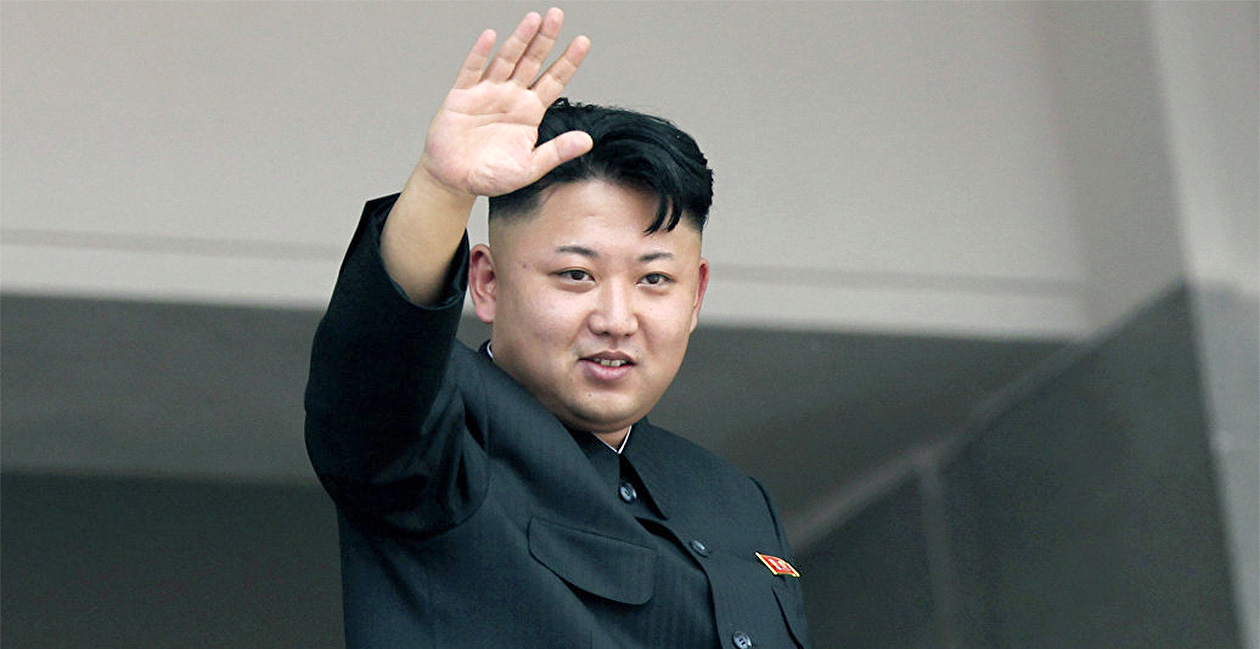
Photo: News2world.net
On September 18, Russia and China began joint naval exercises off the coast of North Korea. As the Chinese government agency of Sinhua, the Russian official agency specified for some reason late with the publication of this news-the exercises will be held in the area between the bay of Peter the Great, near Vladivostok, near the border between Russia and North Korea, and in the southern part of the Sea of Okhotsk, north of Japan. Similar joint exercises, by the way, took place last year. But now they have a special background: the situation around the launches of North Korean missiles and nuclear tests - on September 3, Pyongyang has already conducted the sixth test, the most powerful, hydrogen, ammunition for the intercontinental ballistic missile, has sharply aggravated. From Washington, reports of a possible military operation against the DPRK are increasingly coming. At the same time, according to NT diplomatic sources in Washington, the Americans admit that at least 1 million people will die in a local war on the Korean Peninsula without developing nuclear weapons.
One of the observers saw a demonstration of power in the Russian-Chinese teachings-they say that even the closest guardians and allies warn Pyonguns that he went too far in his nuclear ambitions. On the contrary, someone found that Moscow and Beijing were sending a signal primarily to Washington and its allies-South Korea and Japan: they say, before planning some kind of military operation against the DPRK, it would not be bad to consult with us, especially since we are on the alert. One way or another, although Vladimir Putin openly makes it clear that the North Korean regime in a corner is unpromising and even dangerous, and excessive restrictions from the outside can be tantamount to an attempt to strangle the DPRK economy and provoke a deep humanitarian crisis, Moscow supported the UN resolution on the tightening of sanctions against the DPRK: Russia, as the Basocal Representative of the Russian Federation said at the UN. Vasily Nebena, does not accept Pyongyang's claim to gain the status of a nuclear power.
But these statements, it seems, is a facade, while Russian politics against the young Marshal Kim Jong -un and his regime also have the wrong side. And the Washington Post said in detail about this wrong side in her investigation.
Not Beijing so Moscow
In the spring of 2017, the number of tankers, cruising between Vladivostok and Rajin, closest to the border with Russia, the port of North Korea, unexpectedly increased sharply. As it turned out, bypassing Western economic sanctions, Russian smugglers supply Pyongyang with oil, industrial equipment, ore and even luxury items, the newspaper The Washington Post writes, citing representatives of the American authorities.
The sharp surge in the sea route between Vladivostok and Rajin coincided with a new wave of US sanctions against North Korea and the decision of the Chinese National Petroleum Corp.) since May of this year to reduce fuel exports to Pyongyang. China, which, as reminiscent of the publication, is the largest trading partner of North Korea, no less than Washington and Seoul is nervous because of the provocative behavior of Kim Jong-un, the young North Korean leader with the rank of marshal. Beijing decided to economically “put pressure” on his restless neighbor. So, by July of this year, the volume of export of gasoline was reduced, according to various sources, by 90–97% compared to the same period of the previous year. Previously, according to Reuters , Pyongyang annually received 500 thousand tons of raw oil and 200 thousand tons of oil products from Beijing. Last time, oil supplies were suspended in 2014, after Pyongyang experienced nuclear weapons for the third time.
"When the main oil supplier ( China. - NT) refused to find new ones."
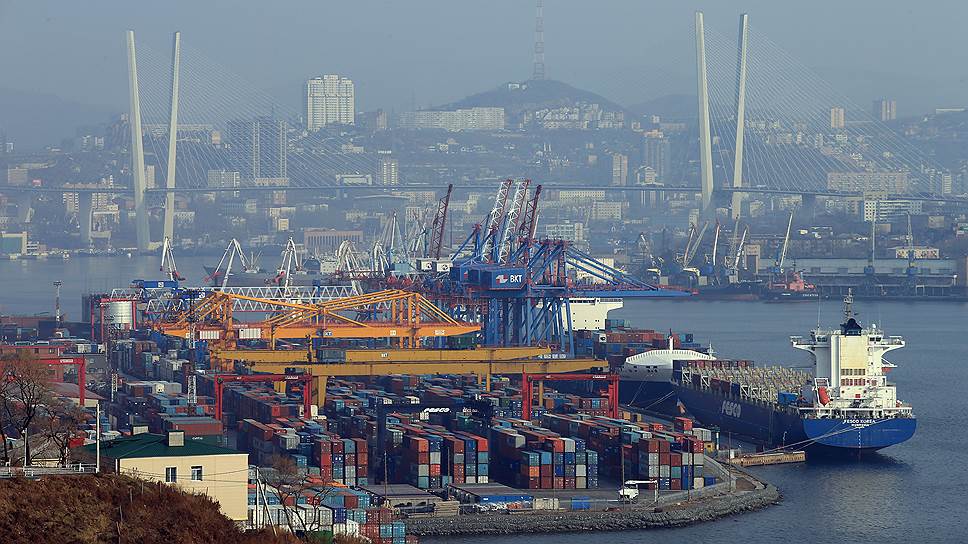
Sea port in Vladivostok. Photo: Glob-news.com
Oil in exchange for dollars
How do Russian smugglers help Pyongyang survive, despite the harsh sanctions? The Washington Posrt provides a specific story of Velmur, registered in Singapore in 2014 as a real estate management company. In fact, Velmur was supposed to help North Korea through opaque transactions to purchase millions of dollars in Russia. The Washington Post, referring to a document published on August 22 by the US Department of Justice, writes that Velmur does not have a headquarters, or an ordinary office, or even a web address, therefore it is very similar to a forthcoming company.
According to the American Ministry of Justice, Velmur in 2017 - from February to May - through other Russian partners, concluded contracts for the purchase of diesel fuel worth about $ 7 million from a Russian supplier, known as IPC. In each case, the settlements were in US dollars: they paid North Korean intermediaries, and Velmur transferred the IPC for the supply of a diesel engine using a tanker from Vladivostok to Radzhin. And these calculations in dollars, notes The Washington Post, is one of the obvious signs of a sharp depreciation of the North Korean currency - Vaughn.
Based on, in particular, on this document, the US Department of Finance in August this year announced the imposition of individual sanctions against four Russian citizens. Irina Hugaish, managing Velmur, as well as Ruben Kirakosyan (director of the Russian company Hephaestus-M), Mikhail Pisklin and Andrey Serbin, got into the black list. For the supply of fuel to the DPRK under sanctions, another company turned out to be another company - Transatlantic Partners, which is also based in Singapore. “Hephaestus”, as the US Department of Finance explained then, was involved in the supply of metals of the North Korean company Korea Tangung Trading Corporation, which previously fell under the sanctions of the United States and the UN due to its role in the Nuclear and missile programs of the DPRK. Earlier-June 1-entrepreneur Igor Michurin and his financial and construction company Ardis-Bearings LLC fell for personal sanctions. Two oil companies can also be found in the same list-the “Independent Oil and Gas Company” by the former head of Rosneft, Eduard Khudainatov and her “daughter” NNK-Primorsknefteprodukt.
The US Treasury in August 2017 announced the imposition of individual sanctions against four Russian citizens. Irina Hugaish, managing Velmur, as well as Ruben Kirakosyan (director of the Russian company Hephaestus-M), Mikhail Pisklin and Andrey Serbia, got into the black list
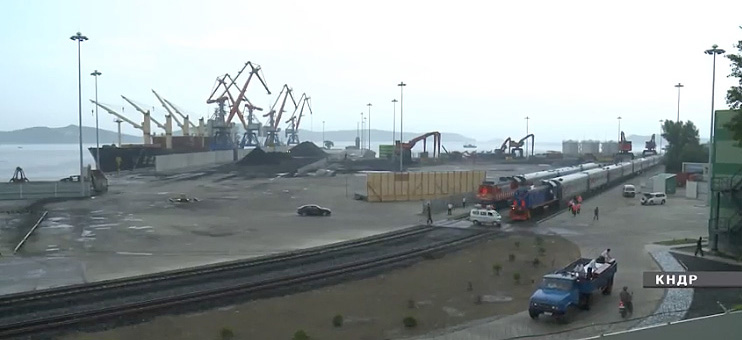
Sea port in Rajin, DPRK. Photo: YouTube.com
Without emotion
The US officials in an interview with The Washington Post admitted that it is physically impossible to stop Russian tankers, since they supply the DPRK fuel in fact from the silent approval of Putin. Even during a joint press conference on September 6 of this year with the South Korean leader, Moon Jaeu ( in Vladivostok. -NT) Russian President, writes the publication with reference to the South Korean media, made it clear that he was not going to maintain new restrictions on fuel supply for the DPRK. “We should not act on the basis of emotions and drive North Korea to a dead end,” said Vladimir Putin then.
It is physically impossible to stop Russian tankers, since they supply the DPRK fuel in fact from the silent approval of Putin
However, on September 11, Russia, along with all other members of the UN Security Council, supported a new resolution on tightening sanctions against North Korea, prepared by the US delegation. This decision says on the UN website , has become a reaction to the sixth in a row and the most powerful nuclear test conducted by the DPRK on September 3. The document, which will enter into force within 90 days from the moment of its adoption, prohibits the purchase of North Korean textile products, the sale of gas condensates to the country, and also permits the inspection of cargo ships in North Korea. In addition, the resolution introduces restrictions on the supply of petroleum products to the DPRK - a maximum of 500 thousand barrels until the end of this year and no more than 2 million barrels per year, starting in January 2018. The document also allows you to look at the open sea of the court in case there is a suspicion that the forbidden cargo is on board, but, however, with the permission of the countries under the flags of which they go. The question is, however, in another: whether this resolution will stop the tankers who walk between Vladivostok and Rajin, it seems that this will depend on the stubbornness of Moscow and perseverance of the UN, Beijing and Washington.
See also: "When 10 = 1500 "