
Translated material
President without a party
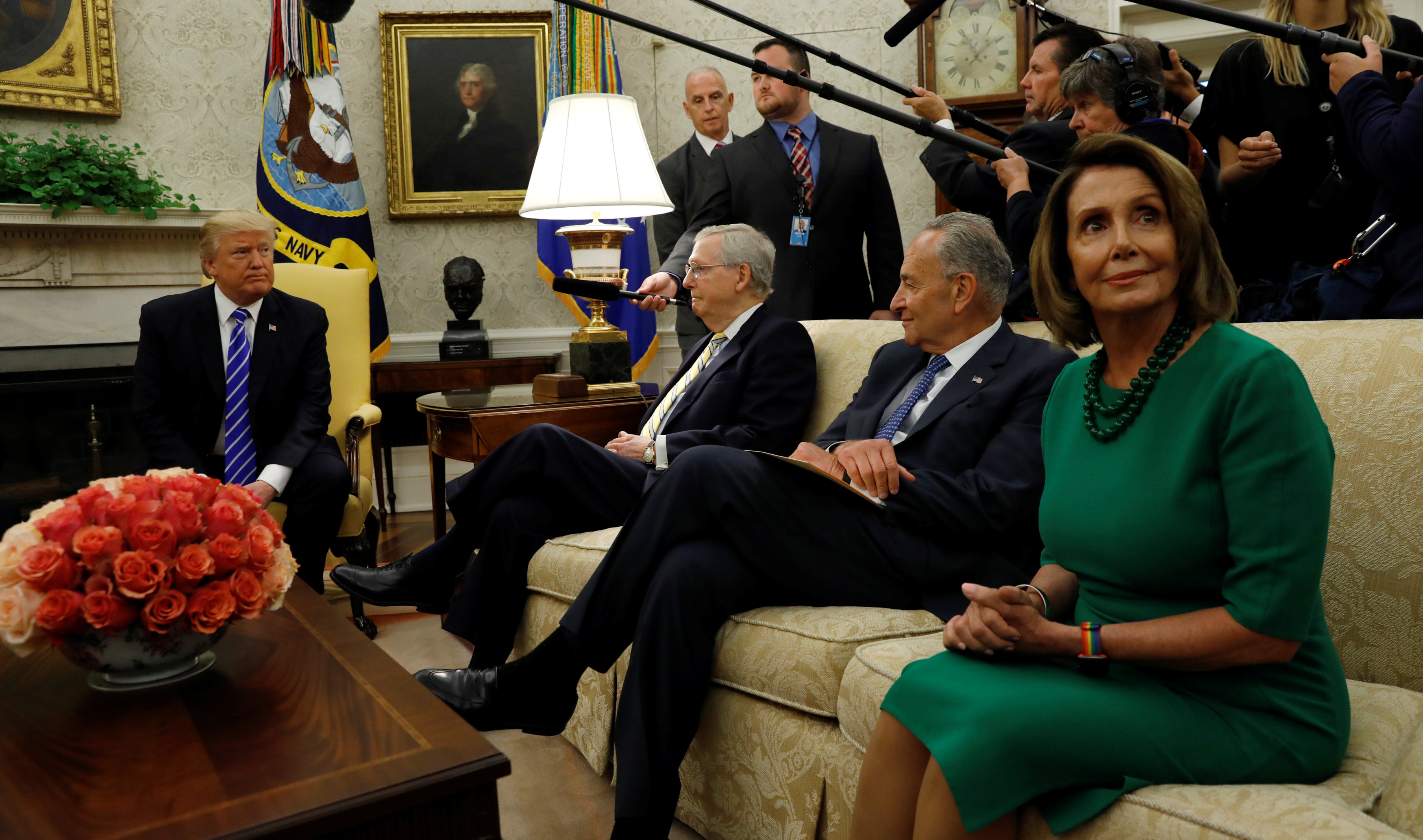
President Trump is constantly arguing with his own party. What will happen to the political life and structure of the US leadership, if he finally quarrels with the party, which nominated him for the presidency?
In July, he laughed at the leader of the Republicans in the Senate of Mitch MacConnell for not being able to provide the majority of Bille to replace the Obama Medical Insurance Trump insurance. Then the Three Republicans, including specially interrupted the treatment of John McCain, voted along with 46 democrats and two independent senators - as a result, the bill was rejected by 51 votes against 49. The president responded on his Twitter page with a remark that the Republicans in the Senate would never win if the majority of 51 votes could not collect. “They look fools and lose time in vain,” Trump wrote. One of his followers responded with a picture depicting how the leader of the democrats faction Chak Schumer approvingly pats Senator McCain and the signature "These idiots still consider themselves Republicans."
The president burst into a whole gulp of angry remarks to MacConnell, and in a conversation with reporters hinted that if he went on, the leader of the Senate majority may have to part with his post.
In August, the president was waiting for a new Afront: MacConnell and Speaker of the Lower Chamber, Paul Ryan, refused to introduce an amendment for veterans of the Armed Forces to increase the limit of the state debt to the exclusively popular bill. The president hoped that in this case the amendment would easily “slip”, but the republican leaders of the Congress knew: the amendment would complicate the passage of the entire bill.
However, the problem must be solved until the end of the financial year, that is, until September 30. Otherwise, the treasury simply will not have money to pay the current government bills. On September 6, the president to discuss the threat of default invited the leaders of Congress from both parties, as well as the chairmen of the relevant committee to the White House. The leaders of the Republican Party had to swallow a bitter pill at this meeting: Donald Trump, to their complete surprise and despite the objections of the Minister of Finance Stephen Mnuchin, agreed with the proposal of the Democrats Chuck Schumer and Nancy Pelosi to increase the debt limit by three months instead of 18, as the Republicans proposed. Moreover: he said that he further intends to "conclude transactions" with the Democrats.
Given the timekeeping, the Republicans are likely to accept the proposal of the Democrats. However, the situation makes them think about further relations with Donald Trump. Will the party be without the president, and the president - without a party? What if the president declares himself non -partisan, will consider his own party or, good, will become a democrat?
Neither one nor the other nor the third scenario contradict the constitution. There are no references to political parties in it. George Washington considered them evil and spoke about this in his farewell message to the nation as follows:
Any alliances and associations created under any respectful pretext with the actual intention to manage or control over the constitutional authorities ... contribute to the emergence of a fractional struggle, giving it an extreme role, replacing the delegated will of the nation by the will of the party - often a small but enterprising minority of society - and, taking into account the alternating triumphs of parties, and the transformation In the mirror, reflecting the non -conceived and ridiculous projects of fractions, and not to the body of the implementation of reasonable plans supported by universal opinion and meet mutual interests.
However, already in his office, consisting of only five people, an inter-party struggle was in full swing: the leader of one party, federalists, was the vice president John Adams, the leader of another, the Republican-Secretary of State Thomas Jefferson. Divided into two fractions and a congress. They were the main rivals in the presidential election of 1776. Adams won, Jefferson came the second. According to the then Constitution, the candidate who took second place became vice president. A paradoxical situation arose: the vice president waged an irreconcilable struggle with the president. The 12th amendment, which entered into force in 1804, introduced the procedure for a separate election of the president and vice president in order to avoid this provision. After the election of Jefferson in 1800, the federalist party gradually lost its influence and ultimately ceased to exist.
In the history of the United States, it happened that the president lost the support of the party. This first happened in 1841, when exactly a month after the inauguration, President William Henry Harrison suddenly died. His post was taken by Vice President John Tyler. He was a native of the south, and in the leadership of the Wig party, from which he and Harrison were elected, New English politicians prevailed. Tyler became a candidate for purely conjunctural reasons.
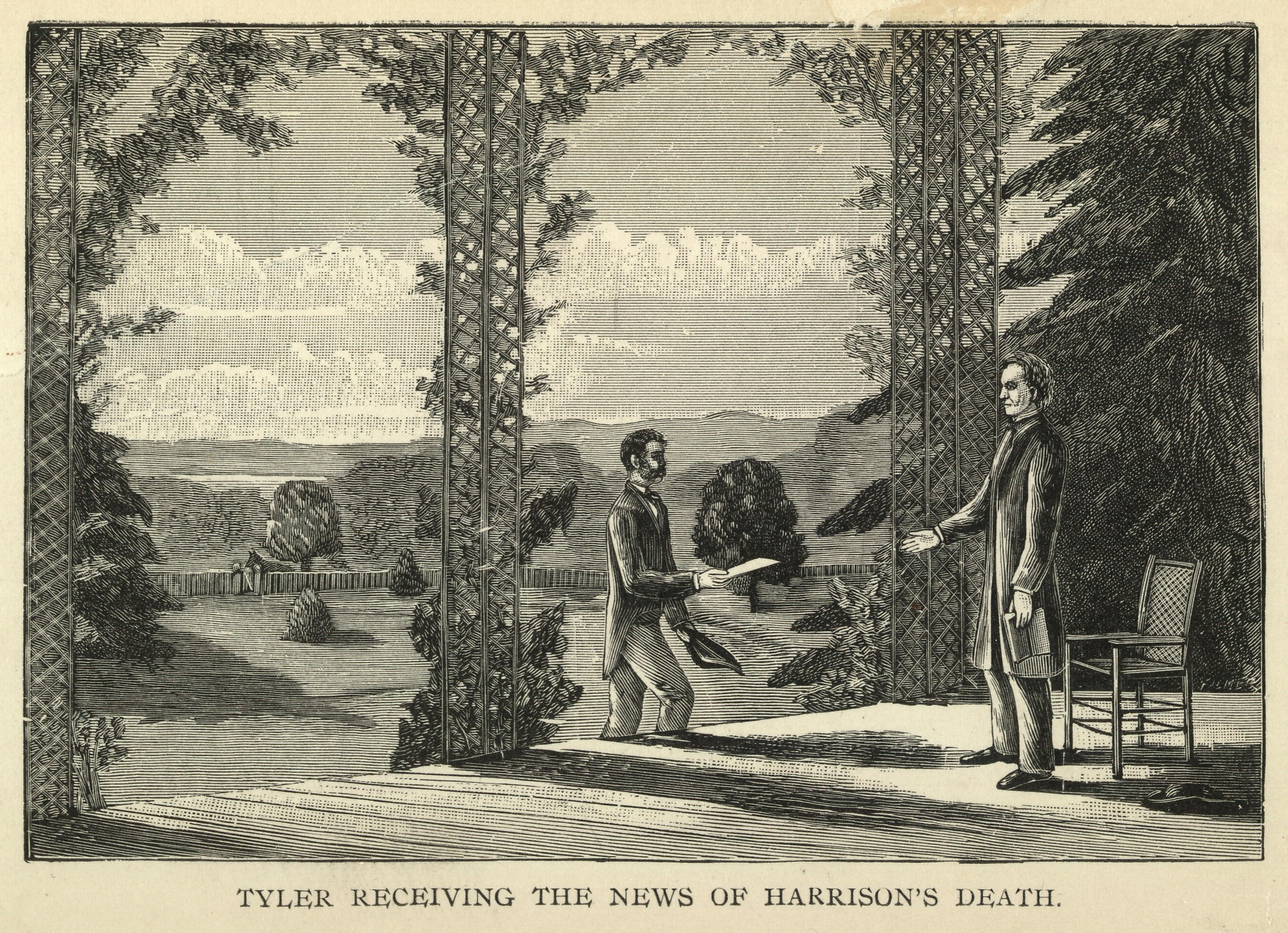
Since the transition from the president to the Vice President occurred for the first time, party bosses tried to limit the scope of Tyler’s powers, to establish something like “Semiboyarshchina” with an obvious manner: the cabinet makes decisions-the president agrees with the opinion of the majority. But John Tyler resolutely opposed such a procedure. At the first meeting of the office, he said:
I apologize, gentlemen. It is a great honor for me to have in my office such outstanding statesmen like you. I will use your advice and recommendations with satisfaction. But I will never allow me to dictate what I should do and what I should not ... Until then, as long as you adhere to the same opinion, I will be happy that you are with me. If you think otherwise, I will accept your resignation.
The cabinet resigned in full force, with the exception of Secretary of State Daniel Webster. Vigi tried to pursue their policy through the Congress, but President Tyler invariably imposed a veto on the laws with which he did not agree. It was possible to overcome the veto only once. Vigi excluded him from the party, and in July 1842, after the next veto, they introduced a resolution on impeachment. But most members of the lower house, which decides to initiate impeachment, found accusations against Tyler excessive. And in the intermediate elections, Vigi lost control of the chamber and decided to just wait for new elections.
Tyler remained until the end of his first and only term by the president without a party. He tried to return to the ranks of the Democratic Party, in which he once consisted, but her leaders reacted to these attempts without enthusiasm. Then Tyler established his own party, the Republican Democrats, actively using the administrative resource. Tyler had something to attract the voter. He proclaimed a foreign policy doctrine, according to which Hawaii became part of the United States and the inclusion of Texas was prepared. Many newspapers sympathized with him. The syllable of his campaign was the phrase "Tyler and Texas!"
However, the Vigi, which made up the majority in the Senate, refused to ratify the contract with Texas. Then Tyler called on the Congress to accept Texas in the United States not by ratification, but by a joint resolution. Democrats supported him. Their candidate James Regiment invited the president to recover the party again. Satisfied Tyler, for whom the inclusion of Texas in the Union was the main goal, withdrew his candidacy. The regiment was elected president. Under him, Texas joined.
The party of the Vigs after the death of its leaders, Henry Clay and Daniel Webster, broke up.
It can be argued that Abraham Lincoln, in a sense, changed his partisanship. In 1864, he was elected for a second term of the party of the National Union. So the coalition of the Republicans with the "military democrats" called itself, that is, the faction of the democrats-Severs who advocated the preservation of the Union. One of the leaders of the faction was Andrew Johnson. He became a candidate for vice presidents.
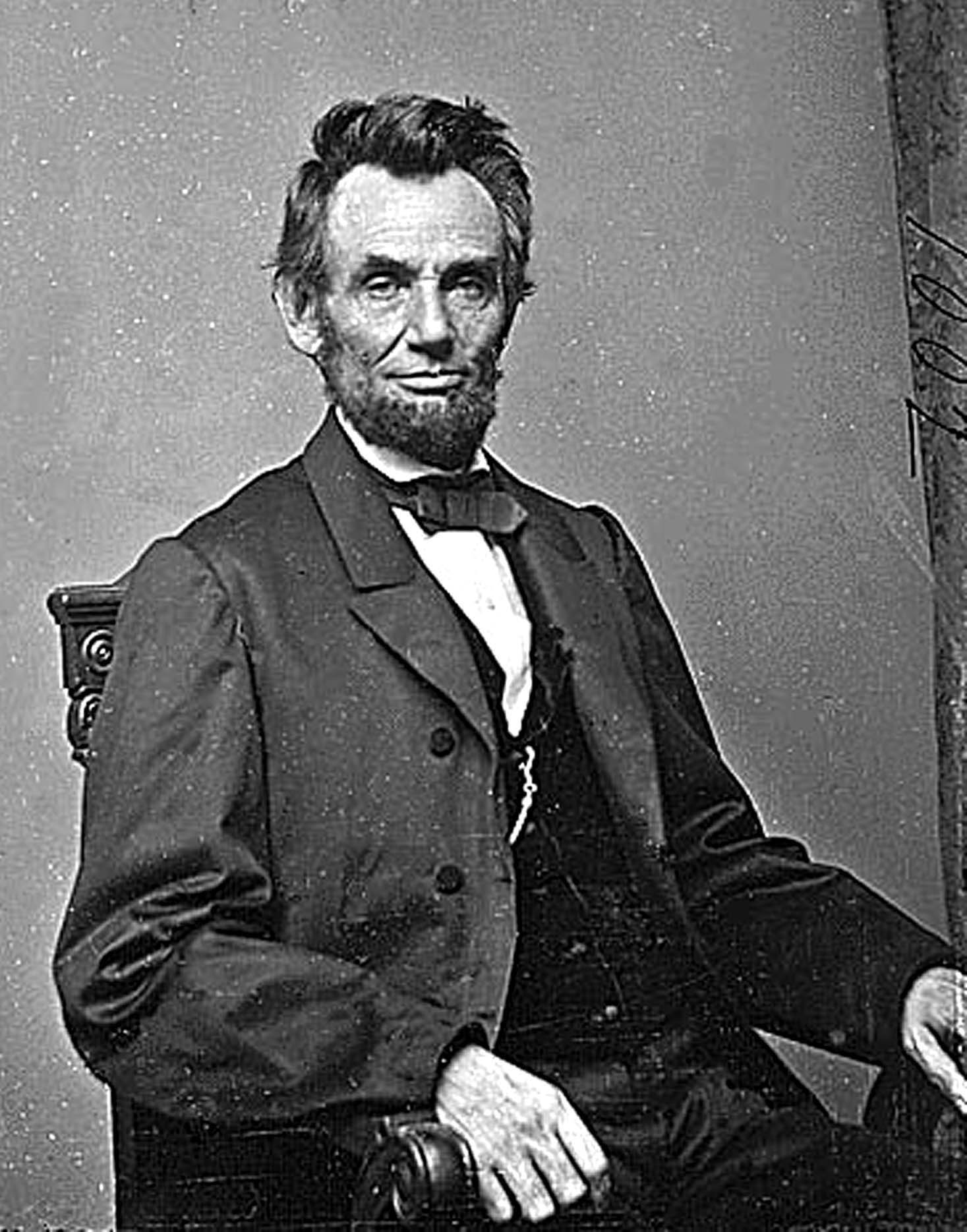
The murder of Lincoln in April 1865 made Johnson as president. This is the second example of the president without a party.
Johnson almost immediately entered into an acute confrontation with the so -called "radical Republicans" on the issue of reconstruction - post -war settlement in the south. Johnson after the battleship was a supporter of the soft line. In particular, he agreed with the right of the southern states not to grant suffrage to the African Americans and declared a broad amnesty who fought on the side of the Confederation. Radical Republicans, who possessed the absolute majority in Congress, considered the south as an occupied territory. They dominated the Fifteen United Committee - a special reconstruction body. Andrew Johnson stubbornly imposed a veto on the laws adopted by Congress, and Congress invariably overcame it.
In the end, in February 1868, the House of Representatives decided to impeach the president. The immediate cause was the dismissal of the military minister Edwin Stanton, who refused to comply with the presidential orders, especially regarding the reconstruction. The investigation in the Senate lasted three months and was discontinued when it became clear that the impeachment of the qualified majority would not receive.
Johnson remained the president until the end of the deadline. However, he was morally broken, and a tough line prevailed in the reconstruction policy.
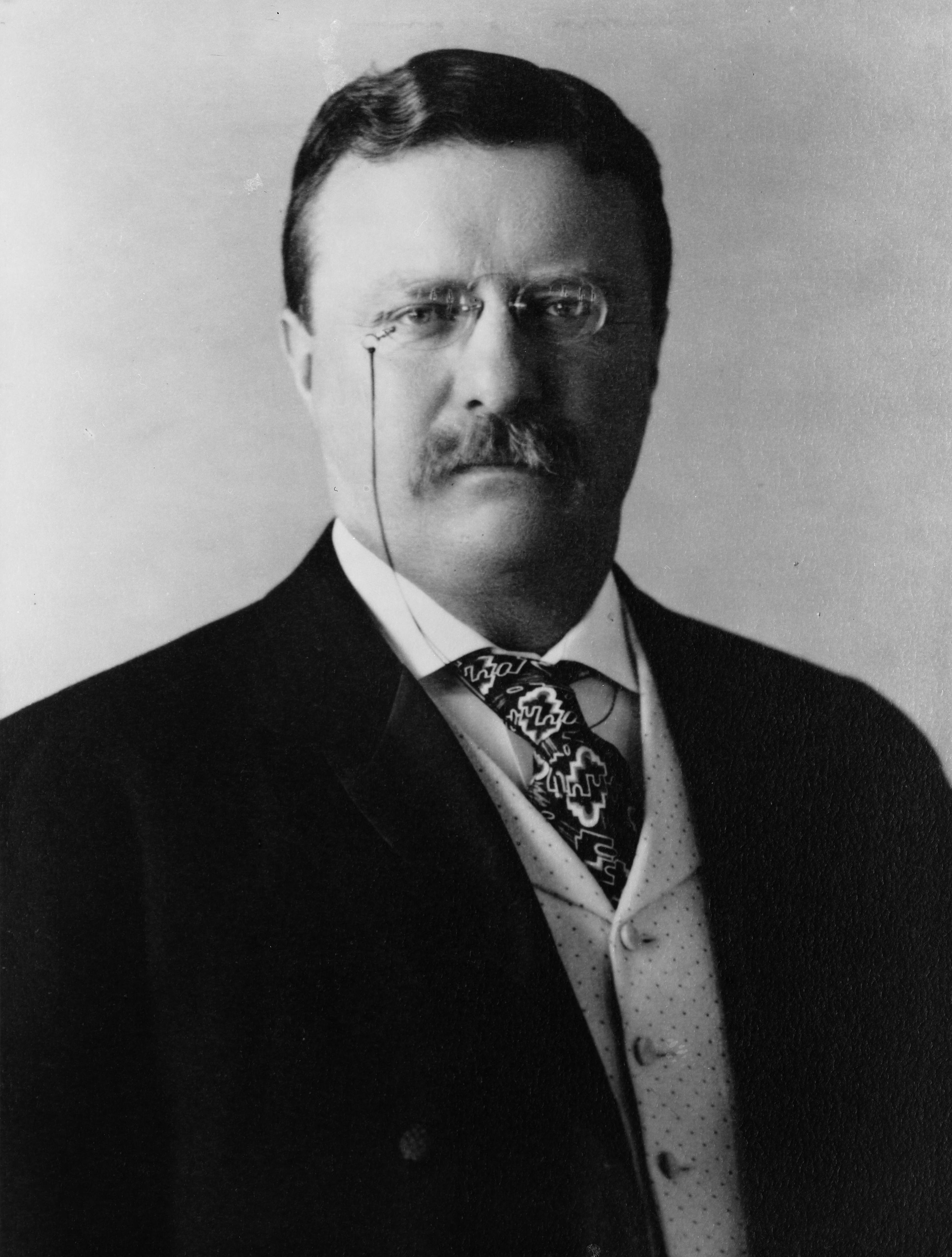
In addition, five times in history, the party refused the president in the nomination for a second term. In addition to John Tyler and Andrew Johnson, this happened to Millard Filmore, Franklin Pierce and Chester Arthur-the 13th, 14th and 21st presidents, respectively. When, in 1912, Theodore Roosevelt, who left the presidency in March 1909, wished to be elected again, the Republican Party preferred him to the current president William Howard Taft. Offended Roosevelt created his own national progressive party and split the republican electorate. As a candidate of the third party, he achieved the largest success in the history of success - he went around Taft, but lost to the candidate of the Democrats Woodlon Wilson.
The Internet publication Smoking Gun found that as a voter Donald Trump changed his political affiliation at least five times. In July 1987, he registered as a Republican. In October 1999, he declared himself a supporter of the Independence Party. In August 2001 he became a democrat. Eight years later he returned to the Republican Party. Two years later, he again left her and registered as an independent voter. Again became a republican in April 2012.
We add the sixth time: in 1999, he participated in the presidential campaign as a candidate of the reform party, but in February he withdrew his candidacy. The nomination of this party was then received by Pat Buchenin, who gained 0.42 percent of the vote.
Nevertheless, one thing is a voter or candidate and quite another - the current president. Even remaining formally a member and head of the party, but defiantly contrasting himself with it, the president weakens both his positions. If it is difficult for party bosses to mobilize a simple majority, then with even more alienation you can expect if not a split, then fragmentation of the party, when the members of the Congress will vote without looking at the president and party leadership, focusing in each particular case on the interests of their voters and their own types of re -election.