
Translated material
"Frozen budget"
Economists about what to pay attention to in the new draft budget
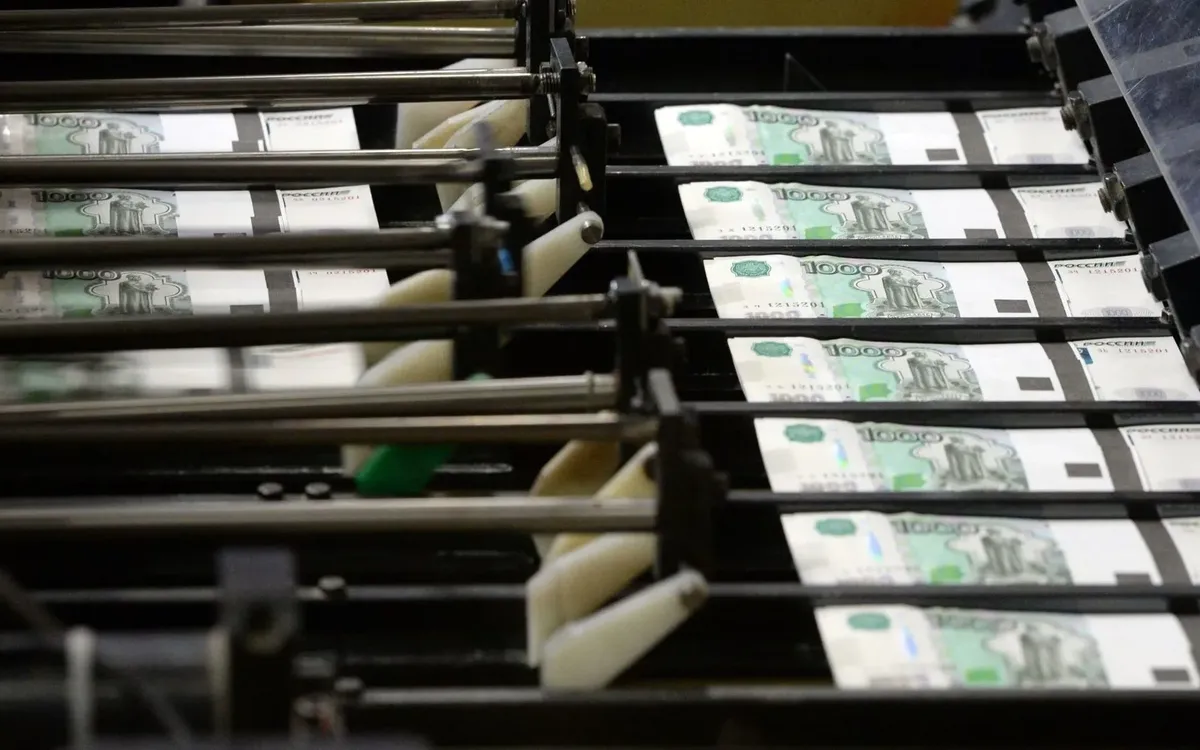
The government approved the bill on the federal budget for 2018 and the planning period of 2019-20. According to the project, the income of the federal budget for 2018 should amount to 15.182 trillion rubles, and expenses - 16.5 trillion rubles. Since 2019, the budget deficit will gradually decrease, which, according to the Minister of Finance Anton Siluanov, will help control inflation, and the Central Bank to reduce the interest rate. The inflation rate, according to government forecast, will be 4% annually - for three years.
Formally, the budget policy unfolds towards the social sphere, the expenses of education and healthcare are growing (60 and 31 billion rubles, respectively), and military expenses, on the contrary, are reduced (from 1 trillion to 944 billion). However, independent experts warn: the changes are mainly cosmetic, the costs of the social sphere in real calculus will not increase due to inflation, and the new budget is mainly built around the preservation of Status quo and eating the latest reserves.
Valery Mironov
Chief Economist of the Fund for Economic Research of the Center for Development of the Higher School
The main thing that is worth paying attention to in the new draft budget is the desire of the government to maintain the status quo and not to hold a budget maneuver in the direction of the economic growth model before the elections. At the same time, the government retains the growth of income in most sectors. Everyone looks at the numbers of statistics by sectors and see minor changes, at first glance, growth: for example, there was a trillion, but it became a trillion and 50.
Everyone is unhappy with the huge cost of “defense”. According to the “defense”, they say in the government, the costs will decrease: there was a trillion, it will become - 980 billion. But still it is 4.3% percent of GDP. Already the level of GDP is one of the highest in the world. Trump would be very pleased with such indicators, because he cannot achieve two percent of the costs of defense in NATO.
But the question is how to make it so that there is an economic growth that would allow to maintain high costs for the same defense, and ten years later, and in twenty? So that we do not miss the moment when we need to optimally distribute resources and provide those industries that stimulate economic growth. In this regard, it is clear that health and education costs are slightly increased. But in real terms, they will still be reduced, because inflation will be at least four percent.
At the same time, we must understand that our expenses together for healthcare and education are approximately 5.7% of GDP, as it was at the beginning of the two thousand years. Despite the fact that in countries with a similar level of GDP (I'm not talking about developed raw materials that diversified the economy, such as Australia, Canada, the Netherlands), there are more health and education costs-about 7-8%.
When we retain the nominal expression of these expenses, and in real terms we allow them to reduce them, we will not catch up with these countries, that is, we will not increase investments in human capital. This is fixed by the current not very good status quo-“distribute to all sisters in earrings”, that is, not to offend anyone. The government strives in most sectors, except for defense, to increase expenses in the face value so that there is no appearance that no one is offended.
Of course, we need a budget maneuver in one direction or another, or towards Kudrin’s strategy or towards some other approaches. Because if the current state of affairs is mothballed, then we will turn into the Soviet Union of the period of its collapse.
Igor Nikolaev
Director of the Institute of Strategic Analysis of the FBK
I would now call this document “frozen budget”, it is still scarce (1.5 trillion rubles). This deficit just now needs to be treated differently. We had a greater shortage. But it is one thing when you have a deficit and if it is available, there are all reserve funds. And another thing is that our reserve fund will be exhausted this year. From next year we will spend money from the National Welfare Fund. The deficit indicator seems to be smaller, but there are smaller reserves for covering this deficit. There is no reserve fund, to occupy in the foreign market is difficult. Plus, new US sanctions will be intensified, which are introduced and specified in relation to external debt. I believe that the problem of deficiency will be one of the most serious.
In terms of expenses by sectors, now we are talking only about some insignificant changes. Defense costs are especially symbolically reduced. Several tens of billions are very little, given that these expenses have grown in significant volumes before. They say that the costs of the rest of the sectors increased slightly, that it was not 16.2 trillion rubles, but a little more. But all this is insignificant, it is still withstanding the line that was a year ago. For three years, everything is frozen in terms of expenses.