
Translated material
Silence sentence
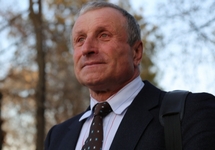
The judge of the Railway District Court of Simferopol, which was controlled by Russia, was sentenced by journalist Nikolai Semen to two and a half years in prison in a fabricated case of separatism. This was reported to the "Franes" by the lawyer of the Agora group Andrei Sabinin, representing the interests of Semyon together with lawyer Alexander Popkov.
Semen has been appointed a trial period of 3 years. The journalist was also deprived of the right to engage in public activities for three years. “The court’s decision will necessarily be appealed,” Sabinin said.
The head of European diplomacy Federica Mogherini condemned the sentence to Semyon, calling him a clear violation of the freedom of expression and freedom of the media. "Semyon was convicted of his journalistic work under an article on" public calls to actions aimed at violating the territorial integrity of Russia. "This article is used by the Russian authorities in relation to those who confront the illegal annexation of Crimea," her statement said. Mogherini urged the Russian authorities to remove the charges from Semyon.
On Monday, in the debate of the parties, the head of the department of state prosecutors of the annexed Crimea, Svetlana Udanskaya, requested for Semyon three years conditionally with a three -year trial period. Udanskaya also demanded to ban Semyon for all three years of a trial period to engage in any public activity.
The hearings in the case of a journalist lasted since February 28 . The 67-year-old Semen was charged with part 2 of Article 280.1 of the Russian Criminal Code (public calls for separatism through the media), which provides for up to five years of the colony. On April 3, at the first meeting on the merits of the case, he refused to admit guilt, declaring the right of any journalist to express his opinion on the status of the peninsula and participate in a world discussion on this issue.
The defendant emphasized that he does not deny the authorship of the article “The Blocade is the necessary first step towards the liberation of Crimea” , which has become a reason for its criminal prosecution, but does not see the writing and publication of this text of the crime. “It was precisely to this aspect that little attention was paid to during the investigation,” said Semyon.
The article was published in the Crimea. Realiykh on September 11, 2015, on the eve of the civil blockade of the peninsula announced several days earlier. In the case file, there are screenshots of the screen of the Semyon computer made in the process of writing the text.
At the same time, two FSB operatives, questioned in the process, found it difficult to explain on what legal basis they gained access to the computer of the seeds and tracked its actions before the court allowed them. “At the end of the interrogation,” said the lawyer of the journalist Alexander Popkov, “one of the FSB officers completely swam - began to say that there were supposedly some other decisions of the court on another wiretapping. This is a very important point for us, indicating that the FSB officers either carried out these events illegally, unauthorizedly, arbitrarily, or now during the trial, they invited the materials of operational and search activities, which are classified. "
The investigation led the UFSB in annexed Crimea and Sevastopol. The journalist is under the no to leave. Rosfinmonitoring included it in the list of terrorists and extremists.
The accusation is based solely on the conclusions of a linguistic examination, which announced the presence of public calls for extremism and separatism in the texts of Semyon. The defense, however, noted that in his conclusion, the expert-linguist went beyond his competence, and insisted on excluding the study from the case.
At the same time, there is a political science examination conducted by order of lawyers by the former professor of Kuban University, Mikhail Savva, who fled from Russia at the end of 2014 and received a political trial in Ukraine. Savva indicated that according to the Constitution of Russia, international norms have priority before national laws, and in a number of international legal documents signed by Moscow, Crimea is recognized as the territory of Ukraine. Thus, the political scientist concluded, the seeds, declaring Crimea Ukrainian, did not violate Russian laws.