
Translated material
Capitol against the capital of America
How the President and Congress fought with the financial crisis and Wall Street
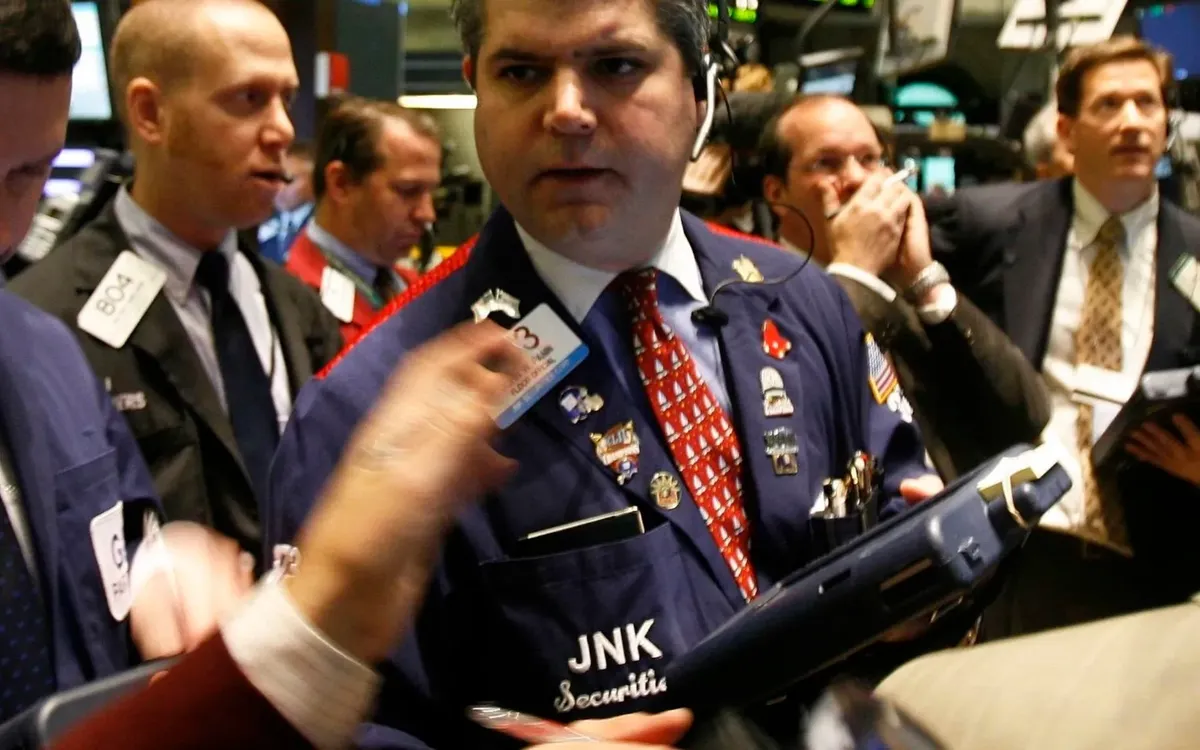
The current situation with Russian banks refers us to the experience of the American recession of 2007-2009, which caused the global financial crisis, to the measures that were undertaken by the Bush and Obama administration to save the banking system and prevent future financial bubbles.
CONTEXT
Okhotny series - in line
The State Duma instructed the financial market committees and to request security at the Bank of Russia and law enforcement agencies data on the reasons that led to a possible withdrawal of assets from the Yugra, Opening and Binbank banks. It is clear that the deputies want to somehow fix their concern in the context of high-profile events in the financial sector, but in this formulation the order looks rather awkward.
Firstly, the situations with the Ugra, on the one hand, and with the “discovery” and “Binbank”, on the other, are fundamentally different. If in the first case the case ended with the review of the license with the active resistance of the owners of the bank, then in the second, the shareholders voluntarily transferred their banks to the Consolidation of the Banking Sector.
Secondly, neither the Central Bank, nor law enforcement officers have no documents that could tell about the withdrawal of assets from these banks. Now there are inspections, and through the Central Bank line in three banks at once, and in Ugra law enforcement officers work at the request of the Bank of Russia itself.
Finally, despite the astronomical amounts that the financial recovery of the “discovery” and “bina” will require, this money is beyond the competence of the parliament. The Duma approves the federal budget, while the reorganization is carried out by the Central Bank at its own funds, without attracting budget financing.
Read also
Do not say “bin”. Nationalization of large banks is a symptom of a crisis in the economy
Work through the Consolidation of the Banking Sector is a fundamentally new mechanism for Russia, and it is too early to talk about its possible efficiency (with signs of “plus” or “minus”). The Central Bank really takes on huge risks, including political ones. But there is no doubt that the new mechanism of sanitation on the nebel was launched with an eye on international experience. Including - American.
Department of Economics

On superjets for money
When in November 2008 the “captains of the American automobile industry” - the control of the Ford, Kraisler and General Motors, arrived in Washington on private superjets to ask Congress for urgent financial assistance - i.e. Taxpayers' money, this caused the wrath of lawmakers, journalists and the general public. A crisis was already raging in the country, the causes of which were risky speculations in the real estate market, the creation of “exotic” securities - derivatives, the lack of financial regulation and the growth of the “shadow” banking system. These conclusions are contained in the final report of the special commission of the Congress to investigate the circumstances of the recession of 2008-2009.
Three managing auto giants imposingly left private aircraft with paper cups of coffee in their hands and headed for the Capitol Hill, where they suddenly encountered a tough reception in the financial committee of Congress.
“Amazing irony: people flew to Washington on private“ Lux ”class aircraft in order to ask for money and promise to optimize their business, get rid of everything superfluous. It’s how to appear in the kitchen in the cylinder and tuxedo. Could you take tickets in the first grade or at least divide one plane into all? ” - Hiri Eckerman's congressman ironized.
Three managers asked the Congress to allocate a loan of $ 25 billion to them to “save the industry”. Journalists calculated: the flight on the superjection costs 20 thousand dollars, and a regular flight of two ends - 500.
Congressman Brad Sherman invited them to raise a hand if one of them is ready to sell their plane and rendered in the back to ordinary flight. No one raised his hand. Managers also did not receive money then.
Domino effect
Mortgage and financial crisis in 2007-2008. Countered 50 banks and financial organizations of America. They fell like a domino, and with them - the economy and the living standards of Americans. Recall how it was:
On April 2, 2007, the largest mortgage company of the United States for borrowers with a low level of creditworthiness of the New Century Financial Corporation announced its bankruptcy;
December 2007, the official beginning of the recession, unemployment is 5%; The US Federal Reserve (hereinafter by the Fed) introduces a program of urgent auction lending (TAF) to help financial institutions, increase liquidity in credit markets;
On February 13, 2008, George Bush signed the law on economic incentive, which provides individuals with tax discounts, encouraging investments in the economy;
On March 16, one of the largest Bear Stearns investment banks after bankruptcy was purchased by JPMorgan Chase & Co;
On September 7, the US government nationalizes the main mortgage agencies of the country Fannie Mae and Freddie Mac;
On September 15, bankruptcy is announced by Lehman Brothers Bank, and on September 26 , the Lashington Mutal (WAMU) is a loan-saving bank, first it was transferred to the federal deposit insurance corporation, and then $ 136 billion deposits for only 1.9 billion JP Morgan Chase were sold. Merrill Lynch was forced to merge with Bank of America, and the AIG insurance giant was implored by the Federal Reserve Bank (hereinafter by the Fed) to provide emergency financial assistance and received it. Lehman Brothers bankruptcy is called the starting accurate global financial crisis. The bank suffered from a mortgage crisis and derivatives collapse. The largest world investor Warren Buffett in 2002 called derivatives "financial weapons of mass defeat." Their value significantly exceeded the value of basic assets. When the speculation bubble bursts - it was a matter of time. As the hearings in Congress confirmed, a few days before the collapse of Lehman Brothers, the top managers were written out “golden parachutes”-multimillion-dollar bonuses. The head of the collapsed bank Richard Fuld admitted that in 8 years in the form of a salary and bonuses he received $ 300 million;
On October 3, Bush signs the law on the allocation of $ 700 billion per program of redeeming problematic (called “toxic”) assets. The plan to save the banking system was named in honor of the then Minister of Finance (he is the head of the US Treasury) Henry "Hank" Polson. The project to save the market has become the largest since the crisis of the 30s of the twentieth century. They were guided by the rule - to save those who are “too big to burst” - the so -called system -forming banks. In the countries of the "big twenty" there were 29 of them, of which 10 were from the USA. Goldman Sachs was among the elect. The 74th Finance Minister Henry Polson from 1998 to 2006 headed this bank, such a coincidence.
In one week in October 2008, the Dow Jones index fell by 1874 points, or by 18%. Pension funds were injured from the depreciation of American securities (50% in the midst of the crisis), which accumulated the accumulations of “old age” of millions of Americans. In October 2010, unemployment reached 10 percent (the worst result over 26 years), many Americans were forced to go into unpaid vacations or a shorter clock worked. In 2011, 2.9 million Americans lost their housing due to non-payment of mortgages. The middle class was especially affected - people who work selflessly and do not count on the help of the state: subsidized housing, free medicine and food coupons. They lost their "American dream", which is inextricably linked with their own home. The middle class still feels the consequences of this shock. These people became the electoral base of the 45th President, who promised them the creation of jobs and the acceleration of the army of parasites sitting on the neck of the state.
The Planes Plan replaced the Obama Plan. In February 2009, the US government put forward a plan to stimulate the economy in the amount of $ 787 billion, among which 35% were given to a decrease in taxes, and 65% to investments, the largest plan for government spending from the Second World War. The administration announced that it would help medium and small businesses, enterprises of alternative “clean” energy, as well as ordinary citizens in saving their own housing, in loans for the purchase of a car, in paying for training in universities, etc. It is not surprising that opponents of state regulation called the actions of the Obama administration "socialism."
It is fundamentally important that the loans provided to corporations were returned to the state. The representatives of the liberal media proclaimed the Savior Detroit (read-the American automobile industry), although the first Bailout-ransom of securities for General Motors and Chrysler-occurred in December 2008, despite the help, in June 2009, General Motors announced the closure of 14 enterprises in the United States.
Ben-veletlet
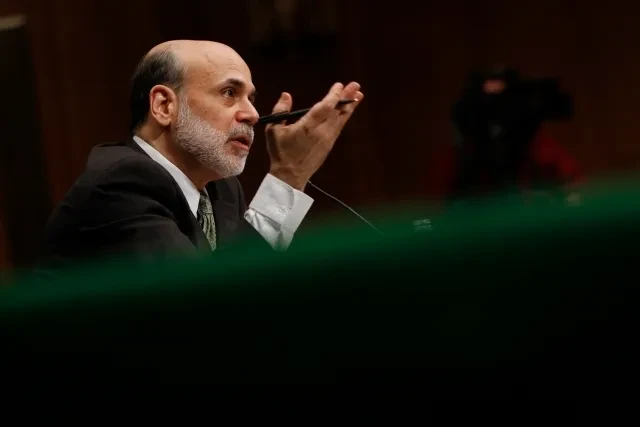
The main name that left the mark in the textbooks of history and the global economy in connection with the financial crisis of 2007-2009. -Ben Bernanke, chairman of the Council of Management of the Fed in 2006-2014, a man of the year according to Time magazine (2009),
A helicopter who received the nickname for the willingness to “scatter dollars” from the sky, stimulating financial institutions and the most important sectors of the economy.
Another of the meanings of the word Bail out is to jump with a parachute. The parachutes for the American economy became:
decrease from 5.25% to 0 base banking rate and
The phased program of “quantitative mitigation” is the purchase of a Fed and other bonds for the amount of & 1.7 trillion at the first stage, in 2008-2009.
In February 2009, the Fed and other agencies-the regulators conducted a stress test of American banks to determine who needs further assistance. It turned out that the worst for them is already behind. At the second stage 2010-2011. The total amount of securities of securities amounted to $ 900 billion. In 2012, the 3rd stage was launched: it was supposed to redeem the treasury bonds-in the amount of $ 45 billion, and mortgage bonds-for the amount of $ 40 billion on October 29, 2014. The Fed completed the “quantitative mitigation”, the economy did not need it anymore.
On September 20 of this year, the federal reserve system announced plans to start reducing the assets on the balance sheet - bought from 2008 to 2014 of debt papers of the government and mortgage agencies. Their volume after the implementation of stimulating programs reached $ 4.5 trillion.
Every six months, the head of the Fed cooked in Congress with a report on the progress of the restoration of US financial markets. During his stay as chairman of the federal reserve system, he was the most important person in the world economy. Bernanke has enough critics who say that during the recession he simply turned on the printing press, increased the cash base five times: from $ 800 billion to $ 4 trillion dollars.
Others are guided by the rule: the winners are not judged. Bernanke, working with other central banks of the world, saved the financial system from complete collapse.
DODD and franc regulators and Volker's rule
Having seen enough of Wall Street’s customs, realizing that the financial market “without borders” leads to chaos, President Obama, with the support of Congress, has carried out the most large reform from the time of the great depression to reduce the risks of the American financial system.
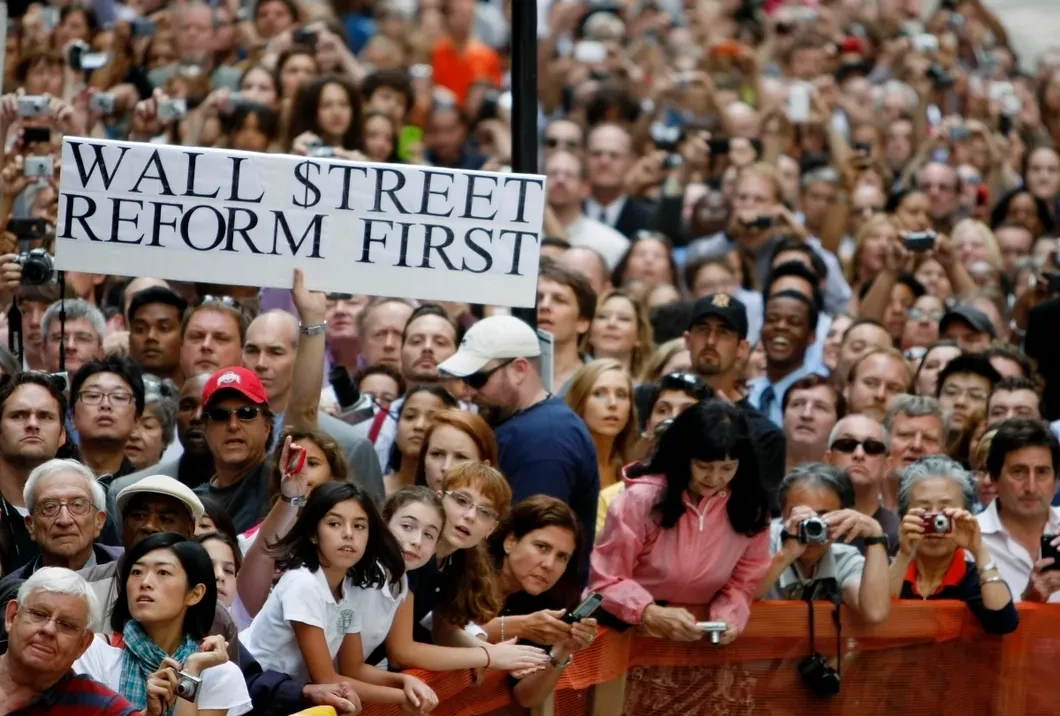
The Law on “Wall Street Reform and Consumer Protection” is named after Senator Chris Dodd and a member of the House of Representatives of Barney Frank (both democrats). Over 2300 pages of the text are a set of new regulatory rules to reduce risks for the financial system, protect consumers of financial services and control the activities of system -forming financial institutions. The central place in the new system is reserved for the Council for supervision of financial stability. The law took place thanks to the initiative of President Obama and most democrats in both chambers. The Republicans did not support him, believing that the state unacceptably intervenes in market processes, and liberals criticize him for blur and ambiguity. According to the Law Firm Davis Polk, 111 out of 390 regulatory requirements are still waiting for improvements and embodiment.
A special place in the law is occupied by the “Volker's Rule”. Paul Walker, the former head of the Fed, was appointed Obama as head of the Council for Economic Restoration. The law limits the participation of American banks in the operations of the sale of securities at their own funds designed to cover obligations to customers. The rule applies to banks that attract deposits from the population and organizations. The change is aimed at limiting the risky behavior of system -forming banks, such as Goldman Sachs, Morgan Stanley and Jpmorgan Chase. Trump calls the Dodd -Frank Law “disaster” and promises “to process it in the most thorough way”. But while the hands do not reach, not to that.
The US financial system turned out to be “too big to burst” from the crisis of 2008-2009.
Two administrations - Bush and Obama, despite different ideological platforms, were chosen from him gradually, but steadily. The forecasts of the Alarmists who foreshadowed the collapse of the dollar (and continuing to do this), state default did not come true. There was no nationalization of the banking system, and the regulation of the state, as financial stability was restored, weakened. Now the pendulum swayed in the other direction - refusing to regulate, it is constantly in America. However, in order to prevent the mortgage or any other financial bubble to bring down the local market, now they will now follow the four eyes: both Republicans and Democrats.
Washington