
Translated material
Elections to Bundestag began in Germany
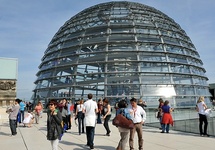
In Germany, the Bundestag elections began, RBC reports . 47 parties participate in them, if we consider the ruling bloc of the Christian Democratic Union and the Christian Social Union as a single party.
Four forces are represented in the current composition of the German parliament: the CDU/CSS, the Social Democratic Party of Germany, the Left Party and the Green. As expected, according to the results of the current elections, two more parties overcome the 5 percent barrier - this is a free democratic party and a right -winged alternative to Germany.
CDS/CSS, headed by the Federal Chancellor by Angela Merkel, according to polls, leads by a wide margin from competitors. A week before the elections, 37 percent of voters intended to vote for him, about 20 percent for SDPG, 12 percent for ADG, 10 percent for the SVDP, for the left batch - 9 percent, and 8 percent of voters for green.
Merkel, who has been holding this post, has already three cadenations - since 2005, is again in the Chancellors of the HDS/CSS. The candidate from the SDPG was named Martin Schulz , who in 2012-2017 was the speaker of the European Parliament.
The peculiarity of the current elections is that for the first time after the Second World War, the right -wing party may go to parliament. In 2013, ADG was already nominated in the Bundestag, but she gained only 4.7 percent of the vote, not managing to overcome the balloon thus. The popularity of the party increased significantly in the wake of the migration crisis, which erupted in the country two years ago after the Merkel decision to provide asylum almost 1 million migrants.
ADG insists on closing the boundaries of the European Union for migrants. Also in her program is Germany’s exit from the eurozone and the weakening of the EU political institutions with the return of the majority of the functions transmitted to him by national governments. Along with this, right -wing radicals opposed the construction and maintenance of mosques in Germany with the funds of Islamic states and other foreign sponsors. They require internal issues to be taken to a referendum, as in Switzerland.
Finally, ADG wants to cancel sanctions against Russia and closer to cooperate with Moscow.
Meanwhile, both the CDS/CSS, and the SDPG are supporters of the strengthening of the European Union. Both forces are linked to the removal of anti -Russian sanctions with the implementation of Moscow Minsk agreements.
The frankly Posoputin position of the ADG, as well as the Russian issue as a whole, during the election campaign was given considerable attention. It was reported that on the eve of the elections in Germany, a network of procting structures was activated. The Federal Protection Service of the German Constitution (counterintelligence of the country) has repeatedly expressed fears that on the eve of the elections, Moscow would deploy a disinformation campaign , resorting to hacker attacks. However, these fears, as far as are known, have not come true.
As Deutsche Welle notes , regardless of the number of votes that will receive in the ADG election, it cannot be passed to the government: all other parties refused to conduct negotiations on the coalition in advance. The Foreign Minister of the country, a member of the SDPG Sigmar Gabriel directly stated that for the first time after the Second World War in the German parliament, "real Nazis" would be.