
Translated material
Bickfords of Independence Cord
Why Kurdish referendum can become a prologue for new shocks in the region
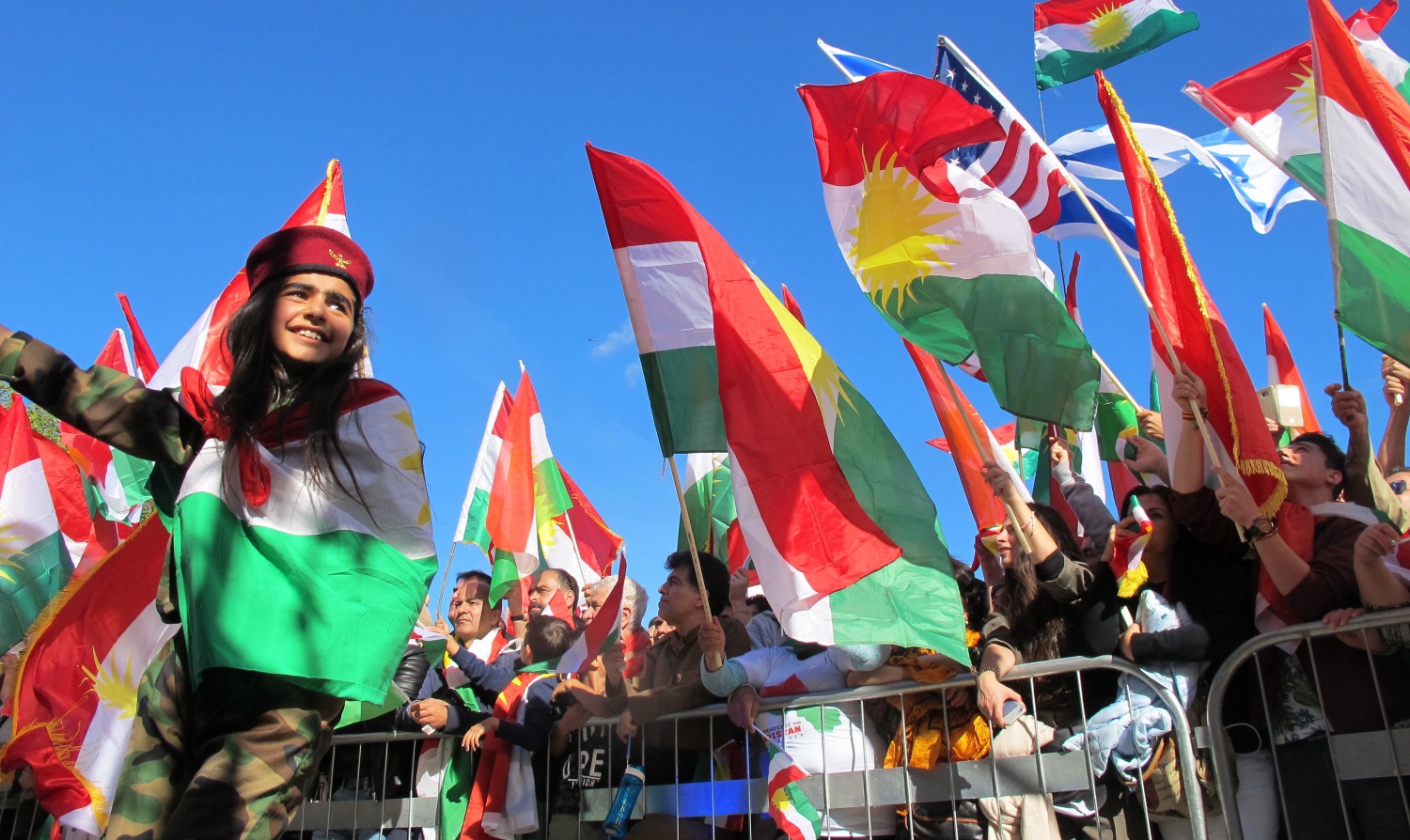
Photo: Flickr.com/jan Sefti
The fact that the authorities of the Kurdish autonomy in Iraq, proudly called Iraqi Kurdistan, want to hold a referendum on the independence of the region and the adjacent disputed territories, became known in June 2017. Moreover, they did not hide that the purpose of voting is to withdraw from Iraq, in which Kurdistan has the status of a federal region with high powers - up to its own border guards, customs, police, the armed forces (Peshmerga) and the right to distribute profit from oil production at their own discretion. The head of the Kurdish autonomy Masud Barzani (by the way, his term of office expired back in August 2015) then said: “On September 25 there will be a voting day. There is no way back, this decision is irreversible. ”
The Kurds made the first attempt to separate from Iraq in 2014, realizing that with an established influx of Neftedollars to the treasury it is easier for them to exist without the rest of Iraq (autonomy, by the way, provided Saddam Hussein in 1972) than with him. But then for a number of reasons did not work out. As soon as Barzan, he proclaimed a second attempt, it became clear to experts engaged in the Middle East: this time it would be incredibly difficult to stop the Kurds. Barzani made it clear that the referendum, speaking the language of football commentators, should “take place in any weather” - at least so that he, Barzani, would not lose his face, but would be able to go down in history with a worthy successor of his father - Molla Mustafa Barzani, the largest Kurdish leader in the history of the Kurdish leader.
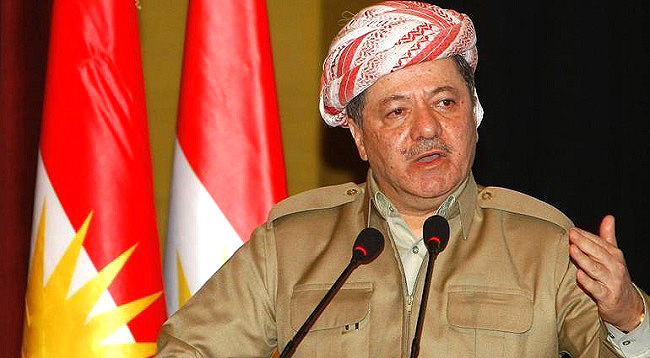
*Head of Kurdish autonomy Masud Barzani. *Photo: Flickr.com/jessica Herron
Arguments of Barzani
From June to September, Masud Barzani and other representatives of the Kurdish elite showed the determination to hold a referendum “here and now”, not succumbing to any persuasion to abandon it or at least postpone for a while.
From the outside, from other powers, including the United States and Turkey, there were a number of initiatives that took place to proposal with a referendum due to an extremely complex situation in the region, which has not yet ended with the “Islamic state”*, etc. - But all of them were consistently rejected by Erbil ( the capital of Iraqi Kurdistan. - NT). The war of the nerves continued until September 23 - on this day, the Kurdish delegation went to Baghdad to discuss a possible alternative to the referendum with the Iraqi. True, on the eve of, the 22nd, Barzani again confirmed his determination to hold a referendum, despite external pressure, and fell criticism of Baghdad. “For the decision to hold a referendum, we are threatened with punishment. But what they ( the authorities in Baghdad. - NT) have been doing the last hundred years, how they did not punish the Kurds, - Barzani asked rhetorically at a highway in Erbil. “We are not afraid of new punishments.”
At the same time, he made it clear that the referendum will be resolved not only the issue of independence, but also about the “real boundaries” of Kurdistan. Yes, now between Baghdad and Erbil, Barzani noted, there are many so -called “controversial territories”, but the referendum will just determine the will of the people on this issue. Without doubting that the referendum will proclaim the independence of the Kurdish autonomy from Iraq, Barzani explained: “After September 25, we will begin dialogue with Baghdad for oil, gas, water and disputed territories. We want to be good neighbors (with Iraq). ” But he immediately reminded: the 35 millionth Kurdish people, the most numerous people in the world, who do not have their own state, remembers chemical attacks, to which Saddam Hussein resorted to the Kurds and repressions in the fight against the Kurds .. Yes, today the Kurds see that Baghdad does not want to help the Kurdish militia (the Irony of Fate was signed by the authorities in Baghdad and the Kurdish militia. Agreement on the joint struggle against the IS units*).
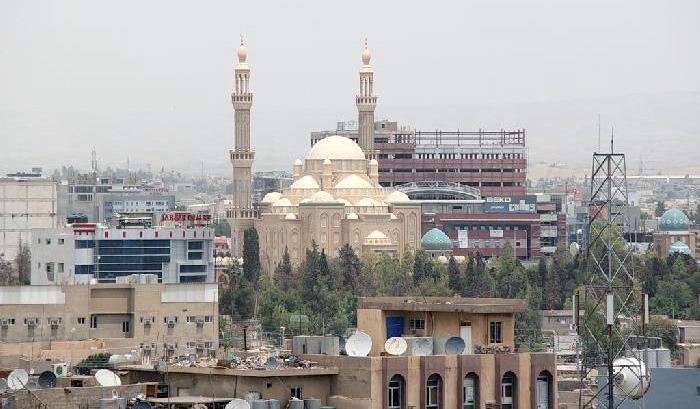
*The capital of Iraqi Kurdistan city of Erbil. *Photo: Kurdistan. ru
In a word, the aging Kurdish leader hurried. But not only because we are obsessed with the desire to leave an inconsistent trace in the history of his people, becoming the founding father of the Kurdish state. Barzani wants to take advantage of the profitable moment: the day is not far when the general fight against IG* ends with the victory and the federal authorities will be able to strengthen their positions during the upcoming inevitable bargaining with the Kurds. While Baghdad’s hands are connected by the fight against IG*, he will not be able to talk with the Kurds from the standpoint of strength. Barzani intuitively feels that the victory over Igra will strengthen the Iraqi state, and then the current, widely opened, as it seems to him, the window of possibilities may slam slam. Under these conditions, he is unlikely to be able to implement plans to increase the additional 40% of the territory to what it is already.
Barzani is in a hurry and seeks to hold a referendum where he managed to establish his military control. Otherwise, there will be a threat of a direct clash of Kurdish Peshmerg with loyal Baghdad ethnic military formations, which will also support the Iraq army.
However, it is precisely this aspect, which the representatives of the Kurdish elite are least now indicated, the most sensitive for national minorities - ethnic and religious - Iraqi Kurdistan.
“For the decision to hold a referendum, we are threatened with punishment. But what did they ( the authorities in Baghdad. - NT) have done the last hundred years, how did the Kurds have not punished? - asked the rhetorical question Barzani at a multi -thousandth rally in Erbil. - We are not afraid of new punishments "
Arguments of national minorities
The possible consequences of a referendum cause strong concern among Assyrian Christians, Yezidov, Shabakov, Kakai, Turkman, Iraqi Arabs and other Iraqi citizens living in the territories that may be part of an independent Kurdish state.
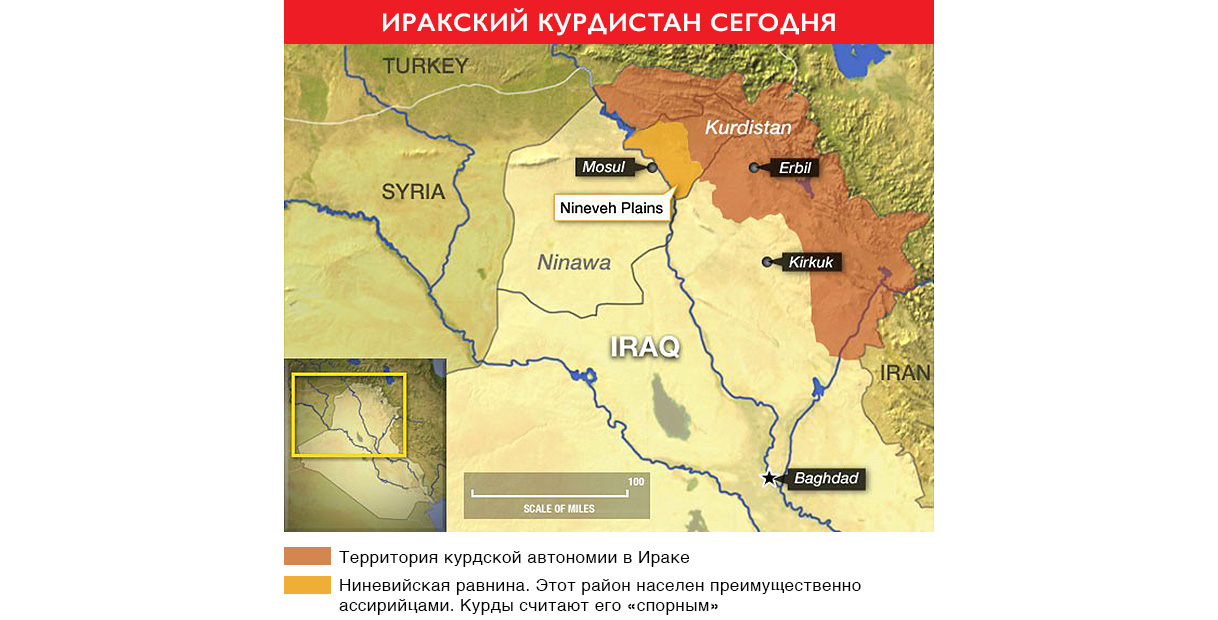
The Assyrians are fundamentally against the referendum to be carried out in the three districts of the Ninevia Plain, east of the Iraqi, which are just freed from Ig* Mosul, are part of the Iraqi province of Nineveh (Nainava).
Turkmans (Turkoman, Iraqi Turkmens), which make up a significant percentage of the population in Kirkuk, Tel Afare and other territories, also against the entry of their residence regions into Kurdistan.
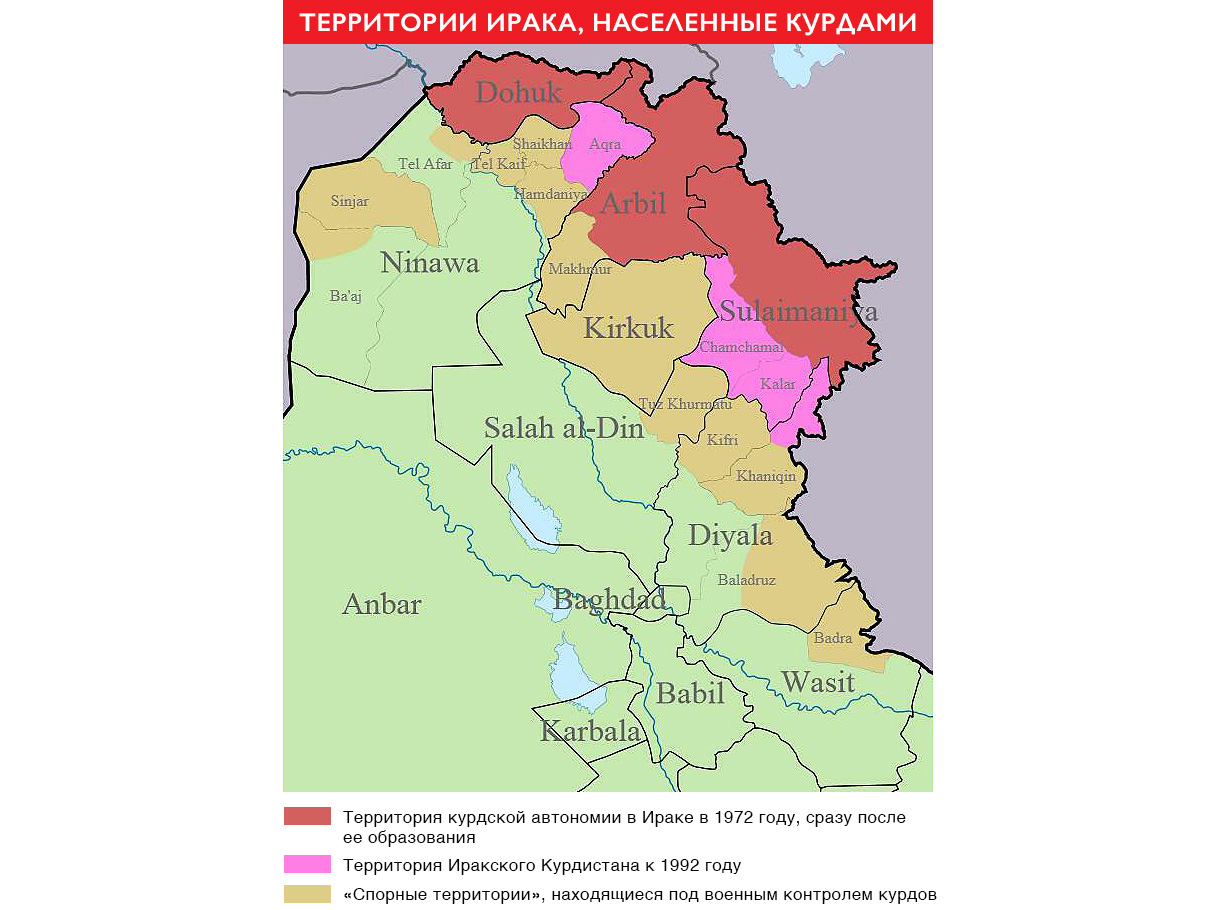
Source: Google.com
Source: Google.com
The Yezidi would also adhere to a similar part of them to be a significant part of them that a new Iraqi province to be created on the territory of their compact residence (Sinjar).
Some Iraqi politicians prompt exactly such a way out: to create in the territory of the three mentioned districts the province of Ninevia Plain as part of a single Iraqi state.
The leaders of the 200 thousandth community of the Assyrians, as well as the Yezidov (at least 250 thousand) and Shabakov (150-200 thousand) are afraid that in the event of the Ninevia Plain and Sinjar to Kurdistan, their rights will not be provided properly.
They are convinced of this by the experience of life under the Kurds, who actually took control of the “disputed territories” after the fall of the Saddam Hussein regime in 2003 and since then practically did not leave there. And even in mid -2014, when a significant part of these lands passed under the control of IG*, the Kurds managed to establish control over the oil -bearing Kirkuk, taking advantage of the collapse of the Iraqi army.
In the summer of 2014, the Kurdish units of Peshmerga, who had previously suppressed the smallest attempts of the inhabitants of the Ninevia plain and Sinjar to organize self -defense forces, fled from the fighters of IG*, actually throwing national minorities to the arbitrariness of fate. After that, the massacre began. Tens of thousands of people left their native foci, fleeing from the atrocities of the IG fighters*, thousands were captured by Islamists and remain hostage (and actually in slavery) until now, for example, women and girls from the Yezidic syndjar, who could not be saved or redeemed. At the same time, the Kurdish authorities did not conduct a comprehensive investigation of the reasons for the unexpected retreat of Peshmerg, so many Assyrians and Yezidis are sure that in 2014 there was a certain conspiracy between the actually ruling democratic party of Kurdistan (DPK) and IG*. And if so, for them it is much more reliable to build their future on their own, within the framework of individual provinces, but as part of Iraq. Such a status, among other things, will allow them to formulate their own security forces.
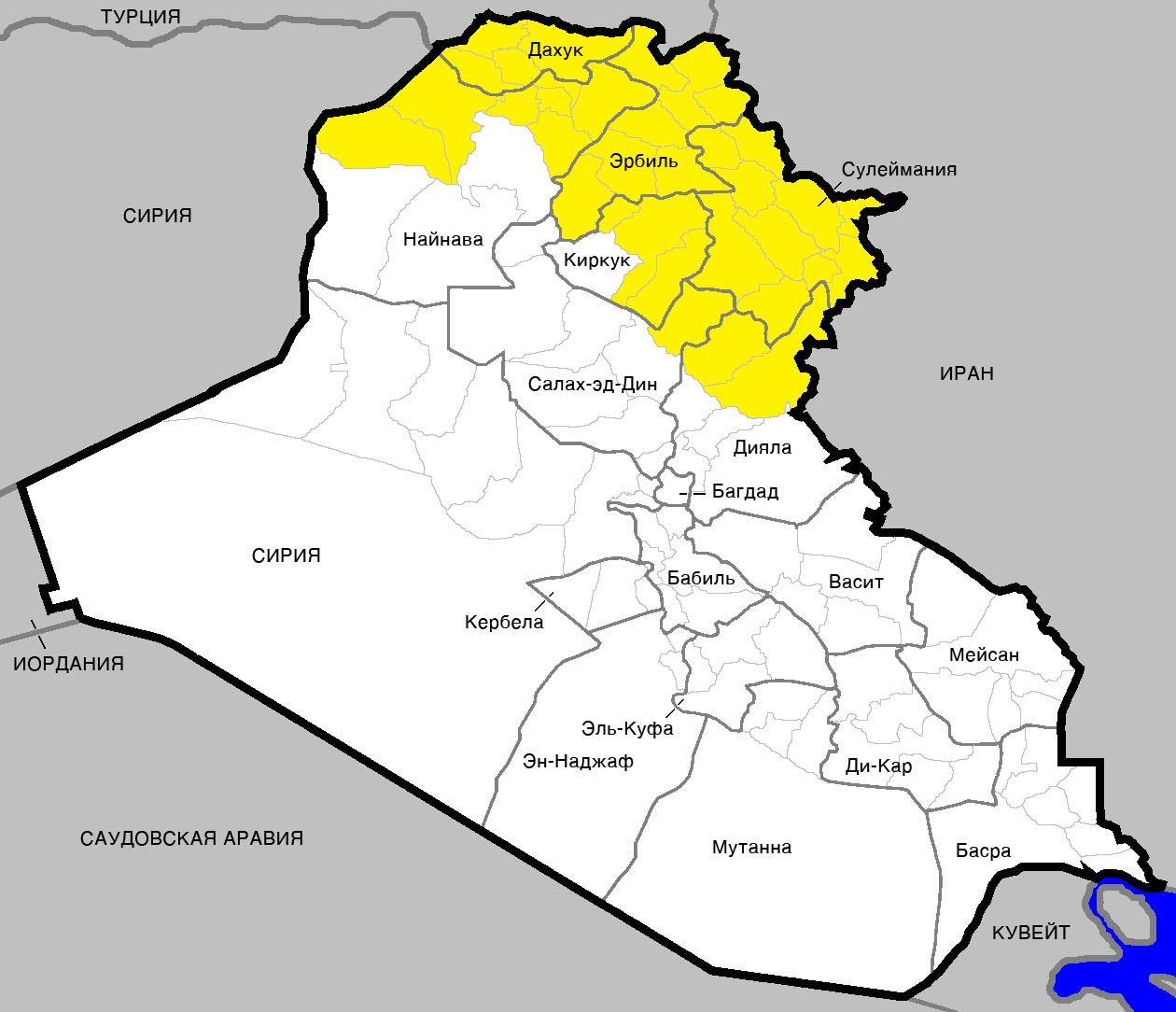
*Iraq card. The territory of the Kurdish autonomy is yellow. *Source: Google.com
And after in August the authorities of the Kurdish autonomy as a strong -willed decision were replaced by mayors of the Assyrian cities of Alkovs and Telkef (Telkeep) on the Ninevia plain on the loyal members of the DPK, suspicions of national minorities in the fact that in independent Kurdistan they were waiting for legal lawlessness, only intensified in the service of protest.
By the way, human rights activists regularly report other actions of the Kurdish authorities so that citizens of Nekurd nationality vote for independent Kurdistan on a voluntary and compulsory manner.
In August, the authorities of Kurdish autonomy as a strong -willed decision replaced the mayors of the Assyrian cities of Allkosh and Telkef (Telkeep) on the Ninevia plain on the members of the DPP loyal to them
Gloomy experience
The whole experience of life in the Iraqi Kurdistan, or rather, in its actual borders that arose after the first war in the bay (1991), and then heavily extended in 2003, does not give representatives of minorities the grounds for optimism. Since the 1990s, the murders of Assyrian politicians and activists have remained unsolved. The growth of chauvinistic and Islamic tendencies in Iraqi Kurdistan was reflected in the wave of the pogroms of the Assyrian and Yezid population in 2009. In fact, the history of the region is rewritten: for example, the capital of the Kurdish autonomy Erbil ( Assyrian Arba-Ilu, the “city of four gods.” - R.B .) receives a new Kurdish name-Hevler. But the most bitter for the Assyrian living in Kurdistan is the feeling that they treat you as a second -grade person. And this is in Mesopotamia, on Earth that remembers the achievements of your ancestors in all areas of civilization, including in the field of law.
In the 1960s, Iraqi Assyrians were faithful allies of Molla Mustafa Barzani in his struggle for the freedom of Kurdistan. The first fallen martyr of the Kurdish Revolution of 1961 is the Assyrian Atniel Miho. The commander of one of the Assyrian units as part of Peshmerg, Margaret Givargis (Georges), was called "Jeanne d'Arc Kurdistan." Another hero of those events - the Assyrian Robert Malik Chicco - blew himself up, throwing himself under the tank of the Syrian army, which went to unite with the Iraqi units. However, it is well known: the freedom of one people ends there and when it begins to oppress other nations.
In the 1960s, Iraqi Assyrians were faithful allies of Molla Mustafa Barzani in his struggle for the freedom of Kurdistan. The first fallen martyr of the Kurdish Revolution of 1961 is the Assyrian Atniel Mijo Assyrian
What's next
... September 15, for the first time after a two-year break, a meeting of the Iraqi regional parliament was held in Erbil: most deputies from Assyrian Christians and Turkoman, representing the largest minorities of the region, boycotted him, and deputies from the Party “Assyrian Democratic Movement” Yaku Yaku Yaku and Lina Isarya held an improvised press conference at the walls of parliament:
“We are against holding a referendum on the Nineveh Plain,” the deputies said. - This has no legal basis and contradicts the country's constitution. The Nineveh plain is not part of Kurdistan. ”
However, not everyone supports Barzani’s decision to hold a referendum in the Kurdish establishment. Many representatives of Kurdish political parties, journalists and analysts talk about his untimely, pay attention to the fact that the region is not yet ready for this. The opinions are heard that when leaving Iraq, the Kurds will lose everything that they managed to acquire during the years of stay in the federal state, including their own relative well -being. Instead, it would be better to carry out political and economic reforms in the region, get out of clan, non -ism, bribery, corruption, that is, to begin to build a truly modern state based on the principles of a civilian nation and compliance with human rights.
In addition, there are serious fears that the region immediately after obtaining independence will split into two parts - with centers in Erbil and Suleimania. Indeed, now the differences and contradictions between these parts of the Kurdish autonomy are quite deep, in the recent past it reached a direct armed confrontation.
Some analysts foresee the “military scenario” of the further development of events with the participation of Baghdad, as well as Turkey and Iran. Others talk about the inevitable economic blockade of Kurdistan and the closure of borders. Someone relies on the “internal turmoil” in the region itself and in the territories adjacent to it.
The fourth and most preferred scenario would be the declaration of the Kurdish authorities as the first step towards independence - transitional period, negotiations on the status of the region, including its possible final exit from Iraq, a constitutional solution to the issue of “controversial territories”, and only then - referendum behavior under international control. And on September 23, the hope of such a turn of events was - Barzani reported the “alternative option” proposed to him by a nearby Western countries. But literally a few hours later, his environment disaded this news.
Clouds over the region are thickened ...
* “Islamic State”, Igil, ISIS - an organization banned in Russia as a terrorist.