
Translated material
"Obvious": Gender's short course
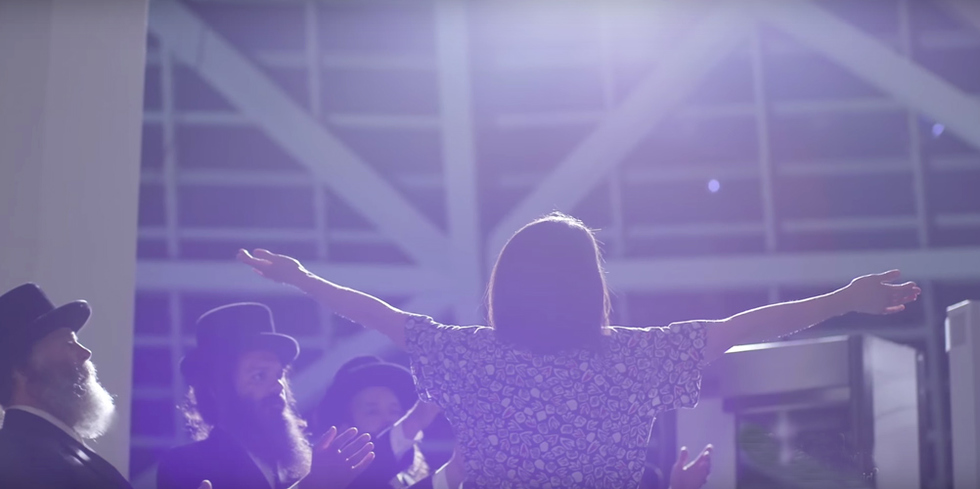
The other day, Amazon was published on the fourth season of the series “Obviously” (“ Transparent ”) , and the media for the fourth time swept a wave of enthusiastic reviews. Having gained a whole bouquet of Emmy and Golden Globes, the series was the first attempt in the history of television to focus on the personal and public aspects of the transgender transition. More importantly, together with the protagonist Mora (or Moppa, from the English M Om and Poppa ), the ex-father of the Jewish family from Los Angeles, into the world of TV shows, penetrated the whole legion of relevant gender ideas and disagreements.
Our historical moment is fascinated and obsessed with a gender issue. All those who used to exist outside the boundaries of visibility, in the field of closed doors and nicknames, are today in the very spotlight. Even in a society where LGBTK is most often demonized, Gender’s issues are discussed everywhere and everyone. And it doesn’t matter what exactly everyone thinks. It is much more important that everyone really thinks about it. For people whose existence for centuries has been associated with secrecy and a sense of shame, the very open presence in all possible discourses, from public and legal to cultural, is a victory.
The reaction of the popular culture to the gender and sexual diversity in society can be safely called inhibited. On the one hand, already in the early 90s, no American series could do without gay or lesbian. The problem is that these characters existed somewhere in the background and, as a rule, were comic. As we deepen into the new millennium, the situation is changing. The number of LGBTK representatives on television screens is constantly growing, and the comic element turns into a tragic one. The best example of sentimental tolerance established in the mass culture is perhaps the series “Anatomy of Passion”, where each episode is gritting from the characters of all the colors of the rainbow and someone constantly offends gays.
 © Amazon
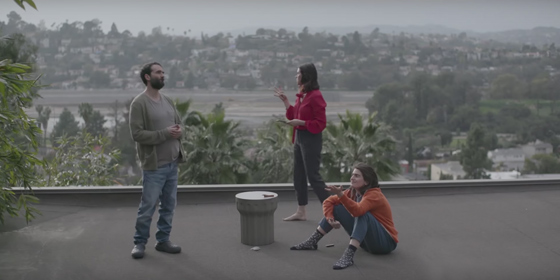
“Transparent” is taken up for the gender topic not for the checkmark in the “Political Correction” line, but with the goal of explaining to the mass viewer what exactly we call the gender, which is sexuality and how to live with all this. At the same time, one of the sexually frank series in the history of the genre does not even try to hide his didactic intentions.
Training is the most important element of the “obvious”. First of all, the family of the main character, Mora (Jeffrey Tambor) studies. Constantly, again and again, two sisters, brother and their mother explain to each other and all around what transgender is. At the same time, critics of the series rightly notice that the cliche that migrated to us from the 19th century was “born not in his body” here sounds too often. But attempts to explain and accept unusual identity on this phrase still do not end. Rather, “Transparent” insists that no one, even Mora, can fully understand and adequately describe the experience of war with traditional gender definitions.
Only one thing becomes clearer: a transgender transition is not a jump from point A to point B, but a process that has neither the end nor the beginning. Eepis is faced with new and new questions. The most noticeable of them is the issue of choosing a sexual partner. Initially, the transgender transition does not affect its preferences: for a long time it consists in relations with the CIS Twal (Cisgender-the coincidence of gender identity with the biological sex.-Ed. ) Vicki. In the last season, Vika’s place is occupied by CIS Muzhchina Donald, and Mora is forced to go through the next series of painful explanations with family members. A camming out in the series is not one quick movement of akin to breaking the patch, but a state associated, in addition to everything, with the need to constantly explain and justify itself, this is the current demand for society to anyone who deviates from the “norm”.
The reaction of the popular culture to the gender and sexual diversity in society can be safely called inhibited.
Although the efforts of Mora are concentrated on stopping playing the role of a man in a social structure, it is not capable of completely abandoning the privileges of her biological sex. Insisting that the children stop calling her dad, she is absolutely unable to retreat from the role of the patriarch. This is especially noticeable in the last season where the whole family goes to Israel. During the trip, Mora to the left and right gives condescending permits and instructions, again and again approved as the leader of the family clan.
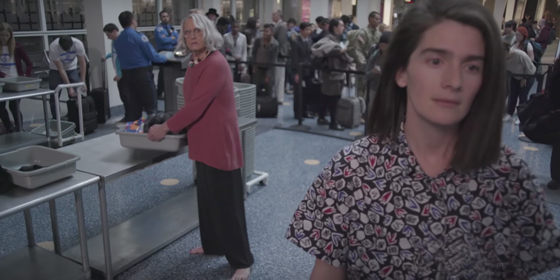
The “obvious”, thus, affects the painful moment in the life of a trans-community: its stretched relationship with feminists. One of the most unforgettable moments of the series is the conversation between Mora and Leslie Makinou (Cherry Jones), which took place in the second season. Leslie is a professor at the Department of Gender Studies, where the youngest daughter of Mora, Ali (Gaby Hoffman) wants to enter. As part of the semi -official meeting in a university cafe, she resembles the sea, as, while still a man, Mort, the editor -in -chief of the university newspaper, he for 10 years accepted only men to the editorial council and once - a young girl with huge breasts. Leslie, as we find out, was not only one of the candidates rejected by Mora, but also a participant in the feminist group, who fought for the equality of men and women in the academic environment. Mora tries to apologize: “I should be ashamed for what I did in those years. But, to be honest, I don’t even remember very well what happened then. ” To which Leslie responds sarcastically: "It is clear, why should you remember." Leslie refuses to see a new person born at the time of the first camming out. Refuses to follow the idea of “complete rebirth”, often found in trans-discourse. For Lesl, the past of Mora, in which she was a privileged white heterosexual man who did not notice that under his nose, women fought for the right to be full members of the academy, is insoluble.
 © Amazon
This does not mean that Mora will not be able to become a real woman - since she never fully felt the pressure of the Patriarchate. Rather, it leads us to the conclusion that everyone invents a woman for himself and that, perhaps, the words “woman” and “man” are not enough to describe all possible options for existence in society. Showing us this stretched conversation, dressed in old jeans and T -shirt Leslie and neatly painted, trickers with huge earrings of Mora, “Transparent” suggests that “woman” and “man” are the concepts that do not exist separately into each other.
In the new season, the topic of privileges comes to the fore. It even seems that on his fourth round the series entered the zone of healthy, but merciless self -criticism. When the Fefermen family (let's say right-wealthy American Jews) comes to Israel, one of the main topics becomes the Palestinian-Israeli conflict. Ali, the daughter of Mora and at the moment, is a successful graduate student at the Department of Gender Studies, in the framework of its work develops a parallel between the patriarchy and the Holocaust. And, being a woman and a Jew, he is inclined to consider himself as a victim, a representative of marginalized and stray. But in Israel, she meets the Palestinian activist Life and, visiting Ramall, realizes that in this part of the world she is no longer a victim, but an aggressor.
At the same time, the creators of the series masterfully avoid underwater stones awaiting any series that expands the focus of their social and political engagement: “Transparent” does not create a hierarchy of injustice. The problems of national policy, the rights of LGBTK and religion in the fourth season are so masterfully mixed that none of them come to the fore. Instead, we are offered the idea that all types of discrimination in this world are inextricably linked.
A camming out in the series is not one quick movement akin to breaking the patch, but a condition associated, in addition to everything, with the need to constantly explain and justify himself.
In addition to the fresh geopolitical aspect, the pilgrimage of the heroes into the Holy Earth brings the denouement of one of the parallel plot lines. For three seasons, we observed the flashbacks that transfer us to Berlin from the time of the Weimar Republic. Here, at the Institute of Sexual Sciences of Dr. Magnus Hirschfeld, the author of the term “Transvestite”, Gittel lives - a charming transsexual appearance and, as it gradually turns out, aunt (initially an uncle) of the Mora. These flashbacks in “Transparent” are a way to talk about how the thought of transgender in history developed. The series recalls that the struggle for the rights of the so-called minorities began long before the Stonell riots in New York. In Berlin, the late 19th century, Magnus Hirschfeld launched a campaign to collect signatures for the abolition of the 175th article of the criminal code of Prussia, which provided for the punishment for homosexual contacts between men. Among the signed were Leo Tolstoy, Albert Einstein, Emil Zola, German Hesse and Thomas Mann. The campaign was interrupted by the First World War. Hirschfeld did not achieve the abolition of the unfortunate article, but according to his recommendation, Berlin began to issue special passports to transvestites - people who, who were insisted by Hirschfeld, article 175 has nothing to do. These passports helped avoid arrest and gave a certain protection against irreconcilably -minded homophobes. Such a passport shows Hittel to his mother, answering her question: "And how did you not beat you here on the way here?"
The Institute of Sexual Sciences, founded and flourished in the conditions of the liberal climate of the Weimar Republic, was closed in 1933 by order of the National Socialist Party of Germany. The huge library of Magnus Hirschfeld was defiantly burned on the opera square of Berlin. Fefermen managed to escape to America, and Gittel, most likely, became a victim of the Nazi regime. We observed this plot in the second and third seasons.
 © Amazon
These flashbacks seemed to shimmer from Ali's consciousness. However, in the new season, the story of Gittel becomes a reality. During a meeting with his unexpected father, Mora learns about the life and death of Hittel, after which he runs away from the room. In the next heartbreaking scene, we see her and Ali on the seashore. Looking into the blue distance, Mora says: “All my life I thought that I was alone. If I only knew ... ”If Mora knew, she might have gathered courage not to accept herself in the 75th year of her life, but earlier. Loneliness, says “Transparent” , is powerlessness.
But today Mora is no longer alone. She became part of the Los Angeles Trans-Committee and received family support. Moreover, her transgender transition served as a kind of catalyst, helped the younger Fefermen drop the suffocating cap of normality. Both of her daughters, Ali and Sarah, start a series of experiments - sometimes very funny - with their sexuality and begin to look more closely at the usual separation of gender roles. It’s not that it made them very happy - it is rather milestones on the path of knowing oneself and the mechanisms acting in society. But it is still worth noting: at the end of the fourth season, Feferman seems happier than ever.
Of course, the series could be better. And although Jeffrey Tambor is absolutely magnificent in the role of Mora, I would like to hope that next time the transgender’s role will get the transgender. Fortunately, the expectation of this more progressive time will brighten us up at least one more season of “Transparent” . Amazon has already confirmed that the series will return to the screens in 2018.
On September 30, Colta.ru holds a unique lecture marathon “New Hope. Culture after the 17th. " Join! You can read about the marathon here , buy tickets - here .