
Translated material
Per hour to any point of the planet
Elon Musk decided to adapt SpaceX missiles for passenger transportation - and all in order to make money for the development of Mars
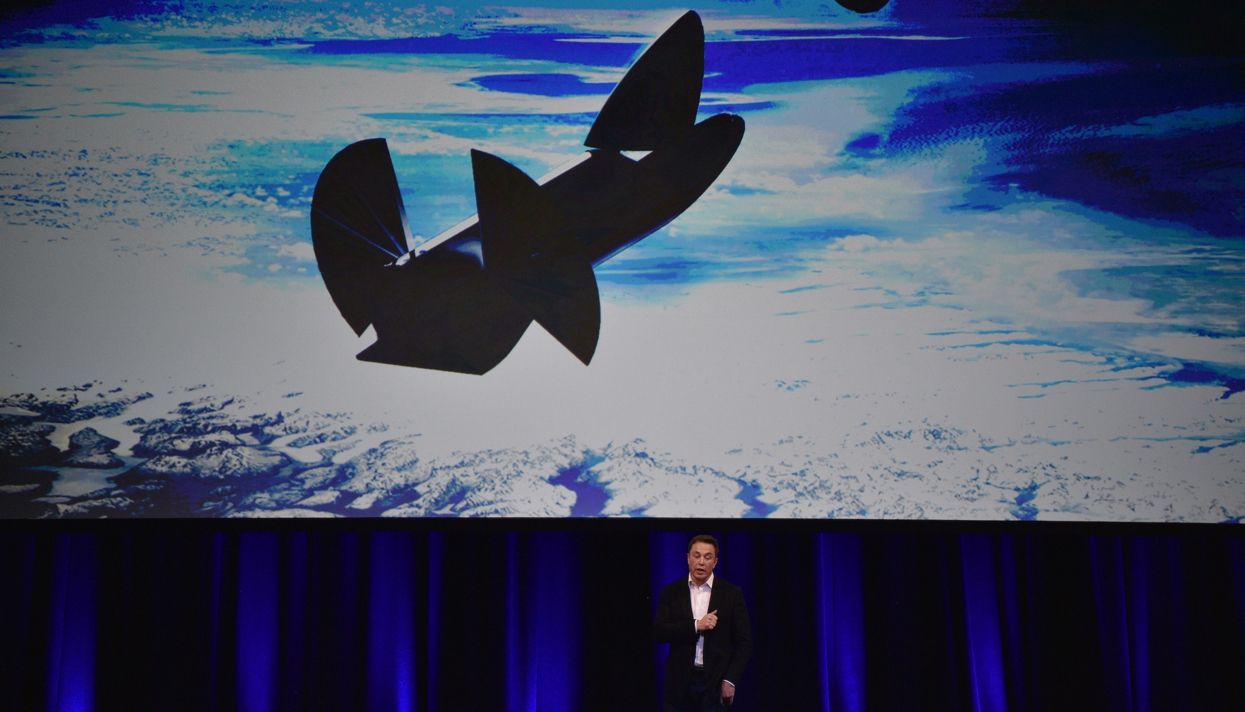
On September 29, the founder of SpaceX, at the International Space Congress in Australia, presented a strategy for the development of the company - and at the same time his vision of the future space industry as a whole. Musk still dreams of Mars and is ready to direct every effort to colonize this planet-but, in addition, he promises to develop a new type of cheap transport that can overcome the distance from New York to London in half an hour. "Medusa" says that Musk promises and how real it is.
New rocket
The main announcement of Ilon Mask is a new missile called BFR, Big Falcon Rocket or Big Fucking Rocket, as the founder of SpaceX joked. BFR will be the third SpaceX missile - in addition to the already successfully working Falcon 9 and the new Falcon Heavy, which has never flyed into space.
BFR will become the basis of all SpaceX projects for the development of space, including flights to Mars and the Moon. It is assumed that it will replace all existing SpaceX missiles and spaceships, that is, both Falcon 9, and the Dragon truck, which now delivers goods to the ISS, and Falcon Heavy. The intention to develop something similar Musk has declared before, but now the SpaceX plan has acquired more understandable outlines.
Firstly, the SpaceX experienced a new fuel tank-a light container made of carbon fiber, which can withstand overloads and store 1,200 tons of liquid oxygen. According to the mask, such a fuel tank can significantly reduce the weight of the rocket and increase its effectiveness.
Secondly, the company carried out dozens of tests of new Raptor engines, which will provide both the launch of the rocket and its landing.
Finally, SpaceX developed the design and technical specifications of the rocket. Its diameter is nine meters (that is, less than Falcon Heavy), the height is 106 meters. BFR weighs at the start of 4400 tons, which is ten times larger than the ISS weight. The rocket consists of an accelerated module and the main part, and both steps are supposed to be used many times. In Falcon 9, now you can use only the first of the two steps again, and the Dragon space truck has only been launched again.
The first stage of the BFR is an accelerated module, the second is a full -fledged spaceship with space for goods or passengers. There you can place 40 cabins in which up to 100 people will fit. It is on such a rocket that people will fly to Mars, Ilon Musk is sure.
New transport
At the beginning of his speech, Musk said that he found a solution to the key problem of the Martian program - a source of financing. A year ago, he said that he had no idea where to get the money from, and joked that he was planning to steal Palsons. Its new rocket will be quite expensive in production (it is still unclear how much BFR costs), but will quickly pay off due to multiple and multi -purpose use. BFR can take satellites into space and fly to Mars; The rocket can also be used as a stationary lunar base - but the most important thing is that the new rocket will be a fundamentally new means of movement on the ground.
Musk offers to use BFR as a ballistic vehicle capable of hiking from New York to London in half an hour and in 40 minutes to Shanghai. Any journey to anywhere in the Earth will take no more than an hour, says the founder of SpaceX, and the ticket will cost as much as the flight on an ordinary plane in the economy class now costs. His idea looks straight borrowed from the story of Philip Dick “Man in a high castle”, where intercontinental missile transport is distributed.
Musk did not introduce any technical details of such travels and did not tell which year he plans to launch rocket transport. He did not explain how difficult overloads during flight will turn out to be difficult for an unprepared person.
Mastering Mars
As before, all SpaceX developments are subordinated to one goal - a trip to Mars. It was for this purpose that his space company was created. Musk believes that with the help of BFR it will be possible to achieve Mars in 2024, and send the first unmanned missions already in 2022.
For the flight to Mars, a significant amount of fuel is required - four times more than for the usual launch. Musk presented a scheme for such a flight a year ago. According to SpaceX, this will be possible to implement due to refueling in orbit: one rocket takes a spacecraft into orbit, the other delivers the required amount of fuel to travel to Mars. The same scheme will work on Mars, where it is planned to extract rocket fuel - so BFR will be able to return to Earth.
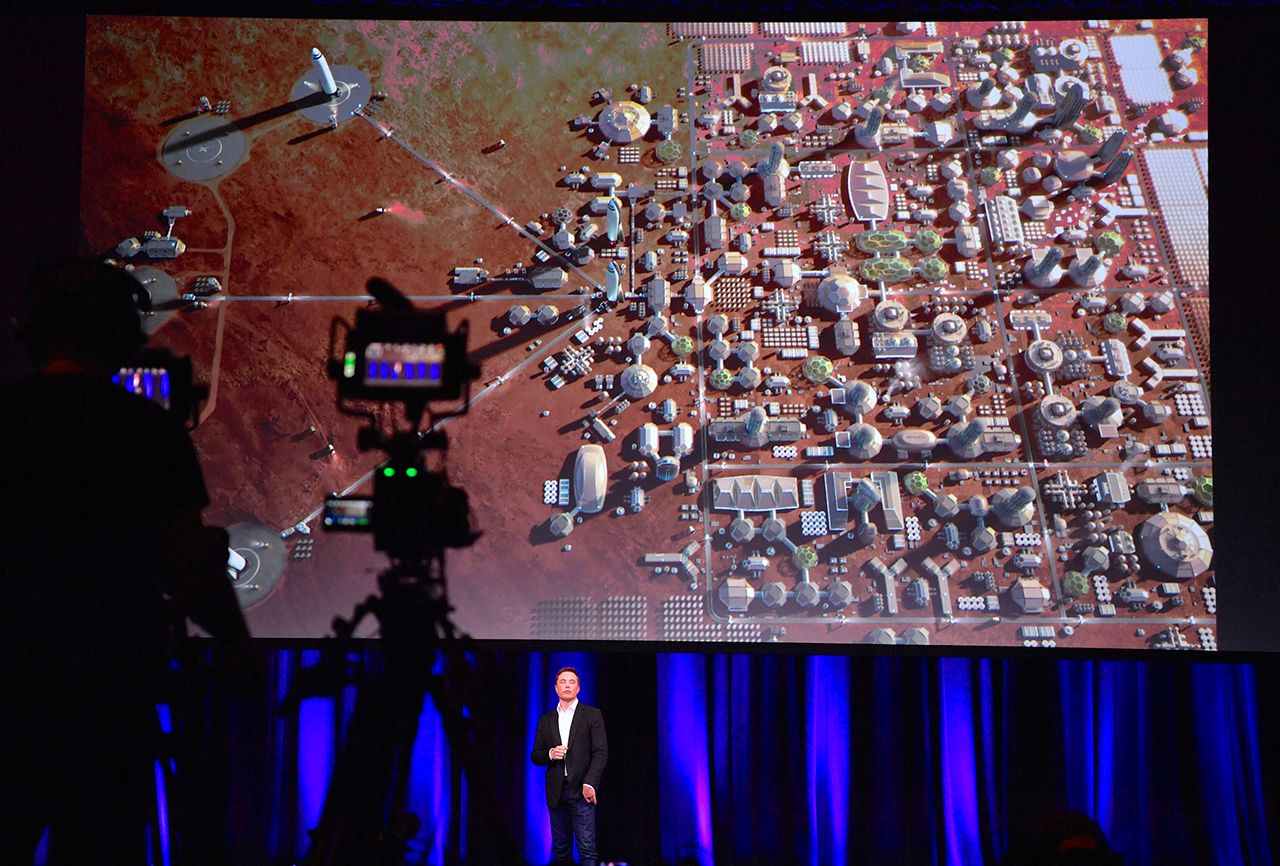
Earlier, Musk said that about a million people are needed to create a successful colony on Mars. These are about ten thousand flights, each of which will last from three to six months.
Like the rest of the initiatives of SpaceX, and the idea of mastering Mars, and the creation of intercontinental missile transport seems to be unrealistic, but quite fulfilled. The only thing that will probably not come true from the promises of the mask is the deadlines that all his companies traditionally break off due to the perfectionism of their creator.
Pavel Borisov