
Translated material
2315 polling stations are ready for a referendum on the independence of Catalonia, Madrid mobilizes the guard and the police: ballots, urns were seized, searches are underway
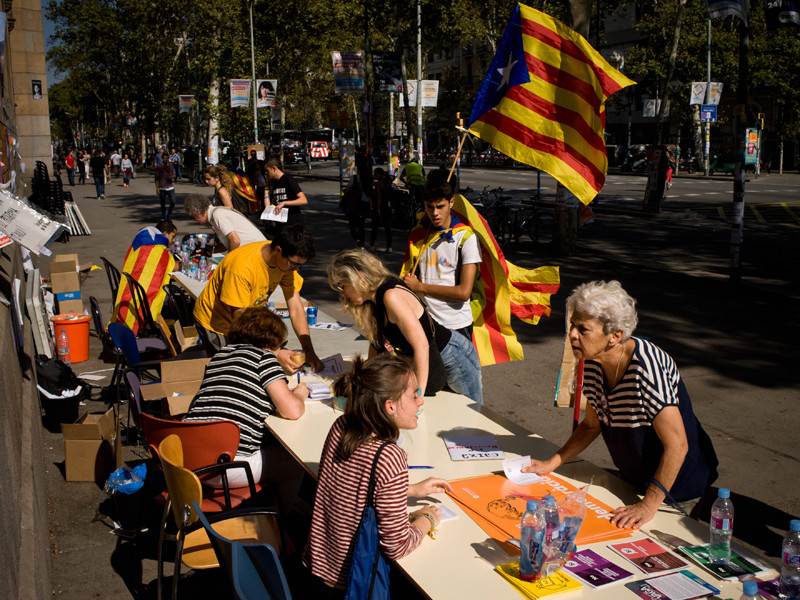
The Spanish police on Thursday, September 28, three days before the Catalonia of the referendum in the creation of the state independent of Spain, seized about 2.5 million ballots and voting envelopes in one of the cities of autonomy. Law enforcement agencies also seized about 100 electoral urns.
On September 20, the Civil Guard, which, by the decision of the prosecutor's office, should seize all the materials intended for the referendum, seized 10 million ballots that prepared the Catalan authorities for the plebiscite. Judging by the fact that only 5,343,358 people have the right to vote in Catalonia, the authorities of autonomy were ready for such demarcers of the Spanish government and prepared several times more ballots than required.
Spain unfolded in autonomy reinforcements of thousands of additional police officers. The National Police, who received an instruction from the authorities in Madrid to stop "crimes against the form of government", conducted searches in a number of government institutions of Catalonia. More than a dozen high -ranking Catalan officials responsible for organizing and holding a referendum were arrested. After that, thousands of people went with a protest march to the Supreme Court building in Barcelona to declare their right to vote for the independence of the region.
According to La Vanguardia , the Spanish Agency for Protecting Personal Data (AEPD) warned the Catalans who will take part in the vote count or become members of the election commissions of the prohibited referendum that they can be accused of violation of the data protection law and a fine of 40 thousand to 300 thousand euros. Since the referendum is recognized as illegal, the persons who participated in the counting of the votes cannot be considered legal representatives of the authorities, but act as individuals who disclose the personal data of citizens, opening the urns and viewing the ballots indicating their personal data.
Catalonia is ready: 2315 polling stations, 7235 volunteers
However, the Catalan authorities announced their readiness for on October 1 a referendum on the independence of an autonomous community and actively informed the fellow citizens of the plebiscite. At a press conference on Sunday voting, the Minister for Foreign Affairs of the Government of Autonomy Raul Romev, mayor of San Vicensce del-Ors Uriol Loginsraz and representative of the Catalonia Government Jordi Turull, said that 2315 polling stations would open throughout Catalonia on Sunday morning. 7235 volunteers will be involved in the referendum, who will monitor the organization of the event and consider votes, El Pais reports.
The vote will begin at nine in the morning local time (10:00 Moscow time) and end at 20:00 (21:00 Moscow time).
At a press conference, journalists were also demonstrated by one of the electoral URN, which the police actively sees. The required amount of URN is already placed in polling stations, and their number will be enough to put them in each school of autonomy.
Politicians also showed that urns provide a high level of safety of ballots.
???? Última hora: Les Primeeres iMatges de Les Urnes per votar al referèndum d'Aquest diumenge. https://t.co/gvrm3dq40 #refcat #delcamp pic.twitter.com/zazmpfax77
- Delcamp.cat (@delcamp_cat) September 29, 2017
However, in order to take part in the referendum, the Catalans do not have to go to polling stations, fill the ballots and lower them into the urns - they can vote remotely through a special application. The current Chairman of the Government of Catalonia Carles Puchamont announced this on his Twitter, posting a link to the application on Google Play .
Vols Saber on Has d'ANAR A VOTAR? Baixa'T L'App #1OCT (Per Android) I Actualitza-La Cada Dia Per Rebre Novetats https://t.co/lk3ltyxduz pic.twitter.com/zwgzumlvex
- Carles puigdemont (@krls) September 27, 2017
The Catalan police warned the central authorities about the possibility of public unrest after Madrid ordered to seal polling stations in order to prevent a referendum.
Indeed, immediately after law enforcement officers confiscated igualada in the municipality of 2.5 million ballots and more than 100 URN voting, unknown people threw a burning object into the local government.
As a result of the incident, no one was injured. The responsible for what happened could not be detained.
In Barcelona, on the eve of the demonstration in support of the referendum on independence, about 10 thousand students of higher educational institutions and high school students went. They chanted the slogans: "We will vote" and "Independence!" Many of them carried red-yellow flags with them. They walked along one of the main streets of the city of Grand VIA, blocked it for the movement of vehicles, Interfax reports.
On Friday in Catalonia, the "march of tractors" in defense of the referendum is held. The columns of vehicles left different points of autonomy at 08:00 local time (09:00 Moscow time). The purpose of the march is to get to Barcelona, where tractors should block buildings belonging to the authorities of Spain. The action is aimed at "protecting democracy and freedom" in autonomy.
The head of the government of Catalonia is sure that the referendum will pass without violence
The Chairman of the Government of Catalonia Carles Pughmont is sure that the upcoming referendum on the exit of the region from Spain will be held without manifestations of violence.
"I do not think that someone will show or provoke violence in order to tarnish the impeccable reputation of the Catalan peaceful movement for independence," he said. The head of the region also called on the Spanish police, thousands of whose representatives arrived in Catalonia to prevent plebiscite, to act professionally. “I would like them to be guided by the same standards as the Catalan police. Not by political standards and political orders, but by police and professional standards,” he added.
A referendum on the exit of Catalonia from Spain is scheduled for October 1. Earlier, the Autonomy Parliament approved two referendum laws. The first, according to the separatists, created a legal framework for a plebiscite about independence, and the second regulated the exit of Catalonia from Spain in case of victory in the referendum of supporters of the rupture with the kingdom. Madrid considers both laws and the plebiscite itself illegal. Spanish authorities assure that there will be no referendum, but the government of Catalonia is confident that the plebiscite will take place.