
Translated material
Specialist and amateur
David Burliuk. Filonov: Tale/ Preparation of the text, notes, comments and afterword V. Polyakov. - M.: Gileya, 2017.
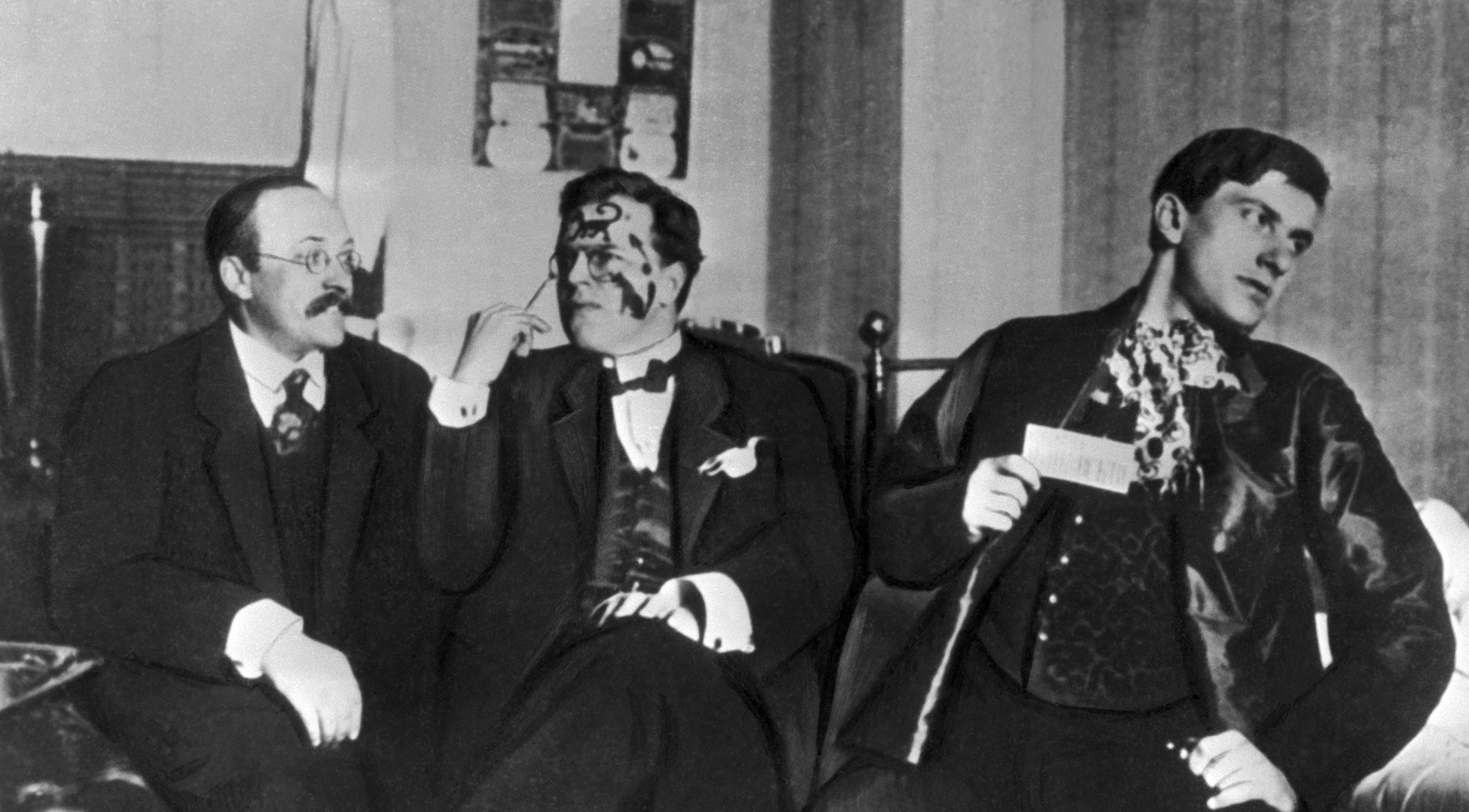
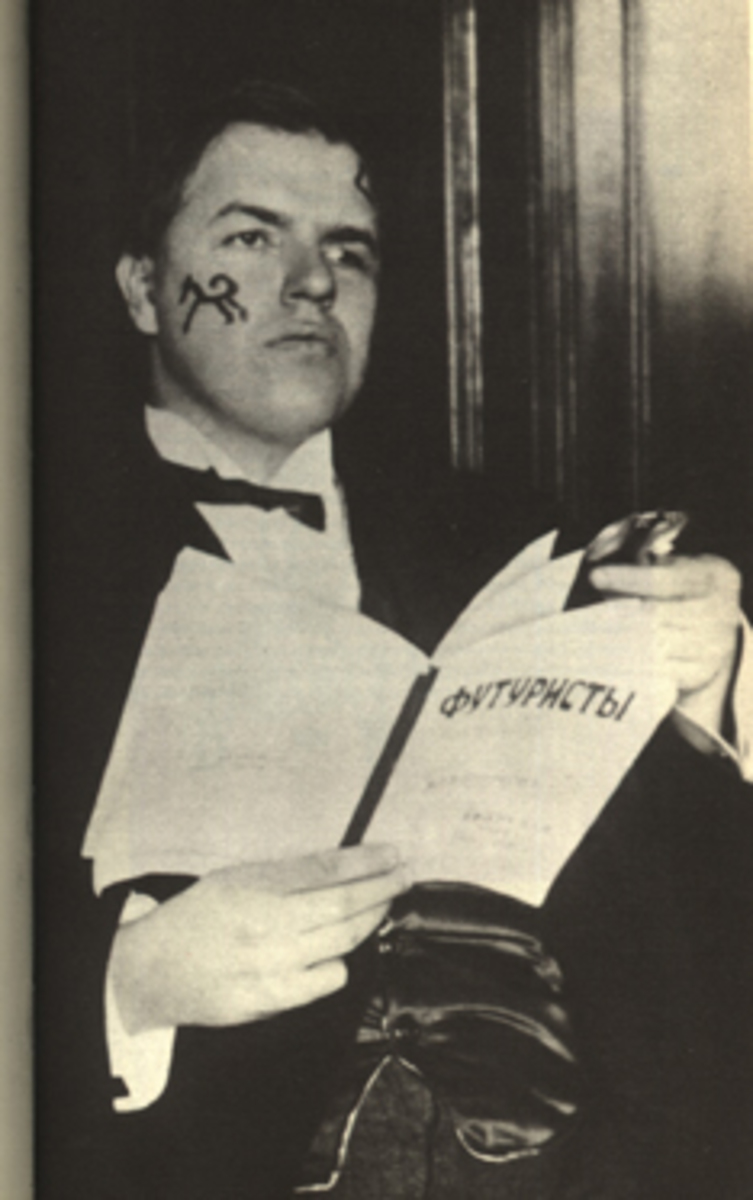
It is impossible to talk about the history of Russian futurism, without mentioning David Burliuk - the named father and the midwife of this movement. Benedict Livshits pointed to the duality of Burliuk’s nature by Burliuk's nature: “Overflow, a hermaphrodetic beginning, which always gave a slightly mysterious character with women, appears in it.”
Futurism Burliuk resembled the path of the conquistador or salesman, with their desire to find the Midasa, the gift to turn into gold everything that you will not touch. About the conjugating nature of the Burliuk’s basturism, it is expressively written in the same “one and a half -eye of the Sagittarius”: “And how seductive it is predatory! The world lies wherever you look, in the ultimate exposure, it puffs around the freshened mountains, bloody blocks of smoking meat: grab, tear, click it, create it all your whole!” Burliuk himself finished (or cut it off) a story important for himself: "Good luck falls out, only you need to have will and time, strength and indestructible will."
Burliuk and laurels of the chronicler of Russian futurism were lured: the novel "Filonov" was written by him in Japan back in 1921, but the publication took place only in 1954 and in English, and the Russian edition was published almost a hundred years later.
The phenomenon of Russian futurism is devoted to decent texts of participants and contemporaries - from the mentioned science -like, but biased memoir of Livshits to the allegorical "admiration" Ilyazda, where the poet Mayakovsky is hidden under the guise of an honest smuggling. A lot of texts have been published, for the publication of not intended, for example, the correspondence of Ilyazda.
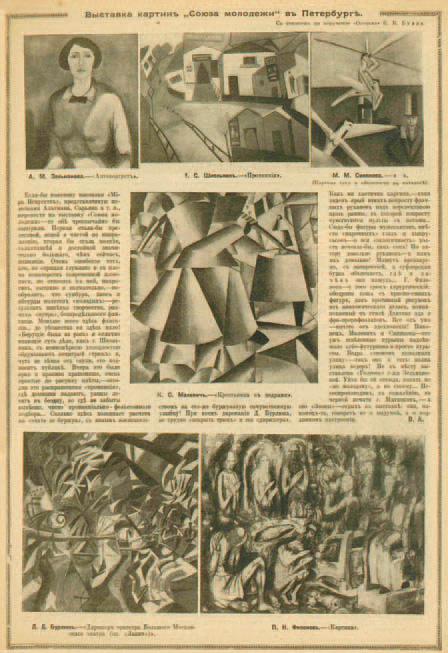
The plot background of the novel by Burliuk is composed of pictures of futurists, scandalous vernissages, difficult negotiations with philanthropists, between the lands and civil strife.
"Maxim paced without hesitation between those present, his black velvet eyes with eyelashes, raised like a wing of a butterfly, shone coquettishly ... naked among dressed, with the contours of the body, where each bend resembled the harmony of Greek vases, he was a fairy tale that went into the gray giant world."
The hero whisper that genuine art is shamelessness and lies, and creations should be a "bomb thrown into the swamp of devils"
Sarcasm, feuilleton, ridicule of acquaintances - these features of the story of Burliuk are distinguished by it with the "Petersburg winters". The collector of the vests of Sapunov quickly "made a career, deftly wrote ancient vases and bouquets of roses" ; The hardworking Goncharova gave the children to the shelter so as not to be distracted from creativity, and not only a small head on a long and dry body gave her a resemblance to a poisonous snake (Goncharova had no children!); The paintings of a completely forgotten Knabe are written almost mud and look like ridiculous dreams - however, the author is already complimentary here. Almost at the same time with Burliuk, his story about avant-garde art called "Caravan-Sarai" wrote Francis Picabia (it was published in Russian "Gileia" a year ago). From Ivanov and Burliuk, Picabia favorably distinguishes Self -irony and the rejection of the lifetime publication. The main object of the author’s satire is the world of Bohemia-“Caravan-Sarai”: “Such people look like a soap bubble in the middle of infinity. And one fine day, such a bubble bursts, leaving, however, people who believe in life, pink and blue spray of memories.” Of course, he does not forget Picabia about all sorts of “izisms”, and a certain singer invites the hero of the novel to dinner, adding “that a courier train passes through the kitchen in her apartment every night, and a mirror hangs in the hall, reflecting your back when you turn to face him.”
We should not forget that the story "Filons" is not only memories, but also fiction. The young artist from the province tries to conquer the metropolis: "I put them a pie of my work, the black agile flies ran up, became a condensed line against my cake, each curiously poked with her trunk." The hero whisper that genuine art is shamelessness and lies, and creations should be a "bomb thrown into the swamp of devils." And Burlukovsky Filonov should carefully jump from a bump to a bump over the "top of the blat", squeezing the money in his pocket - a fragile tree, from which it is necessary to tear a leaflet or twig; Every day to avoid the tentacles of the spruce city, wandering with the pregnant darkness of the lanes, read the Iron Book, written by a team of ordinary small people , and try to illustrate it.
A love story that happened in a swamp city, "a shackled stone, the steel will of a man where the worms of passions, malice and power of power, is also woven into the story of the artist. The artist connects with the lunar girl-lunar lily, but strange, rather related, bonds: "To be a brother means to see the body of a teenage girl when she washes her head, and a young, non-formed chest is covered with soap spots and sparkles of water."
Filonov remembered his ability to fly out in an open window and get confused at the tops of star trees
The story of Burliuka should be compared with other futuristic samples of the pen in prose, of course, with the early things of Pasternak, in which the sky bends over the conversation, like a muscular gymnast, the train is carrying the chopping sun on many striped sofas, and the wet street jumps like rubber. Or with the novel "Hercules Pillars" (1918) Ivan Aksenov, published only ten years ago. In it, the author combines the songs of Maltorore with the painting of "Diamonds", the action is rapidly transferred from Moscow to Paris, from Paraguay to the cities of Germany and further towards Tibet, and the plot ranges from the Ugar "beautiful era" to revolutionary storms, and from scientific progress to love egoism.
But the Russian futurists appreciated the inspired impulse above painstaking accuracy (M. L. Gasparov), and the lonely model of the truly futuristic prose remained the cubist “people in the landscape” (1912) Benedict Livshitsa - the evening walk of two cooled hearts in the vicinity of Burliukov Chernyanka, a walk through the seasons, back to antiquity.
The artist Filonov from the story is also more and more on rapid movements: “It was felt that for him being is an overcoming pirouet, it was the ease in the figure of circus acrobat ... Filonov remembered his ability to fly out in an open window and get confused in the tops of star trees.”
Of course, the hero of the story can least of all be mistaken for a photographic portrait of the famous analytical painter. Burlukovsky Filonov was not composed of many cubes, but of two halves - the artist Filonov and the author himself: alas, halves are not Platonovs. “The painful poems in colors about the human anthill” , drawn horses, jumping away from the trees that pull the paws of death to them, are not quite compatible with the lilac heels of the dead woman, which the black dog sniffs - such “organic” art is closer to the ideals of the author of the story. And when Filonov of the story recalls an anatomy lesson at the Odessa School and the minister who brought the dead to the dead of the dead man to demonstrate, the editor of the book by V. Polyakov rightly notes that this memory was probably Burlyuk himself, who was studied precisely in Odessa. At the same time, the description of the Hero of the Story exactly coincides with the memoirs of Filonov's fellow students-Barbara Bubnova and Anastasia Ulinova, which the erudite editor-publishing department of a forgotten book draws attention to readers.
Excellent comments and accompanying texts I would a little complement the hero’s opinion about the author:
“I see the art objectively, like flint or a piece of iron, and everything that does not apply to it, I will eliminate ... I deny Burlukov completely. They are not related to new art, but to the operation of new art. I am far from this business (an incorrect letter from 1914 M. Matyushin, published by J. Malmstad in the“ Culture of Russian Modernism, ”1993).