
Translated material
The old people are appropriate here
Putin’s bet on “young technocrats” - a propaganda myth, showed the latest appointments
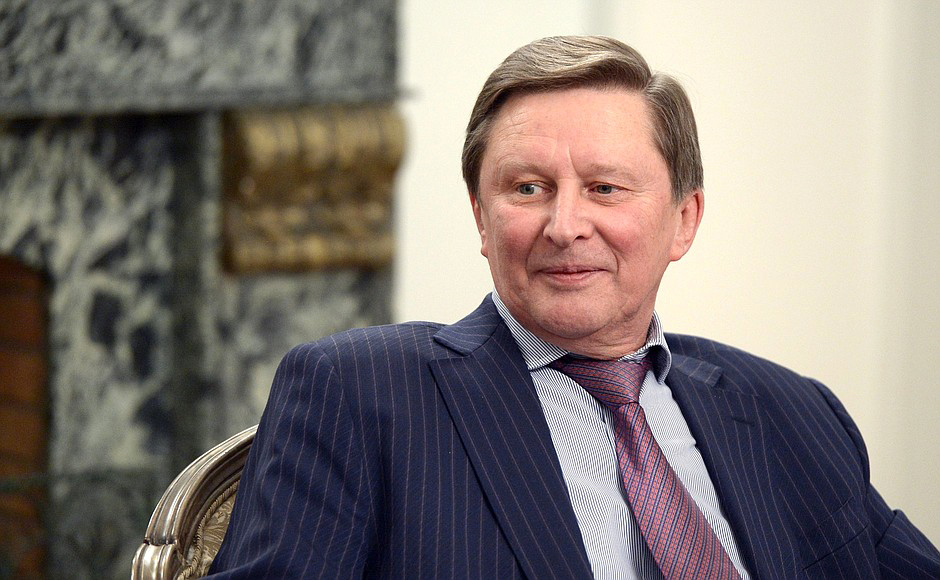
Sergey Ivanov. Photo: kremlin.ru
Young in spirit
In the middle of last week, political scientists close to the Kremlin, who are instructed to publicly explain through comments in the media the meanings of all the actions of the authorities, were waiting for the resignation of the head of Dagestan Ramazan Abdulatipov. The new head of the region, according to the information that appeared at that time, was supposed to be an experienced 52-year-old colonel general of the Russian Guard, a graduate of the Higher Command School named after Dzerzhinsky Sergey Melikov. “Well,” one of the pro -Kremlin experts sighed or sighed or sighed in an interview with NT. “Now it will be necessary to say that this one is a young technocrat.”
But the appointment was unexpected and even less fit into the official version of the "landscaping" of regional elites. The post in Dagestan did not go to Melikov’s mature policy, but to the political pensioner, 68-year-old Vladimir Vasiliev, who reached his career heights under Yeltsin.
Talking that Putin is now promoting young technocrats, that is, young apparatchiks, still deprived of political ambitions, have been going on since August 2016. Then, 63-year-old Sergei Ivanov left the post of head of the Kremlin administration, and his place was taken by 44-year-old apparatchik Anton Vaino. Since then, the state media and the Prochrevsky political scientists in their comments, just in case, recorded almost everyone in young technocrats.
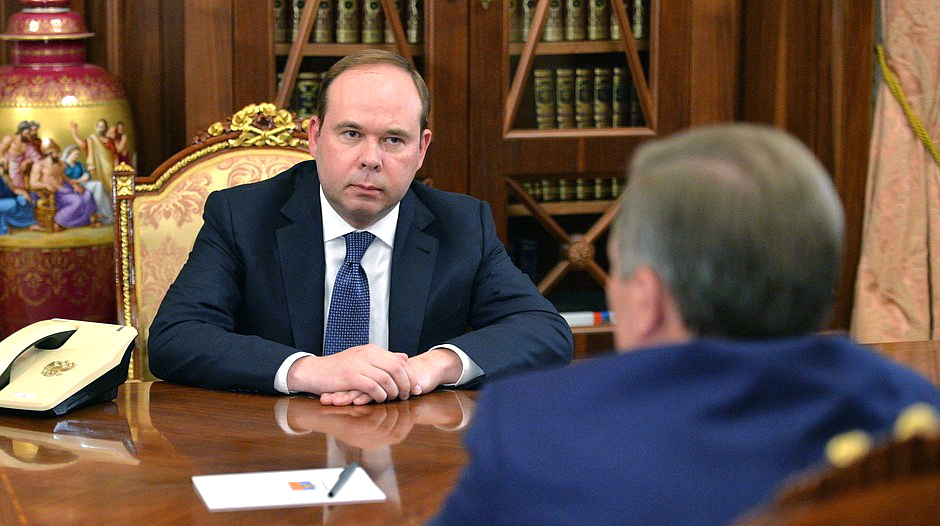
*Anton Vaino. *Photo: kremlin.ru
In some cases, it looked more logical, for example, when the Kaliningrad region was headed by 30-year-old Anton Alikhanov, and in some less, for example, when the 47-year-old experimental policy Dmitry Azarov (appointed to perform the duties of the head of the Samara region) was recorded in young technocrats). But in general, everyone liked the term, and soon the liberal media picked it up. After all, it is logical that the aging Putin wants to update the elite on the eve of the fourth term (the arrests of high officials - a vivid confirmation of this) and replaces the old and tied politicians to young officials, whose political career came to his power.
But the practice of appointments by Vladimir Putin shows that the president is far from always deciding on a radical change in elites. The most striking example is the resignation in 2006 from the post of prosecutor general Vladimir Ustinov. The celebrations of liberal politicians who rejoiced at the departure of one of the authors of the Yukos case ended a few weeks later, when Putin returned Ustinov to power, appointing the Minister of Justice.
Recent appointments show that that story was not an accident. In some cases, Putin is forced to return people from the past for the absence of a “personnel bench”, it turns out that the president is ready to entrust some important post to trusted people, and thirdly, the influence of the old groups is so large that the real update becomes impossible. All these problems also manifested this week.
Kambek Ivanova
Last week, the final doubts that the former candidate of Putin’s successors, now unclenched to the symbolic position of the President’s special representative on ecology and transport, Sergei Ivanov, is actually one of the most influential politicians in Russia. On Wednesday, the president appointed one of the main associates of Ivanov-57-year-old Andrei Chostitov-the head of the Kremlin Office for Combating Corruption.
Chobotov worked with Ivanov always and everywhere. In Soviet times, in the KGB, and when Ivanov headed the Department of Analysis, Forecast and Strategic Planning of the FSB - he worked there. As soon as the boss switched to the post of secretary of the Security Council, Chobotov immediately became the deputy head of the Council of People's Commissars. Later, Ivanov became the Minister of Defense, and Chobotov became first as an assistant to the minister, and then the head of the apparatus of the ministry.
While Ivanov was the Deputy Prime Minister-Chobotov was a member of the military-industrial commission under the government. And since 2011, he led the secretariat of the head of the Kremlin administration - naturally, Ivanov.
Sergei Ivanov is actually one of the most influential politicians in Russia
Now Ivanov lobbled the appointment of Chobotov by the head of one of the key Kremlin departments, this is an unconditionally serious hardware victory, says NT a source close to the Kremlin. This management has a lot of levers, it checks the anti -corruption declarations of officials, prepares materials for the president for federal officials and governors. In addition, the management is actively connected when deciding on the arrest of officials, the interlocutor notes. Of course, Ivanov and his allies wanted this management to be headed by a man, added by a former official of the Kremlin administration.
When deciding on the appointment of Chostitov, Ivanov managed to move another person close to Putin. The former head of the anti -corruption department Oleg Badoy is the creature of the Assistant President Yevgeny Shkolov. And schools served in the KGB along with Putin and, according to media reports, for some time even sat with the future president in the same office. Now, Skolov’s protege was transferred to the first deputy minister of justice, which so far looks like a decrease. If in the next government the bad suddenly does not become the Minister of Justice, then Him and Shkolova can be considered chrome ducks, the interlocutor NT in the government apparatus argues.
Meanwhile, a year ago, many readily believed that you could write off the accounts of Ivanov himself. In 2014, his son died, after which he began to appear less often at work and gradually began to transfer a significant part of the affairs to the deputies. So the departure for an insignificant Ivanov’s insignificant post in 2016 looked very logical.
True, it soon became clear: too many privileges were preserved for the former head of the Kremlin administration. After the resignation, he simply changed his offices with his successor Anton Vaino, that is, he took rooms intended for the deputy head of the Kremlin administration. Moreover, Ivanov himself in an interview with Komsomolskaya Pravda noted that this office is even more than the same.
Moreover, Ivanov is the only one among all Kremlin officials, in addition to the press secretary of President Dmitry Peskov, who still has the right to express the Kremlin’s official position on almost all issues, including international ones. He also periodically gives a big interview with the media: for example, in the summer his interview with Kommersant was published.
Ivanov flies with a special flight detachment intended for the first persons. And on trips it takes journalists of the Kremlin pool, which is only the head of the Kremlin administration, in addition to the president.
In mid -September, it became clear that Ivanov was going to activate and manifest himself not only by formal privileges, his acquaintance says. He does not know whether he is going to lobby for other people from his environment to new posts, but claims that the ex-head of the AP is “set to work”.
Post instead of a pension
The possibility of the resignation of the head of the Krasnoyarsk Territory Viktor Tolokonsky close to the Kremlin last week, people close to the Kremlin spoke the last month. But in no well-known media, the short-list of applicants was not appeared Viktor USS. He was 62 years old, and he missed the chance to become the governor 15 years ago when he won in the first round, but in the second he lost to Alexander Khloponin. Since then, he was the speaker of the local legislative assembly, and it seemed that he would work for them until retirement.
At first, the ex-head of Rosseteus Viktor Budargin, and then spoke about the imminent arrival of Mikhail Kotyukov’s head of the Federal Agency of Scientific Research in Krasnoyarsk to the governors of the media. The latter was especially suitable for the role of a young technocrat - he is 40 years old, and the whole career is connected with work in various departments.
But then everything went not according to plan. Tolokonsky called to Moscow to announce a resignation, says an interlocutor close to the Krasnoyarsk authorities. The president did not accept it, according to tradition with the departing governor, the first deputy head of the Kremlin administration Sergey Kiriyenko spoke a supervisory policy. Tolokonsky was offended, he is the former envoy of the president and an experienced governor, and he was fired as an ordinary, says the interlocutor NT. As compensation, he was offered a humiliatingly low deputy minister, while, for example, Alexander Khloponin moved from the post of Krasnoyarsk governor to the deputy prime minister of the federal government.
This is logical, says the interlocutor close to the Kremlin. Khloponin went to increase, and Tolokonsky was fired for interethnic conflicts in the region, he notes. Nevertheless, he lurked the resentment and did not wait for the official decree of the president. Instead, Tolokonsky, contrary to informal rules, gathered local officials and deputies himself and announced to them that he was not just resigning, but generally leaving the region. Indeed, after that he went to his native Novosibirsk region, confirms the interlocutor NT. The Kremlin had to postpone a resignation for several days in order to figure out everything.
Tolokonsky was offended, he is the former envoy of the president and an experienced governor, and he was fired as an ordinary
At the same time, the potential governor began problems. Information about the possible appointment of Kotyukov began to actively throw up the media and Telegram channels with his opponents, says a source close to the Kremlin. According to him, this caused tension in the presidential administration. Difficulties began at Kotyukov himself. By position, the head of Fano was engaged in the election of the head of the Russian Academy of Sciences. It was planned that he would ensure the election of the candidate Vladislav Panchenko, who was lobbying by the influential brothers Kovalchuk, and after that he will go to the post of governor. However, as luck would have it, Panchenko defeated the elections, and Alexander Sergeyev became the president of the Russian Academy of Sciences, supported by part of the opposition within the Academy of Sciences.
It is difficult to say that the president’s decision most affected, but in the end it was decided that there were too many conflicts in the Krasnoyarsk Territory to send a person from the federal level, all the more just not fulfilled the task, says NT source.
Then, the Minister of Defense Sergei Shoigu, traditionally influential in Siberia, intervened in the situation, says NT source close to the presidential administration. According to his recommendations, the authorities decided to rely on a significant part of the Elite of the USS. “I waited 15 years and accidentally waited,” one of the interlocutors notes.
Aksakalov call
Tolokonsky provoked Domino's principle with his demarche - another offended governor decided to “riot”. The head of Dagestan Abdulatipov was also offered a position that seemed to him low - a representative when organizing Islamic cooperation. And last week, following the example of the Krasnoyarsk colleague, he announced the departure, and publicly criticized the actions of the federal authorities. According to him, in Moscow there are people who “shave hares” on the go and impose unpopular decisions to the president. The Kremlin in response also detained an announcement of the new leader. It will occur this week, say NT sources.
Against the background of a difficult situation in the region, the Kremlin, among others, examined two experienced Caucasian figures. The already mentioned Melikov was the presidential envoy in the North Caucasus District for several years. The work was not close to him, and in the end he was transferred to the first deputy to the Russian Guard. Melikov himself was not enthusiastic about the idea of working in Dagestan, his current post is higher, but the Kremlin believed that his skills could be useful in the conditions of the current mess in the region, says an informed NT source.
Vladimir Putin is forced to consider all his old associates when appointing to the highest posts
An even more interesting option is the deputy head of the presidential administration Magomedsalam Magomedov. He had already discussed him on the issue of a possible return to the region, confirms a source familiar with Magomedov. Magomedov was the head of Dagestan in 2010-2013, he was transferred from there to the Kremlin to a formal increase due to a difficult situation in the region, including law enforcement agencies, the interlocutor, close to the Ministry of Caucasus, claims. The fact that he was considered for a post is that the situation is only worse, the source, close to the Kremlin administration, argues.
But in the end, the preference was given to an even more experienced policy that did not have roots in the republic-68-year-old Vladimir Vasiliev, who occupied high posts under President Boris Yeltsin. In 1997, he became the first deputy minister of internal affairs, and in May 1999-the first deputy secretary of the Security Council, at that moment-for four months-the direct subordinates of the Secretary of Submarine Vladimir Putin.
The return, it would seem that the departed people are not only at the level of heads of departments and governors, as it was last week. The events of the last year showed that Vladimir Putin is forced to consider all his old associates when appointing higher posts. So, the main surprise of last fall was the appointment of the first deputy head of the Kremlin administration, Sergei Kiriyenko, who was the prime minister back in 1998 and then represented the FSB team of their new director Vladimir Putin. The former curator of domestic politics Vyacheslav Volodin, according to some of his opponents, was too ambitious, and also on a number of issues, he stopped arranging a group of Yuri Kovalchuk, the interlocutor, close to the Kremlin’s domestic political bloc. As a result, Volodin was transferred to the post of speaker of the State Duma, and in his place the struggle began between different groups.
As a result, Putin decided to appoint his old friend, who, in addition, has long built a good relationship with Kovalchuki, the interlocutor NT notes. According to his observations, good relations with influential businessmen and the confidence of the president are still an unconditional key to success.