
Translated material
Educational operation
On October 2, 1944, the Warsaw Uprising was suppressed
Ashes and Pain of Warsaw. 73 years ago, the latest detachments of Polish rebels who tried to liberate the capital on their own and thereby provide the country with an independent future. The reasons for the defeat of the Warsaw Uprising recalled The New Times
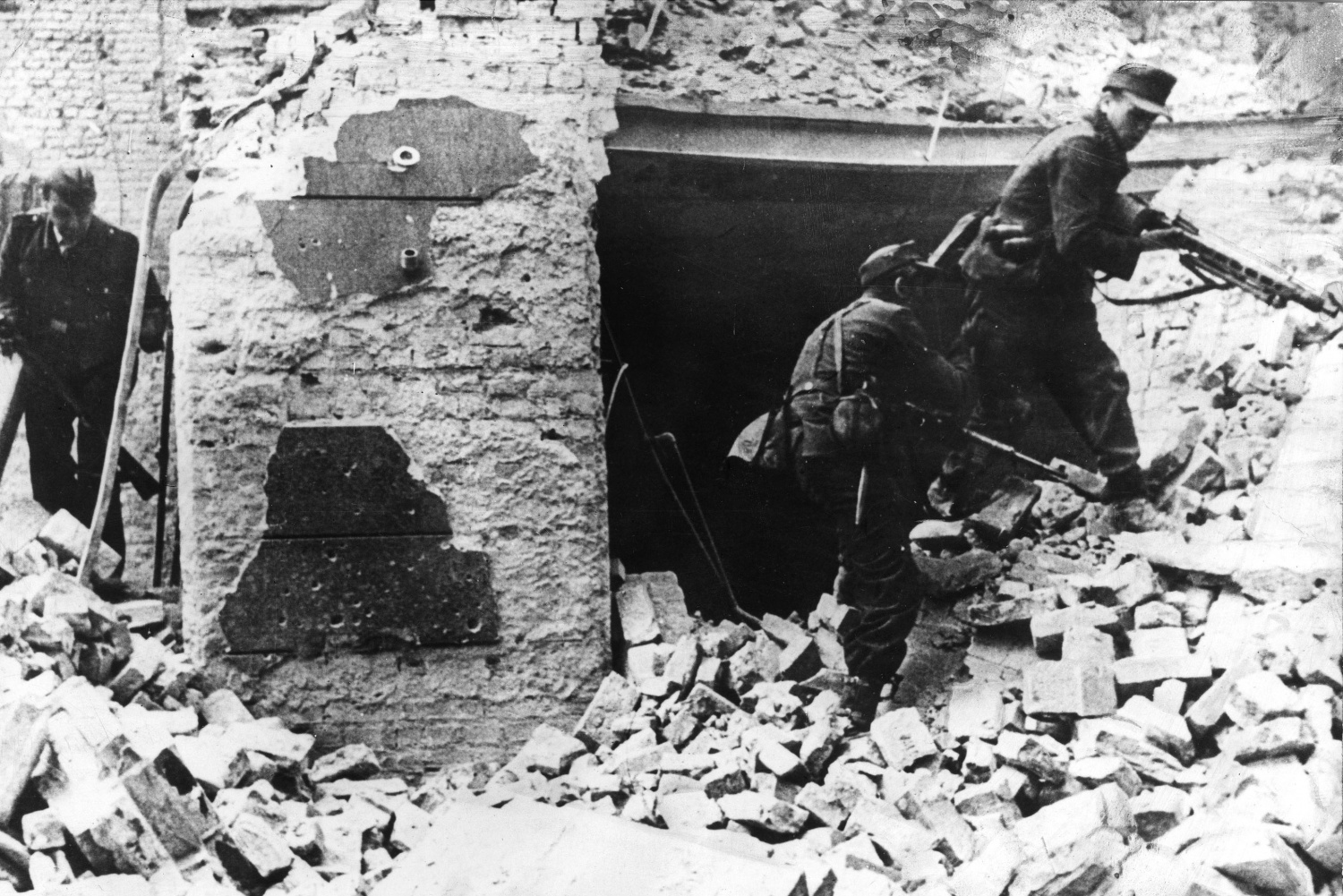
Parts of the SS were hastily transferred to the suppression of the Warsaw uprising, which had the experience of “anti -Partisan operations” in the USSR
On October 2, 1944, the tragic epic of the Warsaw uprising ended. The fighters of Ak - the army of Kraiova (that is, “domestic”) under the command of Tadeusz Komorovsky (wearing an underground nickname BU), supported by other patriotic organizations and thousands of ordinary citizens, suffered a brutal defeat in the struggle against the superior forces of the Germans. Tens of thousands of Warsaws were killed, including about 16 thousand fighters of the Kraiova army. About the same amount, 17 thousand killed, the Germans lost. About 20 thousand AK fighters were captured. The surviving residents, contrary to the surrender agreement, were deported from the city lying in ruins.
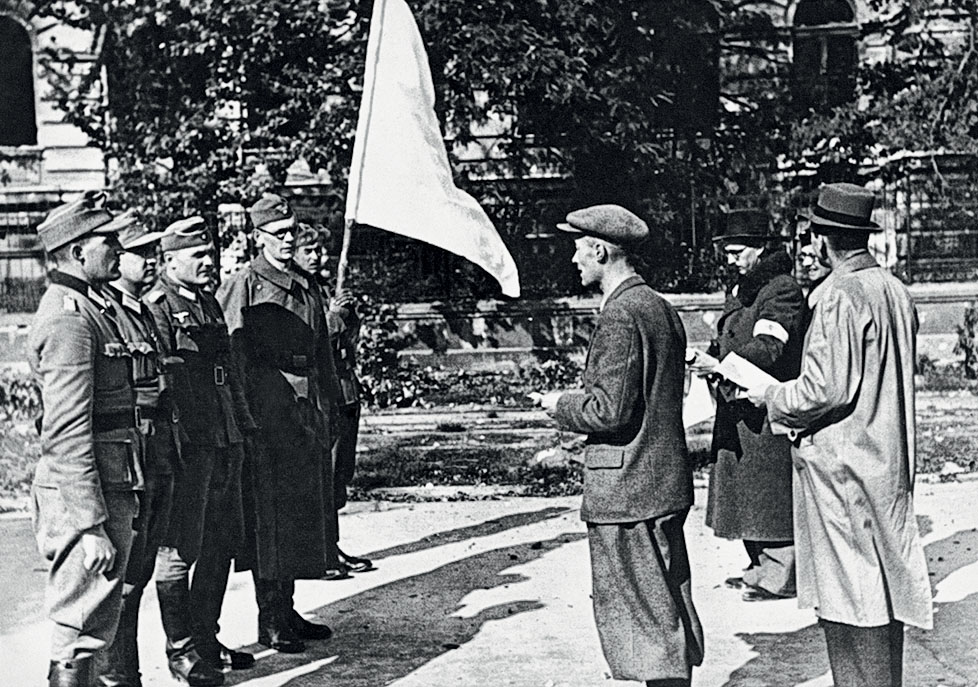
The leaders of the uprising managed to pronounce worthy conditions for surrender: the rebels who have developed weapons were considered prisoners of war
The defeat of the uprising was predetermined by the fact that the rebels did not receive help from the side of the Red Army on the approaches to Warsaw. The Poles were sure that she, continuing the offensive, would break through the German front and go to the city. But the Soviet troops did not do this - by no means for the military, but mainly for political considerations.
London or Lublin
Kraiov’s army was subordinate to the Polish government in the exile, which was in London. Back in April 1943, the USSR broke out diplomatic relations with this government after a scandal with Katyn graves. In the summer of 1944, the London government, headed by the leader of the peasant party, Stanislav Mikolaich, decided to conduct the operation "Storm". When the Soviet troops approached large Polish cities, including Vilna and Lviv, the Kraiova army detachments should have occupied these cities with the support of the local population in order to approve the power of the underground Polish government, which was subordinated to the government in London, and put the Soviet side before the accomplishment. Particular importance was attached to the mastery of Warsaw. But Stalin did not suit such a development of events. Indeed, in the spring of 1940, prisoners of the Poles, both military and civilians, were destroyed in Katyn and other places for the fact that they were Polish patriots, negatively related to communism and could become a serious obstacle to the Sovietization of Poland. And now he again came across such an obstacle in the person of the Kraiova army. On July 21, 1944, Stalin created the pro -Soviet Polish Committee of National Liberation (PKNO) in Helm, soon transferred to Lublin. The committee claimed the role of an alternative Polish government. Under these conditions, the Warsaw Uprising led by AK was completely inappropriate. According to the report of German agents, back in the spring of 1944, when the plan of the summer campaign was discussed in the Soviet rate and it was decided to apply the main blow in Belarus, it was assumed that an anti -German uprising would break out in Warsaw. Obviously, Stalin hoped that in the conditions of approaching the city of the Red Army, the leadership of the uprising would be in the hands of the Promunistic Army of Lyudov ("People's"). That is why, when the Red Army approaches Warsaw, the Moscow Radio handed over to the Warsaws to raise an uprising. And it was after this calling that the AK command brought its plan. The army of Lyudov (Al) could not compete with the army of Kraiova-the latter totaled by the summer of 1944 about 380 thousand people, although not all of them were armed. Lyudov’s army consisted of no more than 30 thousand fighters. Therefore, individual detachments Al, who found themselves in Warsaw, unconditionally obeyed during the uprising of the command of AK. The predominance of supporters of the London government among the Warsaw rebels was an unpleasant surprise for Stalin.
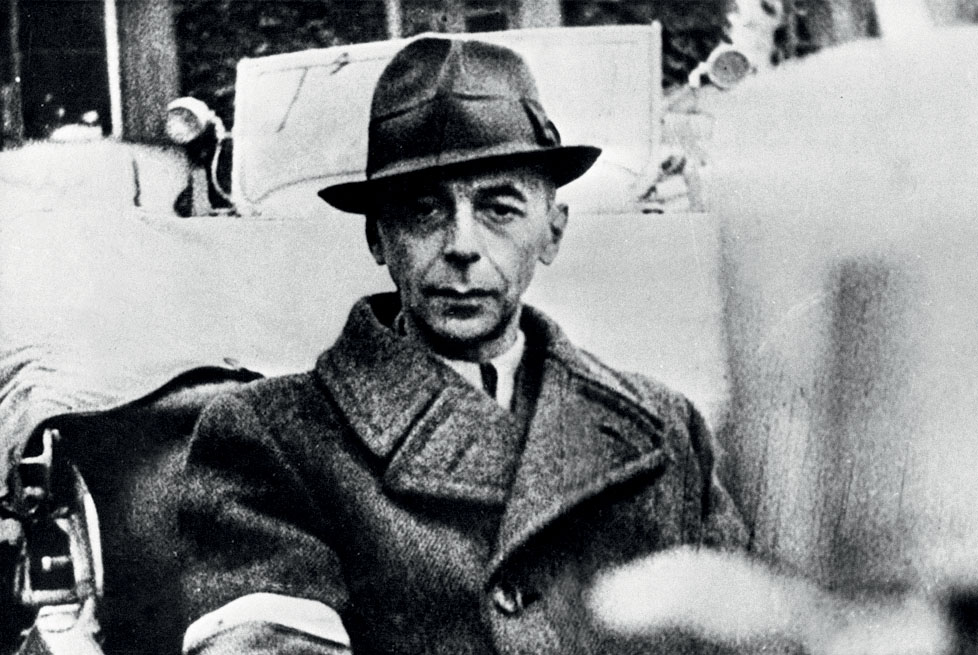
The army commander Kraiova Tadeusz Komorovsky as an honorary captive was sent to an officer concentration camp by car
On the eve of the uprising, the Prime Minister of the London Government Stanislav Mikolaychik arrived in Moscow. He expressed his readiness to cooperate with PKNO, but insisted that only his government is the legal government of Poland. After that, Stalin thought over the Warsaw rebels seriously. There was no direct order to the Soviet troops to stop the attack on Warsaw. This would cause too much the damage of the USSR in the Anglo-American public opinion. It was easier to advance, but so that Warsaw not to take for the time being.
Imitation of the offensive
Soviet, and after them, many Russian historians claimed that objective reasons prevented the rebellious Warsaw of the Red Army. Say, the 1st Belorussian Front suffered heavy losses, the rear are behind, ammunition and fuel were exhausted. And the Germans transferred five tank divisions to Warsaw and stopped the Soviet offensive. All this is true, but it is worth considering that the Wehrmacht, which lost the main forces of the Army Group "Center" in Belarus, was in an even more unenviable position.
Indeed, it was not possible to take Warsaw from the raid. Under the onslaught of fresh German tank divisions, the Soviet 2nd Panzer Army suffered a heavy defeat near Warsaw, irrevocably losing 130 out of 810 tanks by August 1 and temporarily proceeding to defense. However, in other cases, large losses did not force the Soviet command to change plans. For example, on August 10, 1943, the 3rd Guards Tank Army in one battle irrevocably lost 110 tanks, but this did not lead to the stop of the Soviet offensive in the area of the Oryol bridgehead.
On August 8, after the failure of the 2nd Panzer Army, Georgy Zhukov, as a representative of the Headquarters, and Konstantin Rokossovsky, as the commander of the 1st Belarusian Front, invited Stalin to prepare and conduct the Warsaw offensive operation. They noted that “in order to conduct this operation, it is necessary to transfer the 1st Belorussian Front to the 1st Ukrainian Front from the 1st Ukrainian Front to the 1st Belorussian Front ...” Marshals called the operation on August 25 likely.
In principle, the Warsaw operation was quite feasible.
In order to defeat the Warsaw grouping of the enemy and open a direct road to Berlin, it was worth, if only military-strategic considerations are taken into account, to wait with the Soviet offensive against Romania, scheduled for August 20. If the Soviet troops shot down the Germans from the Vislinsky border and pushed them to the Oder, the German command would have to begin the transfer of troops from Romania to the Oder Front, and the Romanian government in this case would probably have left the war. By the end of August, the Germans also suffered a severe defeat in France. The allied troops reached the borders of Germany. In these conditions, a real chance appeared to end the war in 1944.
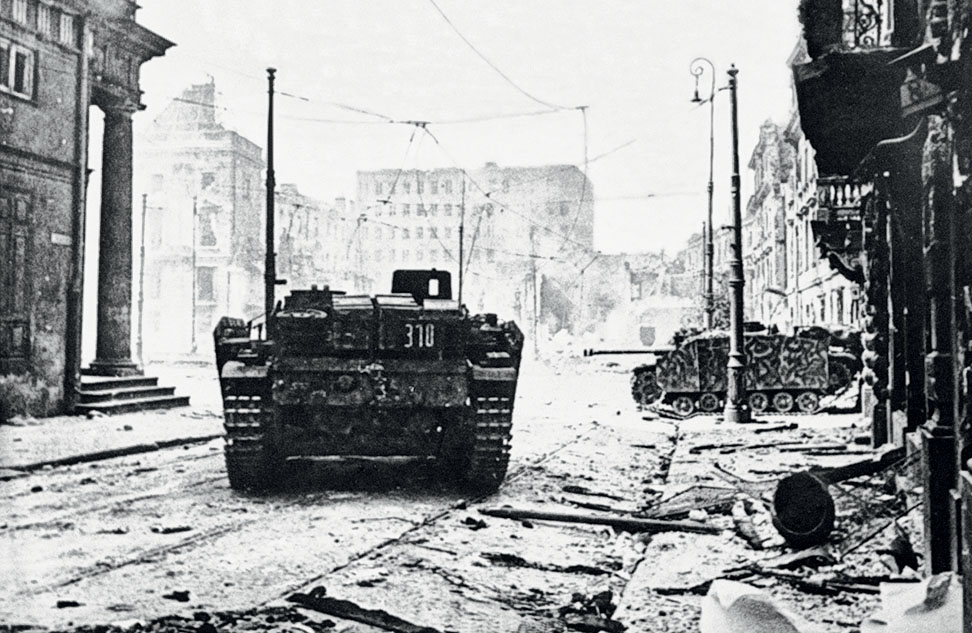
To analyze blocks and barricades, German troops had to use heavy equipment
However, Stalin was in no hurry to occupy the Polish capital, while the Kraiov army uncontrolled there fought there. He preferred to rush to the Balkans to guarantee their transition to the Soviet sphere of influence and prevent the landing of Western allies there. The plan of the Warsaw operation was approved by him, but did not receive the necessary means of strengthening the 1st Belarusian Front. And the failure of the offensive was a foregone conclusion.
Back in mid-August, the German tank divisions, which thoroughly patting the Soviet 2nd Panzer Army operating behind the Village, were transferred to the Baltic coast to cut down the corridor to the Army group of the North, which turned out to be cut off from Germany. The operation began on August 16, and in the very first days the presence of tank divisions transferred from Warsaw, was recorded by intelligence of the 1st Baltic Front. By the end of the month, the Germans managed to push Soviet troops from the Baltic coast and restore ground communications with the Army Group North. But this operation would be impossible in the event of a Soviet attack on Warsaw. The weakened German forces could not stop him, and even more so to keep the front from Latvia to the Oder in the north. However, the troops of the 1st Belorussian Front on Vistula did not advance, while the German 3rd Panzer Army was breaking through to the Baltic Sea at the Latvian town of Tukums. But a large offensive began in Romania, and on September 8, hastily - the advance of the two Soviet armies in the Carpathians not previously planned to help the Slovak uprising, in which the Communists played a prominent role.
"Reckless adventure"
Among the German soldiers, as evidenced by the report of the River combat group dated August 24, 1944, the belief that "Warsaw would not be able to keep if the Russians were not stopped in the northeast and southeast of the city."
If, after the start of the battle, the 1st Panzer Army Katukov would have been overflowed by Tukums on Warsaw, and Rokossovsky’s troops would receive replenishment with tanks and ammunition, they could immediately attack the Polish capital, and the Germans could not protect it. But the rebels still held on, but Stalin was not going to help them.
On August 16, he wrote to Churchill: “Having got acquainted closer to Warsaw, I became convinced that the Warsaw action represents a reckless terrible adventure standing the population of large victims. This would not have happened if the Soviet command were informed before the start of the Warsaw action and if the Poles maintained contact with the latter. In the situation, the Soviet command came to the conclusion that it should dissolve from the Warsaw adventure, since it cannot bear either direct or indirect responsibility for the Warsaw action. ”
It was a verdict of the Warsaw Uprising. Rokossovsky did not receive a direct “stop order”. But after August 13, he realized that his armies would not give enough strength and funds for the capture of Warsaw until the Germans end up with the rebels. In an interview with the British journalist Alexander Verta on August 26, Konstantin Konstantinovich, in particular, said: “We are conducting military operations in Poland, we are the power that will free all of Poland over the next months, and Bour-Komorovsky, together with his minions, burst out here, like a redhead in the circus-like the clown at the most layered moment and is completed in the stove ... if here It was just about clowning, it would have no meaning, but we are talking about a political adventure, and this adventure will cost Poland hundreds of thousands of lives. This is a terrifying tragedy, and now they are trying to shift all the blame for it. It hurts me to think about thousands and thousands of people who died in our struggle for the liberation of Poland. ” Marshal probably understood that his troops were thrown into hopeless attacks with obviously insufficient forces and means, since Stalin had to ensure that the Germans had previously destroyed the rebels.
Apparently, the Germans also realized that while the rebels are holding in Warsaw, the Soviet troops would not occupy the capital of Poland, so as not to fall into an ambiguous political situation when it is not known what to do with AK units. It was inconvenient to disarm them and arrest the Akovites, as it was in the Vilna area, Lublin and other places, since the Warsaw rebels strugged for a great resonance from the British and American public. And therefore, the Germans were in no hurry to end the uprising. But in the end, the nerves could not withstand the German command. And when the Soviet troops took the outskirts of Warsaw - Zarechny Prague, the rebels were over. But the Soviet troops were so exhausted that Warsaw was able to free only in January 1945. For this, the Poles, of course, are grateful to the Red Army. But they also cannot forget that she did not help the rebellious Warsaw in time.