
Translated material
Mr., designer
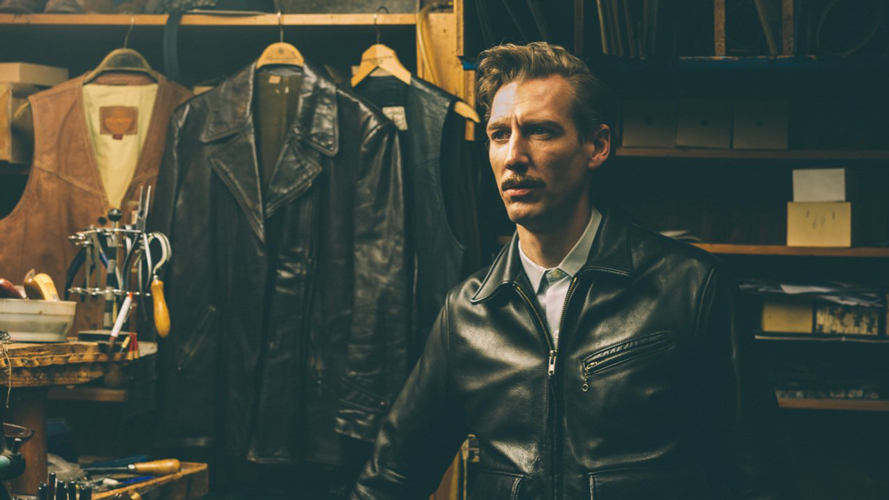
In the program of the Film Festival of the Northern countries in St. Petersburg, Tom from Finland, a Bayopic of an artist who made an invaluable contribution to gay culture. On the large screen, the film can be seen on October 7 in the Giant, there is no dates of the Russian rental, but you can see the picture in other known ways.
Tuko Laaksonen, an advertising artist and a veteran of the Winter War, did not first notice, but earlier and brighter than others he recorded the homoeroic nature of militarism and demonstrative, forced masculinity. In his black and white drawings, pumped-up guys in leather jackets or uniforms stand in relaxed poses, launch their hands into their pants and extract huge members. The peace of partnership reigns in this world: the motorcyclist and the policeman who write out the fine, equally affably, swells trousers, and the blackness hugs white as if the laws on segregation never existed. Having entered the mass consciousness thanks to the episode in the Blue Oysteza bar from the Police Academy, the aesthetics created by Laacsonen reconfigured our perception - a pumped man pulled into the skin or uniform, is read (at least in the first world) as a definitely homosexual type.
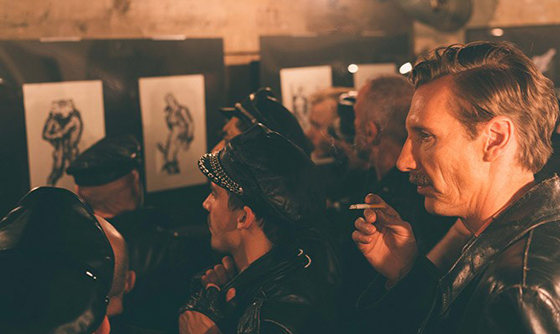 © Helsinki Filmi Oy
Laacsonen’s exhibitions have been held since the mid-1970s (homosexuality in Finland has ceased to be a crime in 1971), and over the past forty years, it has turned into the same article by Finnish cultural exports as Mumi Trolli, Kaurismaki or Angry Birds . In 2014, Finland released stamps with drawings by Laacsonen (his Canadian friend, now heads of the fund, which disposes of the whole creative heritage of the artist, notes in an interview The Guardian , that familiar Finns are especially eager to use them, sending postcards and letters to Russia). The artist, who received a prize of critics at the Gotharg festival in the winter, has become a hit of national rental (two months in the first ten) and is now moving from Finland to Oscar. Both the director and the main role are heterosexual, 65% of the audience who watched the film in Finnish cinemas are women; Where the LGBT community is allowed to leave the ghetto, gay-kino is blurred, disappears and flows into the mainstream.
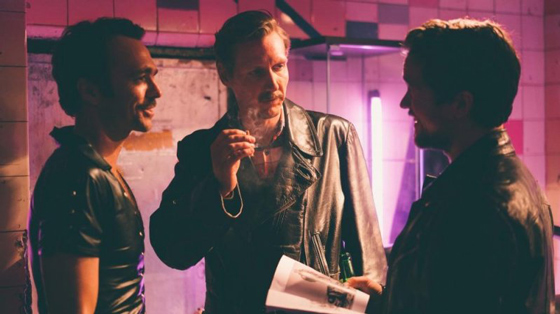 © Helsinki Filmi Oy
The film of the Karukoski house is an ideal modern bayopic without seams and archaic nonsense like a linear narrative, in which, however, a difficult task has been successfully solved: transferring a two-dimensional black and white world to the screen. The characters of Laacsonen (the pseudonym “Tom from Finland” came up with an American publisher) come to life and wink from their creator from all corners, urging the shy artist to finally embody them on paper. He himself, played by Pekka, is the most unlike his drawings: tall, thin, very polite, ridiculous in a leather jacket; It’s not that completely monogamous, but devoted for almost thirty years to a permanent dancer who died of cancer in the early 1980s.
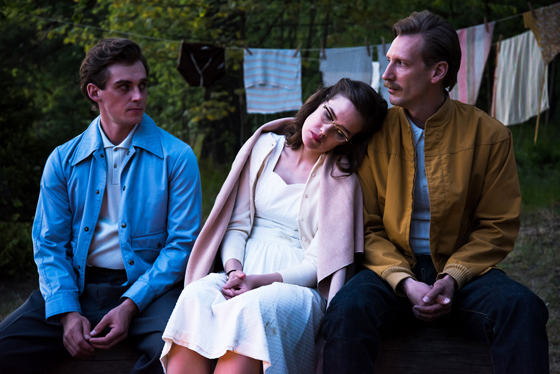 © Helsinki Filmi Oy
It has been noticed more than once that the image of the future also forms the image of the past: the movement towards further softening of morals allows you to open and re -evaluate what seemed to seem incorrect, vicious or simply non -existent. In the 20th century there were many films about mental and physical violence in the army (Franco Nero, suffocating from his own mastication, is torturing the young Michele Placido in the “triumphal march” Marco Belllocko). But the creators of Tom, connecting the aesthetics of drawings with the artist’s military experience, emphasize a completely different, once unprotected aspect of the relationship of the eldest and younger in rank. To realize homosexual desires - from disinterested compassion - the army captain helps the hero, indicating the subordinate forests, where they gather the same as them. Having killed the Soviet paratrooper in order to self -defense, the artist becomes obsessed with his face - until it becomes the face of the first of his muscular characters. Police beat gay batons during a night raid in the park, and Laacsonen imagines how rapists and victims merge in a hug.
Gradually freeing the artist in himself, the hero of the film liberates others, turning the attributes of power into entourage of an erotic carnival, and the act of violence into an act of voluntary mutual possession.