
Translated material
Silent hunt
Tips for those who are gathered for mushrooms
Quiet hunting more than captivity. Who loves mushrooms and who - collect them. Real fans begin to go to the forest in early spring and do not calm down until the first snow. And what is surprising - almost never returned without prey. Who prefers any mushrooms and why - found out The New Times
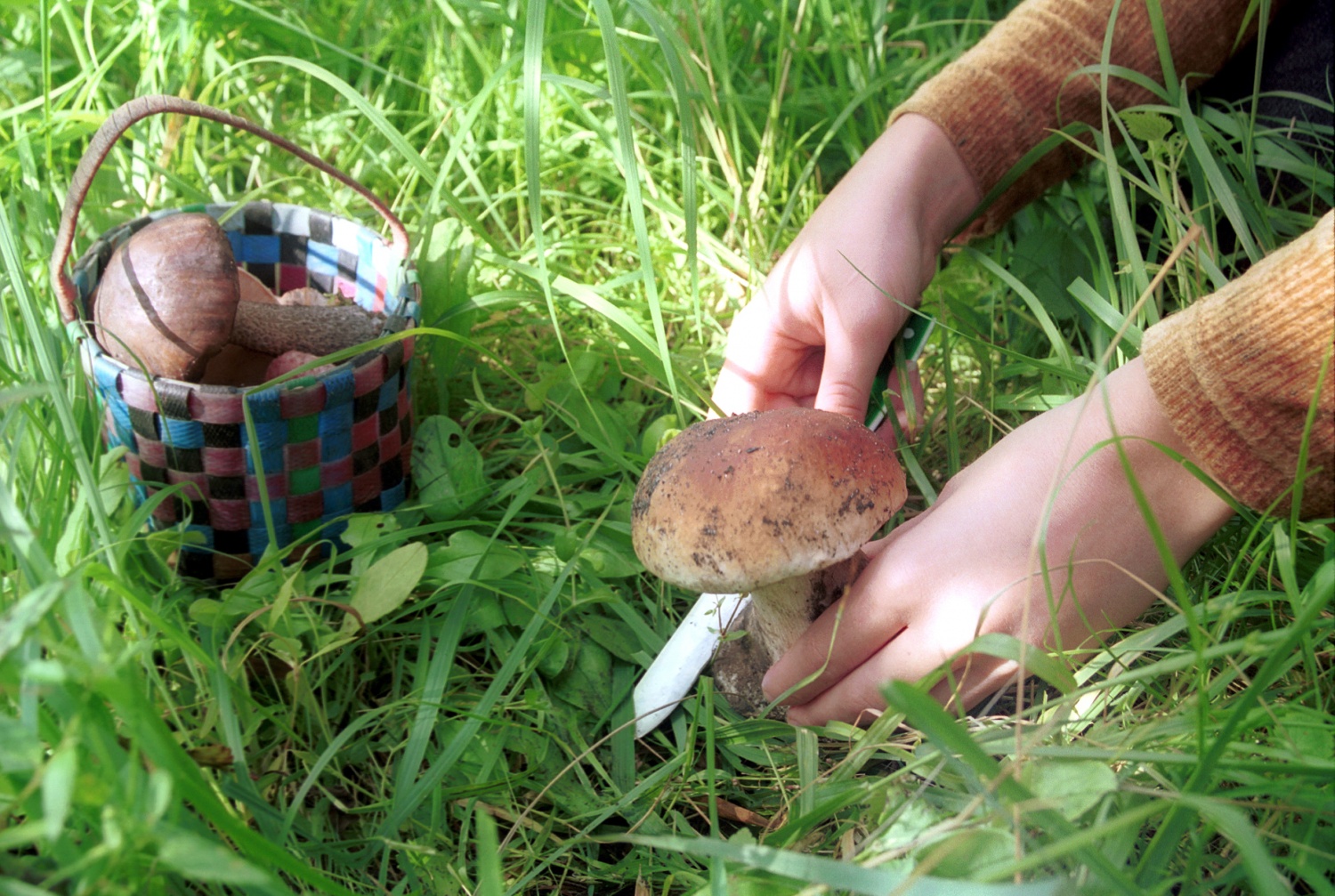
Photo: Oleg Dyachenko/ITAR-TASS

The past summer-at least in the meteorological sense of the word-turned out to be some kind of nervous. Excessively changeable. Either the rains will be charged, then a sharp cooling, then a sudden suffocating heat. Experienced mushroom pickers consider such unstable weather the most suitable for mushroom fishing. But despite this, in the summer there were few mushrooms, mainly chanterelles and rays. They say that even fly agaric, eternal satellites of white mushrooms, something did not fall ...
But then autumn pleased. In the forests around the summer cottage villages, mushrooms were full. One familiar family, which retained a curtain of young birches on a garden plot, was cut back a pair later. On the weekend, on the sidelines of the roads near Moscow, cars of serious, motorized mushroom pickers are lined up by this time: people are chosen into a “real” forest, away from human housing.
Unknown animal
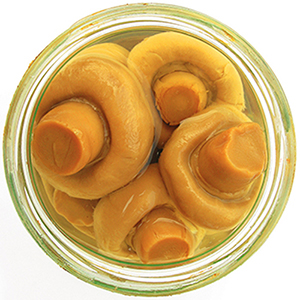
In one cubic meter of air in Bor or Bereznyak, one to two thousand mushroom disputes soar, and the forest soil is simply dotted with them. On average, one gram of inexorable subzolus contains up to 80 thousand mushroom rudiments. It would seem that with such an abundance of mushroom seeds there should be an incredible amount. But the dispute has a limited supply of nutrients, and the nutritional value of the soil, temperature and humidity, and illumination affects its germination. Only when all this together develops in “favorable conditions”, the dispute breaks through and gives the beginning of the new mushroom picked.
And the purity of the forest is also of considerable importance. The overgrown, impenetrable, pouring forest is usually not rich in mushrooms. They do not like mushrooms and “human” garbage, retreat, go into non -enlightened places. The “snotty” oils, which were previously not mowing, now you will practically not be found, but all because the butter is very sensitive to environmental pollution.
The mushroom is a mysterious creature: biologists do not attribute it to plants or animals and are more likely to be considered a special form of life. There is no generally accepted scientific classification of mushrooms. More often, division into saprophytes, that is, feeding on dead organisms (they include large mushrooms), and parasites are more often pathogenic mushrooms. True, all this is not so important, since it deals only with a narrow class of mushrooms suitable for food. Therefore, we, non -specialists, divide the mushrooms into edible and inedible, allocating poisonous into a separate detachment.
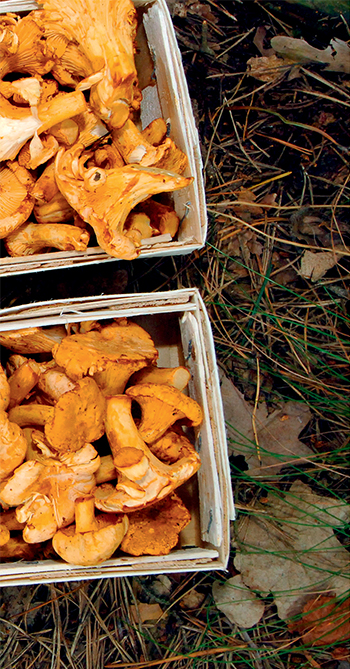
Among the edible there are cultural mushrooms that have learned to grow in nurseries (champignons, for example, or oyster mushrooms), and wild. Wild, of course, tastier and more expensive, and it is from them that the most refined dishes are prepared. In restaurants, they are many times more expensive, but this is not surprising - after all, the taste and aroma characteristic of forest, wild mushrooms can not be faked.
God sent
They began to cultivate mushrooms some two hundred years ago. And they were always collected by people always. The ancient Greeks and Romans, the Chinese and Indians, African and South American tribes - all believed in the divine origin of mushrooms. In Egypt, they were considered the food of the pharaohs, ordinary mortals were forbidden to even touch them. The Babylonians preferred truffles. This mushroom has always been considered a delicacy. Mentions of the beneficial properties of truffles can be found among the famous Romans - a doctor, a Greek by origin, dioscoride, philosopher of Seneca, writer and scientist Pliny the eldest. The ancient Greek natural scientist and philosopher Theofrast mentions in his writings that his relatives (in the 3rd century BC) willingly eat sweatshirts and champignons. The treatises that have reached us on medicine and natural science testify to the mushroom feasts that the Romans arranged. But in ancient times, poisoning were not uncommon to poisonous or incorrectly prepared mushrooms. There are cases when poisonous mushrooms were used to solve dynastic problems: Emperor Claudius, for example, went to the forefathers, tasting the mushrooms, carefully offered by his wife Agrippina.
The Chinese and Japanese have been collecting mushrooms for more than two thousand years that grow not on the ground, but on the trees, Shiite. In the Far East, this mushroom was considered and is considered at this time not only nutritious, but also healthy. To taste, it resembles something between white and champignon. Today, Shiite is grown in artificial conditions not only in Asian countries, but also in Europe and America.
Strategic raw materials
In the Russian language, the word “mushroom” appears in the 15th century and is most likely from the Old Slavic “GRB”, that is, “Gorb”. Perhaps the name comes from the characteristic forms of hats of the most common edible mushrooms of the middle strip.
In Rus', it was not for nothing that mushrooms were called "forest beef." The meat for ordinary people was an unacceptable luxury, and the mushroom created the illusion of dense and satisfying food. Moreover, it is the illusion that some biologists argue that mushrooms in our body do not have time to absorb, pass by a “draft”. Mushrooms have always formed the basis of the lean table. Before, when the majority observed strict post, mushroom reserves for the winter were of important strategic importance. With whole families, they went into the forest on carts and brought them full of selected red -haired, booths, chanterelles, and loaders.
In the 30-40s of the XIX century, Petersburg was famous for its lean mushroom dishes during the Great Lent. The dinner meal even in the best St. Petersburg restaurants at the first and passionate weeks of the post was no different from the strictly monastery. The menu included mushrooms with onions, cabbage with mushrooms, pickles salted, seasoned with oil ... "There is a lot of beautiful in Russia ... But it is best to take pickles from Zaitsev (the corner of Sadovaya and Nevsky) in pure Monday. Redcles, loads, some kind of apple, lingonberries are laid out on plates (for sample). And the threads of white mushrooms on the jamb of the door ... ” - wrote V.V. Rozanov in the "fallen leaves".
Mushrooms were a serious export item: for 1911, for example, Russian merchants sold 32 thousand to the west with a luster of poods (over 516 tons) of dried mushrooms for 420 thousand rubles in gold. At that time, mushrooms were exported along with such primordially Russian goods as fur and caviar. The pound of salted in a special cold way of the Kargopol sails at the beginning of the 20th century cost in Europe more than a bottle of the best champagne. The quality criterion was considered the mushroom ability to pass through a narrow bottleneck (a hat with a diameter of not more than 2.5 cm). The pickled oils were for Parisian gourmets that oysters.

And in the XXI century, chanterelles and saucers in Europe are considered the same delicacies as black caviar. A significant part of them is still being imported from Russia. True, the part returns back to us in a frozen and canned form - as if they cannot be canned and frozen here! And in well -groomed European forests, only notorious gourmets collect mushrooms. Or our brother is a Russian tourist. It seems like a character from the story of Valery Popov: Having been in London on a business trip with extremely limited funds, he gathered fungi in the London Park and had a great dinner at his hotel.
In the United States, the vast majority of the population considers all mushrooms except for those sold in supermarkets, poisonous, and if a person collects something in the forest, they most often think that he wants to find hallucinogenic mushrooms of North American Aborigines. The writer Alexander Genis said that somehow, together with his son, he came to visit the deceased Leo Losev, but not taking the house (Losev gave a lecture at the university), decided to collect mushrooms for dinner. Through rare trees, the father and son of the Genis suddenly saw another mushroom pipe. "Our!" - They decided and were not mistaken: Viktor Erofeev approached them, jealously looking at their already filled basket and instead of greeting, putting everyone in place with the words: "And my new book comes out! .."
What is good for the mushroom
About dishes from forest mushrooms can be composed of poems. About soups-from transparent broths to thick Polish mushroom borscht, French soups-puree, the most refined of which is the French cream Sup of chanterelles. About complex side dishes and no less complicated combinations with meat, bird and game. About Fetuchini Ai Porchini, paste with white mushrooms, fried garlic, Italian seasonings and sauce from fresh tomatoes, considered the height of culinary art. And how not to recall the perigorsky sauce based on calf broth, maderes and truffles, which is served with meat in France!
And you can not become tricky at all and fan mushrooms with potatoes. The mushroom time, by the way, has not yet ended, and many “professional” mushroom pickers, who are playing with honey agarics and chanterelles today, are waiting for signals from acquaintances from the hinterland: noble mushrooms can also go - booths, boletus, and boletus. Everything that is bad for other types of living - cold, rains - is good for the mushroom. This must be related to him with a Russian man, for whom everything is great, that the rest is death. Maybe that's why we collect and eat all sorts of mushrooms, up to a shaft with a brown spherical hat, which is so easy to take for a white mushroom. And the pig is in use, although it concentrates the largest number of harmful substances, starting with lead. Vladimir Soloukhin, the author of the book "Third Hunt", assured that if you soak the fly agaric in vinegar, then they taste like white mushrooms ...
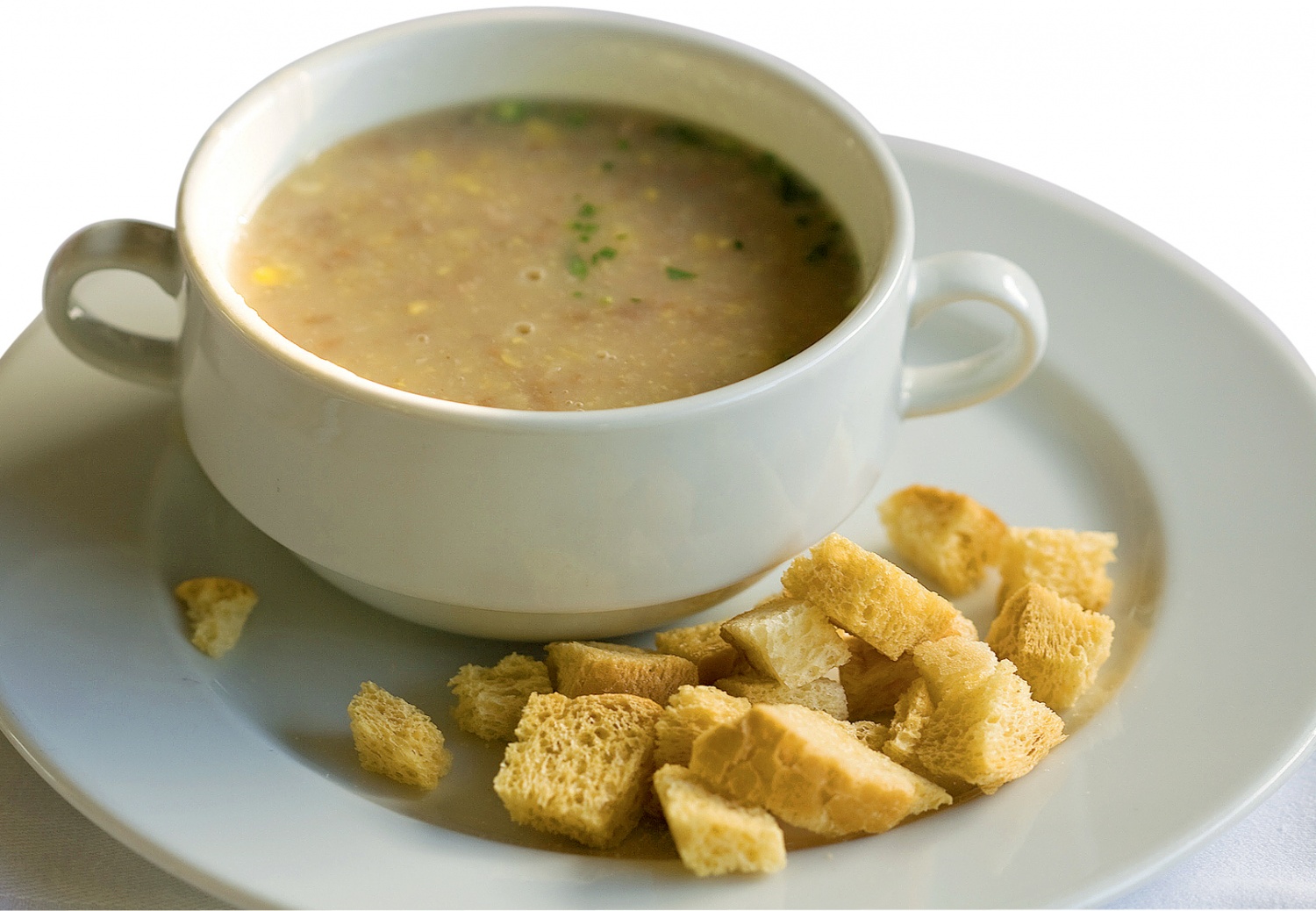
Photo: Fotolia/PhotoxPress.ru
Cream-SUP with forest mushrooms (4 portions)
250 g of chanterelles, 250 g of fresh white mushrooms, 2 bulbs, 2 tbsp. l. vegetable oil, 30 g of flour, 200 ml of milk, 400 ml of vegetable broth, 1 bunch of fresh thyme, salt, pepper to taste.
Clean mushrooms and onions, finely chop. Heat the oil in a pan, fry the onion (2 minutes), add mushrooms. Stiring, cook all together for 5-7 minutes. Remove half the mushrooms, postpone. Sprinkle the remaining mushrooms with onions with flour and fry for another 1 min. Pour milk and vegetable broth. Stiring, bring to a boil over low heat, without covering the lid. Beat with a mixer, season with salt and pepper. Pour on plates, put in every layered mushrooms, decorate with thyme.
Salad with chanterelles and goat cheese
Mix from salad leaves - 60 g, fresh chanterelles - 100 g, chopped parsley - 1 tbsp. spoon, goat cheese - 50 g, garlic - 3-4 cloves, butter - 30 g, cherry tomatoes - 50 g, avocados - 50 g, salt and pepper to taste. For mustard sauce: Dijon mustard - 10 g, olive oil - 30 g, lemon juice - 10 g, pepper to taste.
Cut the avocados and cheese with cubes. Put on a plate along with the leaves of salad and cherry. Refun with sauce. Separately in olive oil, fry the chanterelles with salt, pepper, garlic. At the end of the frying, add chopped greens and a piece of butter. Mix ingredients for mustard sauce. Twine salad with sauce.
Cabbage rolls with mushrooms
8–10 leaves of white cabbage, water, salt, 2 tbsp. tablespoons of vegetable oil. For filling: 500 g of fresh mushrooms, 1-2 tbsp. tablespoons of tomato paste, 0.5 tbsp. rice.
Boil mushrooms, finely chop, mix with rice and tomato paste, salt to taste. Capture cabbage leaves in boiling water for 2-3 minutes, remove from the water, let the water drain. On each cabbage leaf, put 2-3 tbsp. tablespoons of the filling and wrap it. Fry the cabbage rolls in oil, then simmer in a goose -free or in the oven on a baking sheet. Serve with boiled potatoes and salad of cucumbers.
First published in NT No. 34 of September 28, 2009 .