
Translated material
FSB beats UVP
Special services intercept the management of political processes in the country
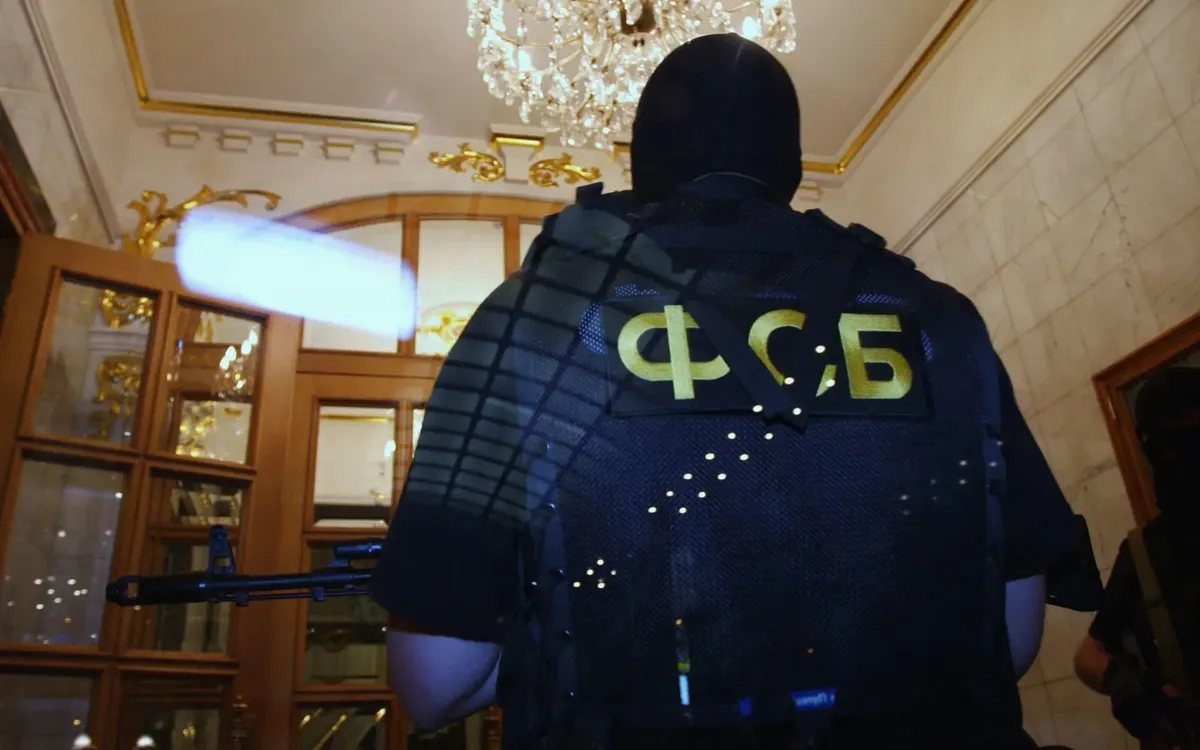
On the morning of October 5, large -scale searches were held in Moscow in the apartments of Open Russia employees and in the office of this organization. They searched for the money of Khodorkovsky, Nevznin and other undesirable citizens. Investigative actions were formally carried out in the framework of the first criminal case of Yukos, opened back in 2003. The current chairman of Open Russia, Alexander Solovyov, for example, studied at that time in the eighth grade.
For numerous ridiculous details of searches (I want to write - raids) is easy to miss the political context.
The bias for understanding the large context of hunting for “open Russia” is the proof of the employees of the Investigative Committee with the cameras of the REN TV channel. In the searches of the old case of Yukos for the Bastrykin department there is no practical sense-it is unlikely that anyone seriously planned to find suitcases with Khodorkovsky’s money in opposition activists. But
The participation of propagandists with REN TV indicates the political meaning of what is happening, in which only the role of the performer plays.
We are talking about one of the episodes of the transition of political processes within the country under the control of the FSB.
The meaning of the attack on “open Russia” under the cells (pay attention to REN TV actually participates in investigative actions, and not just removes what is happening) is transparent. Before us is the stripping of the FSB of political players on the eve of the elections, while a report on the work done and the demonstration of force - both potential “clients”, that is, to whom they can also come to the search and their competitors - including, apparently, within the presidential administration.
The pressure on polyactivists should show the Kremlin that the special services cope with problems more effectively and it is for them - in the interests, of course, the country's security should be the last word on political issues.
In the same style of power stripping, administrative arrest of Alexei Navalny and Leonid Volkov was implemented on the eve of a large protest campaign announced on October 7. Until this moment, the regional authorities implemented another attitude: to coordinate shares only where, by definition, they will not collect many people. An attempt to marginalize the supporters of Navalny, the collapse of the street mobilization of his campaign was built as the Russian version of Soft Power.
Volkov at first unexpectedly went free - and it looked like a partial revenge from the internal policy of the Presidential Administration. But a few hours later he was detained again. He was taken away in an unknown direction.
If we take a wider perspective and analyze not only the pressure on opposition politicians, but also the bureaucratic model folding on the eve of the 2018 election, we will find a similar picture.
Special services impose on the country their own ideas about the goals of political development and political participation methods.
The current rotation of the regional elites de facto was launched by the FSB and opened with the arrests of governors Alexander Khoroshavin, Vyacheslav Gaiser and Nikita Belykh. The deputy of some leaders of regions resigned in recent weeks, in particular the Governor of the Primorsky Territory Vladimir Miklushevsky, have long been in operational development.
The FSB directly controls the cultural policy - this was announced with a great resonance after the director’s house arrest Kirill Serebrennikov. Like, the director’s case was transferred to the FSB constitutional system to protect the constitutional system, due to the fact that this organization has special skills in working with the intelligentsia.
There is no special political department in Lubyanka. But the influence of people in civilian clothes on the adoption of political decisions is felt more and more.
The political ambitions of the FSB, which are already obviously going far beyond the scope of departmental, continue to grow. The special services are close to obtaining direct control over the election campaign, turning the presidential administration into the conductors of their decisions. This strengthening occurs against the background of clan conflicts in which the main forces of the rest of the Russian political market are invested.