
Translated material
In pursuit of replicants
“Running along the blade 2049” Denis Vilnev was released - the continuation of the cult classics of Cyberpan
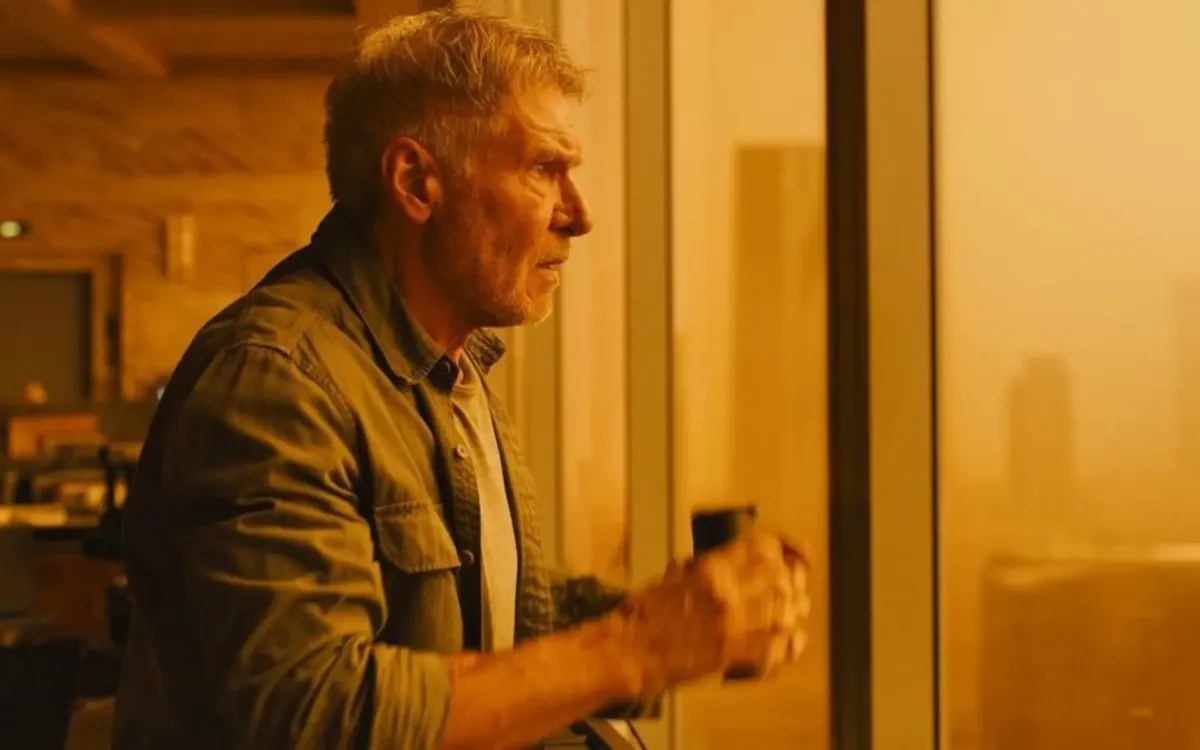
This is more than a film. Firstly, it goes nearly three hours. Secondly, the epic created by Scott, as befits a grand fantastic odysse, is overgrown with whimsical (sometimes confused) plot corridors and tunnels, heroes of new generations. The new film was shot by Denis Vilnev - the creator of the experimental meditative “arrival” (eight Oscar nominations). To whom, whatever he may, Ridley Scott could entrust the new chapter of the piece anti -utopia “Running Blade”, who at one time delighted and puzzled even fans of the novel Philip Dick “Do Androids about electricovians dream?”
Among the close and distant “relatives” of the film are the “world of the Wild West”, “Dark City”, “Johnny Mnemonik”, “Matrix”, “Mad Max: Road Road”. There is a game with Star Wars (Ford literally repeats the phrase of his khan Solo). Well, of course, "Solaris" with its bodily phantoms created by the ocean of the living planet.
Neither Delnev nor Scott, who acted as a producer, love simple plots. And so that the viewer does not get lost in the saga about the biorobots-consultants “thirty years later”, the director asked his fellow coming to the removal to remove a few short-terms that would tell, and what, in fact, happened in these three decades? Of course, Vilnev’s film can be watched from scratch, but knowledge brightens the time of show. You read Dick's book, watched the first film, then short films, among which there are even anime.
You are already inside, among the screen acquaintances, their descendants, among the gloomy landscapes of the post-apocalyptic Los Angeles. You know that the Apocalypse of the high -tech XXI century is just a blackout, when not only the city systems are cut down, but also most of the population, existing on ... digital media. You are connected from the very first frame: in the pupil of the Android under white eyelashes, a gloomy world is reflected (a similar frame was in the first film). So you are again - "at home."
Scott returned to the cinema -populated “running ...” for many years (there are seven versions of the picture, including the director’s, international, “final”). It seems that the film itself is something like a replicant - an anthropomorphic creature that can be constantly improved. He was mounted, before writing and composed "the film. He quarreled with Harrison Ford, who starred in the title role, with the first screenwriter Hampton Fancher. He has already grown a world in which high technologies are found with the Middle Ages. But how to create an accurate cast of ghostly gloomy dreams on the screen?
Dani Vilnev, preserving the main drawing of Odyssey, brought his vision to her. But this is still a movie about the complex ties between a person and his creation, who escaped from control. The main thing in the dilogy is the Hamlet question that sounds in the new century: to be a person or android to you? What determines your essence?
It is known that this issue caused scandals and quarrels during the filming of the first film. For Harrison Ford, his hunter for the heads of rebellious replicants Rick Descartes was a man. For Ridley Scott - android. The dispute will be finally resolved in the new film. How exactly, the patient viewer will recognize in the finale. Writing a review of such a movie is generally unseemly, each phrase can hide the spoiler. Therefore, only in general terms.
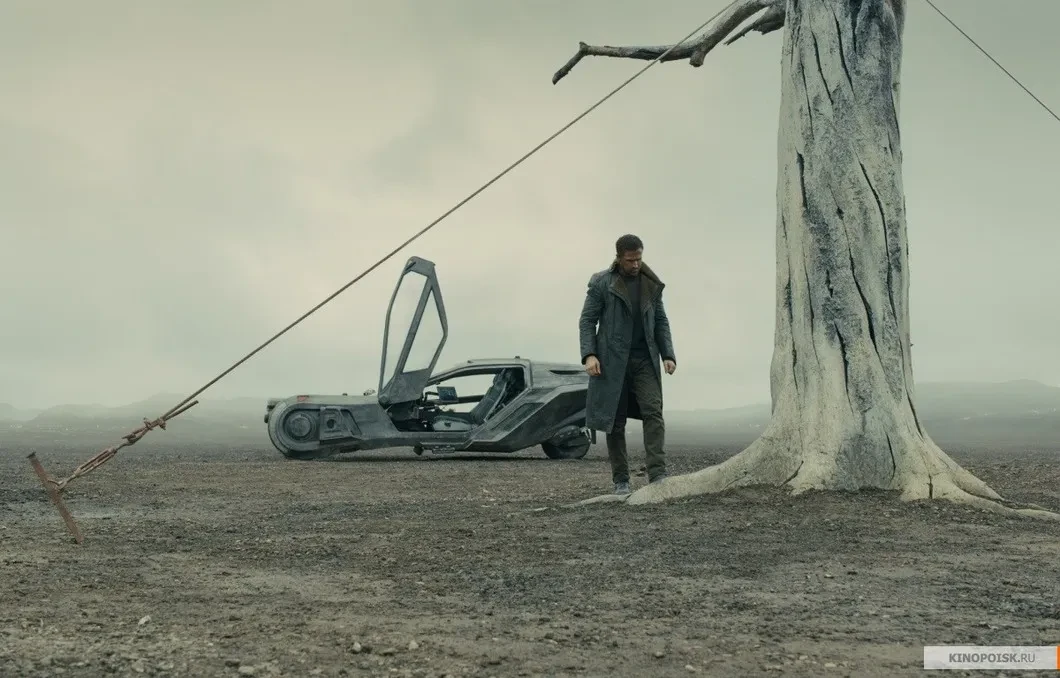
The Blade Runner 2049 action takes place in the near future. Rick Descard (Harrison Ford) was gone. The planet finally fell into the twilight of the post -apocalypse: nature was destroyed, he was able to eat the sun. In the hands of a thirty-year-old Kop-Slikante K. with an inventory number in the token (Ryan Gosling) is a box, the contents of which sheds light on the secret of the relationship of people and biorobots. On a secret that can change the world or destroy humanity. But in order to solve it, it is necessary to find Rick Descard at all costs: the former Los Angeles police disappeared thirty years ago. For the sake of this, K. is ready to violate the laws established by the corporation ruling on the planet to go through the wall dividing the world into people and their bioclons.
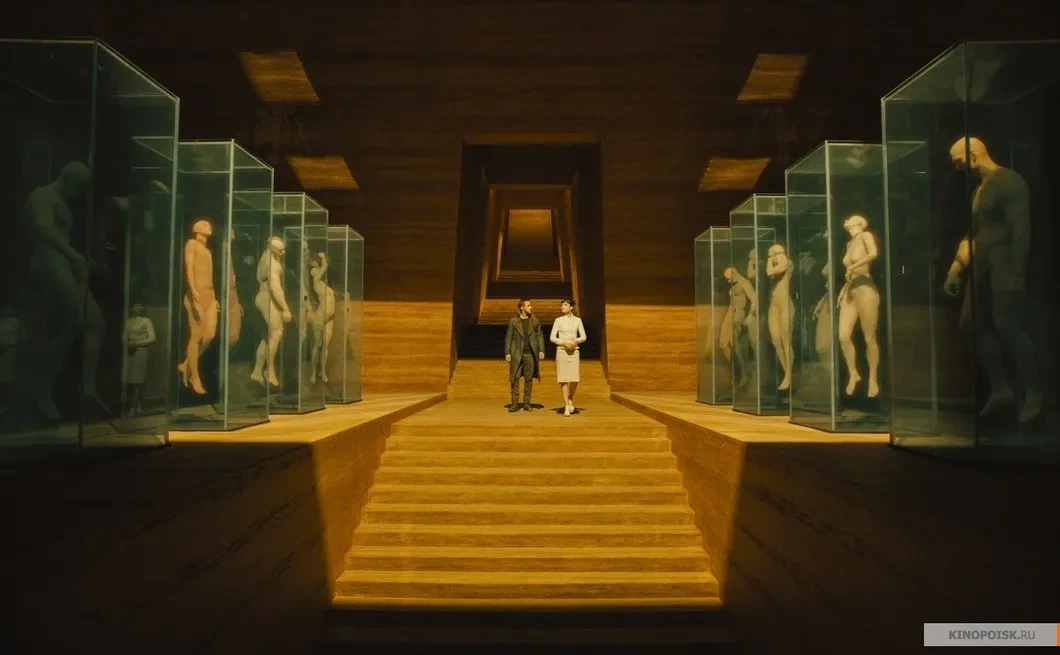
The image is primary here: a magnetic, bewitching space, invented, thoughtful, literally stuffed with spectacular details. A multi -storey gray megalopolis explodes with bursts of neon holographic advertisements, mobile billibrods. The world was finally dehumanized and globalized: there are no moral prohibitions here, here they speak all languages at once. Among the eternal values are the brands of Pan American, Coca-Cola, Sony and the Russian ballet-virtual dancers in white packs and codes are circling over the street crowd.
The first film was resolved in the style of Noar Sorokov and sent to the Langa Metropolis masterpiece, born of depression, technological breakthroughs and “Steel hurricane of the First World War”. New “Running ...” is an alloy of melancholic neonoire with vivid interspersed of pop culture of the eighties-time of eccentric and excessiveness. As in the first part, a hopeless lead rain pours. It also flows electric flows on the walls of apartments. And only snowfall is not virtual, real, promises to update life even to replicants.
The first and second films are worn out by mythological, biblical, philosophical motives. Here is the return of the prodigal son, and the cheek substituted for the second blow, and the kiss of Judas. Motives of ancient Greek tragedies. The ideas of Nietzsche (the image of a superman) and Descartes (the Universe created by God begins to act as an independent mechanism).
To someone, the slow rhythm of the epic will seem unbearable, others will revel in the microscopic details of the post-humanistic world. Someone will be annoyed by inconsistencies, plot gaps (for example, the line of the head of the “Tyrell Corporation” Wallace performed by a specially “blinded” and the summer, which was weighted for the role of Jared, turned into a couple of mysterious fragments). But for fans of the film and film fiction, esoteric issues hung in zero gravity are scope for interpretations and discussions.
They will enjoy the exciting compositions of the legendary operator Roger Dikins (he shot the films of the Cooen brothers, the Games of the Reason, “Hurricane”), thanks to which the film gains the scale of the visual symphony, where naturalism is crushed with irreal, the classic composition with computer effects. In any case, the film is waiting for a long life. Ridley Scott is already thinking, like George Lucas, to continue the construction of a global franchise.
And does the figure of the coming chapter in the long -playing history of the time running along the blade of time are also important for the Fabula of the film “2021”?
PS
Russian spectators are also expected to be a gift from Denis Vilnev. The call on the phone of the hero Ryan Gosling is the theme of Petit from the symphonic fairy tale of Prokofiev, the boy, as you know, defeated the angry, not at all android wolf.