
Translated material
Why Catalonia fails to repeat the "success" of Crimea
This is the translation of the article by Bloomberg View Leonid Burshid . Other Bloomberg View columns can be found at the link .
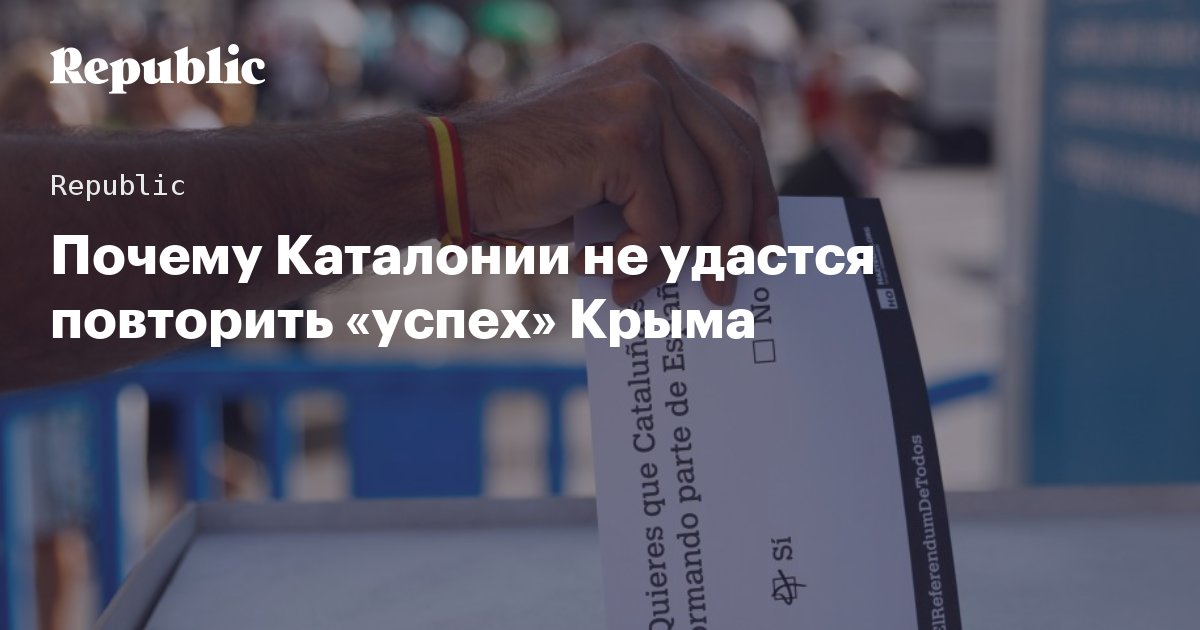
There are very good reasons why the Russian propaganda machine supported the Catalan referendum on Sunday, and the Ukrainian Foreign Ministry, on the contrary, announced it "illegitimate." The situation in Catalonia suggests itself to compare with what happened in Crimea in the spring of 2014, and these analogies are not so easy to remove, as supporters of the independence of Catalonia probably believe.
Before proceeding with the discussion of parallels, we will deal with one obvious difference. In March 2014, the Ukrainian peninsula Crimea was filled with Russian troops both in uniform and in civilian clothes. A few days after the government of Viktor Yanukovych was shifted as a result of the revolution in Ukraine, the Russian “green little men”, as Russian soldiers were called in military uniforms without insignia, seized the Supreme Council of Crimea and put the local pro-Russian politician Sergei Aksenov Prime Minister of the peninsula.
Ukraine insists that the referendum on March 16, 2014, during which the inhabitants of the Crimea voted for the separation from Ukraine and joining Russia, took a threat of weapons. This, however, is not true. There were no “green men” or Russian soldiers in uniforms in polling stations during the vote. There was no armed pressure on the Crimeans in order to fill the ballots in a certain way - even to the indigenous residents, the Crimean Tatars, who did not support the separation of the peninsula and for the most part abstained from voting. The presence of Russian troops played a role, but it does not make this referendum illegitimate.
Subscribe to read the whole
Make a subscription Redefine.media to read Republic
Subscribe [you can pay for a Russian or foreign card. The subscription is extended automatically. You can unsubscribe at any time.]
Where are the money subscribers going