
Translated material
The history of the occurrence of fabric
Few people think about how the fabric of shirts, trousers and blouses that we are now wearing was made. Today, fabrics are made with the help of cars on huge machines, and in gray -haired people, people made fabric manually.
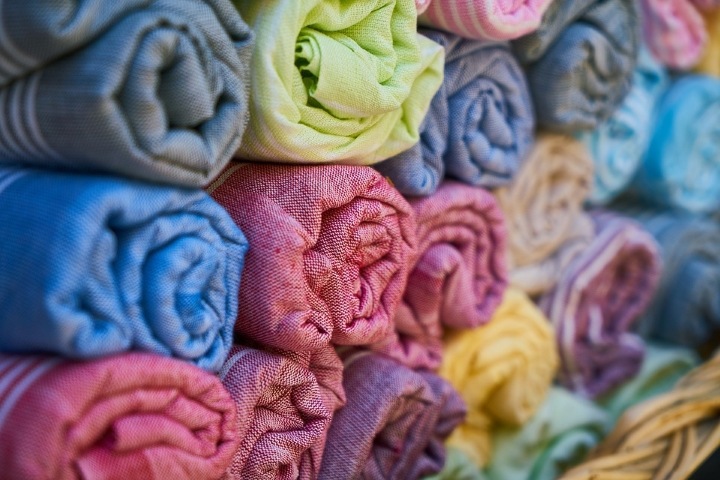
And humanity did not have such fabrics as on the website https://cykno.ru/ . People have come a long way before learning the subtle art of weaving.
The origins of weaving
At the dawn of human civilization, no one heard such a word as weaving, and there were no machine tools yet - there were all kinds of weaving. They woven in those days mainly from plant materials, a little later, from wool, when they learned to spin of thin threads from the trimmed wool. However, primitive weaving machines were in the everyday life of people - they woven on two poles, standing vertically, parallel to each other. The threads were hung from top to bottom, and by the end of each thread they attached a weight so that they would not get confused. The weaver with a loaf lifted the necessary vertically stretched threads and stretched out horizontal through them. He repeated this process until the canvas was obtained.
In the Middle Ages, a vertical weaving machine was invented, but the art of weaving still remained too laborious.
Natural fabrics of that time were produced from hemp, nettle and flax - the most fibrous plants. The most ancient products from flax are considered - the finds of archaeologists in Egypt were dated II in BC.
The development of weaving
Since the case of fabric production was complex and laborious, the fabrics were expensive, and some of them were considered a luxury subject. In each country there was a certain type of fabric, in the manufacture of which the country was not equal. For example, in China, silk was amazingly made, in Turkey - velvet, in Italy - brocade, in Iraq - Muslin. The secrets of fabric manufacture were as valuable as the secrets of military art, and were guarded at the highest level. The craft of weaving passed from generation to generation.
And then?
In the first half of the 18th century, a mechanical weaving machine was invented, which significantly facilitated the work of weavers. Before the manufacture of an electric machine, it was not long left, and in 1879 it was invented. Since then, fabrics have become cheaper. Nowadays, natural fabrics almost completely gave way to synthetics. Of the synthetic materials, they sew good quality clothes, in addition, synthetics has various interesting properties, but do not forget that it can be the strongest allergen for a person. That is why many doctors advise people to wear clothes made of natural fabrics - flax, cotton, silk and wool.
Of course, everyone decides what to wear, the main thing is to acquire high -quality fabric for sewing things and give free rein to their imagination.