
Translated material
Our poor/rich children

What is a silver spoon syndrome, and why the children of rich parents are at risk. “Such things” publish a chapter from the new book of Marina Melia - a psychologist and a coach, who has been advising the first persons of Russian business for fifteen years
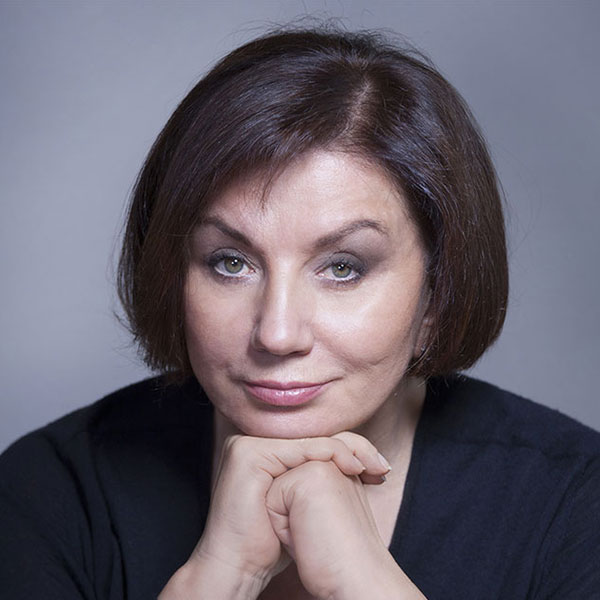 Marina Melia photo: Publishing House "Alpina non-fiction"
It is difficult for people who have taken place, smart, energetic to understand why the colossal opportunities that they possess and who fully provide their children are studying at prestigious schools and universities, classes with the best teachers and coaches, traveling with bright people - do not give definitely positive results. What prevents children from living happily and happily? Why are they passive, do not want anything? Why do they have no stable desires other than material desires? Why are they not able to set serious goals, why are they ungrateful, cold, indifferent?
The theme of raising children in rich families turned out to be not only complicated, painful, but also completely new for Russia. The publishing house "Alpina Non-Fikshn" published a book by a psychologist and coach Marina Melia. While she consulted a Russian business elite for fifteen years, a whole generation of “poor rich children” grew before her eyes, which suddenly became a problem for her parents.
***
Syndrome of splendor-abscess
When we hear the word “abandonment”, we immediately imagine children and adolescents who earn a miserable existence in mud and poverty, completely pissing off, receiving only “pokes and blocks” from their parents. However, in psychology and psychiatry, abandonment is initially considered differently-as a special form of neglect of the child. In relation to wealthy families, this phenomenon is transformed into the “Relogic Syndrome”, when parents try to balance the lack of emotional closeness, warmth and attention to children with material benefits. It turns out that, in fact, two opposite vectors act on the child - rejection and pampering.
Rejection is to ignore the real needs of a small person, and pampering is permissiveness and deadline. No matter how strange it may sound, “gold” children are often “abandoned” from birth. It would seem that the baby has everything: a separate room, an amazing crib, toys, clothes from the best designers, and all this is “bio”, “eco”, “luxury”. But he does not have the most important thing: strong attachment - stable, warm relations with his “main adult”. Moms are often not nearby, after birth they give the nanny or nannies to the care of the care, which also change one after another. As a result, he turns out to be as emotionally deprived and abandoned as the pupils of orphanages.
Many parents believe that the lack of attention in the first year of the child’s life can be replenished later, when he begins to speak, when he can already be fully communicated and “go out”. But the baby has grown up. The family goes on a trip - of course, with a nanny: parents live in one room, a child with a nanny in another. The family goes to a restaurant with a baby, a nanny, friends and ... a tablet that is put on the table so that the child sits quietly and does not bother anyone. At the same time, no one is going to talk to him! Remember, more and more often in cars you can notice children and adolescents who do not communicate on the road with a mother or grandmother sitting nearby, but watch a film on a tablet or a small monitor built into the back of the front seat. It turns out that we are at the same time “both together, and separately”, no closeness, there is no contact between us, we are nearby, but everyone lives his own life.
Dr. Joseph Yankovsky, head of the psychiatry department of children and adolescents in Tufts Medical Center in Boston, sees many problematic children from good families living in the most prosperous areas. He is amazed at how lonely and even rejected many of them feel: “The main problem is alienation from parents. Of course, parents want the best for children ... They make sure that the buttons fasten quickly and the children would spend less effort. But what children really need is the parents themselves. ”
Today it is considered prestigious when children from wealthy families study abroad in boarding houses, boarding schools and famous private schools under the “virtual” supervision of parents. And this, in a certain sense, abandonment, neglect, more precisely, supervision at a distance. Parents will forward strangers (teachers who maintain staff) their parental duties and exempt themselves from responsibility.
“Children who grew up in such families, for the most part, sad, pessimistic, lonely people who later experience difficulties with communication even in their social group,” says Clinical psychologist Madeline Levin.
The psyche of the child, actually provided to himself, is extremely vulnerable. In order to soften the feeling of anxiety, insecurity, he begins to rebel, behave aggressively, arrange tantrums, just to pay attention, or, conversely, closes, goes into himself. The result of "abandonment" is the slowdown and impaired development. When the child feels rejected, when his emotions are ignored, when his need for love, affection, affection, protection is not satisfied, he grows selfish, emotionally cold, uncertain. He has a low self-esteem, a sense of his own inferiority: "How can someone love me if my own parents do not want to deal with me?"
At a consultation with a psychologist, a boy from a rich family thoughtfully remarked: "My family is rich, and I am poor." And he is right! The concept of "poor" is associated not only with a lack of money. It has long meant a unhappy, wretched person causing pity. And if we were talking about children, then, as a rule, they had in mind an abandoned child or an orphan left without parental care. Today, they are increasingly talking about inner poverty, abandonment, homelessness in external wealth. Some children even declare their desire to change their parents and admit that they envy their poor peers with whom parents spend more time: "Let dad earned less, but played more with me ..."
According to a study conducted in the United States, only 13% of prestracts from financially prosperous families feel their proximity to parents, evaluating relations as “optimal”, 27% consider them “normal”. The remaining 60% of respondents 11-12 years complained about the lack of contact with parents. Further study showed that such boys and girls are characterized by depression, anxiety, a tendency to offenses and drug use.
In Russia, unfortunately, such studies are not conducted, but based on their experience, I think the results would be no less impressive.
Inability to love and make friends
At one of the consultations, I asked my parents: "How do you show your love for each other, for the child, for grandparents?" They limited themselves to stories about the holidays that are regularly satisfied, about trips, gifts.
A person does not know how to do something that no one has ever taught him and what he did not learn himself. Our ability to understand our feelings and talk about them belongs to this. And if we did not give children the ability to express emotions, interact with other people, they will have big problems in relations - with us, adults and with peers.
The mother of a nine -year -old boy proudly told how her son masterfully coped with a difficult task: two friends celebrated his birthday on the same day, so the boy had to choose where to go. He first called one friend, and then to the second, to find out who had some entertainment planned, and decided that he would go to where they were going to the Museum of Military equipment, and not only would celebrate at home. Mom considers this a serious communicative achievement, a sign of a strong “I” and encourages such “wise”, calculated actions in every possible way.
A child who is encouraged for such behavior is not capable of really deep, long, warm relations. He evaluates social ties from the point of view of benefit and benefits, and if there is no benefit, he simply breaks off useless contacts. And he chooses friends on the principle of “who he is, what he has and what can be taken from him”: there is a pool at home - we will swim, a tennis court - we’ll play, a steep car - roll, and if there is nothing of this, so why get friends with him at all?
In emotionally deprived, abandoned children, relations with peers easily arise and quickly end. The imaginary friendship, which is based on material interest, and not emotional closeness, will not “reach out” for a long time. Recall Andersen's fairy tale “Fire”. When the soldier got rich, he had a lot of “real” friends who were ready to go for him into the fire and water. And when he lost his money and moved to a tiny closet under the roof, it became difficult to go to him “friends”, and they suddenly disappeared somewhere. But as soon as his “material situation has improved”, friends are again here.
When for the child the only manifestation of love, friendship, affection is gifts, one should not be surprised that he begins to go to his friends and classmates. He does not represent how otherwise you can earn their friendship and recognition on how to earn authority, if not things and campaigns in restaurants. He does not know how to express his emotions, his affection in other ways - intangible, and his ideas about life, about human relationships are far from reality.
My client bought her eight -year -old daughter a beautiful pink backpack, which she had long dreamed of. When the girl came to school with him, her girlfriend said that she also wanted to have the same. The girl without hesitation gave her backpack. The next day, my mother was surprised to see how her daughter was collecting things in an old backpack, and asked where the new, pink went. The girl burst into tears and explained that she had to give him a classmate: "Otherwise, she would have stopped friends with me." Children very painfully perceive any attempts to limit their spending on friends and often resort to banal theft: they are ready to endure things and money from home to buy good relations on them.
Read on BookMate
Do you want us to send the best texts of “such cases” to you by e -mail? Subscribe to our weekly newsletter!
Children Book Psychology