
Translated material
We - in a hundred years
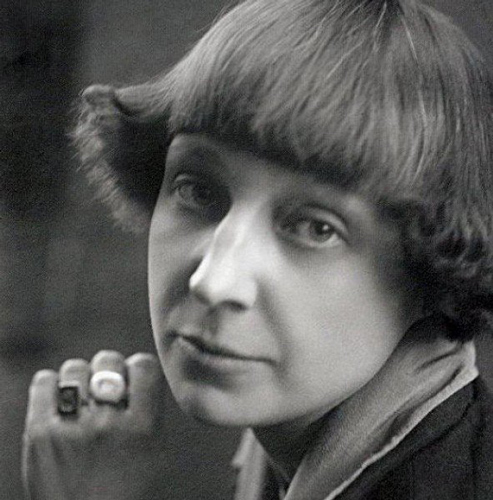
In one of the poems written among the devastation of 1919, “after a hundred years”, Tsvetaeva turned to a distant descendant and spoke at the same time about the futility of her searches, which even the old people “do not remember”, and about the confidence that this descendant would prefer her, “the smart one hundred years ago”. On the eve of the anniversary of Tsvetaeva, the poet Maria Stepanova and the philologist, the author of the literary biography of Tsvetaeva Irina Shevelenko talked about the work of memory and oblivion, understanding and distortion in the posthumous fate of the poet.
Irina Shevelenko: I have long wanted to talk with you about Tsvetaeva in such a public format and at the same time without a plan, without a pre -thought -out outline, that is, as it is, as they say about the important. This is hardly a jubilee genre, but another reason may not be introduced.
At one time, Tsvetaeva, annoyed by the habit of critics to talk about her works in terms of reconstruction of copyright intentions, wrote: “How to tell me what I wanted to give in this thing - I better show me what I managed to take from her - you.” For me, this phrase is something like an internal epigramton epiglot to our conversation, but I interpret its meaning intentionally expansion. What do I mean? The author - and you, of course, know more about it than I - constantly sees his own reflection in the mirrors of someone else's understanding. He can evaluate these reflections in very differently (we will not even plan a spectrum of these assessments), in these reflections, ideas about his life, environment, interests and what the author wrote and how to understand this are mixed or imposed on each other. Moving into the era of "afterlife", these reflections finally get out of the control of the author, but even during his life he is small. However, Tsvetaeva, it seems to me, is not accidentally preferred by the imperfections of these subjective reflections (what the reader “managed to take” from what he read) was read by a fortune telling about copyright intentions. As a person engaged in the latter, I understand that the living life of any work is in the first. They read, trying on themselves, correlating with themselves, imagining that it is about them (or that is not about them at all!), Or that they are seen by their eyes, or that now they see that too ; Alien life conflicts “read” the same. And these imperfect readings “charge” the texts and figures of the authors for further life. So, it would be interesting for me to start with the question - and what, as you think, “managed to take” the second half of the Russian twentieth century and the beginning of the XXI? And why were they indifferent? This is equally the question of poetic and human.
Maria Stepanova: This is a good way to start a conversation (at once from the upper “before”, she said Akhmatova about how the poetic patterns were arranged by Tsvetaeva)-I would like to answer everything right away and, first of all, to think about the original thesis: I have always caused vague irritation logic in which the texts are treated as a thing useful in home or spiritual economy. “This is about me”, “I also thought so, I just found words”, “What would be read under a blanket of a winter evening” - such a reading seems to be inevitable, and the poems (and the kind of prose that interests me) really play the role of a sort of secular mystery: they make charged idle cartridges of everyday life, inform our method of living. Poetry makes things lit; Well, consecrated, too, in a sense.
All this is somehow too much, or something comfortable; And the fact that the wording and semantic moves, obtained by difficult for today, - and they, if we talk about the poets of the twentieth century, who are no, are a direct result of special circumstances: unbearable pressure, fear, self -denial or abandonment; Things, in short, with the usual everyday life are little compatible - so that this special experience can now be obtained without any effort, scoop up with a spoon, like caramel in a store ... This remains for me a problem. What the reader will be able to take is obviously less than what is given to his hands with text; And is the filter that imposes my subjectivity on the text so important here? What can I do with the poet, except to simplify him before this or that unambiguous reading ? What can be done with Tsvetaeva as with unity: with this huge, to heaven, discouraging an array of evidence, draft and finally records, poems of complete, unfinished, lost, with a long tail of apocrypha, each of which gives us the same miniature model of existence incompatible with life? The most obvious is to read; But it is much easier - to offer reading; And all the labels that are sculpted to Tsvetaevsky for the second century, all these “hysteria”, “melodrama”, “tearing”, like inevitable references to feminine , is what they managed to take. Tsvetaevskaya history, biographical and textual, is a lively protest against any normativeness. There is little comfort in this.
But the texts have their own ways to resist any functionality, any way to make them part of someone else's coziness, especially when it comes to verses. The famous definition of Emily Dikinson (she talks about the cold, how, when you read, you feel that you have removed the upper part of the skull-that is, this draft of the unhealthy you feel naked, rushing with the brain)-that poetry does not confirm the a priori knowledge, does not legitimize the existing status quo. On the contrary, she is a way to lose any knowledge, fall into it, as in a black hole. In this sense, it seems to me productive to talk about Tsvetaevsky heritage from this corner: what was not useful? What turned out to be annoying, interfering, not fit even into the wide gates of new sensitivity? These texts (this method of correlating with others) still have a high ability to irritate; No “holes-Bul-shyl”, absorbed into the dry soil of the textbook, causes such a rejection. What do you think? What exactly interferes (and for me it is undoubtedly so) Tsvetaeva - well, it seems to be read, for a long time and firmly learned - to become a history of literature, closed by a case in a series of similar ones? There is some kind of trajectory, unlike the rest. In my careful opinion, in the system of relevant poetry, no matter what we understand by this, it is still important to Mandelstam; More than ever it works - it increases new valencies - cousin; All kinds of arcs remain charged: from Khlebnikov to Vvedensky, from Guro to Satunovsky. Other texts, read out once to the holes, to vowel letters, fall out of the active dictionary in front of the eyes. Tsvetaeva does not belong to either one. With what remains of her, few people work; But it is not possible to cool down this body of texts. Do you have such a feeling? What of what she wanted to give is learned? What remains of the perennial - and why?
Shevelenko: I will begin, perhaps, with a stop in an unexpected place. When I am talking about the assignment (or rejection) of texts by various reader subjectivity, I least of all here see the attitude to the text as a “reason”, the less as an object that communicates comfort or does not unclear our existence. As a particular, such an attitude is possible, but this is a particular. I cannot, in fact, describe the understanding of poetic texts by their readers as a series of simplifying “readings”. We do not know what is being done with verses in the heads of readers: the vast majority of them never tell themselves about it. (But there are hardly poems in our minds as autonomous megabytes of memory, without entering into any relations with our other human experience. “Proceeding” of other people's texts in this sense is inevitable.) What we know is a very small stratum of “professional readers” (from among contemporaries and descendants), which always relate to certain parties of the text or texts, but often accepts often The rhetorical form of generalizing judgments. Apparently, you call this “readings” (in a bad sense), which essentially begin to function as deputies of texts. Here I completely agree.
When Tsvetaeva demands to show from the reader what he “managed to take” from what he read, she hardly engaged in the distribution of carte blanches on such “readings”. But in the same essay (this is a “poet about criticism”), she insists that reading is “co -creation” and that “if the reader is deprived of imagination, not a single book can stand.” There are different types of letters, of course, and not any letter is openly open to such a genus of reading - or, by say, carefully, not every letter is open to him equally. It seems to me that Tsvetaevsky letter is not just open to him, but really requires him and that this is generally one of the most important properties of her speech. And this, by the way, does not allow from her poems especially a lot to “get without any effort”, “scoop up with a spoon”, etc. On the contrary, there is “at the entrance” a very harsh screening of readers; Well, if not at the entrance, then in the early stages. That is, to “be able to take”, without a preliminary investment of your own “share”, little is possible. I am talking about the type of effort that we usually associate with the task of reading “complex” poetry: not about unraveling the chains of allusions, not about the analysis of linguistic or poetic experimentation. This layer of “complexity” in Tsvetaeva is unusually bright and significant, but it is just recognized, accepted, learned by the subsequent tradition. But the area of constant discomfort, unho -stiffing, if not rejection, the area that generates the labels that you are talking about, remains what can be called speech pragmatics and what is just closely related to the requirement of reader's “creation”.
Now I will try to explain how I understand this. The pragmatist of speech is not just connected with the task of reporting some message, but with understanding the speaker of his position in relation to the addressee or the addressees of this speech: I give a team and imply that they will obey me; I complain and imply that they will sympathize with me; I teach and mean that they will follow me. Tsvetaeva says: “I am alone in the world. I want to understand why I am alone in him and how to be alone in him. ” Who does she say that? God. Well, or, no matter how you call it (I’m, let’s say, a non -religious person), this is an instance that is non -polling to the world of our everyday experience, but one that the structure of this world is Vydomo. It can be considered imaginary , it does not matter. “What can we say about God? Nothing. What can we say to God? All ”is a wording from“ art in the light of conscience ”, that is, the beginning of the 1930s. There, these words are said, as it were, outside of correlation with their own speech experience, but they seem to me completely directly related to it. Hence the freedom to say everything to the end that many readers of Tsvetaeva consider unforgivable. Such speech pragmatics in Tsvetaeva, of course, does not immediately develop, more precisely, it does not immediately become the main, trunk. There is a gradual internal growth, and crystallizes its external shake: revolution. In the first urgent years, everything just converges together: they will not be the internal coincide with the external one. This does not work out Tsvetaeva, pronounces as an election, as a purpose:
God put me alone
In the middle of a large light.
- You are not a woman, but a bird
Therefore, fly and sing.
This is November 1918. Less than three years later, there will be the first sketch of the Rolandov Rog, where the speech pragmatics that I am talking about is already visible in the palm of your hand: “As a kind of jester about my ugliness, / I tell about my orphanage”, etc. In the autograph of this poem, which Tsvetaeva sends in 1933 A.L. Boehom, a “certain” is replaced by “poor” (in other versions at this place - “gentle”), but most importantly, a wonderful post is remarkable: “Without a date - for all his life.” For Tsvetaeva, always punctually dating his poems, this is a very significant deviation from the rule. That is, this speech situation lasts all my life: "I stand and send, having locked it with take -off / this loud call into heavenly voids." However, in the pragmatist of this speech situation for Tsvetaeva, the fact that this “call” should have an earthly listener, that “a certain Karl will hear you, a horn”. That is, the reader's vacancy is open.
 © Literary Archive of the Museum of National Writing in Prague, A.L. Boom Autograph of the poem of Marina Tsvetaeva "Roland Roos"
But this is a special vacancy. The reader finds himself in the role of a conversation that is not conducted with him. And here is the main fork for the reader. You can feel this speech stream how you have something to do with you, and then you take a step and you are not near, but inside it and the text there are relationships , and their possible spectrum is quite wide: from identification with the author (what we encounter in the “naive” readership of Tsvetaeva is not so rare) to rationalization of ourselves as a rather complicated speech in its internal organization (researcher Position - mine, say). At any point in the spectrum, this is “creation”, you cannot be an absolute ear, this role is not yours. And the second path from the fork is to say that the author speaks not with you, by you, not noticing you, and that all this has nothing to do with your experience. And this is completely normal, but they don’t stop there too often: everything that goes past their own experience is qualified as a “hysteria”, the maximum poisoning is like indecency, and knowledge of such as “she was an incorrect wife and care about children” is opposed to any ethical imperative of the text. The subject and pragmatist of the author’s speech are replaced from reflection completely, and such an “asymmetric answer” is obtained. In this sense, it seems to me that in the reception of Tsvetaeva there are constantly an increment of understanding and increment/maintenance of misunderstanding, and in this indeed, as you said, the specialty of her case in comparison with other poets of that generation. Her texts do not cool because of the choir arguing above them. After so many decades of these debates, it has to be recognized that this specialty is objective, unleasant, or at least within the limits of a time horizon. But it seems to me that this is no less vivid form of relevance than others listed by you.
It will be interesting to hear what you think about it. And yet, if it turns out along the way, tell me how your relationship with Tsvetaeva took shape as a reader-poet. On the one hand, you, on the one hand, are more than anyone in your poetic generation, you emphasize its special significance for you, and on the other hand, this significance is not of the kind that gives rise to dependence in poetic tools. In my opinion, it was also with Brodsky in a generation of earlier. I would like to understand how you see it yourself.
Stepanova: I wonder how you and I, without saying a word, think in one direction - where this incomparable process is unfolding with anything: Tsvetaeva is turning to the only interlocutor who has the full information that reads the “every khvistochka” who remembers every intent (another word from her operational dictionary), but their conversation is impossible without a witness, and this is impossible without a witness. Only a person, a random reader, you or I, or I, in a hundred years with all our inevitable imperfections, can be a witness. And this seems to be due to the fact that Tsvetaeva does not think of his situation as a special, unique; She, oddly enough, in this sense - the antipodes of the romantic poet. Her case- its falling out of the ranks, constant demanding unrestrained in the structure of human relations-not the realization of the right of strong and even some kind of "sins have not constrained at all." We, I hope, talk about it.
In the materials of Tsvetaevsky round table, prepared by the "banner" , there are remarkable considerations of the poet Vasily Borodin, and among them one thing that seems to me very accurate. I translate it into my own language like this: poetry at the beginning of the 21st century does not coincide with Tsvetaevskaya in the main parameter - according to the very type of statement. Its current task is to flure the subject of conversation, to make this item with an environment that has a mobile outline, within which both the movement, the variability of meanings and opportunities, which makes the statement voluminous are also inevitable; Thus, incomplete accuracy works to expand space, makes it a place for life. Tsvetaevsky text, on the contrary, builds himself up on an unambiguous line, which cannot be not noticeable or considered insignificant. Regarding this manifest inevitability, each time you have to determine yourself, find the possibility of consent or refusal. You are either here or there; Each line, each statement turns out to be a kind of compass with which you check, laying your own trajectory.
One of the features of the Tsvetaevsky corps of texts (or a way of existence, there is no particular difference for me) - the inescapable systematicity of everything she wrote; The way any segment of business writing, draft sketch or fluent observation demonstrates the unity of the method - to such an extent that you understand that the method here is not a matter of choice. He is physiological inevitability, the same as fingerprints or hair structure; может меняться точка зрения или предмет описания, но все, что происходит в подвижной зоне между умом и бумагой, трансформируется одинаковым образом. Был, кажется, постсоветский анекдот про военный завод, решивший переквалифицироваться в фабрику детских товаров, — но раз за разом вместо детской коляски на конвейере сам собой собирался автомат Калашникова. Невозможность и соблазн быть не-собой — вещь, с которой так или иначе имеет дело любой пишущий (шире, любой живущий). Но нигде, кажется, обреченность на себя не проявляется так ярко и так страшно, как в стихах и прозе Цветаевой, — это речь невольника, человека, полностью лишенного права выбора. Когда она говорит Пастернаку «Ты ж у лиры крепостной», она знает, о чем идет речь, — и ключевое слово тут не «лира», а «крепостной»: деваться некуда, счет, который она предъявляет мирозданию, включает не только тот событийный ряд, что мы знаем, но и неизбежность собственных реакций и кромешную зрячесть человека, который не может ничего изменить ни в себе, ни вокруг. Это чувство именно что повседневное, типовое ; но жар, с которым Цветаева отказывается считать происходящее (с нею или внутри нее) нормальным, приемлемым, не имеет, кажется, аналогов. Это — движущийся скандал длиной в десятилетия, это совершенно (говоря языком общего пользования) невежливое, неприличное поведение: вот все терпят, и некоторые даже довольны — а эта дама почему-то голосит, требует, не успокаивается. Чем больше мы сумели притереться к миру, чем меньше его зубчатые колеса режут наши собственные бока, тем более неприемлемым кажется цветаевское негодование. Все жили и умерли, что тут особенного-то? Особенное — само это чувство природного права на собственный ответ (в том числе на «ответ с отказом» — на решительное «нет», сказанное этому миру); исходит оно не из представлений о собственной исключительности — романтических ли, каких-то иных, — а из уверенности в том, что любая отдельность должна быть увидена и уважена. В эпоху коллективистских проектов, во времена тоски по единству такая позиция оказывается очень уязвимой. Но она, как бы сказать, несгораемая — со времен книги Иова, где единственный голос, который оказывается адекватным в диалоге с чужим страданием, — это голос самого Бога, чьи аргументы не опровергают собеседника, а превышают , у них попросту другой масштаб, и только эта смена уровня делает разговор состоявшимся.
С другой, литературной, стороны, неподвижность силовых линий, вокруг которых располагается любой цветаевский текст, не мешает ей делать с собственным я — с тем, что тогда было принято называть авторской манерой, — разные штуки, совершенно не похожие на те траектории развития, что были в ходу в те времена. За какой-то десяток лет она сменяет множество языковых масок и оптических систем, которые даже не следуют одна за другой в более-менее привычной логике прогресса, линейного развития, а чередуются, сосуществуют, словно несколько одновременно работающих предприятий, у которых один владелец. «Русская» Цветаева «Мóлодца» и особенно «Переулочков» соотносится с оптикой «Лебединого стана», но совсем уж далека от автора «Приключения» или «Феникса»; эти тексты действительно можно было бы издавать под разными именами, как — если верить цветаевской прозе — предлагал когда-то Волошин. Эта рябь возможностей, это разнообразие — все, что кончается перезагрузкой, стихами «После России», а потом постепенным, неохотным уходом из лирики, — как будто заслоняет даже одну константу, которая, наверное, кажется мне сейчас (или всегда) чем-то главным; ну, для меня главным.
Цветаева — мастер утверждений, которые легко могут показаться слишком радикальными, даже безответственными в какой-то степени: любая стартовая ситуация ею завышается, разворачивается до предельно широкого обобщения, до небесного, недостижимого образца. Проверяется на соответствие какому-то надчеловеческому стандарту. Я все думала, на что это похоже — скорее всего, на автомобильный краш-тест, на эксперимент, когда вещь, предназначенная для жизни и движения, вдруг оказывается в экстремальных обстоятельствах. Рубят ее саблей, лупят по ней кувалдой, плющат, прессуют, пока она не сдается наконец — или не выходит из испытания выжившей, выдержавшей. Цветаевский подход к действительности — такой тест на прочность. Она не признает людей и явлений, непригодных для обработки под высоким давлением. Неудивительно, что проверки не проходит почти никто: в итоге с ней остаются все больше вещи вовсе нечеловеческие — куст да стол. Я все вспоминаю позднее письмо к Пастернаку, то, где она прощается с ним после того, как он впервые за годы оказался за границей и проехал на поезде мимо отца и матери, которые ждали и не дождались. Это страшное письмо, потому что очень уж зрячее; она там говорит «я сама выбрала мир нечеловеков, что же мне роптать» — слишком хорошо понимая чрезмерную степень своей человечности, читай — уязвимости. Вот этот постоянный, в три хода, механизм проверки вещности на вечность (и наоборот, потому что недостаток человеческого Цветаева ведь судит еще строже, чем неспособность к бессмертию), который нельзя отключить и с которым нельзя не считаться, оказывается для меня страшно важным. Все, что делала, что делает Цветаева, размещено в этической системе координат; выжить там по ее законам, наверное, невозможно — но и не считаться с ними не получается.
Шевеленко: Очень здорово, что ты упомянула по ходу совершенно антиромантический этос, который Цветаева — особенно в зрелые годы — настойчиво утверждает. Собственно, это довольно рано начинается. В 1915 году она пишет себе на день рождения стихотворение «Заповедей не блюла, не ходила к причастью...» Начало как будто обещает декларацию романтической исключительности, но уже во второй (и финальной) строфе оказывается, что «я» неотличимо от всего земного мира: «Юноши, девы, деревья, созвездия, тучи — / Богу на Страшном суде вместе ответим, Земля!» И это вообще-то важнейшая для Цветаевой позиция: она пишет историю себя, пишет свою речь к высшему Собеседнику как свидетельство о human condition , о том, что значит быть человеком, человеком-поэтом, в частности. И, скажем, завороженность или зацикленность русских читателей на подробностях личной, любовной жизни Цветаевой — это, конечно, очень яркая иллюстрация к тому, что сделали с русской культурой изоляция ХХ века и подавление личности в условиях этой изоляции. Именно прямая речь о себе представляется нарушающей приличия, а вовсе не обстоятельства, которые являются ее предметом, — иначе обсуждению подлежал бы приблизительно каждый первый. Цветаева в ранний период своей посмертной славы оказывается «окружена» поколением советских читателей, которое, с одной стороны, страшно стеснено в своих представлениях о частном мире человека императивами тоталитарного единообразия и для которого, с другой стороны, личное — единственная область жизни, которую можно постараться уберечь от публичности и государственного вмешательства. И ее берегут. Понять истоки противоположной позиции, позиции «я не боюсь сказать», оказывается очень сложно: она выглядит чуть ли не патологической. Шлейф этого непонимания тянется к следующим поколениям и едва ли вполне иссяк даже сегодня.
Между тем Цветаева почти единолично (если мы выходим за пределы первых двух десятилетий ХХ века) делает колоссальную культурную работу: дает голос — на русском языке — современному переживанию эротического и дает голос женскому переживанию эротического, вообще женскому чувству. Причем происходит это по ходу какого-то совершенно иного поиска: осмысления, разрешения экзистенциальной дилеммы — между этосом личной свободы и личного выбора и этосом, предписанным традицией/коллективом/верой. То есть она просто проговаривает самые базовые дилеммы современности в том виде, в каком они предстоят каждому. Вообще каждому. Как она запишет в 1932 году в рабочей тетради: « Я мое — не единоличное. Только очень уединенное. Одинокое я одного за всех. Почти что — анонимное».
Степанова: Именно; цветаевская речь — это речь каждого, кого угодно, но помещенного в некие специальные условия — интересно было бы сформулировать, какие именно. Здесь, может быть, важно иметь в виду катастрофический фон, на котором этот способ разговора с миром складывается. Все, что мы знаем о двадцатом веке, заставляет согласиться с Шаламовым, говорящим о бесплодном, уничтожающем личность опыте, с Примо Леви, писавшим, что выживали худшие — все лучшие погибли. Цветаева здесь не исключение, она тоже в числе погибших, и ее смерть меньше всего похожа на романтический суицид, торжество своеволия, — это такой же результат обстоятельств, как гибель Мандельштама или самоубийство Вальтера Беньямина. Это оптовая смерть человека, загнанного в угол; она происходит на миру, это общая участь, ничего особенного в ней нет, это цифра из статистики. Понимание своей ситуации пришло к людям того времени очень рано; тот же Мандельштам говорит о том, как теряет смысл личная история (и вместе с ней обессмысливаются жанровые системы), еще в 1923 году. Это сознание своей незначительности — крах ценностной системы, который переживался каждым из цветаевских современников по-разному. Но, кажется, только у нее он вызвал такую — ни на что не похожую, парадоксальную — реакцию, которая оказывается даже шире своего повода. Грубо говоря, Вагинов и Георгий Иванов каждый по-своему отвечают на крушение мира, на его необратимый слом и свою неспособность перемениться сообразно обстоятельствам. Мандельштам и Пастернак каждый по-разному осознанно переделывают собственную органику во имя жизни со всеми сообща. То, что делает Цветаева, уникально: она отказывается смириться с предложенными обстоятельствами существования как такового. Не только с предложенной рамкой истории, с русской революцией или немецкими войсками в Чехии, не только с частными несправедливостями газетной полосы — но с каждой большой и маленькой несправедливостью этого мира, начиная от проблем с квартирной хозяйкой и продолжая, не заканчивая , существованием страдания, оставленности, смерти.
Бóльшую часть этих вещей бóльшая часть человечества переносит, не замечая, с кроткой покорностью тех, кто заведомо обречен событиям, смысл и исход которых никто не удосужился объяснить. Жаловаться на судьбу считается неприличным; вносить же в это дело большую долю пафоса решается только человек, уже в какой-то степени выпавший за краешек нормы, — скандалист, безумец, бомж, мертвец, тот, для кого уже все и навсегда потеряно. Именно эту вакансию, осознанно или неосознанно, очень рано выбрала для себя Цветаева. Позже она будет точно и трезво соотносить себя с одним из хрестоматийных образцов этого рода: с Катериной Ивановной Мармеладовой, с ее «уездили клячу». С Цветаевой случилось то же самое, но начинала она не с этого — а с попытки сказать наконец все и до конца — все, что сказал бы любой прохожий, если бы не правила человеческого общежития. Лирический герой Цветаевой — это овеществленное право голоса в устах человека, заведомо лишенного всяческих прав. Неудивительно, что этот бунт по-прежнему шокирует. Важно было бы понять, сохранилась ли за ним способность освобождать. Мне кажется — да.
Шевеленко: Я не знаю, называть ли этот эффект «освобождающим» или как-то иначе, но само действие цветаевского текста внутри русской культуры уже кажется мне неотменимым. Это, по-моему, главное, что видно из той точки, где мы теперь находимся. Тот тип поэтической дикции и тот модус существования, которые соединены в Цветаевой, — это, быть может, одно из главных и совершенно новых приобретений русской культуры за последний век. Покойный Михаил Леонович Гаспаров на вопрос, за что он любит Цветаеву, отвечал: «За бесстрашие». Еще короче не скажешь.