
Translated material
Empathy and Marxism
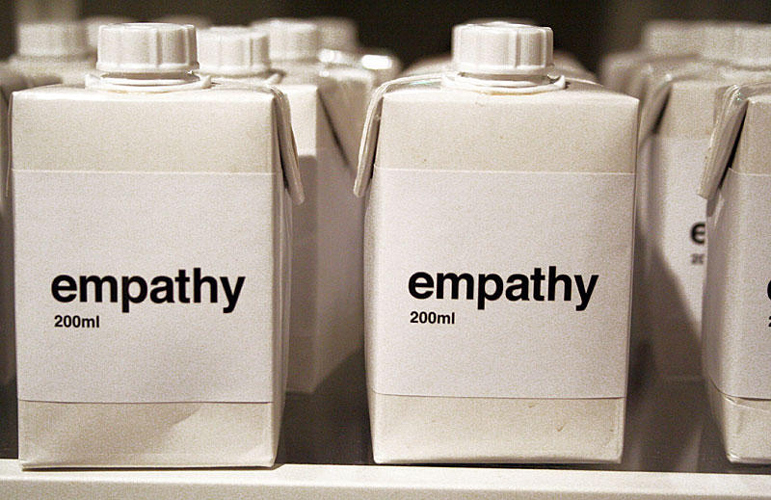
Colta.ru publishes the text of the lecture by Alexei Tsvetkov, read at the House of Hearts charitable festival on September 3, 2017.
I would like to start with what the necessary clarification. By empathy, today I will keep in mind not only the emphasis of empathy itself, but also the following empatical models of behavior, most often marked in our language with the words “mutual assistance” and “solidarity”. Empathy in itself is just an emotion from which there may not be any behavior. And our civilization involves special places in which, if everything happens correctly, you experience a strong empathic effect, without doing anything and remaining a passive observer in a dark hall for about two hours. These empathy simulators are called cinemas and provoke you to empathize with any of the heroes, ghosts moving on the screen, or, in a more difficult case, to separate the emotions of one of the alleged authors of the film if you are not associated with a hero, but with a director or screenwriter. This is an important adaptive skill for our society to "sympathize with someone, remaining a passive consumer of the show." But here and today I will understand empathy, only including the behavior caused by it.
Why do we need empathy?
All of us, modern people, of course, heard about mirror neurons. We all have mirror neurons that allow us to experience someone else's emotion as our own - well, or almost like our own. This is “almost” important because it retains our identity and adequacy. Mirror neurons are open about twenty years ago, and they are writing a lot about them now - for example, Eric Candel, one of the most influential neural ties. That is, our empathy is rational, we know its mechanism. And, since we know its mechanism, we can try to find out: why do we need it? The clarification of such issues cannot do without comparing people with the highest mammals, whose brain is arranged in a similar way.
In living nature, empathy is the most important condition for the success of the population, because it supports the necessary level of connections within it. This is a very important point. In the evolutionary theory, a unit of changes, the acting person of development, an agent of genesis is not a separate individual and not a view in general, but a population is a jointly living group with a total access to food and some hierarchy, inside which a certain level of empathy is needed.
What happens to an individual organism is not so important for evolution, until it is massively inherited, but what happens with the view as a whole, it does not matter, because the species consists of autonomous populations that are not interconnected. That is, carefully and inaccurately trying on this analogy to the world of people, transferring it quite literally, we could say that the population is a group with a common economy. But if you transfer it a little more abstract and wide, then the population is a group with general identity, symbolic economy.
Why do we sympathize with “our own”?
And here immediately the question arises of the boundaries of the population, that is, the distinction of “your/alien”. Most of us in a situation of choice, when it is impossible to help everyone, helps, rather, to “our”, typologically close, to the one whom we identify as a member of our symbolic population, a large imaginary “family”. This question about the addressee of empathy always arises in the case of victims of the attack and the reaction to it on the Internet. Most people on the network (at least in our country) show much greater solidarity with the victims of the attack in Paris or Barcelona than with victims of a similar terrorist attack in Iraq or in Syria. This can be seen simply on the flags on the avatars. Where does such targetedness and selectivity come from?
I’ll try to assume that this is because most reacting ones would like to be like a Frenchman or Spaniard more like a Frenchman or him than to the Iraqis or Syrians and be his neighbors. This is due to the fact that in France or Spain, a permanently higher standard of living, security, self -realization, guarantees of rights, and therefore most people would make a quick and unequivocal choice of place of residence, if he had been offered - they would like to live rather like a Spaniard or a Frenchman.
So we appoint these people part of our symbolic, desirable population for us and worry about them stronger. So our empathy, guaranteed to us with mirror neurons, acquires a specific social form and obeys our political choice. Of course, a completely different case when the terrorist attack takes place in your own country, and here we need to talk about national identity as a way to accumulate empathy, but this will far from lecture from the topic of the lecture.
What I say confirms the simplest experiment with a little girl in a cafe, which many of you have seen on the Internet. The same child of about six in the same cafe of the modern shopping center sits down to adults and behaves as lost and hungry. But in the first case, he is dressed as a child from a middle -class family, and in the second - as a beggar, in random, essential and not very clean clothes. And the reaction to this child is absolutely different. A child from the middle class helps many times more willingly, because they feel much more solidarity with him. That is, they also help the poor child, but the level of empathy is not comparable: they keep a distance with him, they try to hand over him to the waitress so that he does not interfere, they are reluctant to make contact, etc.
Of course, each of us thought now: I am not at all like that, I am the same about everyone. I will not dissuade you and impose a worsened version of yourself, but even if you are really an exception, practice confirms that most people behave exactly as I just described. Our empathy is selective and is associated with our civilizational choice and class position.
There is nothing easier than moralistic to condemn people for this, sigh and wish everyone to be better, but let's ask the question instead: why is it all like that?
Let us recall the maximum ethical commandment from the Bible: Love his neighbor as himself. But a specific social story will always pose a question before us: who is the neighbor? Is this a representative of one nation with you? Class? Gender? Age? Life style? Religion? After all, if the word “neighbor” is said, then “distant” is also implied, not so neighbor, otherwise it could be replaced by the “neighbor” with “everyone”. Who will we help the first, if you have to choose?
And hence a more general question: what prevents us from perceiving all representatives of the human appearance as neighboring, equally worthy of our empathy? What is this obstacle? What prevents us from mentally spread the boundaries of our symbolic population to the size of our entire species?
But, before we formulate how Marxism answers this question, let's briefly return to our differences from animals and similarities with them.
Why does empathy unite people and animals?
What radically distinguishes human appearance from all other living beings? In my opinion, there are two such fundamental differences. The first is the ability to act together for the sake of a agreed common goal. This distinguishes us qualitatively from bees and ants: they do not agree on anything, do not set any goals, but act according to the instinctive program. We act variatively on a contractual basis.
And our second difference, which directly follows from the first, is the ability to use the language, that is, to constantly make new meanings that we need for general activities. Language is a way of producing the necessary meanings. We do not just use it, but constantly complete.
I think it is clear that the high level of empathy is the most important condition for contractual cooperation. It is very difficult to negotiate something and go to a common goal, if you do not empathize with these people, although it is on such a plot that many cowboy westerns are built.
And an important additional point. Empathy is the most important condition for learning, which occurs through imitation, Mimesis. It is very difficult to learn something to whom you are indifferent to, with whom you do not want to have mutual experiences. The opposite is true: it is no less difficult to teach something to whom you do not empathize. Education has become for us the most important way to adapt to the social environment, that is, the more difficult our society is organized (and its degree of complexity grows), the more important the education in it and the higher the empathy should be there.
And here you can skeptically ask: what about Darwin? The struggle between views? The struggle inside the species? But what about: the strongest survives, this is the wisdom of nature? But what about: we all go through the quality test and only then get the right to leave offspring, etc.?
On this topic, I immediately recall the remark of Marx, who respected Darwin very much and considered it the most important scientist of the era, but nevertheless he noticed that the Darwin description of strict competition in nature, firstly, resembles the Victorian capitalism that surrounded Darwin and which many of us now imagine from the books of Dickens, and only secondly is related to living nature and its laws. That is, Marx reminded of the sociomorphism of knowledge, that, understanding a living or even inanimate nature, we always come from our experience, primarily from the experience of the social. So, in one ancient Chinese treatise on animals it is said that they are created in three types: home, wild and belonging to the emperor.
And in this sense, it is worth recalling the other left thinker, but not quite a Marxist, anarcho-communist and our compatriot Prince Kropotkin, who, in his famous books, “ethics” and “mutual assistance as a factor in evolution” greatly corrected Darwin, proving on many examples that mutual assistance in the nature, inside the species, and even between the species, well-known to us as well, known to us as well Symbiosis is no less important than competition. Kropotkin then criticized a lot for this, said that he was overly moralistic, idealizes nature, many facts from the life of the highest monkeys were not confirmed.
But relatively recently, twenty years ago, the book of the famous British biologist Matt Ridley “The Origin of Altruism and Virtue”, which, on the basis of new data, proves that the instincts of solidarity in nature are no less strong than the instincts of competition, and confirms this Kropotkin line, directly referring to it. In many countries, this book has become non-fiction-Bestller, and it has already been reprinted twice in Russian, which signals a high demand for such an understanding of nature.
From the moment a special human civilization arose, people have ceased to compete with other types of survival and habitat. Thus, the external reason for empathic ties has weakened. But human civilization developed as class and biological competition with other types replaced social competition within human society. So evolution has acquired a completely new format. Now empathy consolidated groups, balanced it was the internal, and not external (interspecific) competition, and fastened the “population of its own”.
What does the left have to do with it?
Since we are talking today not only about empathy, but also about Marxism, it is time for us to answer the most common question: who are the left? The left, for which Marxism in various versions is a basic worldview - who are they in the most general sense?
Once I gave such an extremely vague definition: the left are those who advocate an increase in access for everyone created by everyone. Further, this general definition can already be clarified by describing different versions of the left thought.
Let's remember Che Guevara and how he became a revolutionary. We imagine this by the film "Motorcyclist Diary" and on the book of the same name, which we once published in Russian with Ilya Kormiltsev. Gevara decided to become a doctor, which already speaks of a high empathic level. After the institute, he voluntarily went to work in a leopor for the doomed, then he met the unbearable life of workers on mountain mines and decided to become a Marxist partisan, not to return home, treat not people, but a society, change the life of the oppressed and give access to the fact that he himself always had, because Che himself came from a completely successful Argentine bourgeoisie. His father was a wonderful, humanistic and progressive person, but still he was a planter. Che did not understand why he was more fortunate than children of workers from mines.
This example shows that our idea of justice usually arises from comparing ourselves with other people. When we feel injustice, we state the shortage of someone's empathy, its lack. And when we want to carry out justice, we are trying to make up for this shortage, to become an agent of empathy, its actor.
Of course, philosophers have always tried to conceptualize the concept of justice, to give its abstract definition. Dizraeli said that justice is the truth in action. Marx believed that justice would come when the problem of private assignment of the results of our general work will finally be resolved. But all these are cold formulas that can be made exciting and mobilizing us only with the help of an empathic effect, through a comparison with the fate and the position of others.
So, for the left, it is our species community that can once become a commonality of political.
Marx believed that for the first time our species community is specifically, as an attitude, manifests itself in the form of a world market, in which we are somehow included. But this creates the main premise for the transition to a new, truly empathic, civilization.
From the point of view of the left, it should be a non -class - or post -class, as they sometimes say - civilization. In this civilization, solidarity will replace class competition, and people will reason as Che Guevara, who said: “For me, this is one who perceives other people's tears as his own.” Then the level of our empathy will be able to spread to everyone; This is what Marx called the transition from the background of mankind to its history.
Why does capitalism interfere with empathy?
So, in Marxism, empathy is not something that would be nice to be as a kind of additional option, but the condition for the implementation of our species task. The political expression of this task is to change competition in solidarity. But on the way of performing this task is a problem, an obstacle is a class capitalist civilization. In Marxism, it is described as a system inhibiting, blocking, dosing our empathy.
Elementary example. If the volunteer goes to extinguish forest fires or engage in other obviously useful activities, he has to think not only about how and when he puts these fires, but in parallel about the budget of his family, which should not suffer because of his noble impulse, about his income and his work, which should be preserved, even if their public benefits are not so obvious. Or quite simple: if each of us in an empathic impulse will give out to those in need everything that he has, he will have nothing left, there will be nothing to distribute and he will become in need. Our empathy is controlled by class relations.
In Marxism, two main limiters of our empathy are called. Firstly, this is the very phenomenon of private property, which sets the boundary of the possibilities of empathic behavior; Secondly, private property makes people economic competitors in the market. We are always competing for profit, for a place, for a privilege, usually expressed in money, and our mutual empathy is constantly suppressed by fear of losing in a competitive race, which is inevitable in class society. That is, inside capitalism, we live, rather, according to Darwin than according to Kropotkin. Although Darwin himself has many places on mutual assistance, just few people pay attention to them in a capitalist society.
This contradiction between the empathic behavior and the regime of capitalism is partly recognized at the most mass level and is manifested in our daily speech. So, the manager rarely says to the subordinate, offering him to do some kind of work: “work out your money” or “hired you for this”-it sounds like a vulgar, rude and extreme form of stimulation. More often, the manager says: “Your help is needed here”, “We must cooperate in this matter”, “It is time for you to show your abilities for teamwork.” This speech etiquette is more or less the same for the bank, and for the factory, and for the cafe, and in it, the relations, which are based on hired work and the sale of working hours are politely disguised, are issued for empathic, based on the desire to help someone in an important business. In this speech game, empathy acts as something desirable, and hired labor - as something not quite decent and noted.
The Marxist psychoanalyst Erich Fromm wrote a lot about the incompatibility of the truly humanistic civilization and the structure of capitalism. For Fromm, it was very important how exactly capitalism creates a wall between the essence of man and his specific existence. Почти все его книги — об этом, включая самую простую и вводную — «Искусство любить», но самые отчетливые по нашей сегодняшней теме — это «Революционный характер» и «Концепция человека у Маркса».
Недавно о том же самом остроумно высказался британский литературовед Терри Иглтон. В своем предисловии к Евангелию (интересно, что британское высоколобое издательство Verso переиздало Новый Завет с предисловием марксистского интеллектуала, не правда ли?) Иглтон написал: главная проблема современных христиан — как совместить фигуру радикального пророка, отрицавшего материальные блага и заботу о своей безопасности, с наличием двух детей, машины и ипотечного кредита?
Эта фраза прямо отсылает нас к такому явлению, как теология освобождения. Это марксистский вариант католицизма, социалистическое христианство, которое достигло максимального влияния примерно полвека назад в Латинской Америке. Основная идея этой версии христианства — в том, что капитализм является главным препятствием для осуществления Нагорной проповеди Христа. Евангельская притча о виноградаре могла пониматься теологами освобождения буквально, а не аллегорически и доказывала, что Бог был сторонником коммунистической уравниловки в вопросах оплаты труда вне зависимости от вашей эффективности как наемного работника. Буквализация этой аллегории превращала христианскую этику в социалистическую программу с коммунистическим горизонтом.
Тут я приведу момент из «Детства» Льва Толстого, которое мы все проходили в школе. Толстой вспоминает, как няня впервые рассказала ему о муках Иисуса и с ним случилась настоящая истерика, его не могли успокоить, он чувствовал, как в руки Спасителя входят гвозди, и это переполняло душу ребенка отчаянием и болью. В Средние века у некоторых в таком состоянии появлялись стигматы. А Толстой так и не простил этой казни государствам, причем всем государствам сразу, это сделало его противником любой репрессивности и любого насилия и привело к идеям ненасильственного христианского социализма и анархо-пацифизма. Особенно если говорить о позднем Толстом, уже скорее философе, чем писателе, который утверждал, что согласен с революционерами во всем, кроме одного пункта — необходимости насилия как средства достижения социалистической цивилизации. Ни одну лекцию не испортишь Львом Толстым, но вернемся к нашей основной теме.
What to do?
Что со всем этим можно сделать? В мягких, умеренных и «розовых» версиях марксизма предлагается постепенная амортизация, смягчение, перераспределение — от все более прогрессивной шкалы налогов и максимального расширения «паблик спейс», общего полезного пространства в городах, до введения безусловного базового дохода , о котором столько говорят в последнее время в Европе.
Но вообще — насколько утопичен марксизм? Или зададим вопрос иначе: от чего зависит сама возможность новой, эмпатической, постклассовой и посткапиталистической цивилизации? Можем ли мы создать ее прямо сейчас?
Нет, прямо сейчас создать ее не предлагают даже самые радикальные левые. Важнейшим условием возникновения такой цивилизации в марксизме называется уровень развития производственных отношений. То есть нужны технологические, как это ни странно прозвучит для кого-то, условия для повышения нашего уровня эмпатии друг к другу.
Это, во-первых, прямо связано с темой антикопирайта и свободного скачивания. В условиях информационной экономики мы впервые можем делиться продуктом, не теряя того, чем мы делимся, и это ставит товарность этого продукта под сомнение. Частная собственность на информацию становится очевидно абсурдной и реакционной.
Во-вторых, прогнозируется радикальное удешевление очень многих товаров в смысле сокращения издержек на их производство в высокотехнологичном обществе.
И, в-третьих, самое важное — нас ждет тотальная автоматизация труда, которая разгрузит человека. Предполагается, что чем больше свободного времени у человека в высокотехнологичном мире, тем более он эмпатичен. Первые подтверждения этого можно увидеть в крайне двусмысленном феномене этичного потребления. В этичном кафе вы платите за чашку кофе дороже, чем в соседнем, но зато вы знаете, что крестьяне на кофейных плантациях получили достойную плату, их меньше эксплуатировали. Это этичный кофе.
Этика (пока что) включена в стоимость. Сейчас это часть стиля жизни просвещенного европейского среднего класса. Именно такие противоречивые явления, наглядные парадоксы, позволяют называть нынешний капитализм «поздним», или «финальным».
Чтобы стало яснее, о чем я вообще тут говорю, давайте прибегнем к предельной, утрированной тестовой ситуации. Представим себе, что мы с вами создали лекарство от неизлечимой болезни, например, от СПИДа, вложив в эту работу множество труда, времени и денег самых разных людей. Мы взяли большие кредиты, рассчитывая на успешный результат и надеясь на нем заработать. И вот тут вдруг возникает некая внешняя сила, некий бог из машины, и ставит перед нами очень неприятный выбор: либо вы получаете запланированные деньги, но лекарство будет уничтожено, его рецепт будет засекречен, оно не появится никогда — либо лекарство будет раздаваться всем желающим бесплатно, вы останетесь в минусе и огромных долгах и скорее всего будете обречены на нищету. Третьего варианта нет. Как вы поступите?
Зачем я предложил такую нереалистичную задачу? Чтобы утрировать некоторые вещи. Какую проблему ставит перед нами этот тест? Нам предлагается решить: то, что мы сделали, затратив столько усилий, — это в первую очередь лекарство и только во вторую — товар? Или это в первую очередь товар и только во вторую — лекарство?
Если мы выбираем прибыль вместо разорения, но уничтожаем нашу работу, значит, это был, прежде всего, товар и он навсегда продан нами неназванной внешней силе, а это и есть «товарный фетишизм», о котором писал Маркс: он блокирует нашу эмпатию, делает человека отчужденным, инструментальным. Такой человек видит в других людях только средства, а не цели, и потому такой человек никогда не может быть по-настоящему счастлив.
Конечно, из этого неприятного теста хочется выкрутиться, придумать третий вариант, например, через идею постоплаты. Пусть лекарство распространяется бесплатно, мы не пойдем на контракт с внешней силой, но, если кто-то захочет, он может потом заплатить нам любую сумму в благодарность. Возможно, именно так мы что-то заработаем, может быть, даже не меньше, чем планировали. Постоплата основана на возвратной эмпатии, товарность в ней не исчезает, но становится вторичной, это компромиссный и не вполне капиталистический способ расчета. Но мы с вами понимаем, что рыночная экономика не может быть построена на постоплате, потому что ей нужны гарантии прибыли. То есть, если оплата товара или услуги зависит от эмпатии и не гарантируется, это разрушительно для рыночной системы.
А как же присущий всем нам конкурентный дух?
Самое частое возражение, которое я слышу, — людям свойственно конкурировать, людям нравится конкурировать, люди всегда будут конкурировать, такова их природа, и никакой марксизм ее не переделает, раз уж ее не переделало христианство за две тысячи лет. Это звучит убедительно. Но марксисты и не предлагают переделывать людей и лишать их склонности к конкуренции, которая действительно укоренена в нас не меньше, чем способность к эмпатии.
Дело в том, что сам марксистский проект, бесклассовый горизонт, коммунистическую модель можно определить как общество альтруистической конкуренции, где каждый хочет обойти других в своей полезности для этих других, где люди соревнуются в своем альтруизме, в том, кто из них больше сделал для общества, и в этом смысле они остаются амбициозными и конкурентными. Такая конкуренция никак не связана с потреблением, с доступом к ресурсам роста, и потому эта конкуренция имела бы совершенно другую драматургию. Прообразом такой конкуренции может оказаться нынешнее собирание лайков, нематериальных поощрений. В таком обществе рост эмпатии подчинял бы конкуренцию и стимулировал ее, а не наоборот, как при капитализме, где эмпатия подчинена конкуренции и зависима от нее.
Левые, правые, либералы
Еще раз суммируем. В марксизме рост уровня эмпатии в обществе — это не просто хорошо (с этим и без марксизма никто не спорит), но правильно, потому что это — условие выполнения людьми их общеисторической видовой задачи. Уровень солидарности — это показатель развития, а не просто некое внеисторическое благо, данное свыше, пожелание к людям или вечная ценность неподвижной этики.
Главные вопросы марксистской философии можно сформулировать так: что препятствует расширению границ нашей эмпатии и как это препятствие может быть устранено? Ответ на первый вопрос — препятствуют частная собственность и рыночная конкуренция. Ответ на второй вопрос — может быть устранено через развитие технологий и политические изменения, от реформистских до революционных.
Наконец, в завершение: в чем состоит главное отличие левых от всех остальных? Левые уверены, что мы можем существовать как единый и неразделенный вид, гомо сапиенс, с преобладающими горизонтальными солидарными связями внутри него. Они считают, что именно к этому все движется и поэтому границы нашей эмпатии расширяются.
Либералы же видят смысл истории, прежде всего, в росте свободы личности, степень этой свободы растет, уровень мышления личности и ответственности — тоже, и это главный процесс нашей истории, с их точки зрения.
Если правые могли бы назвать главным двигателем истории вечную конкуренцию наций и государств, либералы — вечную конкуренцию индивидуальностей, то левые считают таким двигателем рост солидарности и эмпатии внутри вида, пусть и подчиненный пока классовой конкуренции.