
Translated material
Flu on the needle
Use, dead souls and Russian vaccines
In Russia, the flu vaccination campaign is in full swing. Only 60 million vaccines were purchased from the federal budget, which is 8 million more than last year. However, as the Radio Freedom managed to find out, the figures in the reports of the health workers are overstated, vaccination is often carried out with violations of the rules, and many doctors have questions to the Russian vaccines themselves .
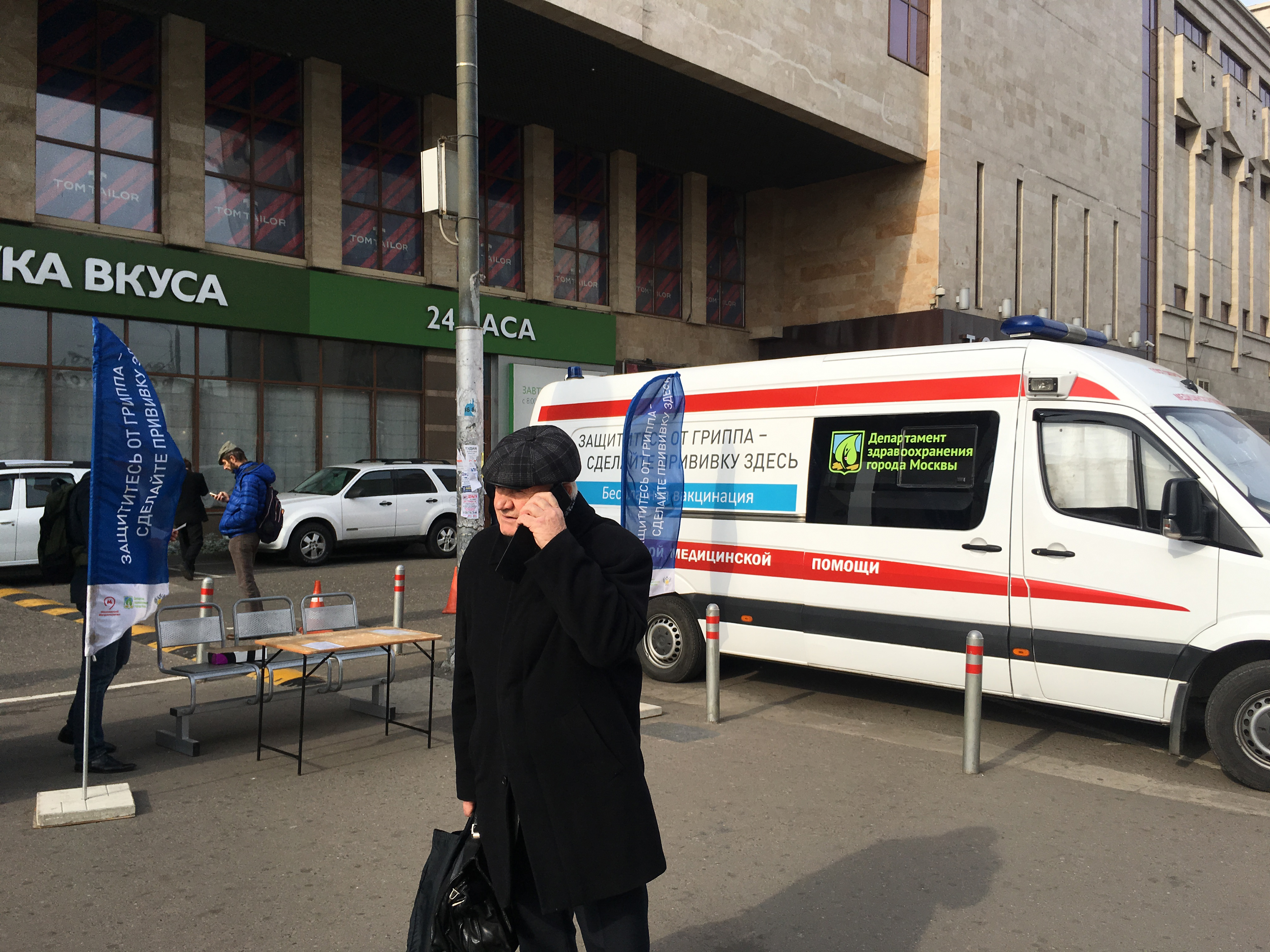
The second year in a row in Moscow, St. Petersburg, Kazan, vaccination is carried out not only in clinics and hospitals, but also in "mobile points"-in fact in ambulance machines. According to the head of the Moscow Department of Health Alexei Khripun, only about 115 thousand people were vaccinated for September in Moscow, 80 thousand of which are metro stations and 30 thousand in the centers of public services "My Documents". According to the doctor in the ambulance at the Baumanskaya metro station, his brigade instills up to 300 people a day (that is, each patient accounts for only 2.4 minutes excluding mandatory farming and lunch).
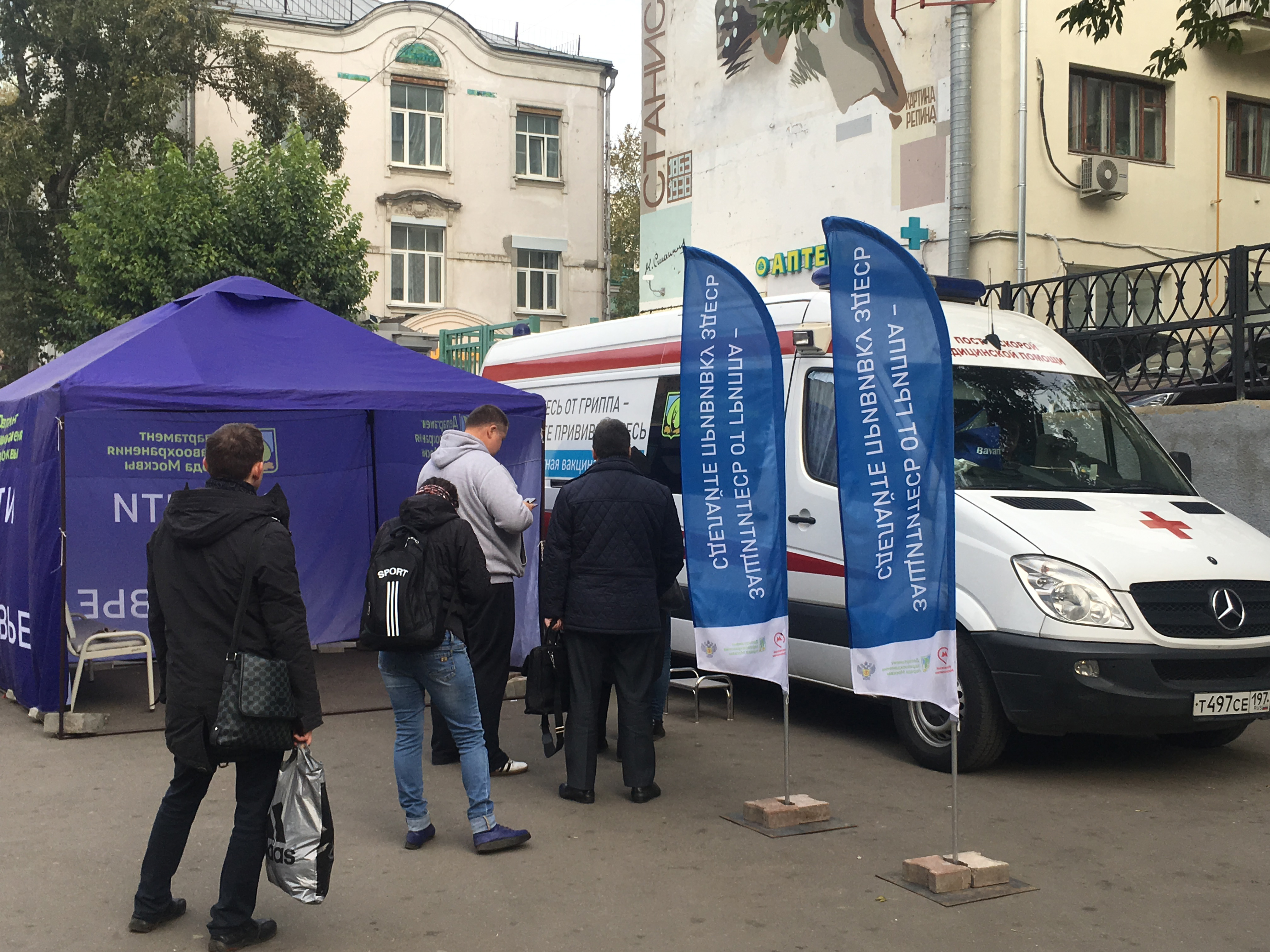
In the regions, volumes are more modest. L., a paramedic of one of the ambulance brigades in St. Petersburg, told Radio Liberty that his colleagues never fulfill the plan of 150 people a day (working day on vaccinations in St. Petersburg lasts 8, not 12 hours, as in Moscow). “This is, in principle, an unrealistic figure,” L. says, saying that even in order to instill 80 patients, health workers have to save time: patients do not measure the temperature (in Moscow, electronic thermometers, in St. Petersburg, do not conduct a normal inspection, and even more so do not observe them for 30 minutes after vaccination, as the methodological instructions of the Ministry of Health and the instructions for vaccinations. “We only quickly ask if there is a temperature, how a person feels and is there an allergy,” L. says, the other day, a doctor who works normally and inspects everyone, vaccinated only 12 people: firstly, each patient is leaving for more time, and secondly, many refuse to find out about a possible side effect. But they usually do not put such vaccinations on vaccinations. ”
The idea of vaccinations by the metro is also criticized by the Doctor of Medical Sciences Professor NIU-SHE Vasily Vlasov : “This is wrong, vaccination should be carried out in medical organizations, taking into account the state of a person, he should receive a vaccine from his doctor,” he says. The reason is not only in the lack of time for inspection, but also in the fact that the cars themselves do not meet the requirements for the procedural offices: “There should be a special hood in the room, we must disinfect it.” None of this is done, ”L. complains, unlike Moscow, where they purchased the PROPPOPOP PLUS vaccine, which is supplied to one -time ones The ampoul syringes, in St. Petersburg, preferred another Russian vaccine-the “ovigripp”-in ordinary ampoules: “We have ordinary insulin syringes, so you don’t always see how much you scored-a complete dose, not complete. In addition, the ampoules must be stored in the refrigerator, and we have a colady,” says L.
To instill reports
Many doctors surveyed by the RS said that in the context of a possible epidemic, you can go to some risks to instill as many people as possible, but only ambulance officers say that the main plan to fulfill on paper, not on patients. So, the Petersburger L. and his colleagues were allowed to enter their acquaintances and relatives in the vaccination magazines - the main thing is to ask passport data. Other health workers told RS that sometimes they were not able to find specific evidence for reporting for reporting. According to the Ministry of Health, 40% of Russians made vaccinations last year, but RS interlocutors cast this figure to doubt. According to an estimates of the Moscow infectious disease doctor, Doctor of Medical Sciences A., who asked not to name his name, even among medical personnel, the share of vaccinated is only 30%, although everyone should be vaccinated by law. The employee of another large Moscow clinic, candidate of medical sciences, agrees with A., "We have only a third of us somewhere last year. But then a 56-year-old employee died, and against the backdrop of the lack of chronic diseases. Almost everyone was vaccinated this year."
If an employee is elderly, they can tell him that you understand, you are an elderly specialist, we can fire you under an article
In addition to the fact that the ambulance themselves are not intended for vaccination, the brigades that are put on this work are usually removed from the calls on duty. “At first, only two people voluntarily agreed to work on vaccinations,” says L. “If it was extracurricular work, the doctors were paid 200 rubles per hour, when fulfilling the plan, this bonus was promised to double, but there were still few people, so they began to shoot one of the teams on duty.” According to L., vaccination is not included in the duties of an ambulance employee, but not everyone can abandon it: "If, for example, an elderly employee, they can say that you understand, you are a middle-aged specialist, we can fire you under an article."
Not everyone is ready to put up with additional load. Thus, Irina Chernetskaya, Irina Chernetskaya, began to complain to the General Prosecutor's Office, the Ministry of Industry, Rospotrebnadzor, the Ministry of Labor: “We have 60 thousand children and 15 thousand children should have 6.5 ambulances,” Chernetskaya explains. “Due to their optimization and savings, due to optimizing and saving them at best, and usually three, and usually three, and usually three, and usually three, and usually three. And one of these three machines is placed on vaccinations.
I wrote to Moscow, they all lowered below and lower, until it reached the district
They did not bring any results of her complaint: "I wrote to Moscow, they all lowered below and lower, until it reached the district. The prosecutor’s office was told to me on the phone that they were not dealing with such issues at all. I received a detailed answer only from the district house." "The number of ambulance brigades is approved by the order of the Healthcare Committee of St. Petersburg and may vary depending on local conditions to the required amount in agreement with the Healthcare Committee of St. Petersburg," the deputy head of the administration of the Central District of St. Petersburg Alexei Kucheryovoi says. The Ministry of Health of the Russian Federation at the time of publication of the material on Radio's questions Freedom did not answer this situation.
Savings on eggs
Almost all free vaccination is carried out by Russian -made drugs. Since 2015, the purchases of vaccines against influenza have been carried out through the National Immunobiological Company (Nazimbio), which is included in Rostec, and most of the vaccination budget will go to manufacturers included in the Natsimbio itself: Fort LLC (Ultrix vaccine) and FSUE NPO Microgen (Vaccine FSUE (vaccine. “Suvigripp”) . Having stated that the conditions of tenders were specially spelled out for Nazimbio vaccines.
In 2016, owned by Vladimir Potanin, Vladimir Potanin, set 8.6 million doses of vaccines for the Ministry of Health of the Russian Federation, and in addition, he exported 7 million doses to Belarus, Kazakhstan, Kyrgyzstan and Iran - including for state free vaccination programs. In Moscow, as part of the vaccination campaign in 2016, about 120 million rubles were spent on the Grippol Plus. It was not possible to find numbers for 2017, but, according to the company's press service, the volumes are comparable to last year.
However, many doctors have questions for Russian vaccines. The technology for the production of antifungal vaccines is the same: antigens to the virus are grown in chicken embryos - special enterprises supply millions of sterile eggs for this. The antigen is quite expensive, but in Russia the problem of value was solved by reducing the volume of antigens, adding instead of them the so -called immunomodulators, which, according to the creators, should raise the body's immunity so that it independently fights the virus (in the “flu plus” this is polyoxidonia, in the “ovigripp” - sovidon). Here are just serious clinical studies these components have not passed, they are not used in developed countries, but in Russia the polyoxidonium immunomodulator has turned into a separate drug. “The vaccine turned out to be cheaper, and it should cause a normal immune response in the human body,” Professor Vasily Vlasov explains. “But the evidence that this is a normal immune response,“ they are bad. The decision to reduce the dose and to unveil the vaccine was made when there was some urgency, and then it somehow fixed, and they continue to do such a vaccine. ” However, Vasily Vlasov notes: “There is no sufficient data to say that Russian vaccines are worse than imported, no one carried out comparative analysis.
Pharmacoadzor is a punitive organization
The Moscow infectious disease doctor, Doctor of Medical Sciences A. believes that the problem of Russian vaccines not only in their unproven effectiveness, but also in unproven safety. "There are also fatal outcomes, but it is impossible to officially talk about deaths due to the vaccine-it is very difficult to prove that it was the vaccine that led to death: this is a long procedure, sufficiently formalized, and very often commissions that are convened, cannot establish a causal relationship. We often talk about undesirable phenomena, which sometimes require serious treatment." However, according to the same specialist, if the side effects of imported vaccines have been studied quite well, the Russian is known about the Russian ones: “Take the same polyoxidonium. The instructions indicate that he has no side effects. This happens at all? The thing is that in the West there is a report of unwanted consequences - this is a routine work in which the doctor and the state -owned medicine are interested, and we have a pharmaco -supervision and this is a punitive organization. Any Russian doctor knows that if, as it requires the law, to report unwanted consequences, they will come to the doctor with a check and the doctor will accuse the fact that he violated the storage conditions. There are still cases of recalling vaccines: in 2014, Roszdravnadzor seized a whole series of Gruppol Plus vaccines in Chuvashia after hospitalization of several vaccinated students. The examination of the vaccines themselves showed their suitability, but an audit was initiated against the Vurnar Central District Hospital.
The approximate number of influenza victims in St. Petersburg in 2016 amounted to 452 people, which in the projection throughout the country can be up to 11 thousand people
Import vaccines (the "Influvak" of the American company ABBOTT, and Vaxigripp from the French Sanofi) are gradually displaced from the market, and sometimes due to the administrative resource. So, in the fall of 2015, due to problems with certification, imported vaccines completely disappeared from Russian pharmacies, despite the fact that they had already been brought to warehouses. “Then there was a large outbreak of influenza, many dead, and bureaucratic problems somehow quickly resolved,” recalls T.
Today it is not difficult to find imported vaccines, although due to the order of the Ministry of Health on the new rules for dispensing drugs, some pharmacies began to demand accounting recipes not only for antidepressants , but also for antifungal vaccines, which still should be released without a prescription.
Muscovites were more fortunate again: in the capital's clinics you can choose a vaccine - you just need to know what to demand from a local therapist. “We are all with good Russian vaccinations and everyone is alive!” Said the therapist of the Moscow clinic No. 5 to the RS correspondent. “And for some reason, give a foreign one!” The therapist did not know that in addition to Suvidon and Ultrix in the clinic, there was still Vaxigripp.
There is no death
It is necessary to vaccinate, and if not imported, then the Russian vaccine
All doctors surveyed have agreed in one thing: it is necessary to vaccinate, and if there is no imported one, it is better to be a Russian vaccine than not to be vaccinated at all. Despite the fact that the flu accounts for only 20% of the total number of colds, and vaccination reduces the risk of getting a maximum of half, the virus often leads to complications and deaths, and this applies not only to older people or patients with chronic diseases.
However, Russia stands apart with flu statistics from influenza. According to Rosstat , in 2016, 1079 people died from influenza, for example, the American National Center for Disease Control and Prevention indicates 55 thousand who died from influenza and pneumonia in 2014 in the United States, putting this cause of death in eighth place. Doctors themselves do not believe Russian statistics: so, according to the report on the results of the influenza epidemic in St. Petersburg, prepared by specialists of the clinical infectious diseases hospital named after Botkina, officially in St. Petersburg, 102 people died from influenza, but this figure does not include dead pneumoniums who died from influenza. Experts conclude that the approximate number of influenza victims in St. Petersburg in 2016 amounted to 452 people, which in the projection throughout the country can be up to 11 thousand people.
With a figure of 12-15 thousand deaths per year, the interlocutors of the RS among the Moscow doctors agree: “The diagnosis of influenza can be made only virologically, that is, the patient must get to the infectious diseases hospital, he must take a detachment from the oropharynx, sow it on special environments, grow a virus and determine what is it, says T.“ The same who died at home or in the hospital, but they are in the hospital, but they are in the hospital, but to them in the hospital, but to them. There was no virological or serological study, such a diagnosis was not made. ”
It is not clear why it is necessary to underestimate the data on mortality and overestimate the number of people who have received a vaccine, every year pretending that there is no epidemic: people continue to get sick and die.