
Translated material
Why will Catalonia be larger
The very idea of the European Union provokes separatism: carnegie.ru
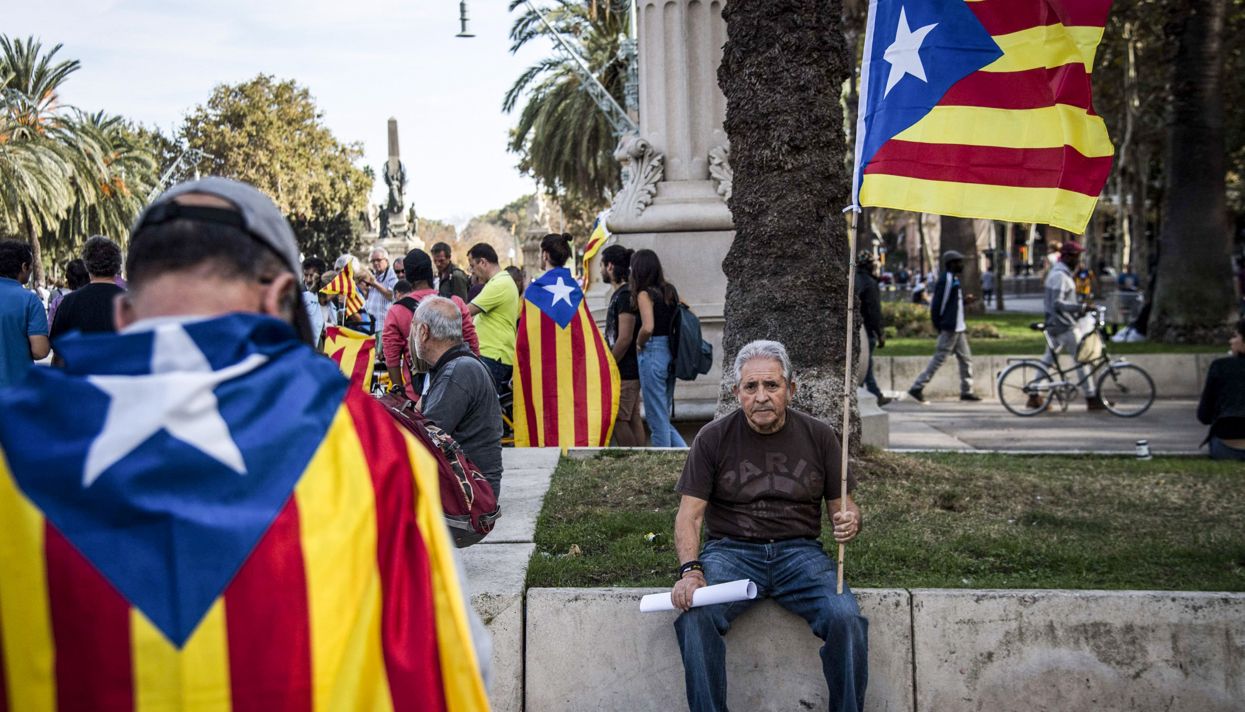
Catalonia President Carles Puchdemon in the evening of October 10 announced “deferred independence” - he signed a declaration that refers to the independence of the region from Spain, but asked the parliament to postpone its approval for the sake of dialogue with the kingdom. Professor of the Russian Economic School Ruben Yenikolopov in an article for the Moscow Center of Carnegie writes that this is a decision - an attempt to compromise, which Catalonia and Spain had previously abandoned. In addition, the expert believes that the European Union took a too passive position in the conflict - but the EU itself provokes separatism in the region. “Medusa” with the permission of Carnegie.ru publishes an article by Enikolopov.
As it was correctly noticed , the Catalan crisis is similar to the divorce of a prosperous married couple. In the case of a divorce of many couples in order to understand the causes of what is happening, it is sometimes more useful to look at the incentives of lawyers, and not the actual problems. In the same way, in the Catalan crisis, many events look much more logical if they are not considered from the point of view of the interests of the “people of Spain” and the “people of Catalonia”, but from the point of view of the interests of politicians who theoretically should represent the interests of these same peoples.
Of course, the emotions and irrational motives of national pride play in an important role in an important role. Current economic and political problems fall on the fertile ground of the romantic Catalan nationalism of the model of the 19th - early 20th centuries and the difficult memories of the political repressions of the times of Franco. But, like in almost all ethnic conflicts, this sourdough begins to actively wander only when a fan of conflict is in the interests of political elites.
Balance failure
The key fundamental problem consists in the inconsistency of the economic and political influence of Catalonia in recent years. This region of Spain has historically been one of the most economically developed since the 19th century. By occupying 6% of the country, the region accommodates 16% of the population, but meets more than 20% of the total GDP, 25% of exports and almost 30% of investments. In terms of economics, Catalonia envelops most of the European Union countries.
This state of affairs in itself causes some tension, but for many years, conversations have not moved beyond the special status of the region and increase autonomy within the framework of the Spanish state. A similar situation, for example, can be observed in Italy, where there is a huge economic inequality between the north and south, but everything is limited to sluggish conversations about the separation of the northern regions, which have (at least now) a rather distant attitude to reality.
The situation in Catalonia was quite stable until 2011. Most of the time after the restoration of democracy in power in Spain was the Socialist Party, for which the support of Catalan voters is important. Even in 1996-2004, when the government in Madrid formed the legal entities from the People’s Party, who in Catalonia, in Catalonia, the political alignment of forces forced the central authority to pay attention to the opinion of the Catalants, since the Catalan and the Conversation and Union (CIU) played a very important role in the Spanish parliament. In that situation, the disproportionate economic importance of the region was combined with the same disproportionately great political influence, so the whole system was more or less in balance.
A sharp exacerbation of the situation in Catalonia led to a decline in the political influence of the region (more precisely, regional politicians) at the national level. This happened after the people of the People’s Party came to power in 2011. The electoral base of this party is located in the central regions of Spain, and the party leadership is not particularly chasing the votes of Catalan voters. In turn, the Ciu Cyu Catalo Political Bloc collapsed and lost its influence in the national parliament. As a result, Catalan politicians, in fact, turned out to be marginalized. This violation of the balance and led to the fact that the problems between Madrid and Barcelona began to quickly accumulate, reaching the state of a large -scale political crisis to the present day.
This problem could be solved and restored. But for this, at least one of the parties should have incentives for compromises. Unfortunately, so far it was not so. Neither politicians in Madrid, nor politicians in Barcelona have special incentives for compromising. The strategy of the People’s Party is to increase support among their nuclear right -wing voters who oppose any concessions in the Catalan issue. The willingness to make concessions and resolve the crisis, most likely, would help to lure more moderate voters to its side, but the People’s Party clearly chose another strategy.
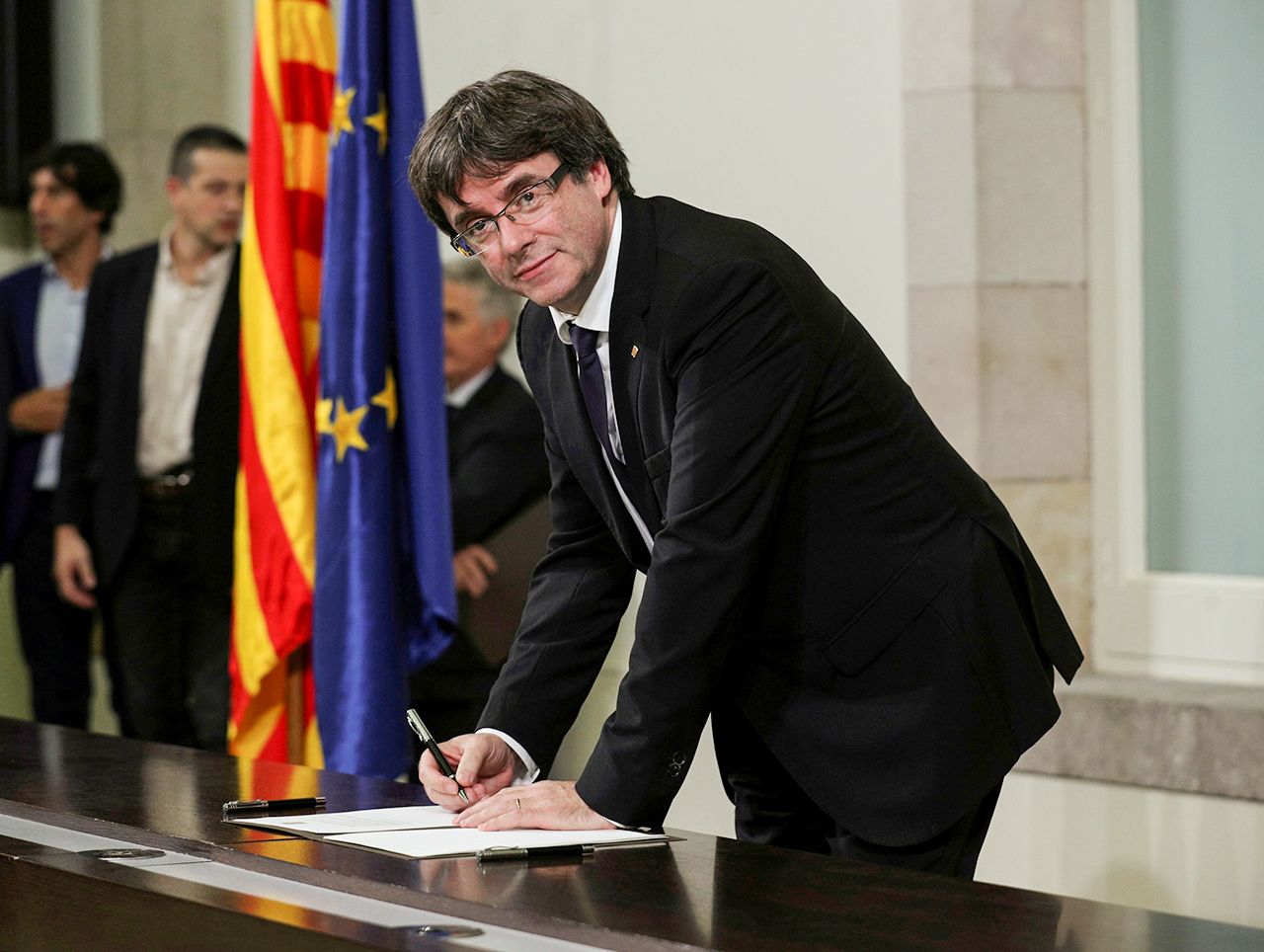
The current leadership of Catalonia is also not prone to compromises. Catalonia President Carles Puchdemon, in fact, is a politician of one idea - the ideas of the independence of Catalonia. Other questions, such as the socio-economic development of the region, are clearly in the background for him. If Puchdemon achieves independence, it will become the holy liberator of all Catalonia. If Madrid removes him from power, then he will become the holy martyr of all Catalonia. As a result, one of the most important regions not only in Spain, but throughout Europe becomes a hostage to personal ambitions of politicians.
In such a situation, only external pressure can make politicians seek a compromise. Moreover, not from other politicians (including European ones), who themselves play according to the same rules and discourage general discussions about the rule of law, but from business and ordinary people. The Catalan government became much more neat in its statements after several days from the catalog of Catalonia announced several days in a few days, several corporations, including the two largest banks (Banco Sabadell and Caixabank), and the Gas Natural Energy Gilates. Both in Madrid and in Barcelona, mass demonstrations with calls to the dialogue passed.
As a result, under pressure from business and protests, politicians have to try not to make too sharp movements, but they do not have so many space for maneuver. In this situation, the “delayed independence” declared by Puchdemon on October 10, perhaps the position closest to the compromise that he could take. The Prime Minister of Spain Mariano Rahya has much more opportunities at the disposal, but maybe less desire to concede. As they write in the comments on the speech of the Catalan president, “Puchemon has just crossed from Franco by 2017. Let's see if this can do it. ”
The course for radicality
The situation in Catalonia, of course, is unique, but it reflects the overall trend that has been observed in developed democracies in recent years. Politicians in an increasing number of countries, instead of the struggle for the voice of moderate voters, prefer to try to increase the turnout among their supporters. The era of broad coalitions and competitions of large centrist parties was replaced by a new political reality, where the weakened traditional parties in order to compete with the kaleidoscope of new parties (or individual politicians), most of which come from radical positions.
As a result, political polarization sharply increased, and the ability of opponents to negotiate, on the contrary, decreased. At the same time, in almost all countries a similar picture is observed: at first, politicians are polarized faster than the preferences of voters. But then feedback begins to operate, and the radicalization of policy leads to radicalization of society. On the example of Catalonia, it is easy to track how the actions (and inaction) of politicians led to a sharp increase in the number of both radical fighters for independence and the number of Spaniards advocating strict suppression of separatism.
You can argue about the reasons for growing political polarization for a long time and with interest. Globalization, the increased influence of the Internet and social networks, and inequality caused by automation of production, and growing migration act as suspects. But there is no clear understanding of the fundamental causes of the changes. But the understanding is growing that such polarization is becoming a serious problem, the opportunistic actions of politicians only strengthen it, and something needs to be done with this.
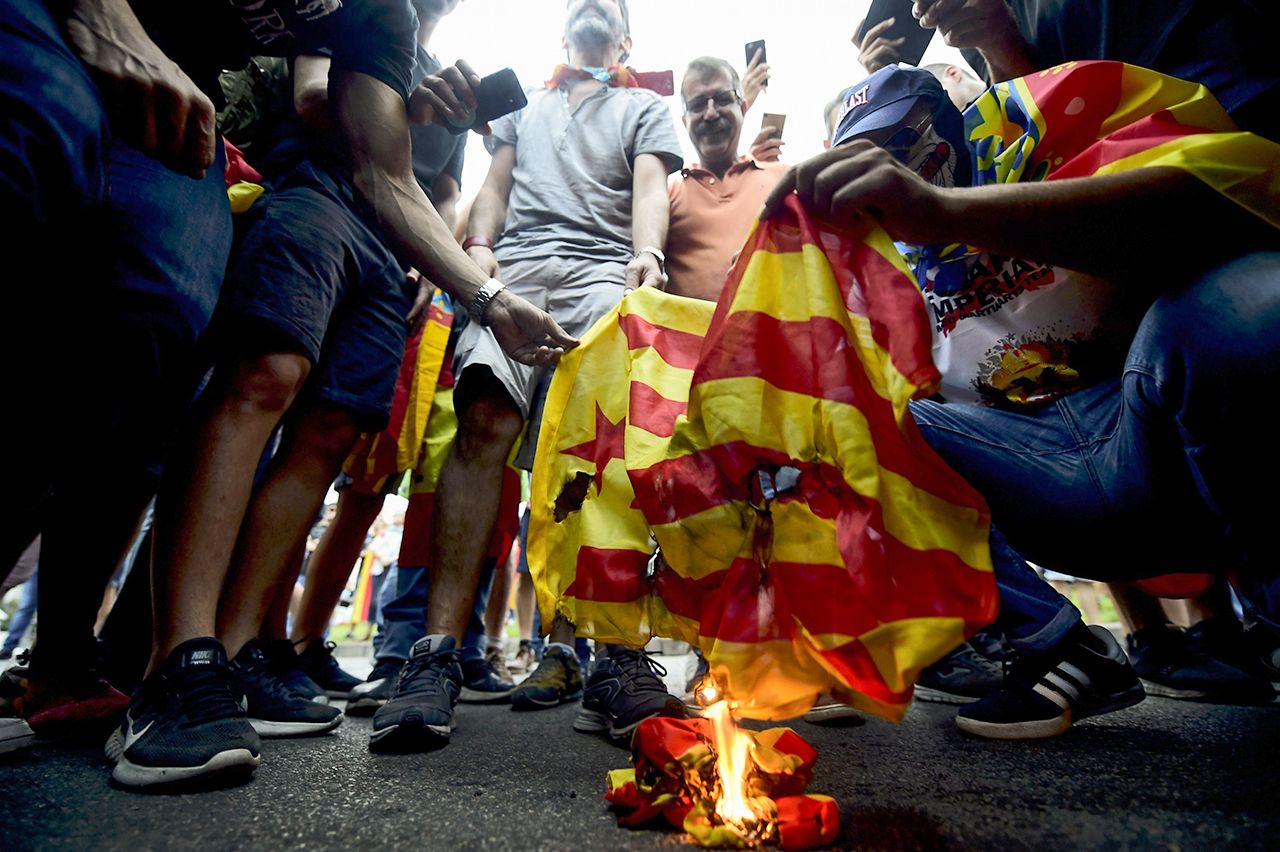
Moreover, the situation in Catalonia demonstrates that growing radicalism in domestic political issues and the inability of political forces to dialogue can very quickly become an international problem that threatens the internal stability of the whole of Europe. The possible separation of a large region from one of the most important European countries is an extremely serious problem not only for Spain, but also for the European Union as a whole, and ignoring it is more expensive.
Until now, commenting on the situation in Catalonia, officials in Brussels and in the national capitals were limited to fresh references to compliance with the rule of law (which implies far from rainbow development of events if Catalonia unilaterally declares independence). This approach can prevent a sharp exacerbation of the situation, but, removing the symptom, does not heal the disease. The legalistic approach does not work well in situations of the political crisis, when one of the parties calls into question the justice of the laws themselves that their opponents refer to. Therefore, for European structures, it would be much wiser not to self -destroy, but to more actively engage in negotiations between Madrid and Barcelona, the level of trust between which fell to a record low.
The irony lies in the fact that the very fact of the existence of the European Union and the distant prospects for joining it as a separate state provokes separatist sentiments in Catalonia, and not only there. Large states provide many public benefits to their regions that would be unbearable for these regions as for individual countries (their own currency, banking regulation, foreign trade, and so on). Some regions, even with economic or cultural disagreements with the center, agreed to remain as part of a single state in exchange for these services.
The growth of the influence of supranational organizations and multilateral agreements leads to the fact that many of these public goods can be obtained as a separate small country. It is enough to enter into a supranational education (for example, the EU) or sign a multilateral agreement, starting with free trade agreements and ending with military pacts. Such a temptation cannot but affect the situation of regional forces. In the end, this will most likely lead to an increase in decentralization. But their ignoring centrifugal trends threatens only an increase in tension, which can lead to open conflicts and the collapse of states.
Other materials "Carnegi.ru":
- Autumn marathon. How the flight of a business from Barcelona prevented the independence of Catalonia
- How Spain became Eastern Europe
Ruben Yenikolopov , Karnegi.ru