
Translated material
"This is a slap in Putin"
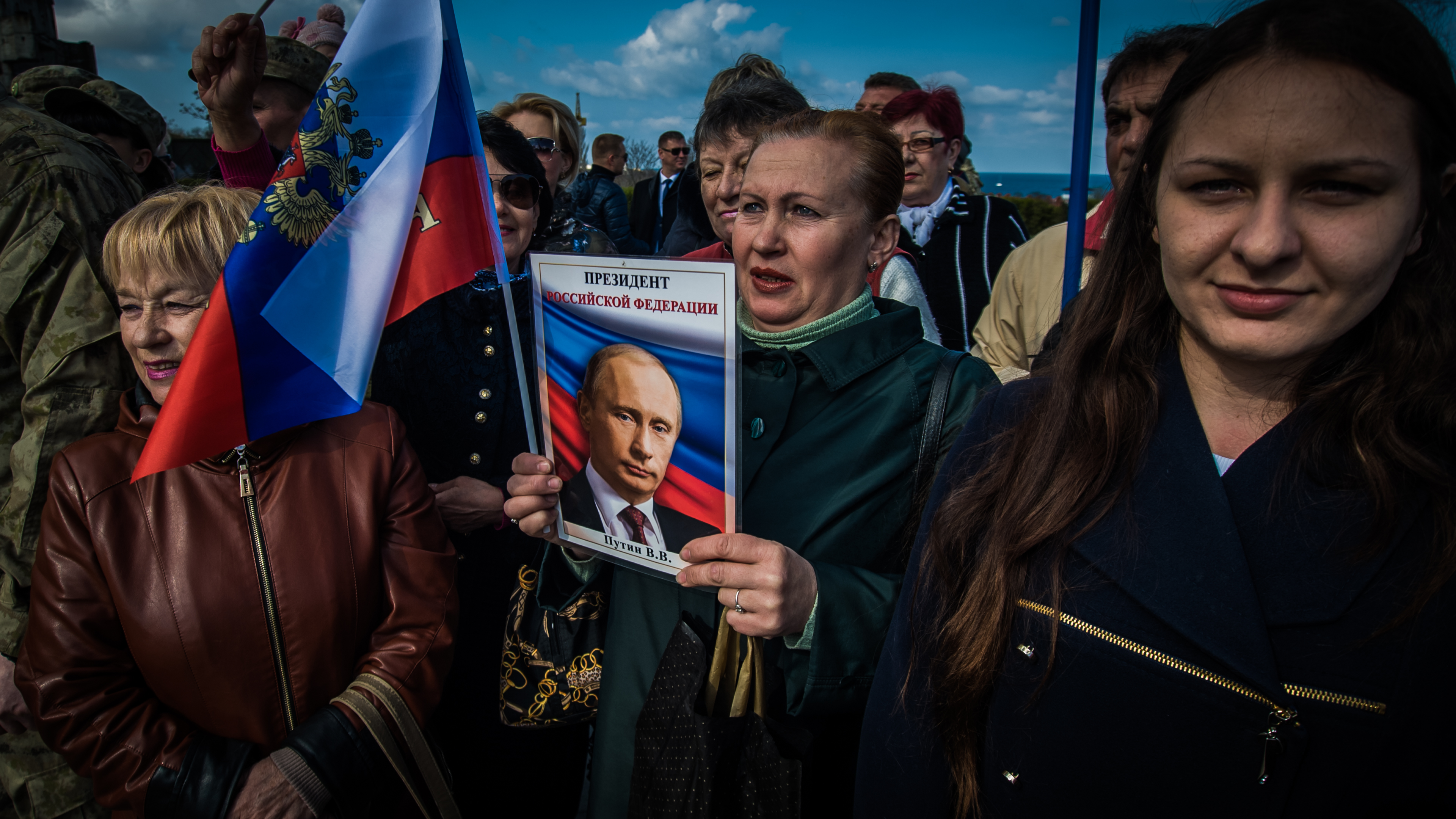
On October 10, deputies of the Catalan parliament signed the “Declaration of Catalonia Representatives”, which states that this region of Spain is becoming an “independent republic”. The first to put his signature by the head of the Government of Catalonia Carles Puchdemon. However, while the document remains symbolic. The tension in the confrontation between the central authorities of Spain and supporters of state independence of Catalonia was somewhat slept. The referendum in Catalonia took place just a few days after the referendum in Iraqi Kurdistan, where the absolute majority also voted for the independence of the region, but the central authorities, in this case, the Iraq authorities refuse to recognize the legitimacy of voting. Both Madrid and Baghdad are based on the support of the international community. Observers note the similarity of referenda in Catalonia and Kurdistan with the so -called "referendum" in Crimea in March 2014, which Moscow is trying to justify the annexation of the peninsula.
The signing ceremony took place a few hours after Carles Puchdemona in the Catalan parliament. The leader of Catalonia said that the autonomous region received the right to independence from Spain according to the results of the referendum on October 1. However, he immediately announced that the official proclamation of independence was postponed to establish a dialogue with Madrid on the issue of the release of Catalonia from Spain. Puchdemon also stated that in Barcelona they hope for mediation in negotiations from various "organizations and countries."
October 1, more than 90 percent of the voted, spoke out of the exit of Catalonia from Spain. Madrid announced the vote illegal. France, Germany and Italy opposed the unilateral declaration of independence by Catalonia and in support of the unity of Spain.

Deputy Prime Minister of Spain Sorai Sansa de Santamaria criticized Puchdemon’s performance, saying that he did not know who he was and where he wants to go. Earlier, the Prime Minister of Spain Mariano Raha said about the impossibility of negotiations with the leaders of Catalonia until they abandon the separatist plans.
Political conflicts in the European Union should be resolved by dialogue, and not with violence on the streets
The Deputy Minister of Foreign Minister Michael Roth said immediately after the referendum that the events in Catalonia were “anxious”, and separatism, in his opinion, is not a response to the problems that the region is faced with. “All EU members must respect and strictly adhere to the principles and rules of the rule of law and democracy,” said the mouth. The mouth also said that political conflicts in the European Union should be resolved by dialogue, and not with violence on the streets. The press secretary of the Russian President Dmitry Peskov called the events related to the attempt to conduct a vote in Catalonia, the "internal case of Spain."
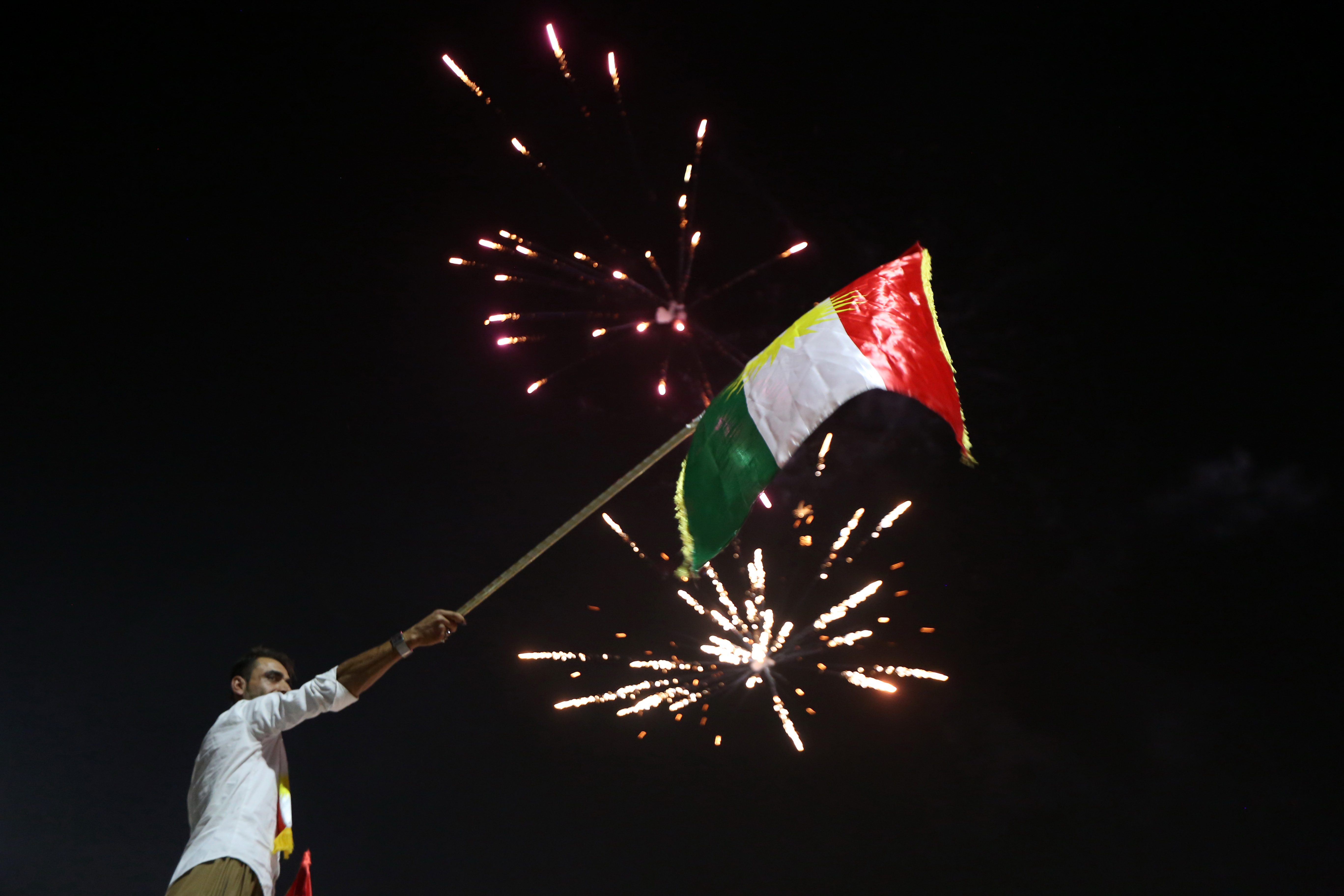
The referendum in Catalonia took place just a few days after another referendum, also on the issue of independence and also not recognized by the international community, in Iraqi Kurdistan. The absolute majority of voters spoke out for the proclamation of an independent Kurdish state, but Iraq authorities called a vote that did not have legal force. The separatism of the Kurds is a very serious problem for neighboring Turkey. Therefore, many media drew attention to the fact that the referendum in Iraqi Kurdistan was discussed during negotiations in the Ankar of Turkish and Russia, Redzepa Erdogan and Vladimir Putin . Putin confirmed the support of Moscow to Moscow.
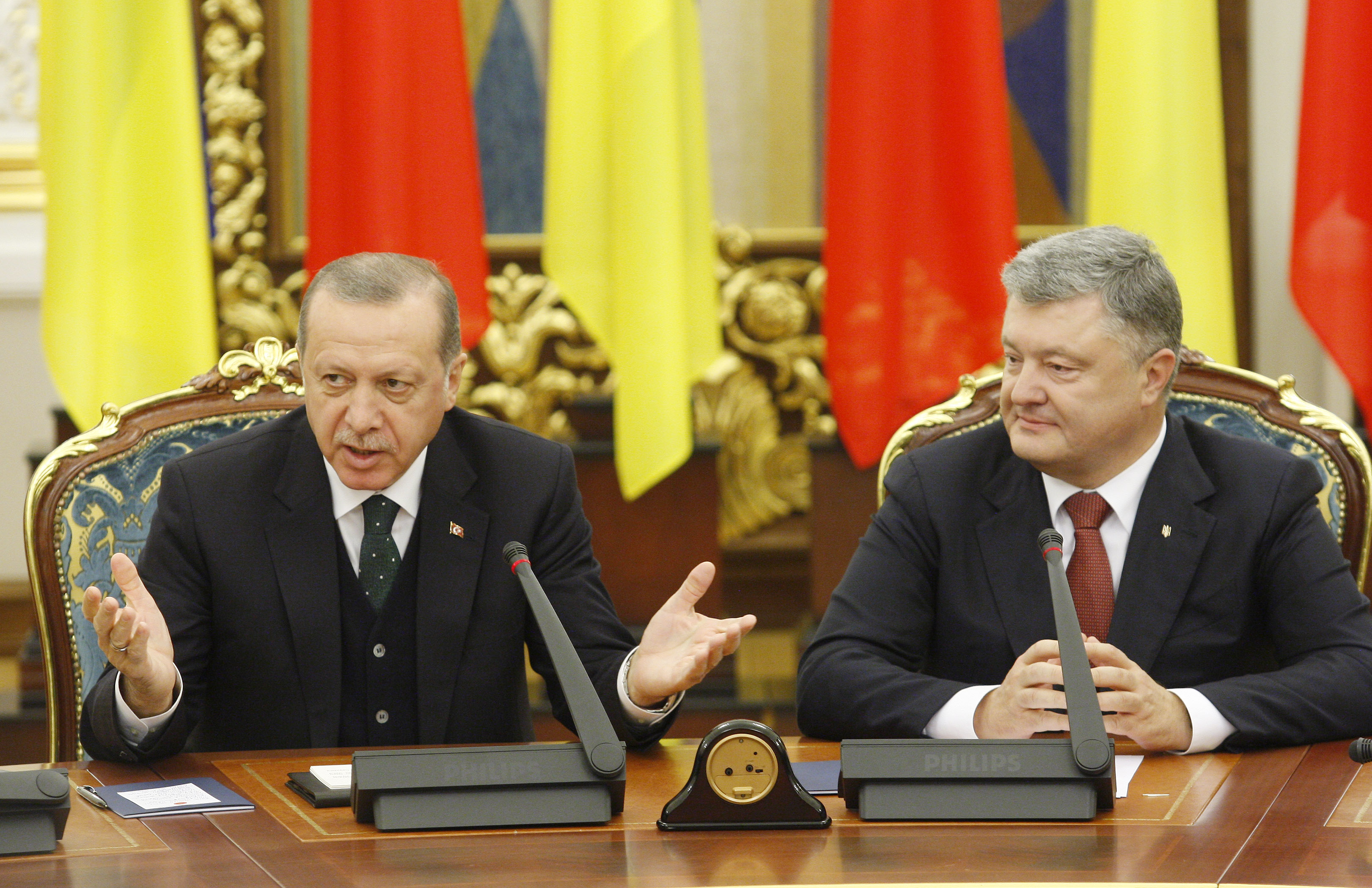
However, this position did not prevent Recep Erdogan at the beginning of this week to publicly declare that Ankara does not recognize the annexation of Crimea to Russia. At a joint press conference in Kiev with President of Ukraine Petro Poroshenko, Erdogan said that Turkey "will continue to support the sovereignty of Ukraine and its territorial integrity." The Turkish president also noted that Ankara is trying to help the Crimean Tatars, which are "in captivity."
On the issue of Crimea, Türkiye has never been an ally of Russia. This must just be taken into account
The first deputy chairman of the Russian State Duma Committee on International Affairs Dmitry Novikov said in response that "in the Crimea issue, Turkey has never been an ally of Russia. This should be considered that there are no illusions regarding Turkish politics." And the Russian senator Alexei Pushkov said that the Turkish president simply “makes pleasant” to the President of Ukraine Petro Poroshenko. Soon it became known that Türkiye introduces restrictions on imports from Russia of agricultural products.
This turn in Russian-Turkish relations, as well as the similarity and differences of referenda in Catalonia, Kurdistan and Crimea, is commented by political scientist Yuri Fedorov :
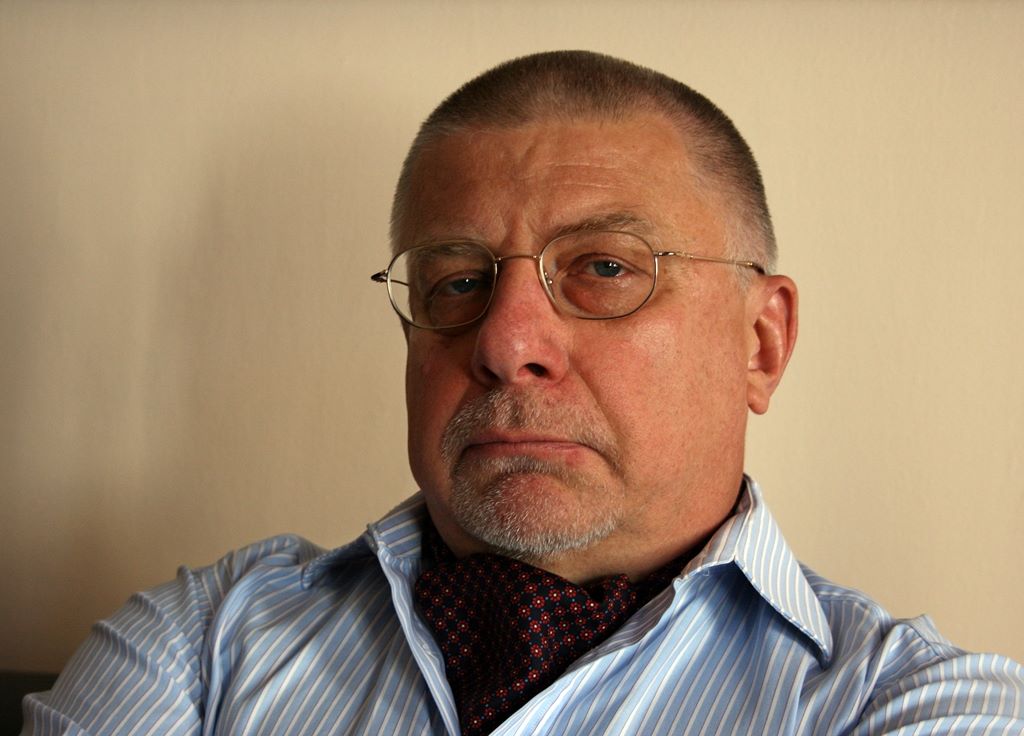
- More recently, Vladimir Putin met with Recep Erdogan, it was a few days after the referendum in Iraqi Kurdistan, and Putin then confirmed that Russia was advocating to maintain the territorial integrity of Turkey. It takes less than two weeks - and Erdogan openly supports Ukraine on the problem of Crimea. In your opinion, what is behind this: first of all, the maintenance in Russian-Turkish relations, some historical reasons? Or just Erdogan, as the president of the NATO member country, could not answer differently, since the answer on this topic was specified at a press conference?
-Firstly, I think that this is a rather strong slap in the face to Vladimir Putin, especially since it was said just a few days after his 65th anniversary. Historically, Russia and Türkiye have always been opponents in the Black Sea basin in the Caucasus and in Crimea. Recall that until the end of the 18th century, Crimea belonged to Turkey, the Crimean Khan was a vassal of Turkish. And there were constantly wars between Russia and Turkey in the northwestern Black Sea region. And besides, there were great difficulties between Russia and Turkey during the so -called Caucasian wars of the XIX century.
These people have settled there, of course, for a sufficiently long time they were carriers of anti -Russian, anti -Russian sentiments
The Russian Empire then, in fact, carried out one of the first in history, at least in the new history, ethnic purges, killing, according to various calculations, somewhere around a million representatives of the peoples of the Adyghe group. And somewhere about half a million, at least expelled to Turkey. And these people settled there, of course, for a sufficiently long time they were carriers of anti -Russian, anti -Russian sentiments and aspirations. So in general historically, Russia and Türkiye have always been, let’s say, on different sides of the geopolitical section of this region. Türkiye sometimes entered into unions anti -Russian with European powers. An example is the Crimean war.
But this is a story. And if we talk about the current state of affairs, then the relationship between Russia and Turkey, frankly, resembles the expression "sworn friends". So once they talked about the relations of the Soviet Union and Nazi Germany. So, and now it is something like sworn friends. Because, on the one hand, Erdogan has a rather complicated relationship with the West, a rather complicated relationship with the United States. A couple of days ago, the mutual issue of visas was interrupted. In Turkey, the fact that the main enemy of Erdogan, Gulen, is in America has always been disliked by the United States. And the Americans refuse to satisfy Erdogan's demand for its issuance. This brings Erdogan and Putin closer.
Kurdish problem, attitude to Kurds has always been a source of very strict tension in Russian-Turkish relations
But there is something that shares. It shares, I think, first of all, the Kurdish problem, because, if we talk about history, starting from the Crimean War, Russian intelligence and all kinds of emissaries tried to establish relations with the leaders of the Kurdish tribes. Then these relations with the Kurds were maintained in the Soviet period. I remember that in the memoirs of General Sudoplatov a certain curious episode about how he established contacts with one of the Kurdish leaders Mustafa Barzani, this was after the Second World War. And the Kurdish problem, the attitude to the Kurds has always been a source of very strict tension in Russian-Turkish relations. Because in the Soviet Union and now, in Russia, the Kurds are considered as partners, as possible allies, as a certain instrument of pressure on the Turkish leadership, on Iraqi leaders.
And let's not forget that the Kurds have a rather complicated relationship with Iran. So strengthening relations with Kurdish leaders and Kurdish organizations is the traditional policy of Russia, which equally traditionally caused very acute irritation in Turkey. I can’t help but say that the main Kurdish organization, the Kurdistan working party, whose leader Adzhalan is now sitting in a Turkish prison, and is considered terrorist in Turkey, nevertheless has a representative office in Moscow. And these people, very left -wing, may even be the left of the Brezhnev Communists, close to terrorists and responsible for terrorist acts, especially in Turkey, have always enjoyed the support of Russian political organizations. In Soviet times - the International Department of the Central Committee of the CPSU and the KGB, and now, I think, all these relations are being built through the foreign intelligence service, possibly the FSB. So this problem has always been acute in the relations of Russia and Turkey.
-Is it possible to expect that Vladimir Putin will somehow begin to play this Kurdish card? What will Moscow openly go to support the Kurdish separatist movement in Turkey, say, motivating this that the Kurds confront the Islamic State?
I can assume that there were contacts about which the leadership of the Institute of Oriental Studies did not report
- Vladimir Putin constantly strengthened, then a little weakened his support for the Kurds. But it is quite well known that the leaders of that part of the Kurdish organizations that control the areas inhabited by the Kurds in Syria were accepted in Moscow. They were officially invited, if I am not mistaken, through the Academic Institute of Oriental Studies or something like that. There, all kinds of contacts and conversations with fairly influential people were arranged for them, at least so reported. I can assume that there were also contacts about which the leadership of the Institute of Oriental Studies did not report. So the support of the political, and possibly not only political, was always, and this annoyed incredibly Ankara.
The Kurds have a very complex relationship with the Assad regime and with the opposition of Syrian. They say: leave us alone and let us live our lives, and then we will already decide the issue of building a Kurdish state ourselves, but this is our business, and it is unlikely that anyone needs to intervene in it. And this is insanely annoying Ankara, because this will inevitably entail the question of controlling the Turkish provinces inhabited by the Kurds. So this problem is always there and will probably be in the coming years.
Russia is trying to play on the contradictions between Turkey and Iran, and again this causes discontent from the one and the other side
And besides, I think, dissatisfaction, albeit not clearly expressed, in Ankara, also caused Russia's cooperation with Iran. Because Iran historically is an opponent of Turkey in the Middle East. And although, on the one hand, there seems to be cooperation on the Syrian problem, because the Islamic State takes out all, including the Shiite population. But Iran causes acute anxiety in Turkey. So here, on the one hand, such a field of common interests arises as Evgeny Primakov liked to say, and on the other hand, historically, these are rivals. Russia is trying to play on the contradictions between Turkey and Iran, and again this causes discontent from the one and the other side. So the reasons for the relationship between Moscow and Ankara are difficult, I think enough.
- Is it possible to assume that Moscow took these words of Erdogan in the Crimea to heart?
- Well, of course, of course! If someone says that Crimea is Ukrainian, this is nothing but irritation and anger. Because it is considered a direct attack against Russian foreign policy and personally against Putin, who is very proud of its role in the annexation of Crimea.
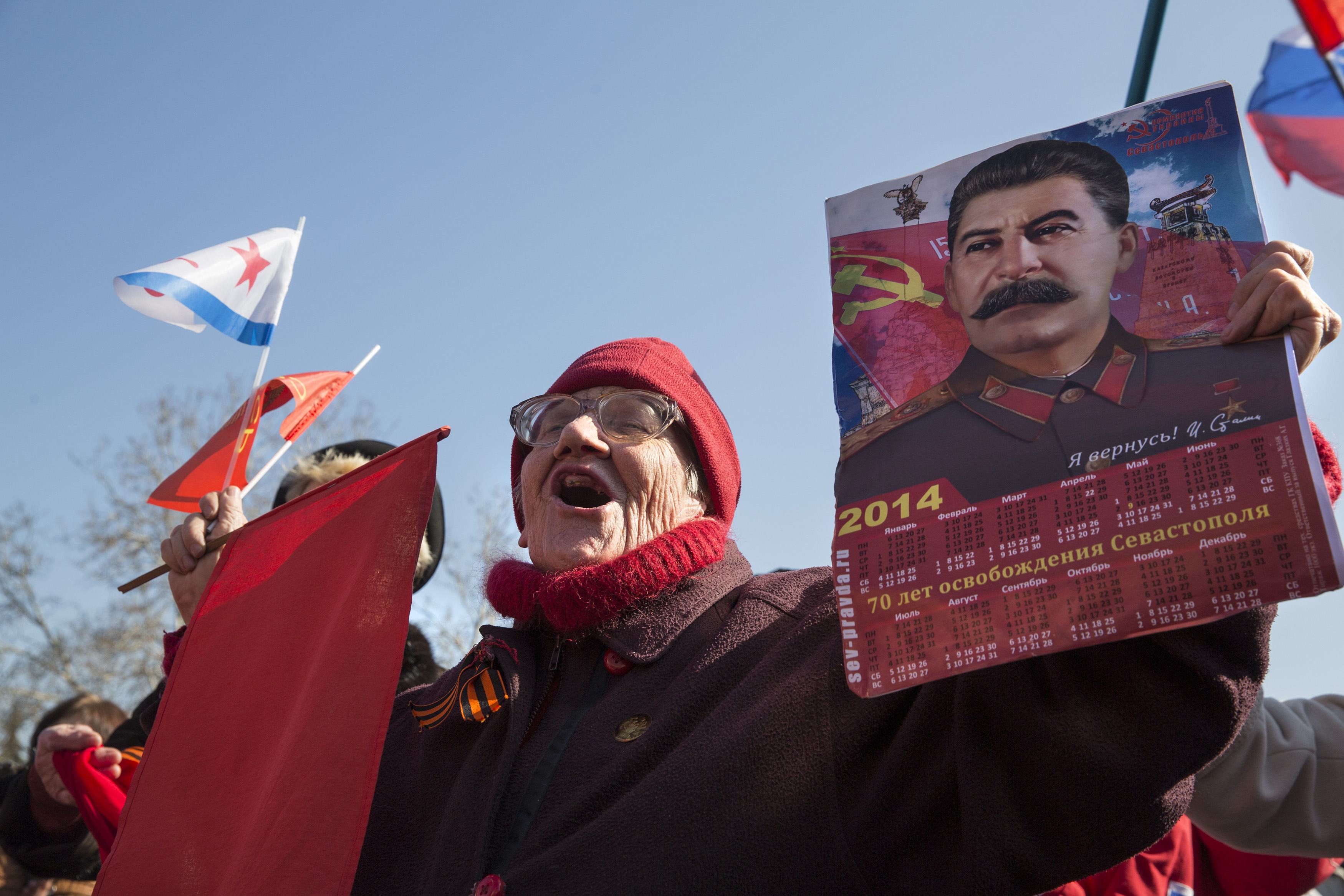
- Referendums in the Crimea, in Iraqi Kurdistan and, the last example, in Catalonia ... I had attempts to draw parallels between these events. The international community considers all three referendums illegitimate, the results of voting, according to the organizers, said that the majority of the region’s population advocated independence. How appropriate are such parallels?
This is such a blow to relations with the European Union as a whole and especially in relations with Spain!
-You know, this is again a very difficult problem, for which there is no unequivocal answer, an unambiguous solution, what to do with the population of a certain territory, which decides to change its status, disconnect, get out of some country, join another, get independence, and so on. There are two principles - the right to self -determination of the people and the territorial integrity of the state. And they are in conflict.
As for these specific referendums, Moscow, on the one hand, would probably like to recognize the results of referenda in Catalonia and in Kurdistan. It is officially recognized, because, in fact, this is a kind of analogue of the Crimean referendum. If you look at the main positions, legal and so on, they are very similar. But, on the other hand, imagine that in Moscow they say officially: yes, we support the aspirations of the people of Catalonia to independence. This is such a blow to relations with the European Union as a whole and especially in relations with Spain!
Moscow is in a state of split
And with Spain, generally speaking, Moscow has always had a fairly decent relationship, despite the entire episode with Ukraine, Crimea and so on. Spain is far away, these problems excited her little. To whom Crimea belongs, in Spain did not particularly think. Of course, the violation of the principles of territorial integrity is bad, but nevertheless it did not concern the Spaniards. And here it turns out that this can touch, and touch it very cool.
So Moscow is in a state of split. To say: "The Russian people of Crimea voted to join Russia, and the Catalan people voted for separation from Spain, and this is very good, despite all the difficulties, we support the desire for self -determination" - Moscow cannot. Accordingly, I think, I will not be mistaken if I assume that all kinds of political scientists, in quotation marks and without, close to the Kremlin, simply call their European colleagues and say: it is interesting to see how you will deal with this problem. Because, indeed, the problem for the European Union is very acute, and it is not clear how to solve it. So I think it will simply be an object for some studs to the EU. And formally, Moscow will support the territorial integrity of Spain, ”says Yuri Fedorov.
Among the examples of successful referenda about self -determination in the past few decades - Guinea (1958), Algeria (1962), Malta (1964), Bahrain (1971), Eritrea (1993), Montenegro (2006). After the collapse of the USSR in 1991, in a number of former Soviet republics, referenda took place that confirmed the decision to proclaim their state independence. Among these republics are Ukraine. The annexation of the Crimea Peninsula, Russia formally tries to justify the results of the “referendum” in March 2014. The international community refuses to recognize the legitimacy of this vote. The latest example of the proclamation of state independence based on the results of the referendum is South Sudan, who became independent in July 2011.
Residents of the Franco-speaking Canadian province of Quebec twice-in 1980 and 1995-rejected the idea of state independence, and in the second case, the gap in the voices of supporters and opponents of the Quebec branch was a little more than one percent (almost 20 percent in 1980). To Bantuustan (territories used as a reservation for the indigenous population of South Africa. - RS) Siskaya as part of South Africa in 1981, after the referendum, independence was granted. However, due to the lack of international recognition, after the political crisis that continued for several years (the authorities of Bantustan did not want to negotiate reintegration with the apartheid policy by the South African leadership) Siskaya returned to the South African Republic.
Following the Iraqi Kurdistan and the Catalonia, the referendum on self -determination will be held next year in New Caledonia - the island of French territory located in the southern part of the Pacific Ocean, the French newspaper Liberacion notes in its recent publication. Officially, this is a vote "On the transfer of the new Caledonia of state powers, international status with full responsibility, as well as the organization of citizenship" in accordance with the agreement of the French state with local loyalists and separatists signed 20 years ago. В случае, если участники голосования выскажутся против независимости Новой Каледонии, то местность будет иметь право на еще два подобных референдума – через два и четыре года. Кроме того, 15 июня 2019 года состоится референдум в Бугенвиле – автономном регионе Папуа – Новой Гвинеи.
Шаг (правда, в любом случае очень и очень небольшой) по направлению к провозглашению независимости, возможно, сделают 22 октября итальянские провинции Венеция и Ломбардия. Но это будет не референдум о государственном самоопределении, а консультационное голосование о большей автономии. Заметим, что оно будет проводиться в соответствии с конституцией Италии. Большое внимание, вне всякого сомнения, привлечет референдум по новой конституции Фарерских островов. Ее принятие может в конце концов привести к независимости Фарер от Дании.
Не исключено, отмечает "Либерасьон", что референдумы о независимости будут в недалеком будущем организованы в Республике Сербской в Боснии, в Гренландии, формально являющейся частью Дании, и, наконец, в Шотландии, население которой в большинстве своем недовольно грядущим выходом Великобритании из Европейского союза. Премьер Шотландии Никола Стерджен обещает организовать голосование между осенью будущего и весной 2019 года.
-

Andrey Sharogradsky
International Radio Offer Freedom. Author and host of the information and analytical digest, podcast "Time of Freedom"