
Translated material
Man of the day: Gleb Maksimov
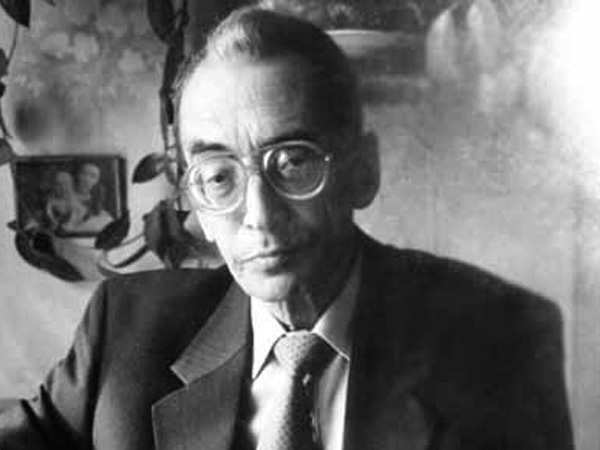
On October 13, 1926, designer Gleb Maksimov, creator of the world's first artificial satellite of the Earth, was born.
Personal business
Gleb Yuryevich Maksimov (1926-2001) was born in Ufa, since the 1930s, after the arrest of her father, he lived with her mother in Moscow, where she worked in the All-Union Book Chamber. After graduation, he entered the Moscow Aviation Institute. During his studies, he was a participant in the stratospheric student circle created by his fellow student Yan Koltunov. After graduating from the institute in 1949, Maksimov and Koltunov were hired by the Ministry of Defense, located in Bolshev, in the Bolshev, in the group of Mikhail Tikhonravov, who was developing multi-stage missiles, and later spacecraft.
One of the reports of the young designer attracted the attention of Sergei Korolev, and he in 1956 achieved the transfer of Gleb Maksimov to his OKB-1. Mikhail Tikhonravov, who became the head of the department, also moved to the Korolev, who became the head of the department. Immediately after arriving at the design bureau, Queen Gleb Maksimov joined the work to prepare the launch of the first artificial Earth satellite. He was responsible for the design of the device and the orientation system in orbit. Among the developers of the "satellite" Gleb Maksimov became the laureate of the Lenin Prize. The first satellite was followed by the development of new near -Earth satellites, as well as the spacecraft of the Luna series. For the creation of the Luna-3 automatic station, Gleb Maksimov received the USSR State Prize.
For the Luna-9 automatic interplanetary station, the team under the leadership of Maximov worked on the creation of a soft landing system (E-6 program). On February 3, 1966, the Luna-9 apparatus for the first time in the history of space development made a soft landing on the surface of the moon. The mass of the descent device was one hundred kilograms.
 Gleb Maksimov
Since the beginning of the 1960s, Gleb Maksimov and the group of designers headed by him worked on projects of automatic spacecraft to study the planets closest to the Earth. They prepared the devices of the series "Mars" and "Venus". A special project was a heavy interplanetary ship intended for a manned flight to Mars. The flight was supposed to take place on June 8, 1971 during the great confrontation of the Earth and Mars. The estimated date of the return of the Martian expedition was July 10, 1974. The ship is 12 meters long, with a diameter of up to 6 meters and weighing 75 tons consisted of four compartments: residential, worker (with a gateway for exit into outer space), biological and aggregate. The complex also included a descent device and a corrective motor installation. Preparations for the flight have been conducted since 1960, complete design documentation has already been prepared and the ground modules of the ship have been built, but in the second half of the 60s the project was canceled.
Some time after the death of Sergei Korolev in 1968, Gleb Maksimov with a group of employees moved to the Institute of Cosmic Research. There, the Maximov group was engaged in design work on the design of automatic devices for the study of the Moon, Mars, Venus and Jupiter. Among Maximov prepared by Maximov was the Venus Long -term project, in which, due to the improvement of thermal protection systems and thermoregulation of the descent apparatus, the duration of its operation on the surface of Venus could be extended up to ten days. But since the institute did not have its own production base these projects laid “on the table”. In this regard, in 1977, Maximov, with part of his team, moved to the All -Russian Research Institute of Electromechanics, where he worked on the construction of satellites.
Gleb Maksimov died in Moscow on August 26, 2001.
What is famous
An outstanding designer of space technology, the creator of the first artificial Earth satellite, as well as many other companions and automatic interplanetary devices, the founder of the design school. Only a small number of projects of Gleb Maksimov eventually implemented, but this is more than enough for an outstanding contribution to the study of space. And a number of unfulfilled projects Maksimov have not lost relevance now.
What you need to know about
The design of the "satellite-1" was highly compact. His case was enclosed in two hemispheres with a diameter of 58 centimeters. Inside there were silver-zinc batteries, a radio transmitting device, a fan, a thermallara and an air duct of the thermoregulation system, the switching device of on-board electro-automatics, temperature and pressure sensors. The satellite was equipped with two antennas, each consisted of two shoulders-stamps 2.4 and 2.9 meters each. The shoulders of the antennas were bred using a special spring mechanism after separating the satellite from the launch vehicle, so that the angle between them is 70 degrees, which ensures uniform radio radiation in all directions. The transmission of the signals of the first satellite was at two frequencies: 20.005 and 40.002 MHz. The satellite signals were confidently carried out using conventional radio equipment at a distance of up to two to three thousand kilometers, cases of superdal reception at distances of up to 10 thousand kilometers were recorded. The mass of the device was 83.6 kilograms, of which 50 kilograms were batteries.
Direct speech
“In parallel with the development of space technology, new sections of sciences and techniques appear and develop: flight theory, the theory of movement of the center of mass, theory and means of control of orientation, the theory of navigation, magnetic control systems, etc. However, there are almost no work on the creation of a space apparatus as a single whole, in which the functioning of almost any system or device depends on the work of other systems, instruments and design of the apparatus. <...> This book is an attempt by a comprehensive presentation of the main issues of the development of automatic spacecraft. In accordance with this, it is given the greatest attention to the connections between the parameters of individual service systems, the flight path, the design and the work program. In addition, the book discusses some problems of the management of space devices in flight, the concept of the logic of work and the logic of the interaction of on -board systems and devices, since these issues, according to the author, have not given due attention in existing works. ”
From the preface of Gleb Maksimov to the textbook he wrote
The outstanding designer Gleb Yuryevich Maksimov headed the designer of the devices, with whom I then had a chance to work for many years when he managed all the work on these projects, and then, after 15 years, when he had already worked in iki. I have never, neither before nor after, I met such a talented and widely formed designer who knew the entire complex spacecraft and the entire system of receiving information in the center of long -range cosmic communication in Crimea. Working with him and his employees (N.G. Kuleshova and others) was very pleasant and exciting. ”
From the memoirs of V. G. Kurt
“Gleb Maksimov is a big clever, intellectual. The glasses that he carried constantly gave him a strict look, although in his life he was a kind and soft person. He, like God, knew all the intricacies of space technology and was equally professionally formed in others necessary for creating this technique. G.Yu. Maximov possessed a rare gift “on the fingers” to explain the most complex processes of the sun movement according to the ecliptic, or the physics of processes, the influence of which had to be taken into account when designing the apparatus. He was extremely modest and was certainly embarrassed if it came to his person. ”
From the memoirs of V.V. Eremin
“We [nuclear people] believed that we have a large scale, but we saw something much more there. The enormous work of hundreds of highly qualified people and their almost everyday, but very business attitude towards those fantastic things with which they dealt ... ”was struck by a huge, consistent work of hundreds of people.
From the memoirs of A. D. Sakharov about the tests of the R-7 missile, which took the first satellite into space
“In the Korolev KB I was immediately accepted in the ninth department: they were already waiting. Tikhonravov invited Gleb Maksimov and me and invited us to choose the direction of work: by automatic machines to planets or by manned devices. Gleb chose machine guns (gentleman!), And I - manned devices (not a gentleman!). I think that the process of choice itself did not deliver joy to Gleb. Probably, he would prefer not to divide the empire into "eastern" and "western". But where to go? Both directions that were before him were too large and too different, and the group of its engineers too small, and the empire did not actually exist (the superstructure from the authorities was very great!). No emotions were reflected on his thin face of the ascetic when he chose the “Western” empire. This difficult moment for him did not affect our further relationship. They remained comradely, as before, although we rarely communicated and, as before, quite "officially." A talented and erudite engineer, he became the leader in automatic apparatus for the study of planets, successfully conducted the development of Lunnikov, Venusian and Martian machine guns until they transfer them to the design bureau of G.N. Babakina. It is he who is the ancestor of this area of space work in our country and the main generator of the ideas of these machines. ”
From the memoirs of Konstantin Feoktistov, the head of the group of designers-designers of the Vostok spacecraft
“Everyone vied with the vain, again experiencing the experienced, and only one person did not take part in the general fun and contrasted with his gloom sharply with the entire festive situation. It was the designer Gleb Maksimov. He came to the design of Sergei Pavlovich Korolev as a very young engineer, took an active part in the creation of the first lightniks, and when all the "interplanetary automation" passed from the queen to Babakin, Maximov also moved to the new KB.
- Are you so sad? I asked Gleb.
- Are you all so funny? - He turned abruptly, looking around our table. - What are you happy about? Do you really not understand that today we are orphaned in the solar system? All! There are no more hopes ... "
From the memoirs of Yaroslav Golovanov about the landing of the Venus-4 spacecraft on the surface of Venus.
7 facts about Gleb Maksimov
- According to legend, the ancestor of the Maksimov family was the Orthodoxy of the Horde Khan Maksud.
- Gleb Gleb Maskimov on his paternal line - Nikolai - founded the first publishing house in Ufa and the first book printing house
- The grandfather of Gleb Maksimov on the maternal line was Chaim Proppen - a native of the Flemish Jews, an officer of the tsarist army. Having received the highest permission to get out of the settled manner, he settled in Tula under the name of Joseph Propin, becoming the owner of the first insurance company in the city.
- The father of the designer belonged to the Left Socialist Revolutionaries, was repressed in the 1930s and was released only in 1956.
- One of the modules created by Maksimov of a superheavy ship for a flight to Mars was preserved. Now it serves as a ground experimental complex of the Institute of Medical and Biological Problems.
- Gleb Maksimov wrote the textbook “Theoretical Fundamentals of the development of spacecraft”.
- According to the memoirs of the colleagues of Maksimov, his beloved song was the song by Yuri Vizbor for the verses of Yaroslav Smelyakov “If I get sick” .
Materials about Gleb Maksimov
Article about Gleb Maksimov on Russian Wikipedia
Iskander Kuzeyev "Martian Chronicles Gleb Maksimov"
About the Martian project Gleb Maksimov
Article about Gleb Maksimov in the newspaper Kaliningrad Pravda