
Translated material
Stupid genius
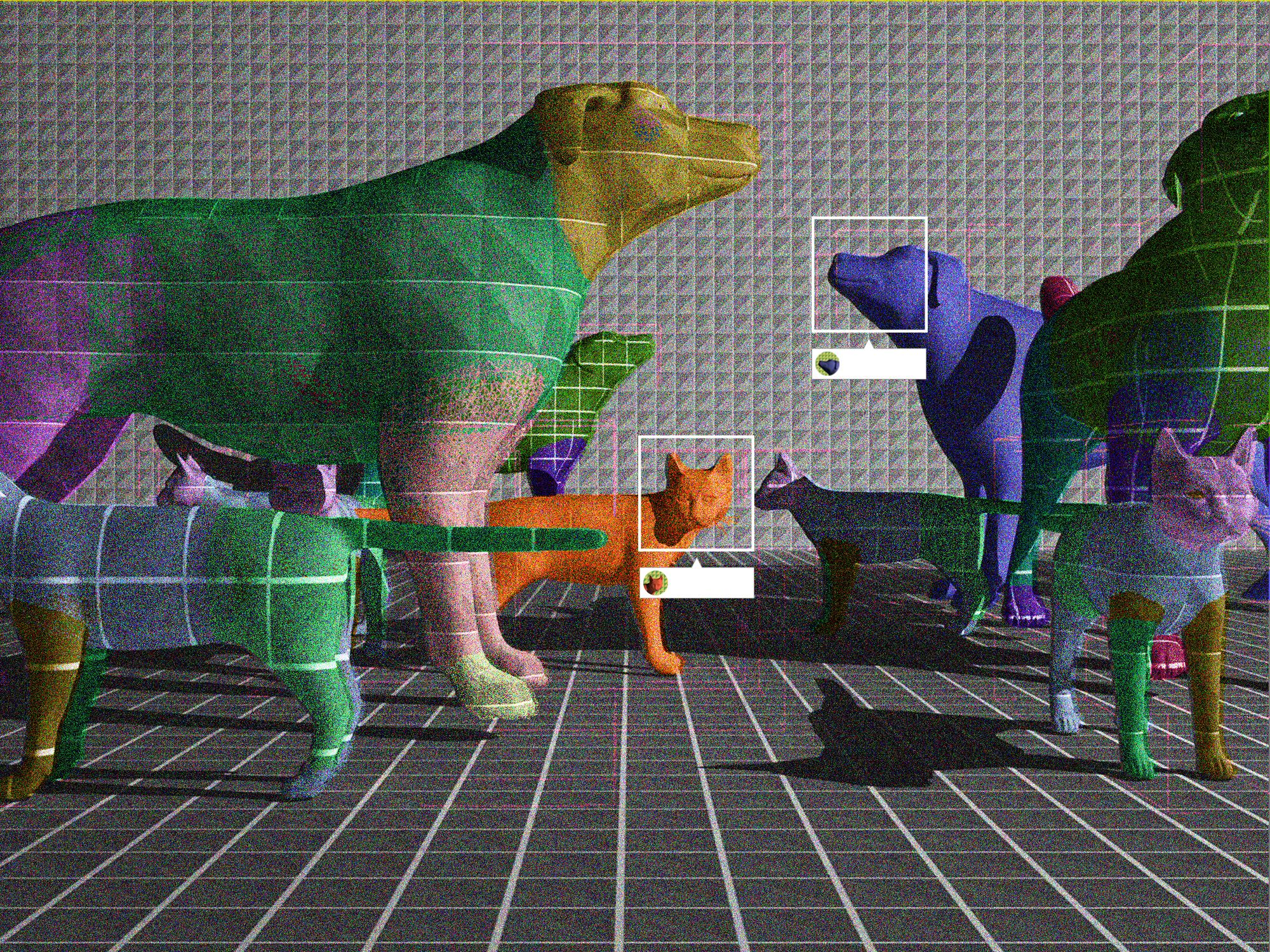
How artificial neural networks learned to rearrange boxes, distinguish orange cats from blue dogs, and why Facebook became their main teacher
"You, what is it, and you will eat sweets for me?!"
Cartoon "Vovka in the Torteling Kingdom"
Has at least one carpenter in the world thought that a good hammer would ever be able to compete with him? Did the coachman suggest that the carriages could ride themselves? Or a worker at the factory - he probably could only dream of a machine that would do everything for him. People do not like to reflect how exactly they do what they do well - they do it automatically. And everyone wants to believe: his skill is exceptional and unique, no one will be able to do the same. To the disappointment of coats, carpenters and workers, programmable machines, cars and GPS systems appeared over time.
But we are not discouraged, because the fact that low -qualified, low -paid and requiring heavy physical labor profession disappear is good. People have the opportunity to retrain, specialize and engage in highly intellectual, interesting, creative and highly paid labor, right? Yes, and in the end, there will always be a job that only people can do. Not a craft, but an art that requires human genius, heart and soul, which a piece of iron does not have and will never be.
After all, so? ..
Whatever we think, but scientists, engineers and programmers were never conducted on these pink snot about the heart, soul and flight of human genius. They knew: he can do everything that a person knows, and there is nothing in the brain except neural networks in the brain. A huge amount of very difficult connected cells, able to send signals to each other. And one fine day, when scientists and programmers connected many artificial neurons into a complex network, the human genius triumphed again, proving to himself that there is nothing special in it, only complex structures of information processing. So artificial neural networks were created.
Lazy neuron
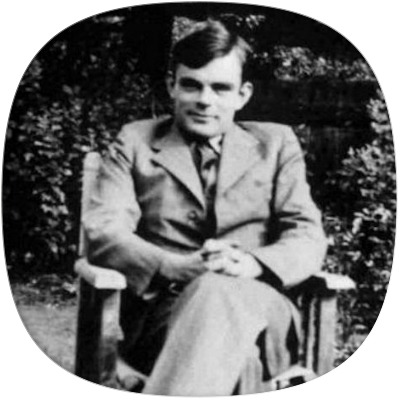 Alan Turing Photo: Commons.wikimedia.org
The ideas about simulating human thinking using a computer appeared at the same time when the first computers - during the Second World War. The first article on artificial neural networks was published in 1943. In 1948, Alan Turing proposed the architecture of a self -learning computer, which looked like a connected network of several simple nodes with the functions of individual neurons. Such architecture was first embodied in 1957 in the model of Frank Rosenblatt, called "Perceptron", and was launched in 1960 on the Mark-1 computer, which became the first neuro-compounder.
Artificial neurons, of course, are much simpler than the real ones, but, nevertheless, are similar in their behavior to people. Although this, of course, is wrong. These people in their behavior are similar to neurons, because the human brain is just a lot of neurons working together. So, neurons, like many people, work as cars to summarize the signals that come to them.
Artificial neurons, of course, are easier than real ones, but, nevertheless, are similar in their behavior to peopleIf you noticed a little dust in the corner, then most likely you will not run immediately behind a bucket and a mop and you will not begin to wash the floor, because then you would have to wash the floor every day. After they tell you: “Something a lot of dust has accumulated in our corners, you should wash the floor”, you can say: “Yeah, of course”-and you will go to finish what you were distracted from this phrase. But someday there will be a moment when, after another reminder, you will remember how you saw how much you accumulated under the bed of dust, take a mop and a bucket in your hands and embark on washing the floor.
Such is the behavior of the simplest neuron with threshold transmission function. He receives signals from neurons suitable for it, but does nothing until the number of signals received reaches a critical mass. Only then does he send a signal further. The first perceptron consisted of three layers of neurons that worked in this way. The neurons of the first layer corresponded to the neurons of the senses that accepted information about the input data, the neurons of the second layer, associative, combined data into more abstract concepts, and by which of the neurons of the third layer it launched the first, one could understand what “the decision” the neural network made on the basis of the received data. Rosenblatlat assumed that "perceptron could study, make decisions and translate texts from different languages over time." To say that he was too optimistic, would be a strong undermining.
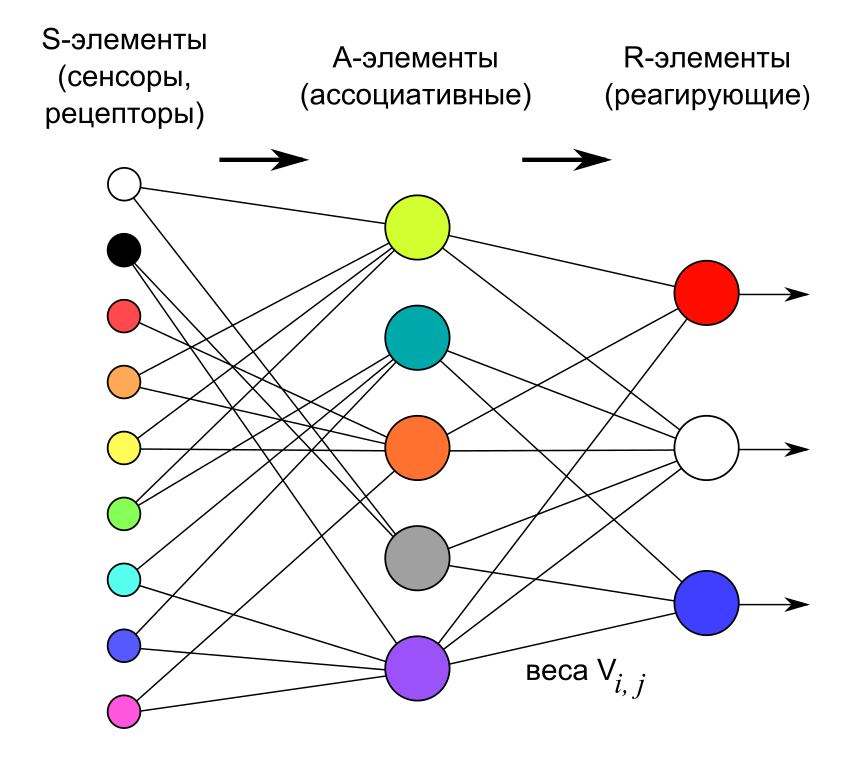 The logical scheme of perceptron with three outputs Illustration: Alex Kranov/Commons.wikimedia.org
Naive and arrogant
In those years, scientists seriously believed that they would be able to program human consciousness in twenty years. This is how the request was formulated to the Rockefeller Foundation to sponsoring the dartsmust “summer camp” in 1956: “A group of 10 people we intend to conduct a two-month study of artificial intelligence ... The study will be conducted on the assumption that each aspect of training or any other property of intelligence can be described so accurately that the machine can simulate it. We will try to understand how to teach cars to use natural language, to form abstract concepts and concepts, to solve problems that are currently accessible only to a person, and to improve ourselves. We believe that you can achieve serious success in one or more of these areas if a specially selected group of scientists will work on this during the summer. ”
Scientists seriously believed that they would be able to program human consciousness in twenty yearsSome successes were really achieved. The simplest chat boot was made, which impersoned the psychoanalyst. Cars were made that were able to navigate in space and, for example, to rearrange the boxes from place to place. A car was even made that could let the rather stupid punses. The most probably outstanding creation of that summer was a program that was evidence of mathematical theorems and proved several dozen theorems from the “principles of mathematics” Bertrand Russell. For one of the theorems, the program even picked up a simpler and more elegant evidence than what Russell came up with. True, the car thought for a long time, sorted out all possible logical chains and was not suitable for processing more complex theorems.
Stupid intellect
This problem was typical of all early systems of “artificial intelligence”. They knew how to cope with a very simple option of some narrow task, but instantly blown away as soon as the task became a little more complicated. The psychoanalyst carried nonsense and only repeated the programmed phrases, the jokes were untold, and the rearrior box could not understand that other things that were not like boxes could be rearranged.
Perceptron was able to draw a line in the picture, approximately separating blue cats from orange dogs. But if he was shown a photograph, he could not understand where the cat is, where the dog is, and where is the man. The simplest skills characteristic of people from infancy, such as recognition of images, orientation in space, the ability to understand oral speech, see emotions in the expression on the facial, were for robots a huge stumbling stone, and no one could write a program that could do this.
One could only hope that the programs would learn themselves. But in order to learn, neural networks required three things: computing power, the depth of thought and a lot of educational materials.
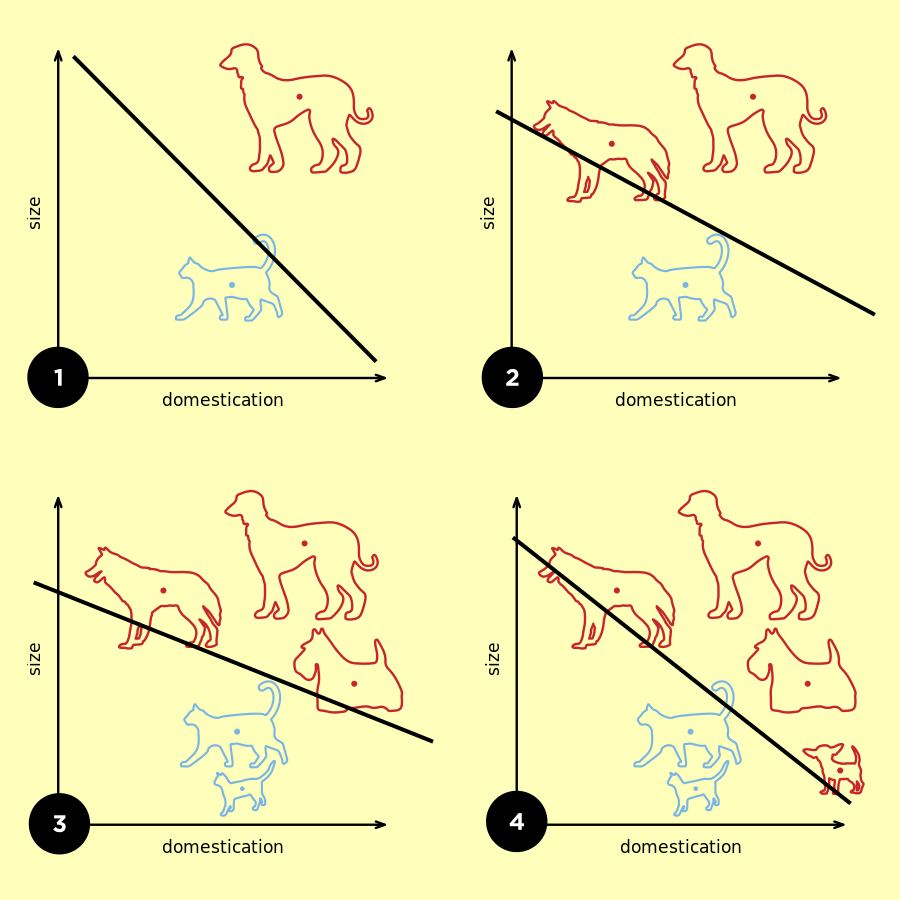 The diagram shows how, as new training examples are obtained, the perceptron is everything better draws a differential line Illustration: Elizabeth Goodspeed/Commons.wikimedia.org/
Since the sixties, much has changed. The power of the processors exponentially grew according to the Law of Moore. The fact that 10 years ago was a powerful computing center that occupied the whole room now placed in a pocket, and so five decades in a row. However, even today the most powerful supercomputers still lack capacities to simulate tens of billions of human brain neurons. Artificial neural networks, which have passed through several cycles of oblivion and popularity, have become more complicated and deeper. Neurons learned to respond differently to signals, change their reaction depending on the information received and, if necessary, send signals back to an earlier layer. The number of neural layers that form the concepts of the intermediate level of abstraction increased from one to several tens. And in the last seven years, neurons have finally have a decent textbook: the Internet and, in particular, social networks such as Facebook.
Teacher Facebook
Neural networks are learned by trial and error. Every second, a person perceives a huge amount of information from his senses, and the neural structure of his brain is constantly being rebuilt in accordance with this information. The pain teaches him that he did something wrong, pleasure, on the contrary, says: "Keep it up!" Artificial neural networks learn similarly. They are trained in a huge number of examples: the computer accidentally changes the structure of the network, and if on average the answer is better than it was, they save such a structure, and if the number of incorrect answers increases, then such structures are removed.
So, with the help of millions of photos from Facebook, neural networks learned to recognize lines, curves, facial features and even recognize faces. Now it is precisely the neural networks of Facebook that they celebrate your friends in the photographs, and to find out their faces, they are enough for you to celebrate them only a few times. They decide what kind of advertising to you, based on your interests and on which pages you visited, with whom you are friends, etc.
With the help of millions of photos from Facebook, neural networks have learned to recognize facial featuresAlso, showing pictures of the location of the chips on the board, the neural network was finally taught to play in the th. The Chinese game, in which it is necessary to capture the enemy territories on a much larger field in black and white stones than in chess, for a long time could not be automated on a computer due to a huge number of stroke options. Chess programmed many years ago, and it was an example of “highly intellectual human ability”, about which they thought that, if we teach the computer to play chess, it will gain consciousness. But chess was not so difficult to calculate, and computers have long beaten all the grandmasters, without having given a sign of consciousness. In the case of GO, the neural network was taught to win not by the gross overcoming of all the moves, but to see the entire field and, on the example of tens of millions of moves, understand which move from which position is the best. After several months of training and games against oneself and other programs, Alphago (the so -called this neural network) beat one of the world champions. And these are just flowers. Neural networks can be taught almost anything.
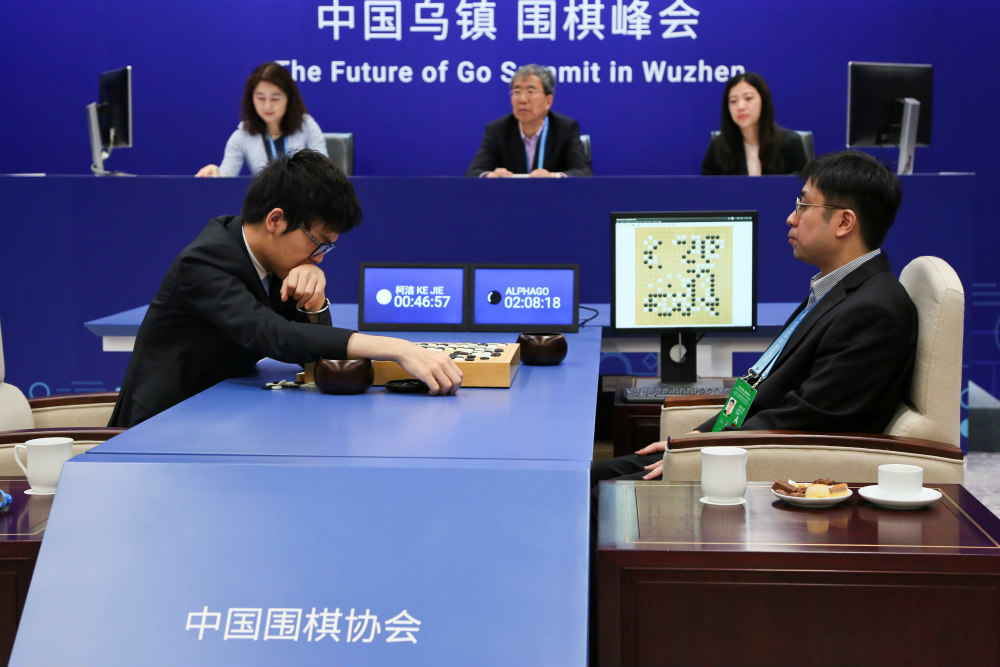 The Chinese player in Go plays with the Alphago Google program during the second match of the meeting “Future GO” in Zhejiang, China, May 25, 2017 Photo: Reuters/Pixstream
The Google translator is already quite good at translating texts, especially from English and English, because it was in this language that he had the most opportunities to train. Games in financial exchanges have long been a competition between robots: stocks have been buying and selling bots who have learned this, competing with other bots. People have nothing to do there.
The Watson neural network, which has won the Genes of Human Champions in the game "Geopardi!", Has since been engaged in medical diagnostics and often copes with this work better than professional doctors. After all, Watson, unlike people, can really read all professional publications and much more accurately evaluate the likelihood that a person is sick with some rare disease that his doctor has not even heard of.
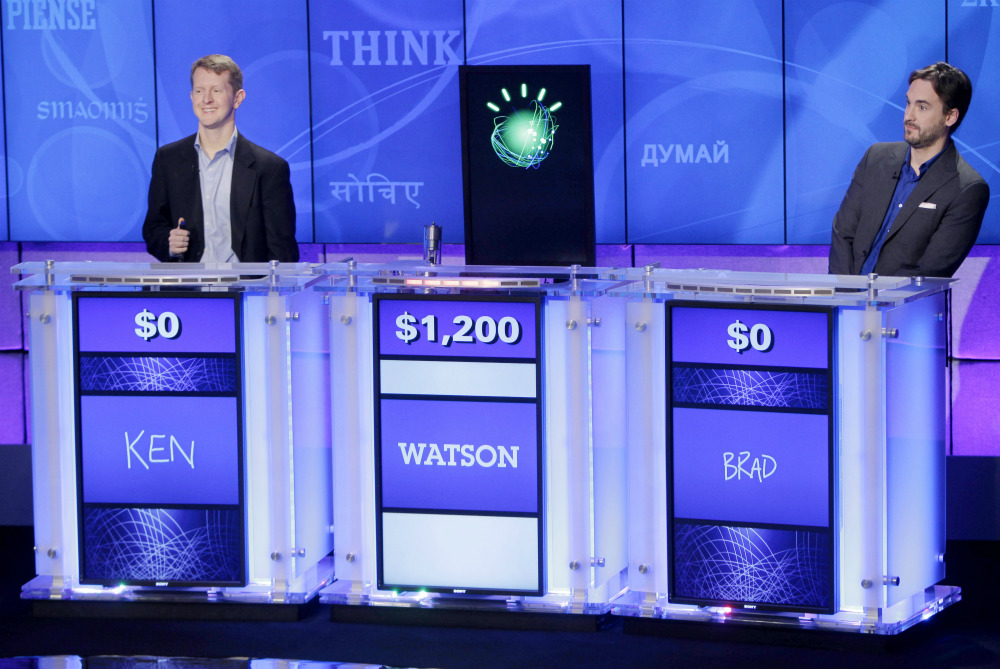 Champions "Geopardi!" Ken Jennigs (left) and Brad Ratter (on the right) watch how IBM Watson computer earlier answers the question in the Jeopardi show! In Yorrtaun-Haits, New York, January 13, 2011. This computer the size of 10 refrigerators, able to absorb whole encyclopedias, could not defeat the best players of the television show, because he did not know how to press the answer button. But as soon as this problem was solved, Watson was able to adequately oppose two champions Photo: Seth Wenig/Ap/East News
And even creative work is already amenable to neural networks. They learned to write news speakers, musical works and paintings.
Having heard music of a certain type, the neural network can fit its structure in such a way as to issue, for example, copies of Bach's works. But we do not need this, we already have a bang. Therefore, we give the maximum reward for the sound structure, which is similar to Bach, Mozart and Beethoven by 70 or 80%. So neural networks learn to play something rather harmonious, but at the same time orgenally sounding. Here is this, for example: http://www.hexahedria.com/files/nnet_music_3.mp3
With the paintings, the story is slightly different: the neural network is nowhere to take the original idea for the picture, but they are very good to remember and recognize the visual images and styles that were taught it. If you show the neural network a picture or a photograph, the neural network lets this picture through itself, adding there the images that I “recognized”. So, for example, schizophrenic photos from Google Deep Dream and paintings stylized as great artists are obtained.
And yet, will all human jobs take neural networks? And will this lead to an economic disaster or universal bliss? No one knows. And the smartest people of the planet, such as Stephen Hawking and Ilona Mask, are not even concerned about, but the question of whether people will make artificial intelligence, which will be better than people to construct artificial intelligence, because then the moment of singularity - when computers will become much smarter than people in everything - will be inevitable. But this is a completely different story.
The material uses links to publications of social networks Instagram and Facebook, as well as their names are mentioned. These web resources belong to Meta Platforms Inc. - It is recognized in Russia as an extremist organization and is prohibited.
The material uses links to publications of social networks Instagram and Facebook, as well as their names are mentioned. These web resources belong to Meta Platforms Inc. - It is recognized in Russia as an extremist organization and is prohibited.
artificial intelligence science neural networks technology