
Translated material
Speculation on the topic of genocide: Polish version
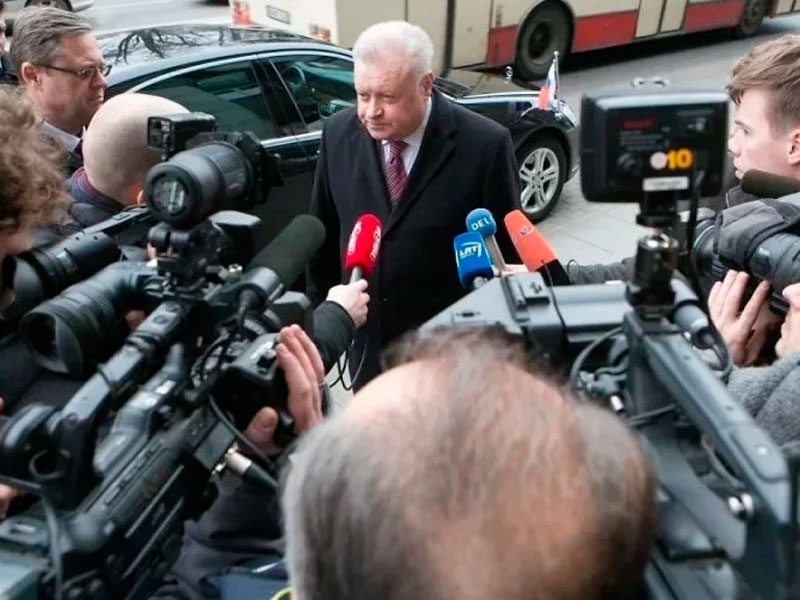
After the statement of the Russian ambassador to Lithuania Alexander Udaltsov in the summer of 2017 that Lithuania should pay Russia to compensate $ 72 billion for investments of the Soviet era in its agrarian economy, the topic of compensation for the Soviet “occupation” of the Baltic states gradually subsided. It was worth talking to our Baltic neighbors in the language that he understood as a further discussion of this issue, at least in the media, it stopped.
But the Baltic politicians did not have time to go into the background of the day with their occupation agenda, as Poland took their place: at the recently conference in Warsaw, the Polish Operation of the NKVD 1937-1938, Polish President Andrzej Duda announced the need to recognize the episode of the mass extermination of Poles in the 1930s in the 1930s in the 1930s in the 1930s in the 1930s in the 30s of the XX century.
What are you talking about? And how many in Russia, and in Poland itself, they know that in the late 30s the NKVD of the USSR, on behalf of the highest party bodies, carried out repressions on the "national lines", including in relation to the Poles?
The main task of the “Polish operation” of the NKVD, begun on August 20, 1937, was the struggle against the Polish spy underground. According to its results, more than one hundred thousand people found and sentenced to execution, found guilty of espionage in favor of Poland, most of whom are ethnic Poles. The figure is grandiose. No country in the world never had such a spy underground.
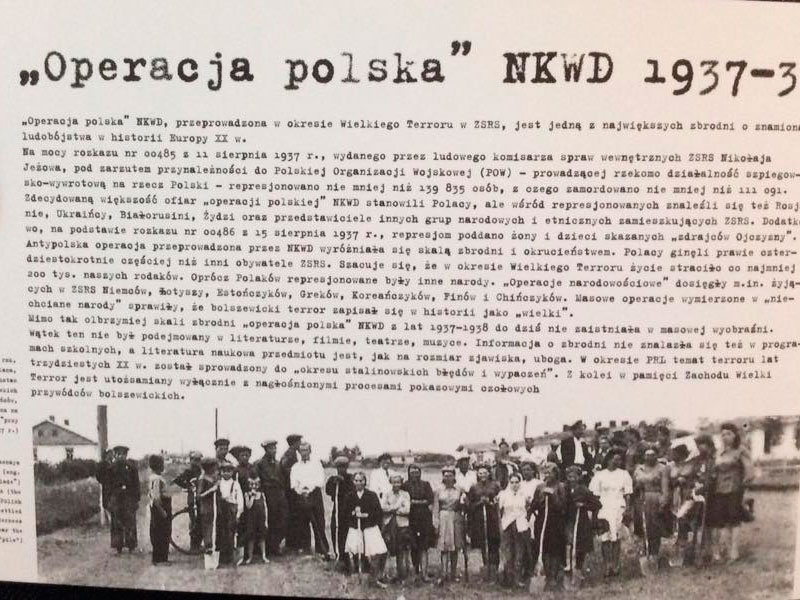 Page from the magazine about the Genocide Poles
Nevertheless, whether the formulation of “extermination” used by Duda is applicable to the event that is applicable to the event. The extermination or, in fact, the murder of people on a national basis is a genocide that is a crime both from the point of view of national law and in accordance with international law. Does the Polish President believe that Russia can just take and take responsibility for committing a genocide?!
No one denies the fact of mass repressions that occurred in the 30s of the XX century, but to say that it was an act of genocide-it is too loud and irresponsible from the Polish officials. There is no doubt that a huge number of ethnic Poles were injured in the repressions along the “national lines”. But is it possible to call it genocide today? In my opinion, no.
For the post -Soviet period of existence, Russia recognized and condemned a sufficient number of crimes of the Stalin regime. But such decisions were made on the basis of carefully conducted investigations, the conclusions of which are based on permissible evidence, and not on the current political conjuncture.
For example, in the case of Katyn tragedy, the main military prosecutor's office of Russia conducted an investigation in accordance with the established procedures and came to certain conclusions. With statements condemning Katyn events as war crimes, the highest officials of Russia acted. Is this a confirmation of objectivity in the analysis of events and unwillingness to engage in the apologetic of the Soviet regime, but on the contrary, a professional approach to resolving such complex events in history?
The current idea of Russia recognizing the fact of the extermination of the Poles is in its essence. Firstly, if you follow the logic of Polish colleagues, then only the Poles suffered from repressions, but what about the rest of the repressed nations?!
Secondly, Mr. Duda perfectly understands that neither the State Duma nor the Federation Council can take on the powers of the investigative body and qualify certain actions of the Soviet regime and its individual functionaries as a crime. Indeed, the legal fact of recognition of genocide as an international crime is the decision of a specialized tribunal that has the authority to draw the relevant conclusions and conclusions and created on the relevant topics. For example, such a tribunal could also be created to investigate the participation of Polish collaborators and anti -Semites who took part in the extermination of Jews at the beginning of the First World War - an event known as a pogrom in a barefoot, or the causeless destruction of the Poles of the civilian population - ethnic Germans in the cattle, known as “bloody Sunday”.
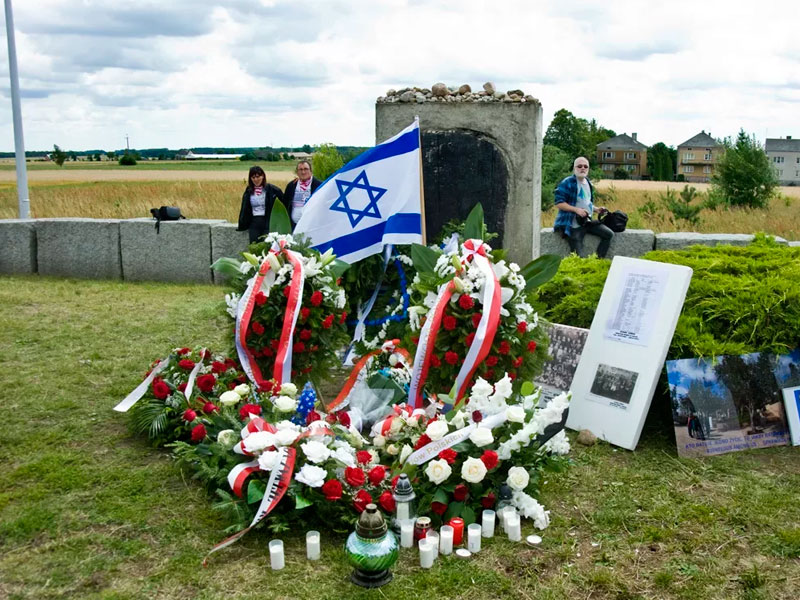 Memorial in memory of the victims in the Polish town
The Polish president declares equal rights in relations and the need to build a foundation for a common future, but at the same time considers it acceptable to put Moscow in a deliberately unequal position, belittling the authority and independence of Russian state authorities, whose competence is the authority to investigate crimes of previous regimes. It is law enforcement agencies, and not institutions and other scientific institutions, can give a legal assessment to certain events, all the more to recognize the fact of the genocide in relation to the Poles in the USSR.
The inferiority of the constant claims of neighboring states in relations with Russia concerns not only Poland, but also the same Baltic countries. Constant conversations about the occupation, the creation of institutes and investigations and other calculations without official participation of Moscow look mildly to say not serious. But this is just in the opinion of a professional.
From a foreign policy point of view, such a permanently negative agenda in relations with neighbors creates a situation for Russia to the impossibility of discussing integration projects, primarily related to the supply of energy resources to Western European countries, and economic cooperation as such.
The main shifters of such an escalation as 450 years ago are Poland and Lithuania. It is the Polish-Lithuanian plans to limit Russia from the European market for energy resources and, as a result, constant digging in the past to search for negative events and the replication of such events, that help for the President of Duda to find more and more new complaints about Moscow. And even if suddenly Moscow recognizes the fact of genocide that from practical or from a theoretical point of view it is not possible, there are still new negative topics for discussion and new claims.
What to do Russia in this case - ignore, respond mirroring, start investigations? I think that any of the above will also be interpreted by our “partners” from a negative point of view. Nevertheless, the answer should follow, since "majestic calm" in relation to such a statement is already unacceptable. If earlier the Russian authorities ignored such events, comparing the state scale of the same Lithuania with Russia, today the situation is gaining new turnover. The gap in the relations of Russia and the Western world is not only economic, but also cultural. The spread of frightening myths and heprbalization of tragic events is a good tool in aggravation of such a gap.
You need to answer mirror. If Russia alone is responsible for the "sins" of the USSR, then it has the right and investigation of those brutal crimes that were committed by other peoples, including in the territories of military operations of the Second World War.
Ilya Gatikoev, member of the Russian Law Chamber, Moscow,
Guilds of Russian lawyers and the Royal Institute of Arbitrators of Great Britain.
Plenipotentiary representative of the International Association of Russian -Sound Lawyers in the Republics of Lithuania, Latvia, Estonia, Poland (Mara). Member of the Lithuanian Arbitration Association.