
Translated material
Wundercancler
In the elections in Austria, the party of conservative Sebastian Kurtz won. He is 31 years old - and he is a nationalist
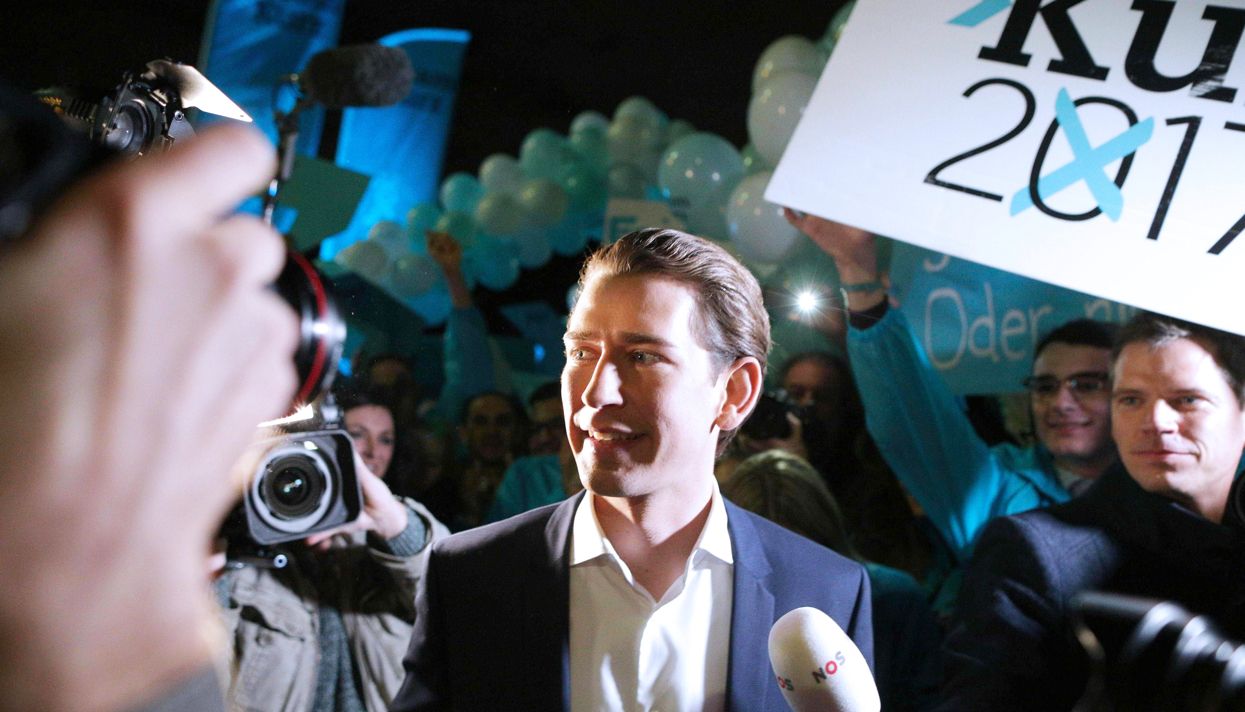
In Austria, on October 15, parliamentary elections were held, the first place on which conservatives from the Austrian People's Party took. This means that its leader, 31-year-old Sebastian Kurtz, can become the country's chancellor. The current head of the Austrian government Christian Kern is 20 years older than him.
The Austrian People’s Party, which is headed by Kurtz, scored 31.7%in the elections. The conservatives managed to take the first place in the elections, despite the fact that in the summer they went thirds-after the ruling socio-democratic party and the ultra-right party of freedom. When it became known that it was Kurtz that would be a candidate for chancellors from the People’s Party, this only added popularity to her, and her ratings crawled up.
In Austria, Sebastian Kurtz is called “miracle-party”- “Wunderwuzzi”. He announced a large -scale renewal of conservative forces and allowed non -partisan to enter the election list of the new People’s Party (as political force is called after the reform), which intercepted part of the summons of the ultra -right freedom party. During the Kurtz campaign, the last four years headed the Ministry of Foreign Affairs, he constantly reminded him to close the “Balkan path” for the Middle Eastern refugees during the migration crisis of 2016 thanks to him. In addition, Kurtz promised to eliminate Muslim kindergartens and supported the ban on wearing Burki .
The economic program of conservatives also repeated the populist requirements of the ultra -right: to reduce taxes and create “new justice” in Austria, that is, to make the state support non -needy migrants, but the poor indigenous population.
Unlike the ultra -right, Kurtz clearly outlined the pro -European path of conservatives and their commitment to general humanistic values . For example, the proposal of conservatives by the composition of the government, in its inclusiveness, resembles the Cabinet of Ministers of Canada, working under the leadership of Justin Trudeau. Among others, it included a former member of the Green Party from the Turkish immigrants of Efghani Donmes, who moves in a wheelchair, the former jumping jump with the pole Kira Grunberg, the psychoanalyst and the former head of the Vienna Jewish community Martin Engelberg. Half of candidates on the list are women.
Opponents of Kurtz explain the contradictions in his views by populism; Supporters assure that the politician intentionally intercepts the nationalist agenda in order to lure those who, in the absence of law-centrists, would vote for the ultra-right.
To form the government, conservatives will have to negotiate with other political forces. The People’s Party had previously refused to form a coalition with the Social Democrats (this is what provoked early parliamentary elections)-therefore, conservatives will probably agree on cooperation with the ultra-right. However, Kurz himself refuses to comment on future negotiations on the creation of the coalition, and the leader of the Social Democrats Chancellor Christian Kern said that he was ready to discuss all options.
The past elections are not only the victory of the ultra -right forces, but also the no less noticeable failure of the “green” . Austrian green - one of the strongest parties of the left -grooming spectrum in Europe; In last year’s elections, the president of the country became the representative of the Green Alexander Van Der Bellen. Nevertheless, in the parliamentary elections the Green could not overcome the passing barrier and found themselves without representation in the National Council, for the first time during their existence. The official representative of the Green Helga Crielsmer called such a result of the disaster campaign.
Elections in Austria are the second elections in Europe for autumn, on which nationalist parties receive a significant share of votes. In September, in the elections to the German Bundestag, the third place was received by the Alternative for Germany. At the end of October, parliamentary elections will be held in the Czech Republic, where populists from the Party “Promotion of Unreased Citizens” are leading in polls.
Olga Kuzmenkova