
Translated material
New Austria and Chancellor Kurtz
How the right defeated socialists in the election
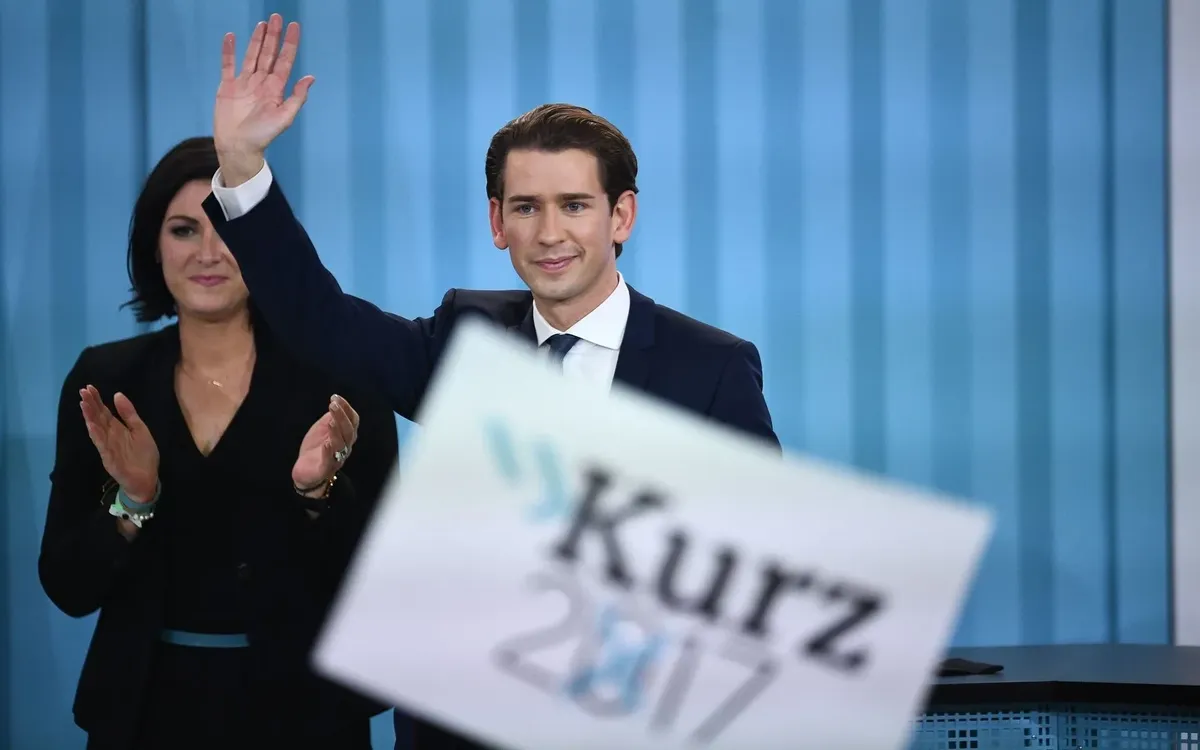
In Austria, elections were held to the lower house of parliament - Nationalrat. The Austrian People’s Party (övp), which gained 31.6 % of the vote, was in the first place, followed by the Austria socialist party (Spö) - 26.9 %. In third place was the Law Popopulistic Austrian Party of Freedom (FPö) - 26 % of voters voted for it.
In fact, the elections were to be held in 2018. However, the partners in the "Great Coalition" of Spö and övp clearly cooled a friend to a friend. The main reason for this was the constantly falling rating of both parties, which was clearly manifested during the 2016 presidential election. Then, for the first time in the post -war years, party candidates did not enter the second round of voting.
The fact that the largest Austrian parties reacted to the migration crisis played out of the not last role and the fact that the largest Austrian parties played. The indecision and slowness of the authorities caused dissatisfaction with the conservative part of the population, and attempts to correct the situation with radical measures have become the subject of acute criticism by liberals, left -wing and creative intelligentsia.
The leading politicians of both parties from cooperation in parliament moved to mutual accusations. The government’s activities were actually paralyzed.
The final point in the crisis was set by the leader of the “Narodniks” and the Minister of Foreign Affairs Sebastian Kurtz, refusing after the official election the chairman of the övp to take the post of deputy prime minister in the office of ministers. Early parliamentary elections were appointed on October 15.
A young politician (Kurtz is only 31 years old), aiming at the post of chancellor, energetically got down to business. He not only achieved almost sole authority in the party, but generally refused to mention the party name in the election campaign. Instead of öVP, voters were invited to vote for the “movement - list of Sebastian Kurtz,” promising to seriously update the country's political life. Local observers immediately saw for this the desire to repeat the success of Emmanuel Macron and his movement “Forward, Republic!” due to the expansion of the electoral base.
Another innovation of Kurtz was that during the election campaign he began to actively play on the field of right -wing populists from the “Austrian Freedom Party”. This mainly concerned the migration policy and attitude to Islam. True, the fact that in the programmatic positions and slogans of the “Svoblov” sounded extremely radical, Kurtz was able to transform into postulates of classical conservatism: instead of a total refusal to receive refugees, strictly dosed quota and strict conditions for integration, instead of the general closing of mosques, a ban on political Islamic organizations.
The tactics of Kurtz worked. The "Narodniks" confidently leaded in all surveys of public opinion.
The övp and accusations against the main opponents of the socialists in an unscrupulous election campaign turned into the hands. SPEs were hired responsible for agitation for the election of the famous political strategist Taly Zilrstein.
At one time, Zilrstein helped Ehud Olmert get elected to the President of Israel, advised Yulia Tymoshenko, participated in elected campaigns in Bolivia and Romania.
The main method of an Israeli specialist was in trolling political opponents of the customer.
He applied the same in Austria. Sites appeared on social networks, which, posing as Kurtz's supporters, published on his behalf the defamation of the övp leader and statements. Other sites, speaking under the guise of competitors, extended negative criticism, in particular, resting on the contender’s youth, they called him “Kinder-Kanzler” (“Chancellor-Rebel”) and accused that he intended to “orbanize” Austria (i.e., pursuing a policy in the style of Hungarian Prime Minister Viktor Orban).
However, two months before the Austrian elections, Zilrstein was arrested by the Israeli police on charges of laundering money, bribing officials and obstructing justice bodies. A scandal erupted in Vienna. The Chancellor and SPO Chairman Christian Kern was forced to make excuses, referring to the fact that he did not know all the details of the election campaign of his own party.
But social parties, as the Austrian journalists found out, allocated Zilrstein only for Internet projects in the amount of 500 thousand euros. How much the entire contract costs is secret.
It is clear that the scandal had a negative impact on the rating of socialists. In this regard, the “freedoms” perked up - they had hope for second place. The head of the FPö Hinz-Christian Strake, who also dreams of leading the government, after the Fiasco in the struggle of the candidate of the right-wing Norbert Hofer, for the president’s post, he largely softened the sharp anti-European rhetoric and positioned himself against the backdrop of the broken opponents as a policy wise with experience, worthy of managing the state.
The free batch was almost enough to become the second most important in parliament. Nevertheless, Strach may well enter the government as a vice-chancellor.
So far, the results of the elections are preliminary. Voices, subjects by mail - have yet to be calculated - about 900 thousand or approximately 12.5% of the total number of voters. The final result is expected on Thursday. And although he is unlikely to make cardinal changes to the alignment of forces, the Austrian authorities, taking into account last year’s embarrassment with re -conducting the presidential election, decided to insure themselves and conduct the calculation of the ballots in a more thorough way.
In any case, the Victory övp almost one hundred percent guarantees Sebastian Kurtza the position of chancellor. According to the Austrian Constitution, the president instructs the head of the largest parliamentary party to form the Cabinet of Ministers. But for this, the “Narodniks” will need a coalition partner, and in this their choice is not rich.
Even during the election campaign, Kurtz repeatedly stated that there would be no return to the former parliamentary cooperation with the Socialist Party. At the same time, he evasively answered questions about the coalition with FPö, without denying or confirming such an opportunity.