
Translated material
Save zincinnat ts.
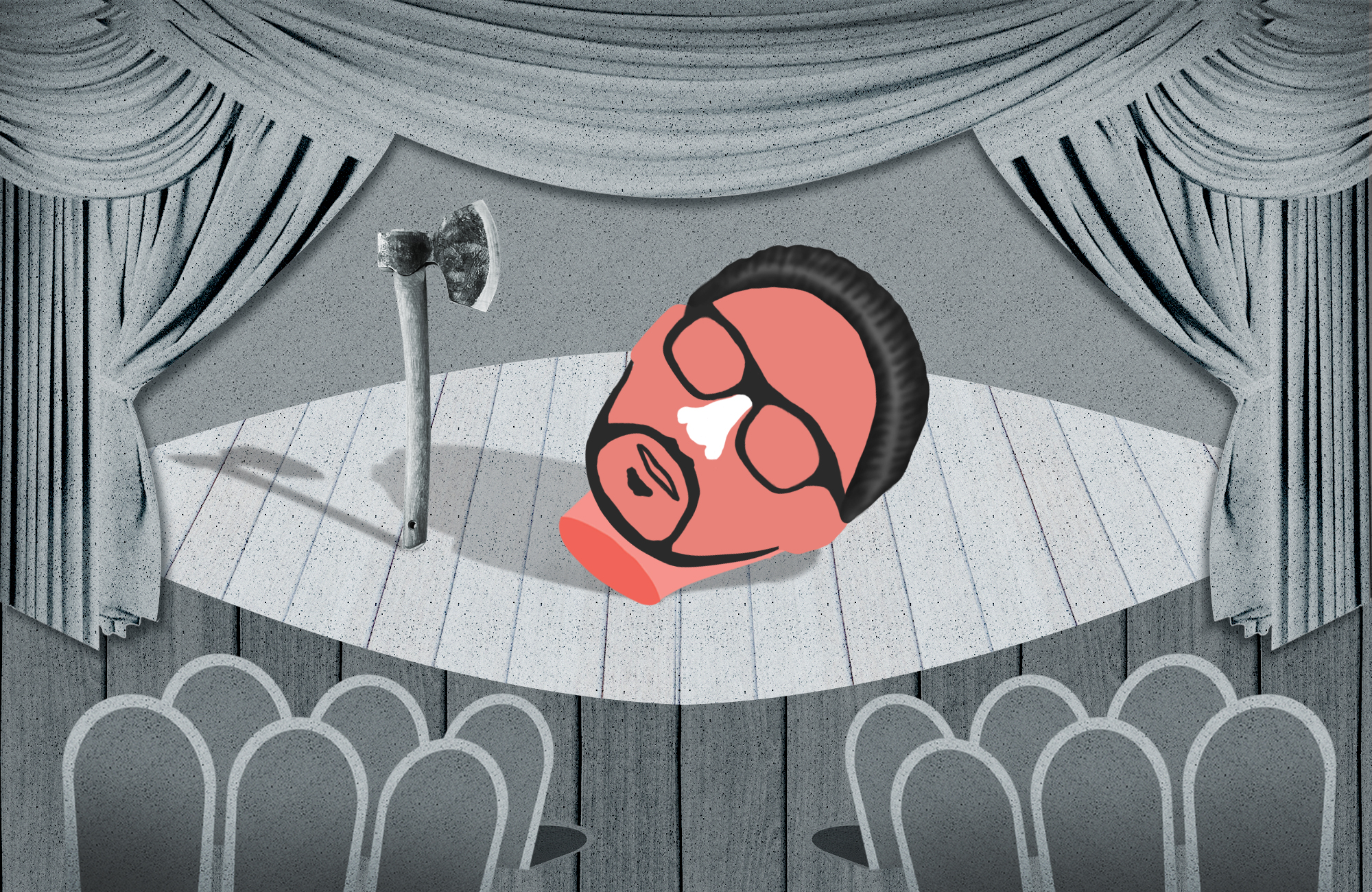
The anonymous plot authors did not seem to understand what they were plunged into, turning to the eternal theme of “Artist and Power”. Or, conversely, wanted real glory
Everyone is trying to convince us that in our exclusively legal state before the law, everyone is equal - the governor, and the colonel, the Ministry of Culture, the Ministry of Economic Development, and even Roskomnadzor. And the world -famous director, producer, director of the theater and accountant are especially equal. But for some reason, the triumph of justice is obtained, but some kind of absurd plot, into which the business of the Seventh Studio has moved public life. As if we are all with one foot in some phantom reality, viscous and creepy.
We are already with one foot in some phantom reality, viscous and creepy Most likely, the anonymous authors of the plot did not fully understand what they plunged into, turning to the eternal theme of “Artist and Power”. Or, on the contrary, they wanted something like that-real, strong, enduring glory, so that it is not enough for the first line in the top of the news, but on the paragraph in the textbook of history. The case is small - the authors have to leave the shadows, present a copy.
However, with the latter it will be more difficult. Somewhere it was already ...
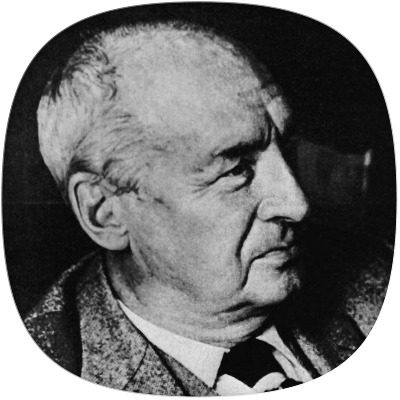 Vladimir Nabokov photo: RIA Novosti
“... He was not angry with the scammers, but they were multiplied and, husband, became scary ...”
The Nabokovsky Tsincinnat Ts. In the “Invitation to Execution”, they arrested, condemned and sentenced, as you know, for “epistemological vileness”. What is it - one of the main mysteries of the novel. Thought the hero thought wrong and not right? Is it impenetrable and incomprehensible to others? In any case, zincynnat is a stranger, another, not made of that substance.
“You must be more flexible, Sudaric. And that’s all: pride, anger, grinding, ”-a cinzinnat chorer curses in ateally. And even the lawyer does not like the tone of the client. Well, is it not enough to turn out to be a circle to blame for the society of transparent (read - understandable and loyal) people.
But with this society itself, everything is especially incomprehensible. The writer and critic of Maya Kaganskaya, one of the most brilliant and, perhaps congenial author, readers of Nabokov in the Essay in the Void essay, drew attention to the fact that “invitation to execution” has one important dissimilarity with classic anti -utopias, in a number of which “we” of Zamyatin, the “beautiful new world” of Haxli, “1984” Orwell - all these are images of an uncertain future, “1984”. In which the technology won and the person lost. In this sense, the main utopia of the twentieth century was the idea of technological and civilizational progress.
But then what utopia addressed his “anti-” Nabokov?
In his future, there are no amazing cars, nor telekran with a dormitory eye of a big brother, nor intercontinental missiles. There are newspapers, illumination in a million light bulbs, dedicated to the day of the execution, and even “half overgrown with the outlines of the airfield and the structure, which contained venerable, decrepit, with red, in colorful patches, wings of a plane that was sometimes launched on holidays - mainly for the entertainment of cripples ... Yes, the substance has grown oldly, little to survive from legendary times, - - - Two or three cars, two or three fountains-and no one was sorry for the past, and the very concept of the "past" became different. "
Obviously, Nabokov was not a modern incarnation of a communist dream with her loud slogan “Time, forward”. The world in which every cinzinnat is sentenced is a small, isolated, musty, technologically wretched, with a stopped time and a “tired substance” is a world of conservative utopia. But this ideal world is also ruthless to man.
The world in which every cinzinnat is sentenced is isolated, musty, with a stopped time and a “tired substance”"Invitation to Execution" was written in Berlin, in 1934. Nabokov lives in the country of the victorious Nazism, which is still soft and it seems like not very frightening, the laws on the purity of blood and kind are not yet proclaimed, the victims do not yet know that they are doomed, everyone is returning to the origins and roots, romantic legends about the past. And who will generally discern in this sweet patriarchate a sort of fascism-loit? So far, the regime is touching about a simple person who is harmful to civilization and the life of large cities - family values and picnics in nature under the motto “Power - through joy” are in fashion. The idea of progress is not outlawed, but it is not encouraged. The main Nazi newspaper "Fyolkisher Beobakhter" draws paintings by the earthly paradise for good Germans in gardens behind the city walls. But Nabokov had already looked behind the fence of a cozy provincial paradise and was horrified. And in his novel it is not just that the streets of the city are overgrown with grass, and the plane rusts - an invitation to execution has already been discharged here.
Nabokov has not said anywhere that Cincinnat C. is a fighter for progress and a bright future, the enemy of the entire patriarchal and traditional and generally dissident. He is just alive. In addition, the writer and artist. Which, however, also does not indicate the criminality of his activities. Rather, the dolls that the young zincinnate made could be criticized: “... there was a small hairy Pushkin in Bekesha, and Gogol, who looked like a rat in a flowering vest, and the old man thick, thick -bearing, in Zipuna ...” This is our crossbreeds, ours, and about them and “little hairy” and “thick -skinned” and “thick -skinned” and “thick” and “similar to“ similar rat ". True, this in the XXI century will resurrect the obsolete word “blasphemy”, and Nabokov is unlikely to especially think about it, and therefore society puts a completely different one.
The “epistemological vileness” more hints at the mocking name of the operetta, which goes in the novel “With great success of the urgency”: “Reduce, Socraticism!” “The story of Socrates is the first sketch of“ invitation to execution ”in European and world culture: the first accusation of an ideological crime (“ ridicule of gods ”,“ corruption of youth ”); The first verdict sentenced by a single intellectual ... ”The Kaganskaya commentary to the Nabokov novel at the same time explains why any accusation of a single intellectual will be an accusation of an ideological crime, an expression of a subconscious desire to shorten too smartly on his head. So that he does not stick out. And others do not stick out and know: if anything, they will also be subsidized.
True, in our version-Light there can not be even such a grave. It is advisable to not know who Socrates is at all to the spectators of the evening show on the federal channel. And, mercy, what an ideological crime? Just "fraud on a particularly large scale in an organized group."
Yuri Itin and Kirill Serebrennikov - under house arrest. Recently, Nina Maslyaeva was released home, we will not discuss now on what conditions. Behind bars - one persistent Alexei Malobrodsky.
But we recall what kind of affectionate prison in the “Invitation to Execution” - with a cup of chocolate and morning newspapers. And in general, how is it written in prison rules for those invited to execution? "The mezer's meekness is the decoration of the dungeon."
Only mercilessly ticks the clock, and still there is no answer to the main zincynnates the question-when?
The investigation requested a renewal of home arrest until January 19 for Cyril Serebrennikov.
But the anti -utopia of Nabokov would not be anti -utopia if his zincinnat C. was not so tragically lonely. The loneliness of the hero here is the law of the genre.
Maybe that's why we still have not been finally inside the anti -utopia, we are still floundering, we still resist. The main thing that leaves hope in the story with Kirill Serebrennikov and the Seventh Studio is that the hero is not alone. The theater is a collective business. And Serebrennikov, his colleagues in the Seventh Studio, the actors of the Gogol Center are such a collective zincinnat.
And in defense of Kirill Serebrennikov and his colleagues, so many wonderful people spoke in Russia and all over the world that it is not that the naive hope appears that at one moment all this absurdity and the mosquito will dissipate, but at least the laws of the genre are not observed. And if anti -utopia is not an anti -utopia, maybe a chance to save zincinnat will appear.
The case of the Seventh Studio Prisoners Kirill Serebrennikov Justice Court Theater