
Translated material
“This is their professionalism. Such is their ethics. Such is their academicism "
A letter from scientists regarding the statement of members of the Expert Council on History
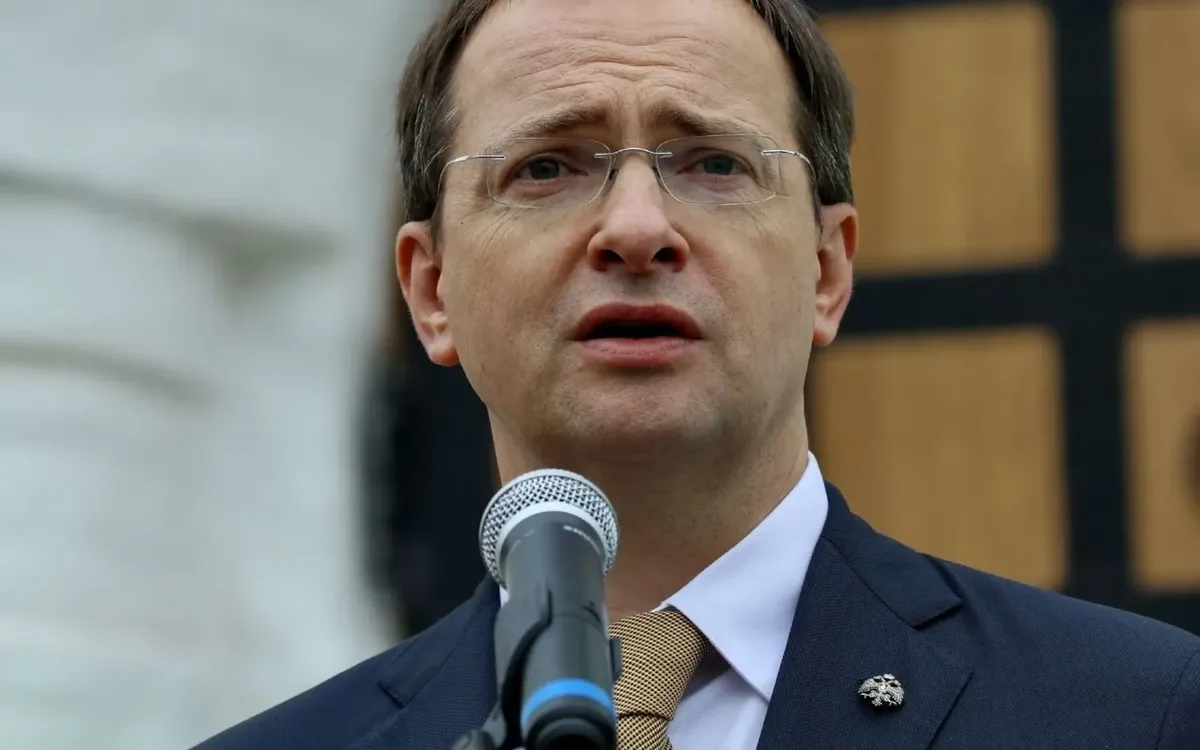
The editors received a letter from two doctors of science. We publish it entirely and without comment. Those who follow the scandal around the dissertation of Vladimir Medinsky themselves will be able to evaluate the arguments and level of discussion in the scientific community.
A group of members of the EC VAK, who prepared and accepted a peculiar conclusion of October 2, 2017 with a recommendation about the deprivation of the scientific degree of the Doctor of Sciences V.P. Medinsky, faced with condemnation of the media and a number of scientists, tried to publicly make excuses and made a collective statement.
The text of the application is mainly a repetition of the long -refuted publicly rhetorical statements previously voiced by the opponents of the dissertation, and does not submit significantly new arguments.
1). The authors of the text are trying to deny the obvious fact of the existence of the conclusions of the two dissertations ( *O *RFography and the style of the authors of the letter are preserved. No matter how much write the “dissent” and “dissertation” with a capital letter, this does not add to them. - Ed. ), The lack of grounds for the deprivation of V.R. Medinsky degree of Doctor of Sciences.
They refer to the fact that the dissolution of the Eastfacing of Moscow State University named after M.V. Lomonosov “decided to refuse to consider the case of deprivation of V.P. Medine degree of Doctor of Historical Sciences. ” But they hide: the dissent, therefore, made this decision that he did not see the minimum grounds for raising a similar issue in the submitted documents.
They write that the BelGU dissent ( Belgorod State University. —D. *) “although he provided his conclusion in the Higher Attestation Commission, he also did not essentially consider the dissertation of V.R. Medinsky, but only the text of the application for the deprivation of the scientific degree of the Doctor of Sciences. " But at the same time, they hide the *genuine formulations of the “Regulation on the award of academic degrees”, which instruct the dissections to consider precisely the statement, the accusations, arguments and arguments exclusively set in it, and not the whole range of issues and regulations raised in the dissertation.
ES members write that since both dissertations examined and rejected the actually presented V.R. Medinsky accusations refused to seek out ways of depriving its degree or arranging a repeated defense of the dissertation, then "the expert council had to consider the dissertation on the merits." But the very concept of “consideration on the merits” is absent in the provisions on the deprivation of degrees, as well as the fact that the concept of “creatures of work” in the imaginary scientificity of words is not defined and not regulated, that is, it leaves space for arbitrary and biased interpretations.
ES members call themselves "the highest expert body ... having the right to both agree and disagree with the decision or opinion of any dissertation council." But according to paragraph 2 of the Regulation on ES, its activity is limited by regulatory requirements, namely: give an opinion on the application received, and not consider re -all the set of the provisions of the dissertation (Article 70 of the Regulation on the award of scientific degrees), which the members of the ES violated .
2). ES members are forced to admit that there were no plagiarism in the work of V.R. Medines. However, it is stated that "the statement of the presence of plagiarism elements was never the main complaint against the author either by either the applicants or from the members of the Higher School of Economic Council."
And they hide that it was the topic of plagiarism that was originally represented by the most irresistible argument of the prosecution. Apparently, the members of the ES had other “main claims to the author” earlier and came to the meeting with an already initially prepared position, which did not suggest taking into account the arguments of the opposite side.
3). They argue that all members of the ES were familiarized with the dissertation a year ago and “had the opportunity to make their own idea of the quality of this text and evaluate the justice of the conclusion prepared by specialists on the topic of the dissertation.” But they say that the position of ES members were formed not during the discussion at the ES meeting, but pre -set and, at the same time, hide that at least three of the six members of the Associated group of the speakers were not specialists on the topic of the dissertation and at least two of this group, including its leader, did not have the right to take part in this issue (Articles 12 and 17 of the Regulation on the Expert Council. VAK), since they have already participated in its consideration in the composition of the previously considering dissects.
They argue that at a meeting of the Expert Council on October 2, “certain questions were asked ... to the meeting of the representatives of V.R. Medinsky ". But they hide that not one of the questions asked about the essence of the case under consideration and was not aimed at clarifying the content position of the defense, that not a single claim to this side was made, not a single accusation in her presence was made, not a single disagreement with her position was formulated. They also hide the fact that they took each of the representatives of the side of protection for three minutes, and did not conduct any discussion with them.
They argue that “they are ready to ask questions in the essence of work by its author, V.R. Medinsky, ”but they could not ask them to representatives. This is at least crash: members of the “Higher Expert Body” knew that the author’s representatives were authorized to answer the questions asked by his side.
It has to be assumed that the issues in essence were not asked by ES members either because the answers were not interested in the answers, since the position of members of the ES was already predetermined, or because they were afraid of a qualified refutation of the charges.
4). They write that “negatively appreciated the quality of the V.R. Medinsky works and noted the absence of a scientific degree of basic professional skills of a historian, and above all, a scientific source analysis of the sources attracted by him. ” But they are silent that the work was defended not in the specialty “Historiography, Source and Methods of Historical Research”, but in the specialty “Russian History”. And they hide: there is no concept of “positive or negative quality of work” among the criteria for awarding scientific degrees, as there are no criteria for evaluating “basic professional skills” . The degrees are not awarded for skills and arbitrary gradations of quality, but for solving problems and nomination of new provisions in science.
5). The members of the ES who wrote the statement assure that their actions cannot be considered “persecution”, since their assessment “does not affect either the personality or diverse activities of V.R. Medinsky, ”and only declare his work“ unskilled, unprofessional, discrediting Russian science ”and ...“ antipatriotic phenomenon ”. And they pretend that they do not understand: the publication of the statement of the ES members after the decision they made, on the eve of the VAK Presidium, which should consider the issue of the dissertation of V.R. Medinsky - precisely the element of persecution. And rough pressure.
They urge not to translate the “discussion from the scientific field into the sphere of political and information technology”, but at the same time, on the one hand, they themselves abandoned the scientific discussion at a meeting of the ES, on the other hand, they turned into an instrument of political technology.
They began excuses with the announcement of inaccurate information about the conclusions of the dissection on the history of Moscow State University and BelSU.
Then they hid that they could not put forward a single accusation or reproach against him in the presence of representatives of the dissertation, could not formulate a single substantial issue to his representatives, and did not find that to object to the arguments of the dissertant.
Declaring themselves the “highest expert authority”, they are crossing through the basic regulatory provisions of their own activities.
They proclaim themselves by the keepers of professional ethics and-in each point of excuses about something is silent, or hide, or cunning.
They protest against politicization, appeal to the name of “high scientific requirements” and complete their proclamation by a political accusation of “antipatriotism”.
This is their professionalism. Such is their ethics. This is their academicism.
These are the current members of the History Expert Council, whose honor on October 2 saved only three of those who found the courage to vote against their prepared decision and one - abstained from voting.
Doctor of Historical Sciences M.Yu. Slavkov, Institute of General History of the Russian Academy of Sciences
Doctor of Political Sciences, Professor S.F. Chernyakhovsky , Moscow State University M.V. Lomonosov