
Translated material
"Outsiders in"
At the Theater of Nations showed the avant -garde biographical film "Vyamyakovsky"
What is “Vyamyakovsky” by Alexander Shein? In a word, you can’t say. Theater. Multivated film. Video installation and animation (multi -colored ink pour into the frame, changing it with a palette). Grounds in the spirit of the Meyrchold biomechanics or plastic gesture of Mikhail Chekhov. Rap and dispute. Chronicle. "Smayakovsky" is a search for a language and method. The effort to get closer to the abyss of creativity that has absorbed the fate of the poet. To the cosmos, who has many names: a rebel, romantic and cynic, priest and performer of social orders, an icebreaker and a tired buffet, a rainbow with a delicate heart. As Pasternak said: "Art was called a tragedy ... The tragedy was called Vladimir Mayakovsky." It is impossible to embrace the immense. You can approach and enter the vast space, into the conjugation of diverse ideas.
"Vyamyakovsky" has nothing to do with the biographical film. This is a risky attempt to seize the bare wires on which art flows. Video Athelas Alexander Shein is a discussion about a hundred years ago. And about today. Therefore, the swamp with banners and banners resembles the eve of that revolution. The poems of the revolutionary poet in the square of his name are an echo of areas poetic performances. And the monuments of communist gods in the DPRK - as if the implementation of the project of the victorious Stalinist socialism. The time is non -linear, it is circling, the voices of the past are fascinating the present.
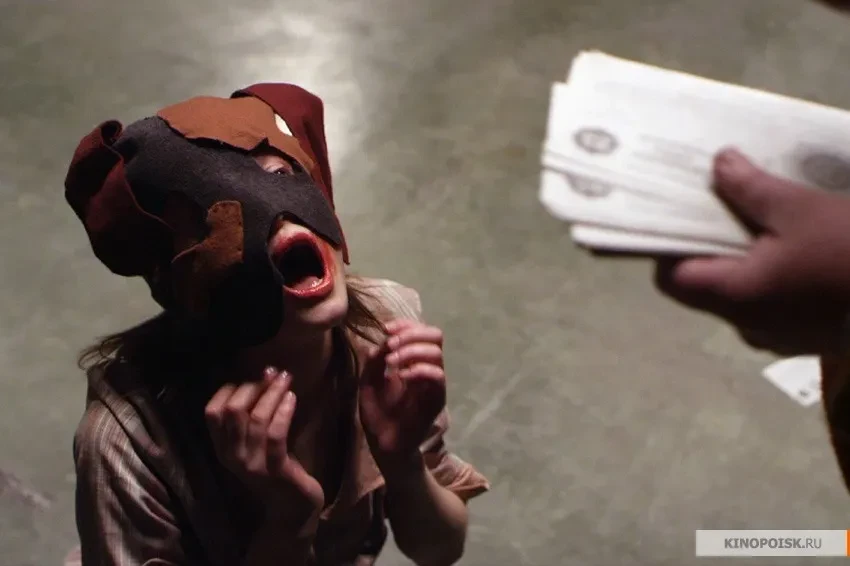
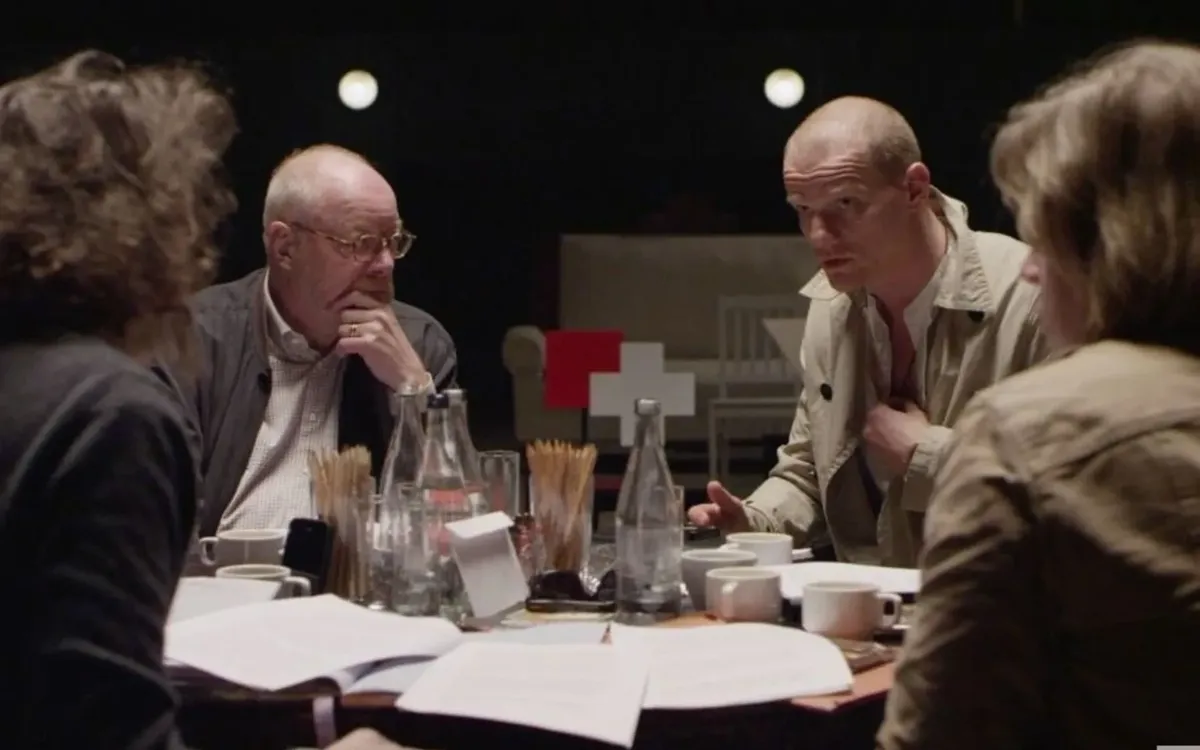
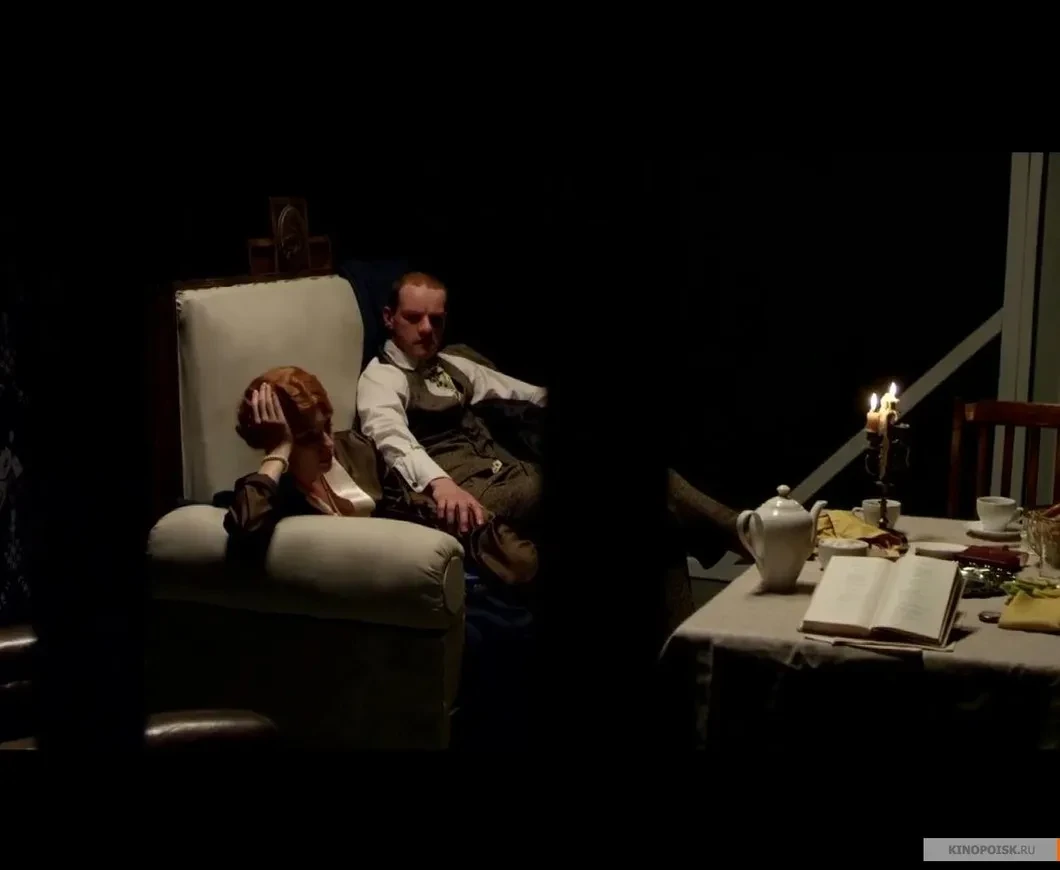
Actors are going to read the script at the rehearsal table. Kolokolnikov, Khamatov, Mironov, Ephraim Mikhail and Nikita, Albert Alberts, Adasinsky, Miriam Sehon try on masks, adapt to roles. For example, Mironov reads for Trotsky and Agranov. Chekist Agranova is played by three different actors. And then an interview with real Lily Brik, Veronika Polonskaya, Patricia Thompson ... As if Chukovsky’s method, described by him in the article “Akhmatova and Mayakovsky”, has been taken as a basis: “I like to construct the poet’s personality of the barely perceptible features of his styles. According to his instinctive addictions, often invisible to himself, according to his unconscious gravities to certain epithets, images, themes. ”
"Smayakovsky" is a designer who is gathering before our eyes. Kolokolnikov - Mayakovsky - opening of the film. It's not only about similarity. He is the embodiment of a painful search for his own voice (“not of himself! Into himself,” Brick Chulpan Khamatova, Mayakovsky Lily, teaches Mayakovsky). He is an actor trying to get into the skin of the poet. In his burned gut. And in the "pre -stomachine" - poetry. When Kolokolnikov pulls off plastic makeup from his face, it seems to tear the skin.
Chulpan Khamatova plays not so much a specific person: a vamp woman, a prudent eater of male hearts, a literary agent, an image maker, “not a woman is an exception”-how many doubts and thoughts, fantasies on the “muse of the 13th apostle and his curse”. That is, the image invented by the puppy himself, looking into the eyes of the alert. Elusive. Either strict, then tender. The actress is trying to recognize these painful relations - mutual power and addiction. And the face of Mayakovsky - Kolokolnikov at the moment when Lily looks at him, changes: the child turns into a giant or, conversely, a genius into a insignificance in a yellow sweater. Chulpan is interesting not so much the result as the process of entering in a contradictory, glare image. The result of this fluid image is Brik Lyudmila Maksakova. The rings, stuck in old hands, a pearl touring in a wilted neck - all unnecessary, like the life that remained there, far away - where the other -sided eyes looked at death.
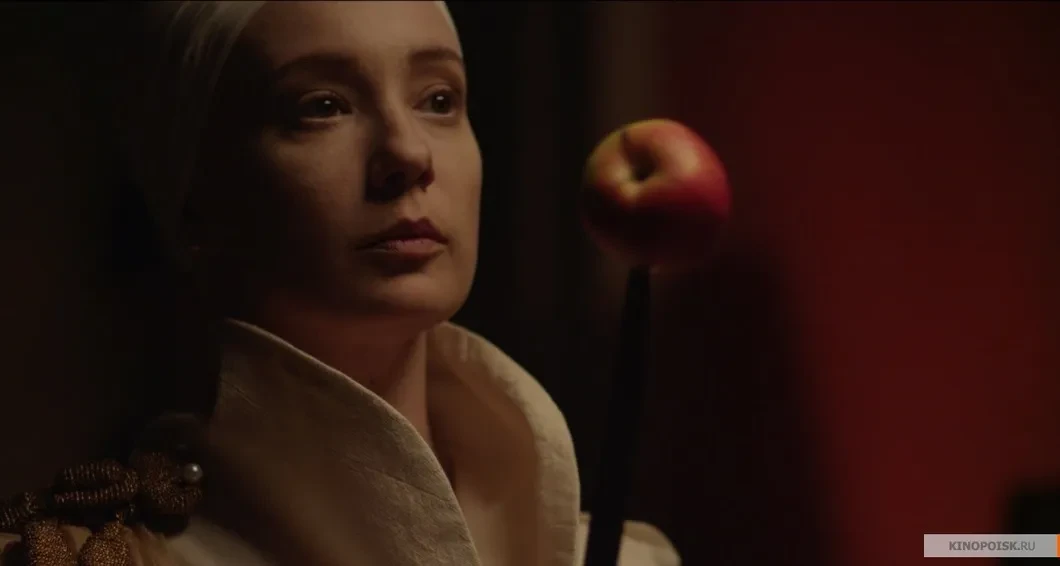
And on the TV - the muse of the New Age Alla Pugacheva.
Rotten theatricality, the camera walks like a drunk. At first, the randomness of what is happening on the screen interferes, minutes stretch painfully: there are too many characters, methods in this system. It seems that there are more discrepancies than coincidences (slurred Meyerhold, Russian Polyfem - Burliuk, Trotsky). Gradually drawn into the process of a total experiment. Efforts to rise above the well -known, break through to the “windows of growth of poetry”, to a poetic substance. Outwardly rude, powerful. Inside the fragile, elusive. Touch the cheek to the expired, treacherously changeable time. Here is a party in a cramped crowded room, a camera departure: everything happens on stage, the audience is blue and green caps of the GPU. The enthusiast of socialism Mayakovsky appears in front of a full hall ... hats and hats ... The conversation with the book seller turns into a conversation with a Chekist. The apple orchard with artificial fruits is into a cropped communist paradise. Neat officers lead someone to be shot, and then a cheerful picturesque picnic ... with the appointment of new victims.
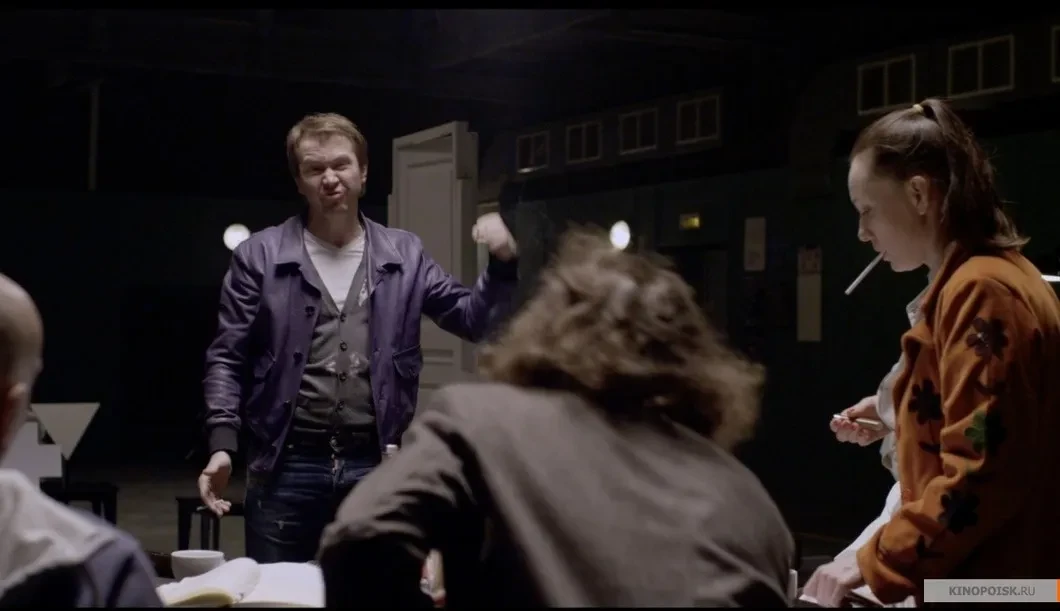
The avant-garde of Mayakovsky and the revolution are twins-brothers, he remained faithful to "the dream of the total transformation of being." But in the upcoming "communist satiety", there is no place for the firing alternative to the "good" revolution. He is still trying to survive this betrayal with gloomy childhood: “Give a new“ Marseilles ”, bring the“ International ”to the thunder of the march of the already defeated revolution!” - And already annoying with its screams. Unfinished, ecstatic, tearful national treasure. Responsible comrades still hope to instruct him to the "true path." But the tormented platform oracle does not know how to turn into a screw. The all -powerful gapet agrans and the party are disappointed. The last warning: "They look at you intently." When it is difficult around, the poet’s heart breaks to the shot. For “healing wounds, this is the only possible poetic ending.
Ivan Tolstoy, historian of literature:
- The film is on the verge of genius. Emotional persuasiveness is complete. Although scream and noise in the film are a little more than necessary. But this is from the chopped nerves who distinguish director Alexander Shein. By the way, his own appearance on the screen is surprisingly harmonious.
The film cannot be measured by political, ideological and even biographical standards. If they measure them, then the film is wrong. And the film is absolutely convinced. There are several unconditional successes. The ingenious game of Kolokolnikov - Mayakovsky. From physical resemblance to the embodied figure of the Creator, Demiurge, the artist as a whole. Yes, it is emasculated in a historical and political sense. Do not understand what kind of era outside the window, what power is there. He played the type of lonely, rumbling, devoted to his emotional lighthouses of the artist: love, creativity, passionate following the drawings of fate.
Chulpan Khamatova played brilliantly ... Chulpan Khamatov. Not Lily. This image has nothing to do with the historical or psychological brick. Her super -item, overson, the main idea is incomprehensible. Khamatova is a person itself, she played a person. Whether Lilya Brik was the personality, I don’t know. She was a pronounced individuality. We do not judge her from a human point of view. Her role is the insidiousness itself. She was alcohol, selfish, cynical. Which completely did not prevent her from being a magnificent muse of Mayakovsky. She knew how to play him. It was smart, insightful, domineering. Chulpan played a sweet, pleasant person. But why it is present in the life of this poet is incomprehensible.
A magnificent image was created by an actor who played Osip Brik. It is the most difficult to play. It's like playing the wind. Shklovsky said about Brik that he was a person present and evading. The same on the screen. Charming. Sly, dear, do not put your finger in your mouth - and at the same time morally detached from what is happening.
The actors failed in the last quarter of the film, when Shane switched the toggle switch from symbolism to black and white realism. This is the will of the artist. But the background ceased to be a theatrical, fabulous, painted mosaic glass, and suddenly became a gray Deryuga. On this background, biographical errors became obvious. The heroes suddenly began to explain the political, ideological component. There were no Bolsheviks from nowhere. Where were they five minutes ago? And then it is good again: without details, fragmented, symbolic - and moved to the tragedy.
Alexander Shein, director:
- This story leaked from childhood. Mayakovsky was a daddy hero. I was surrounded by him. At some point, through Mayakovsky, he began to engage in self-education, comprehension of peace and profession. This has turned into a study of life. He is an unsolved figure, through it you can trace the history of culture not only of the twentieth century. Now, for example, I am engaged in comparing Mayakovsky’s poetry with young Pushkin. His absolute poetic hearing, “the asceticism of conscience” reveal not only the secrets of the past, but also give answers about the present. And, alas, they guess the future.
At first there was a long -term archival study. After all, our film “Timur Novikov. Zero object ”, as well as the project“ Anthology of Contemporary Art ”, partly from“ Mayakovsky ”. Our cinema is about the ability to organize an artistic space from minced meat, about a tragic pattern that overtakes avant -garde. After all, at the second vanguard, the path turned out to be dramatic, like their predecessors. In the cinemas "Vyamyakovsky", it may appear in separate sessions. But we think about a long life with the film. We are happy that the Tretyakov Gallery is ready to present more than 1000 meters for Atlas of Mayakovsky, a movie, theater, the work of the avant -garde, modern art, there are hundreds of hours of rare video, and the Museum of Mayakovsky will be connected in the total exposition. There will be meta references (for example, a comparison of Mayakovsky’s poetry with Tsoi texts). I would like to let into this long -playing history of contemporary artists, the creation of new art institutions is possible. All this is only partly immersed in the "body" of the film. But how to come up with a genre definition to all this? Perhaps atlas or liturgy. Who cares. The main thing is the journey in Mayakovsky continues.