
Translated material
A meek closure
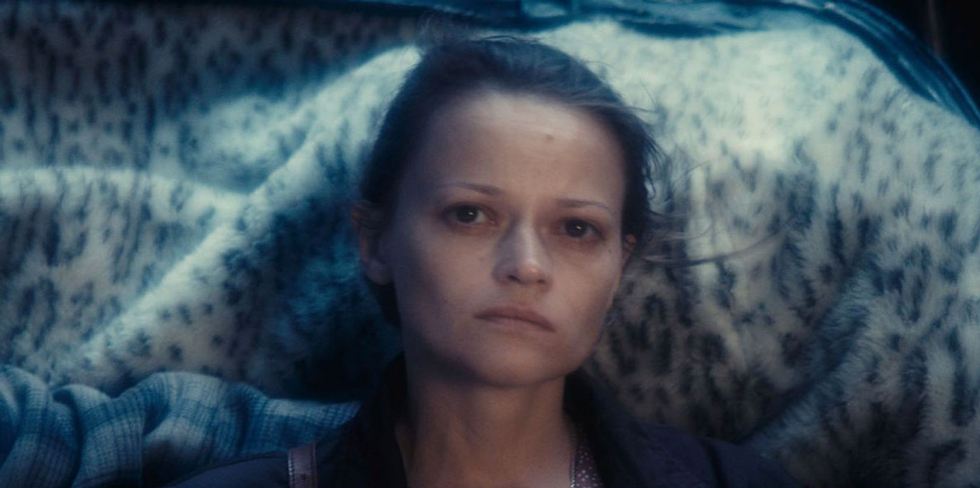
On the screens of Ukraine, the film of Sergei Loznitsa “Mole” was released, the world premiere of which took place in the competition of the Cannes festival, and the first shows in Russia at the festivals “Arrows” and “Message to Man”. The question of the rental of a film in our country is now being decided by its Russian producers.
In the days of the 70th Cannes festival, the news came to the TOP “Yandex”: “The film of a Ukrainian director about Russia boiled in Cannes.” Simplification formally coinciding with the contours of reality: Sergey Loznitsa, who was born in Soviet Belarus, who worked at the Kiev Institute of Cybernetics at the time of the collapse of the USSR and received the citizenship of Ukraine, shot a movie about the endless finals of the Russian world and Russian civilization-too universal to take into account such a trifle as political borders (at a press conference in Cannes, the Ukrainian journalist asked why in a key scene, why in a key scene. The heroes change into embroidered shirts and whether there are criticism of the Ukrainian authorities in this - another simplification in the stupor).
“ Q&A and not,” the director announced at the premiere in Kiev. - The film itself is Q&A A ” - and this is really his first job, which expresses the whole complex of ideas with cinematic means and does not need subsequent author's explication. In the “meek” documentary Loznitsa, the Loznitsa leads his fiction cinema to a new level of convention: this picture is a dream in a dream, which includes recognizable elements of reality that cannot be refuted. From the same name by Dostoevsky, only a warning was borrowed: although the story is entitled as “fantastic”, the author himself considers it extremely real.
 © Slot Machine
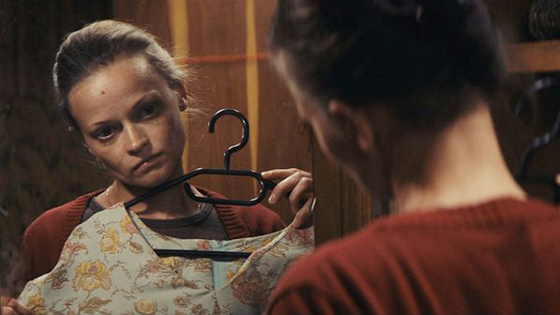
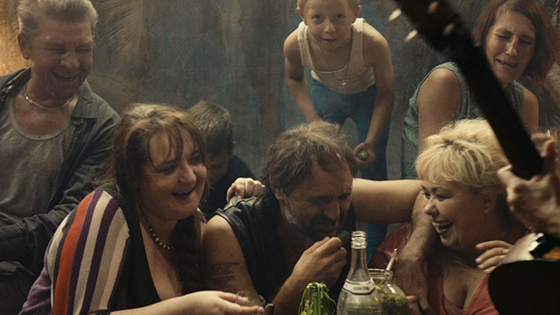
The film is about how a young woman (Vasilina Makovtseva from Kolyada Theater) received a parcel sent to her husband to prison without indicating the reason, and went to find out what happened to him, seemed to be a heavy, viscous and gloomy-but turned out to be a comedic musical horror like the horror show of Rocky Horror. He went into the room, hit the other; I went on a date to my husband, fell into Dostoevsky’s dreams and in Tatyana’s dream - into the hut, where the monsters are sitting at the table and preparing you to sacrifice you. The distraught piano Karavaychuk, Nadezhda Kadysheva and Nadezhda Babkin, marches of the brothers Krasses, a well -known chanson and unknown, written by the actress of Theater. DOC ”Marina Kleshcheva, who has spent twelve years on robbery, is even monologues of the characters that the main character meets in her path sound like opep arias or gypsies with an exit.
Having discarded a serious tone, leaving hope forever and letting the liberating madness into his rational world, the luster experiments with layers of reality and with layers of tongue: a obscene monologue, a monologue on the thieves hairdryer, a feverish monologue saving the whole world, two almost the same monologue in the genre of folklore “suffering”: one pronounces the human rights activist performed Akhedzhakova, the other is the container of the brothel, leading the confused heroine first to the wait, and then to the Calvary; Both are unbearably worried about strangers. “I love women and I want condenses. What to plant for? For the fact that I want condenses? " -the treasure disabled person put in a “monkey” rhythmically shouts from the edge of the frame.
 © Slot Machine
Having shown in his game debut “My Happiness” (2010) the Russian world as a permanent war of all against all, the Loznitsa - the favorite of European film festivals living in Germany - gained the glory of Russophobe. Presenting the 2015 Cannes Festival of the Maidan, he refused to give an interview to the Russian press, defiantly taking Russia for the brackets of the dialogue, into which the new Ukraine enters with the rest of the world. However, these circumstances should not deceive anyone: the director of the Loznitsa once after time addresses the European festival, but to the Russian public - without great hope for reciprocity. Even the “Maidan”, which captures the movement of the human masses in the days of the revolutionary GIDOSTI, can truly hear only the Russian ear, which is sensitively capturing situational switching between cultural codes and languages (they sing in Ukrainian, poems read in Russian, and the restaurant hit “Ruta Ruta” suddenly turns out to be a protest hymn). At the premiere in Kiev, the hall considered neither Putin's joke about circumcision , nor a “slave on galleys” in a monologue of a human rights activist with a St. George ribbon; In this prison, she is entrusted to the honorary mission of “the fight against human rights”.
The road to Dzerzhinsky Street, where the human rights defenders' office is located, lies across Hegel, Marx and Lenin Street, past the house burned at the intersection. Locals call them “agents” and “fascists” and water them a staircase of water so that it is impossible to go out into the frost, the police later arrange searches with a “bimanual vaginal research”, but all statements from the victims are mandatory to “organs” - a ruthless caricature for those who, remaining in the system, are trying to identify with “good”. There is no good here; His ugly imitation looks more disgusting than pure evil. In the stage of the final Satanic banquet, the human rights activist will sit on the right hand from the head of the prison under the supervision of the guard of honor of the NKVD.
 © Slot Machine
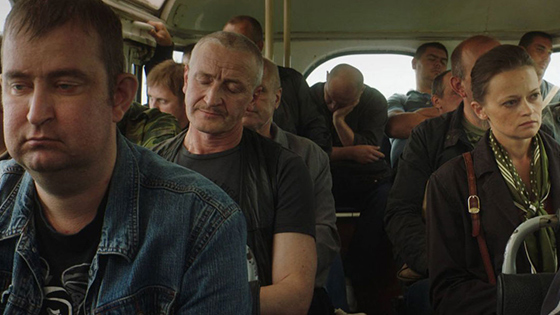
The world "meek" is a cozy impenetrable womb, in which generations of unborn people decompose alive. “Do not sleep, otherwise you will leave,” warns a half -crazy old woman at the station (Rosa Khairullina, who has two roles in the film). But everyone around is immersed in a deep sleep, the heroine, who is raised and taken away, as if for a meeting with her husband, but in fact, to commit an act of barren symbolic violence, will also become infected. At the beginning of the film, a man with a stroller passes past the people at the stop from right to left (that is, in the logic of the screen). Stopping halfway, he picks up empty bottles from the ground and puts them inside - where there is no and there will never be a child.
Where the husband was gone and why the package returned, they will not tell us and will not tell us, but the replicas of secondary characters are formed in a parallel text that allows you to build conjectures. Outside of a cozy paralyzing womb, there is a war that you can go to the time, or protect the Russian world, or crawl to a warm place: "The homeland will endure." This dream is in the hand: throughout the film, scraps of stories about mobile crematoriums and funerals without indicating the place of death (the next project of the Loznitsa is called “Donbass”), like dozens of other details, turn this “fantastic story” into a documentary report from hermetic womb that digests itself.
When writing the text, ideas expressed by Miroslav Svyshpitsky were used.