
Translated material
Program for Travnikov: Urban Proceedings and Transport Policy
Already at the time of writing, the general plan of Novosibirsk in terms of transport looked excessively optimistic. Today it looks fantastic - for its execution it is necessary to spend 40-50 billion rubles a year on the infrastructure with the city budget 36 billion. But high -rise housing is already being built beyond its borders. Alexey Mazur on transformations in transport and urban planning policy in the Novosibirsk region.
The head of the analytical department of Taiga.info continues the cycle of materials on the change of managerial practices in the Novosibirsk region after the appointment of the acting governor Andrei Travnikov.
First text: the Novosibirsk elite needs a new consensus
Second text: what to do with the problems of the Novosibirsk region
Description of the situation
About 70% of the population of the region lives in the Novosibirsk agglomeration, suffering from the consequences of errors in urban planning policy.
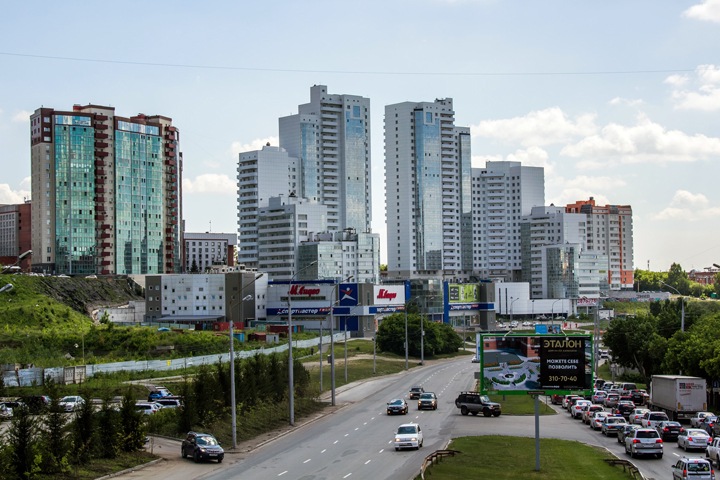
If at the turn of the century the main problem was a chaotic (point) development of the city center, then another was added to it - the construction of large residential arrays on the outskirts without appropriate infrastructure (roads, schools, kindergartens and a clinic). As a result, residents of these microdistricts can stand for hours in traffic jams to get to work, get medical care or take children to school.
The problem is growing like a snowball, now multi -storey buildings are already being commissioned, which are formally built outside the city and belong to the Novosibirsk district. But in fact - they, across the road from the same city houses, people often do not even know that they buy housing in the rural area. And they will strive to give their children to crowded city schools, to be treated in city clinics, and their cars will aggravate traffic jams on city roads.
What errors led to this?
The problem is not even that in Novosibirsk a bad urban planning and transport policy. The problem is that it is not at all. During the development, no requirements for architecture were presented, the new buildings were “stuck” to the existing ones. Uritsky’s street is decorated with the “monuments” of such a building-in one place, the old “Stalin” went cracks because of the neighboring new house, in another place the skyscraper began to build the wall to the wall to the already built-until it “unexpectedly” rested on the balcony. And still stands unfinished.
According to the standards accepted by the head of Vladimir Gorodetsky, the mayor of Novosibirsk, the center was allowed to build buildings up to 50 floors. Promising transport corridors were built up. If there was a urban planning policy in the city, then it can be formulated as follows: on any patch you can stick a high -rise building, everything else is secondary.
133899 Blind is a blind person: a report on passenger transport
Secondary was transport planning. In Novosibirsk, by the way, architects are engaged. It is easy to see from the one who leads the relevant working groups - what is in the Novosibirsk City Hall, in the regional government.
If transporters (real transporters, and not immigrants from the traffic police) look at urban planning at an angle “As we better take out people”, then the architects have a different look - “as if we can use more lands for construction”. If the transporter understands that the corridor for a separate tram line is 10 times more valuable than the road lanes, then the architect argues as the inhuman vehicle (“who needs these broken trams”?) And easily erases the eraser of the promising tram line, condemning the residents of the district into clock traffic jams.
The unscientific science fiction of the general plan
For many years now, the main (and almost only one) document of transport planning in Novosibirsk was the General Plan of the city, adopted in 2007. It is assumed that by 2030 there will be 54 metro stations in the city (now 13, at the time of writing the plan was 11), 7 bridges across the Ob (now 3, there were 2), 150 multi -level interchanges and hundreds of kilometers of continuous traffic roads.
There is a version that such a rich transport infrastructure was drawn in the general plan to justify the possibility of building anything and anywhere - after all, there will be "metro stations" everywhere.
Already at the time of writing, the general plan in terms of transport looked excessively optimistic. Today it looks fantastic - for its execution it is necessary to spend 40-50 billion rubles a year on the transport infrastructure of Novosibirsk with a city budget 36 billion.
Nevertheless, the officials responsible for planning pretend that everything is fine: the layouts of the territories are made taking into account the unscientific science fiction prescribed in the general plan, and the representative of the regional Ministry of Construction, Sergei Novokshonov, requires the developers of the program of the integrated development of the Novosibirsk transport infrastructure, so that they act in strict accordance with the general plan.
Novokshonov himself heads the Council for the Development of the Novosibirsk agglomeration and says that the transport diagram of agglomeration is also done in accordance with the general plan. That is, unscientific fantasy in terms of transport is extrapolated to the suburb of Novosibirsk. This means that we will see high -rise construction in a clean field - after all, according to the plan there will be roads, multi -level interchanges and, perhaps, even metro stations.
The general plan of Novosibirsk (in its transport part) has one plus and two large disadvantages.
134573
The plus is that the transport corridors drawn in it are more or less kept. Well, or built up not as intensively as they could. Although you can see how part of the planned roads is already supposed to be carried out along the tunnels under the existing development.
On this, the advantages of the transport pattern of the general plan are ending.
The first minus: thanks to this document, housing construction is underway in a clean field. The developer receives permission, builds a quarter, and then requires planned roads, schools and kindergartens from the municipality. As a result, such unformed debts of the city exceed the income that he received from the sale of land.
Minus two: when money for transport construction comes to Novosibirsk, some object is randomly pulled out of the general plan and is built without communication with other objects.
We see this on the example of the fourth bridge. The need for its construction and the choice of location is explained only by the fact that it is registered in the general plan. There should already be seven bridges on it, and so far we have only three. The fact that the document has 54 metro stations, and only 13 are built is modestly silent.
Obviously, the budgets of all levels are not enough to realize the general plan of Novosibirsk. Moreover, the concepts laid down in the transport scheme of the general plan are out of the last century. We grind the metropolis, tearing it into parts of the highways of continuous movement. The fantastic metro network laid down in the general plan is extremely expensive. The same network, laid on the surface of the earth (tram, high -speed tram) - is many times cheaper and no worse than freight ability. Fortunately, while the transport corridors on the surface are not fully built up.
The ugly state of public transport exacerbates these problems of Novosibirsk, but this issue requires a separate article.
What to do?
- It is necessary to create a structure responsible for transport and urban planning - not only in Novosibirsk, but also in agglomeration. And a transport policy should be put at the forefront. In no case should this body head the representative of the Ministry of Construction.
Now, the Ministry of Construction, the Ministry of Transport, the Department of Architecture and Construction of the City Hall, the Construction Department, the traffic police, and the transport inspectorate are dealing with the issues of transport in Novosibirsk and its environs. The departments act in a different way, there is no single transport policy.
A simple solution, alas, does not exist. In Novosibirsk there are no practitioners - specialists in transport planning. There are no them in the Ministry of Transport or the Department of Transport. I don’t know about the Ministry of Transport, but the city department of transport, even in the structure, is not supposed to have planning, although conversations have been going on for two years. “Specialists”, as a rule, do not know the basics of transport science, are engaged in “regulation” of current problems (snow cleaning, redistribution of routes and so on) and do not climb into urban planning issues. It comes to the point of absurdity - architects “throw” transport corridors in the layouts, without even consulting with transporters.
132297
There are transport specialists outside the authorities - Mikhail Nikulin from NSTU, the group of Valery Khabarov from SSUPS, as well as Alexander Stefanov (SSUPS and ONF). But they have no bureaucratic experience.
The problem is aggravated by the fact that transport issues are political, they affect the interests of many residents of the region, as well as businessmen who make money on passenger transportation. When solving transport problems, you will have to deal with both business interests and public work.
At a minimum, now it is necessary to localize the harm from the decisions already made. Mass housing construction in territories that do not have transport and social infrastructure must be limited until a comprehensive and responsible approach to this issue has been developed. In principle, this is solved by introducing the coefficient of maximum development density (the ratio of the area of the building to the area of the site). Make it for the fields of the Novosibirsk region (and for the outskirts of the city) minimal and increase, depending on that there is a road, a school and a clinic nearby. No - build cottages.
The general plan of Novosibirsk in terms of the transport scheme must be updated. At the same time, it is impossible to remove the restrictions on development from promising transport corridors. But at the same time, you need to abandon outdated transport concepts and get a realistic plan. In principle, this can be done in programs of the integrated development of transport infrastructure, which is now accepted in the city of Novosibirsk and in the Novosibirsk agglomeration. It is important that all science fiction from the current general plan does not migrate to the latter.
Alexey Mazur