
Translated material
Memory. Eleazar Meletinsky
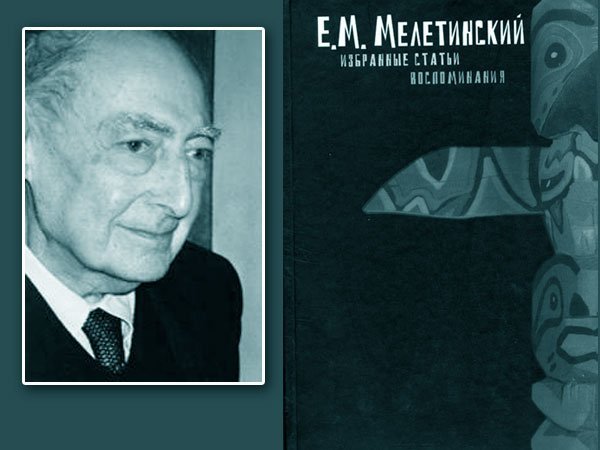
On October 22, 1918, Yeleazar Meletinsky, philologist, literary critic, researcher of folklore and mythology was born.
Personal business
Eleazar Moiseevich Meletinsky (1918 - 2005) was born in Kharkov, but in 1921 his family moved to Moscow, where he graduated from school and entered IFLI - the Institute of History, Philosophy and Literature, created in those years from the humanitarian faculties of Moscow University. Meletinsky studied at the faculty of literature, art and language, in the “Western cycle”, that is, specializing in the language and literature of foreign countries. In 1940, he entered graduate school. After the outbreak of war, Meletinsky graduated from the accelerated courses of military translators and entered the army. He fought on the Southern Front, was an assistant to the head of the intelligence department of the division. When the division was surrounded, the commander dismissed the personnel, ordering that everyone would get out if he can. Meletinsky succeeded, although with considerable difficulties. He continued to fight already on the Caucasus Front. But as a “environment”, he continued to cause close attention of employees of the special department of his division. On September 7, 1942, Meletinsky was arrested. He refused to recognize accusations of treason and espionage even under pressure from investigators, including, for example, a staging of execution. As a result, the military tribunal sentenced Meletinsky to 10 years in the forced labor camps "for anti-Soviet agitation in order to decompose the Red Army."
In a Tbilisi prison, he fell ill with pneumonia, then dystrophy and scurvy began. After some time, the special commission recognized Meletinsky seriously ill and exhausted, and among other prisoners, he was released from the conclusion on May 15, 1943. He got through Baku to Tashkent. There he spent some time in the hospital, then taught at the school and after several fruitless attempts he achieved to enroll in graduate school of Central Asian State University, and then became a teacher, lectures on the history of foreign literature. In 1945, E. M. Meletinsky defended his thesis "Romantic period in Ibsen's work."
Then Yeleazar Meletinsky transferred to Petrozavodsk, where he headed the Department of Literature at Karelo-Finnish University. In 1949, when the campaign of “struggle against cosmopolitanism” began, an article “On Cosmopolitan Perversions” at the Department of Literature and “primarily at the head of the department” appeared in the Petrozavodsk newspaper. And in May 1949, Meletinsky was again arrested. He was convicted for 10 years, was serving a term in the Kargopollag in the Arkhangelsk region. He was released and rehabilitated in 1954.
In 1955-1956 he was the main librarian in the All -Union Library of Foreign Literature. In 1956, he joined the Institute of World Literature of the USSR Academy of Sciences, where he worked for almost forty years, having eventually become the head of the folklore sector and the chief researcher. In 1966 he defended his doctoral dissertation on the topic "The origin of the heroic epic." In 1989-1994 he acted as a professor at the Department of Theory and History of World Culture at the Faculty of Philosophy of Moscow State University. Since 1992 - Director of the Institute of Higher Humanitarian Research (IVGI) at the Russian State Humanitarian University.
What is famous
The work of Meletinsky "Hero of a fairy tale. The origin of the image ”was published in 1958. It was dedicated to the establishment of a social context in the origin of a fairy tale by analyzing the image of a characteristic hero: a deported younger brother, an orphan, and a stepdaughter. Meletinsky showed how the process of the collapse of the primitive communal system, the transition from the clan to the family, the struggle of the major and the minoratus reflected in folklore. In the dissertation “The origin of the heroic epic” and the monograph published on its basis, Meletinsky considered the formation of an epic in several national-historical regions (Karelian-Finnish, Turkic-Mongolian, Sumero-Akkadian epic, the epic of the peoples of the Caucasus, etc.) and general patterns in the ratio of the epic with the preceding primitive forms folklore and subsequent, later types of epic works. The genesis of the epic is also devoted to the work of “Edda” and the early forms of the epic and “Paleo -Asian mythological epic. Raven cycle. "
The event was the appearance in 1976 of E.M. Meletinsky "Poetics of the myth." The first part contained a detailed review of the theories of the myth that existed in foreign science, so it became one of the few sources by which Soviet students could get acquainted with the ideas of European scientists, whose works in the USSR were inaccessible. The second part of the “poetics of the myth” was devoted to classical forms of the myth (myths about demiurges, calendar myths, space and eschatological myths, heroic myths), as well as the relationship of the myth with narrative folklore (fairy tale and epic). Finally, the third part of the book analyzed mythologism in the fiction of the 20th century, the work of James Joyce, Franz Kafka and Thomas Mann was especially examined in detail.
Meletinsky was also interested in the further development of the epic tradition, when it gave rise to fiction. These issues are devoted to his book “Medieval Roman. The origin and classic forms ”,“ Introduction to the historical poetics of myth and novel ”,“ The historical poetics of the novel ”,“ From myth to literature ”. In them, he considered the influence of the myth on verbal art and the origin of the narrative literary genres.
What you need to know about
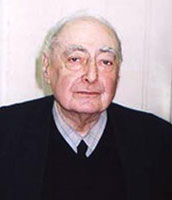 Eleazar Meletinsky
E.M. Meletinsky was the initiator and active participant in many collective works that gained great fame. On his initiative, a series of books “Research on Folklore and Mythology of the East” (known as “Books with a Turtle”) was founded, where the most important scientific works in these areas are published. In the first issue of the series (1969), the classic book of V.Ya. Proppa "Morphology of the Tale". Eleazar Moiseevich Meletinsky was also a member of the editorial board, and then the editor -in -chief of the series “Tales and Myths of the Peoples of the East”, to many releases of which he wrote valuable analytical articles.
Meletinsky played an important role in the emergence of the famous two-volume encyclopedia “Myths of the Peoples of the World”, where he acted as an editor and author of many articles on the mythology of the peoples of Australia and Oceania, the Caucasian-Iberian, Finno-Ugric peoples, the German-Scandinavian, Celtic, Pale-Asian mythology. He became the editor -in -chief of the “mythological dictionary” published in 1991. “The myths of the peoples of the world” and the “mythological dictionary” not only received a high appreciation of specialists, but also became widely known to many readers.
Direct speech
“Life experience was increasingly pushing me to the thought of the meaninglessness of life. The decline in dogma contributed to the development of elements of existentialism in my attitude, maybe in the spirit of Camus, although I had not read either Camus or other existentialists then ... And maybe I thought, - if I have enough strength to lower my eyes before the chaos of life, then I can, without unnecessary illusions, bring conscious meaning to my life and to the life of people around me. ” E.M. Meletinsky
“Myths are born according to the general scheme. From ancient myths, a magical fairy tale and a heroic epic grew. At the archaic stage, the epic is deeply mythological. Then the story invades the epic. And epic works appear that tell about real events: the Trojan War of the ancient Greeks, the battle on the Kosovo field near the Serbs, the reconcist in Spain. But even if the legend arose on the basis of a historical fact, the latter is still gradually surrounded by mythical elements and is stylized according to fairly the same models. Historical characters - kings and princes - occupy the places of mythical heroes, enemies - no longer monsters, but foreigners: Polovtsy, Tatars, Moors. Take legends about impostors, they reflect reality, but the latter is subordinate to mythical content. The myth becomes a life. After all, the historical events of the same troubled time themselves arose, relying on the myth. New myths are born every day. But some of them, individual, will be significant only for a particular person or a narrow circle of people. Thus, the detailed mythology of the world of Middle -earth, which was created by Tolkien in his “Lord of the Rings”, continues to live among his admirers, but does not go beyond their circle. Others, the creation of which a large number of people took part, may be stable. ” E.M. Meletinsky
“I think that the chaos experienced by Russia is so great that its overcoming, if there are rational forces, will require a very long time. In the “Three Sisters” of Chekhov, remember: “After 300-400 years, life will be beautiful ...” Look at how ease modern society retreats from civilization (not only in Russia). Such a feeling: a little more, and tomorrow again on the tree is climb. We were overwhelmed by military conflicts. Where there are primitive fights - even those were more human. Even the heroic epic, which hyperbolizes, including mutual hatred, describing the wars of Christians with Muslims, does not give that picture of fierce, that wild sadism that is somewhere in the Caucasus or in Tajikistan, in the Balkans or in Africa. Society as a whole is not able to rise above the myth. But this can do a separate person. And only when in our country the sufficient potential of personal freedom will be accumulated in our country, it will be possible to talk about the revival of Russia. ” E.M. Meletinsky (1994)
“The will of the fate (or Gulag) at our OLP (separate camp point), many educated people gathered. A kind of intellectual life arose: exchange of ideas, disputes, forecasts. In this life, E. M. belonged to a significant, if not a leading role. It seems to me, he had a considerable impact on the formation of the worldview of young people who fell into the camp directly from the student bench. E. M. himself, in the end settled in the “moron” position of the statistics of the sanitary unit, managed to study in the camp. At his request, relatives sent him books and magazines. At this time, he was very interested in the latest trends in the natural sciences, his thought worked intensely. Sometimes he said bitterly: "I just see these volumes that I could write." From the memoirs of I. Filstinsky
5 facts about Eleazar Meletinsky
- At the University of Tashkent, the scientific director of Meletinsky was V. Zhirmund, who lived there in evacuation.
- In the Kargopol camp with Meletinsky sat an Arabist historian Isaac Filstinsky and philosopher Grigory Pomerantz. The camp theater was led by the convicted person for the storage of anti -Soviet literature, playwright Alexander Gladkov.
- In the anniversary collection, in honor of the 75th anniversary of E. M. Meletinsky, the famous French scientist Claude Levi-Stross published an article.
- The book "Poetics of the myth" was translated into Polish, Serbian, Hungarian, Portuguese, Czech, Slovak, Chinese, Italian, Bulgarian and English.
- In 1971, for work on folklore E.M. Meletinsky received the Award named after the Italian ethnographer and folklorist Giuseppe Pitre.
Materials about Eleazar Meletinsky
Article about Eleazar Meletinsky on Wikipedia
My war. My prison. Memoirs of E.M. Meletinsky
S.Yu. Neklyudov about Eleazar Meletinsky
Isaac Filstinsky eyes of a friend